How to Single Crochet (sc) — Complete Beginner Tutorial
If you only ever learn one crochet stitch in your life, make it the single crochet. It is the smallest, tightest, sturdiest of the basic stitches — and it is the single most important stitch in amigurumi crochet. Open any plushie pattern at random and you will see "sc" repeated hundreds of times. Bears, dinosaurs, flowers, granny squares, dishcloths, hats — the single crochet builds most of them.
The good news? It is also the easiest stitch to learn. Once you can do four small motions in sequence — insert, yarn over, pull through, yarn over, pull through — you can crochet anything. At MrsCrochetWorld, every beginner who learns the single crochet finishes their first amigurumi within a week. In this tutorial, you will learn exactly what the single crochet is, how to make it step-by-step, how to count and turn it, the most common mistakes to avoid, and how to use it inside a real amigurumi pattern today.
📑 In This Tutorial
What Is a Single Crochet?
A single crochet (abbreviated sc in US patterns) is the shortest of the four basic crochet stitches. It produces a tight, dense, textured fabric that does not stretch easily. That density is exactly why it is the foundation of amigurumi: stuffing cannot push through tightly packed single crochets, so your plushie holds its shape and never reveals the fiberfill inside.
The stitch is short because it uses only one yarn over — compared to the half double crochet (one yarn over before insertion), the double crochet (one yarn over before, pulled through twice), or the treble crochet (two yarn overs before insertion). Fewer yarn overs equals less height per stitch, which equals tighter fabric.
| Stitch | Abbreviation | Height | Best For |
|---|---|---|---|
| Single crochet | sc | Shortest, densest | Amigurumi, dishcloths, sturdy fabric |
| Half double crochet | hdc | Medium-short | Blankets, garments, soft texture |
| Double crochet | dc | Medium-tall | Granny squares, shawls, scarves |
| Treble crochet | tr | Tallest | Lace, doilies, open fabric |
📌 US vs UK terms: In US patterns, "single crochet" (sc) is what UK patterns call "double crochet" (dc). Always check which terminology your pattern uses — the difference is one full stitch height. At MrsCrochetWorld, all patterns use US terms unless explicitly marked otherwise.
What You Need to Practice the Single Crochet
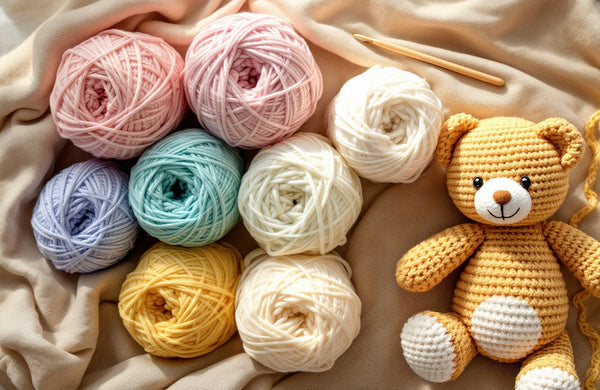
The single crochet is the friendliest stitch to learn because it requires almost nothing. If you already have yarn and a hook, you are ready right now.
| Item | Recommendation | Why |
|---|---|---|
| Yarn | Worsted weight (4) cotton or acrylic in a solid pastel color | Solid colors show stitch definition clearly. Cotton has zero stretch so each loop is visible. |
| Hook | 4.0 mm (G) or 3.5 mm (E) | Slightly smaller than the yarn label suggests — keeps fabric dense for amigurumi. |
| Stitch marker | Locking stitch marker (or bobby pin) | Essential when working in the round to mark round starts. |
| Scissors | Small craft scissors | For cutting yarn at the end of a piece. |
| Tapestry needle | Blunt yarn needle | For weaving in ends after binding off. |
💡 Beginner Tip: Start by chaining 15 stitches and working single crochets back and forth in rows. This builds muscle memory before adding the complexity of working in the round. Spend 10 minutes here and the rest of crochet opens up.
Step-by-Step: How to Make a Single Crochet
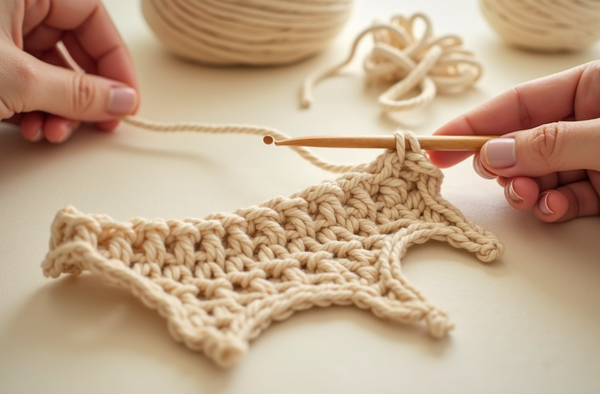
The single crochet has four small motions repeated in the same order, forever. Once you can do them in sequence without stopping to think, you are officially a crocheter. Make a chain of 15 first (or your starter row) so you have something to work into.
Insert the Hook
Insert your hook into the next stitch. If you are starting a row from a foundation chain, insert into the second chain from the hook (skipping the first). For all later rows, insert into the next stitch under both loops on top of the previous row. The hook should pass cleanly through the V-shape on top of each stitch.
Yarn Over
Wrap the yarn around your hook from back to front. The working yarn (the strand attached to your ball) goes over the top of the hook so the hook catches it as you pull back. You now have one yarn-over loop on your hook plus the original loop already there.
Pull Through the Stitch
Pull the yarn back through the stitch. The yarn-over catches as you draw your hook back out of the stitch. You now have two loops on your hook. This is the halfway point.
Yarn Over Again
Wrap the yarn around your hook a second time — same motion as Step 2, back to front.
Pull Through Both Loops
Pull the yarn through both loops on your hook at once. When you finish, exactly one loop remains on your hook — that loop is the start of your next stitch. Congratulations: you have just made one single crochet.
💡 The Rhythm: Most crocheters silently chant the motion until it becomes automatic. Try: "Insert — yarn over — pull through — yarn over — pull through two." Within 50 stitches, your hands take over and you can crochet while watching TV.
Counting Single Crochet Stitches
Counting is the single biggest source of beginner mistakes in amigurumi. Patterns will say things like "Round 5: sc 6, inc, sc 6, inc (16 sts)." If you miscount, the shape distorts and the whole piece grows lopsided.
How to See a Single Crochet from the Outside
Look at the top edge of your row. Each completed single crochet looks like a small "V" sitting on top of the stitch below. The V is what your hook inserts into for the next row. Count the Vs across, not the bumps on the sides — those will mislead you.
How to Count Inside a Round (Amigurumi)
When working in continuous spirals, place a stitch marker in the first stitch of each new round. When you return to that marker, you have completed one round. Stop, count, write down the number. If your pattern says "Round 3: 18 sts," count to 18 before moving on. Do not just trust your hands — they lie.
⚠️ The "Phantom Stitch" Trap: The very last stitch of a row often hides behind the turning chain. When counting, always include the last V even if it looks like the edge of the work.
The Turning Chain — When Working in Rows
If you crochet single crochets in rows (back and forth), you need a turning chain at the start of each row. For single crochet, this is always chain 1. That single chain raises your hook to the height of the new row.
The most important rule: the chain-1 turning chain does NOT count as a stitch in single crochet. Your first sc of the new row goes into the very first stitch of the row below (the same stitch your last sc came out of, on the other side). If you skip that first stitch, your work narrows by one stitch every row — a classic beginner trap that produces a triangle instead of a rectangle.
| Stitch Type | Turning Chain | Counts as a Stitch? |
|---|---|---|
| Single crochet (sc) | ch 1 | ❌ No |
| Half double crochet (hdc) | ch 2 | ⚠️ Sometimes (varies by pattern) |
| Double crochet (dc) | ch 3 | ✅ Usually yes |
| Treble crochet (tr) | ch 4 | ✅ Usually yes |
Working in the Round (Amigurumi)
When you work amigurumi, you usually work in continuous spirals — no turning, no joining, no turning chain. You stitch round after round in the same direction, marking the start of each round with a stitch marker. This is why amigurumi feels different from row crochet — there is no "turn" to lose track of.
Common Single Crochet Mistakes (and How to Fix Them)
Almost every wonky beginner project traces back to one of these five issues. Diagnose it, fix it, and your next project will be tighter, neater, and the correct shape.
1. Your Fabric Curls or Bowls
Cause: Tension is too tight, hook is too small for the yarn, or you accidentally added increases. Fix: Loosen your grip. If amigurumi keeps curling into a bowl shape too fast, you probably did an extra increase by working two stitches into the same V. Pull back and count again.
2. Your Row Keeps Getting Smaller
Cause: You are skipping the first stitch of each row, or counting the chain-1 as a stitch. Fix: The chain-1 turning chain does NOT count. The first sc of every row goes into the first stitch below.
3. Your Row Keeps Getting Bigger
Cause: You are working into both the turning chain AND the first stitch — adding one stitch per row. Fix: Only the first true stitch of the row, not the turning chain space.
4. Your Stitches Look Loose and Sloppy
Cause: Hook is too large for the yarn, or tension on the working yarn is too loose. Fix: Drop one hook size below the yarn label recommendation. Hold the working yarn with consistent tension over your index finger.
5. You Cannot Find Where to Insert the Hook
Cause: The top V is hidden because the previous stitch was worked into the wrong place. Fix: Flatten the row in good light. Each V should be clearly visible. If you cannot see one, slow down and gently pull the fabric flat to expose the loops.
💡 Pro Tip: If your amigurumi looks off but you cannot find the mistake, count the stitches in your current round one by one. 99% of "weird shape" problems are simply miscounted increases or decreases two rounds back.
Single Crochet in Amigurumi — Why It Matters So Much
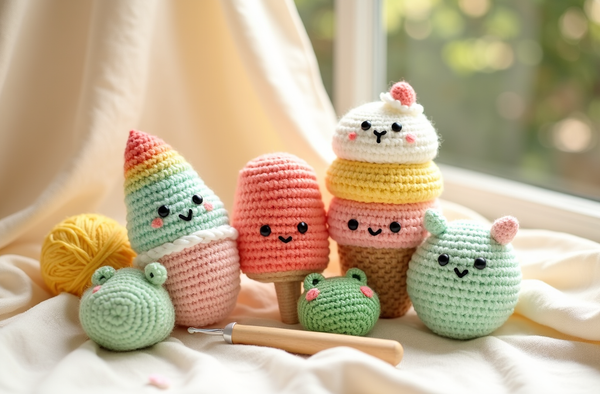
The single crochet is to amigurumi what flour is to bread. You can vary the yarn, the color, the size, the embellishments — but almost every plushie pattern is fundamentally a sequence of single crochets, increases (two sc into one stitch), and decreases (two stitches worked together as one). Master those three motions and the entire amigurumi world is open.
Most amigurumi pieces begin with 6 single crochets in a magic ring. The second round increases each of those 6 stitches to 12. The third round increases every other stitch to 18. By round five or six, the piece is large enough to form the shape of a head or body. Stuffing slips in, the bottom closes, and the plushie is born — all built on the single crochet.
This is why we tell beginners: spend one focused hour learning the single crochet, and you can finish your first amigurumi the same week.
Practice Patterns: Use Your New Stitch Today
The fastest path to single-crochet muscle memory is to use it inside a real pattern. The following projects all rely almost entirely on the single crochet — so each one becomes a focused practice session.
🧶 Patterns Built on Single Crochets
- Free Giraffe Crochet Pattern — Our completely free no-sew amigurumi. Built from 95% single crochets and 5% increases/decreases. Perfect first plushie.
- 50+ No-Sew Amigurumi Bundle — Fifty patterns, all single-crochet-based. Hours of focused stitch practice with adorable results.
- Care Bears 4-in-1 Bundle — Four bears, all single crochet. Tight, sturdy fabric perfect for cuddling.
- Fantasy Crochet Bundle — Six fantasy characters built on the same stitches you just learned.
- Easy No-Sew Amigurumi Book — Print-ready beginner book that teaches the single crochet step-by-step on page two.
50+ No-Sew Amigurumi — Crochet Bundle PDF
Fifty beginner-friendly plushie patterns. Each one is essentially a focused single-crochet workout that ends with a cute completed plushie. The fastest possible way to make the stitch automatic for life.
$14.90 — instant PDF download View the Bundle →Frequently Asked Questions — Single Crochet
What does sc mean in crochet?
"sc" is the standard abbreviation for "single crochet" in US patterns. It is the shortest, densest basic crochet stitch and the foundation of most amigurumi.
Is single crochet the same as double crochet?
No. In US terms, a single crochet uses one yarn over; a double crochet uses one yarn over before insertion plus two pull-throughs and is roughly twice the height. In UK terms, however, "double crochet" is what US calls "single crochet" — always check which terminology your pattern uses.
How do you start a single crochet row?
Chain the number of stitches your pattern calls for, then insert your hook into the second chain from the hook for your first sc. The skipped chain becomes your turning chain — it does not count as a stitch.
Does the chain-1 turning chain count as a single crochet?
No. In single crochet, the chain-1 at the start of each row is purely for height. Your first real sc is worked into the very first stitch of the row below.
How do you count single crochet stitches?
Look at the top edge of your row. Each completed single crochet creates a small "V" shape. Count the Vs across the row. In amigurumi spirals, place a stitch marker in the first stitch of each round and count from there.
Why does my single crochet curl?
Most often, tension is too tight or your hook is too small for the yarn. Loosen your grip and try one hook size larger. A small amount of curl is normal for the first few rows — it usually relaxes once the fabric is large enough to lie flat.
Why is my row getting shorter every time?
You are skipping the first stitch of each new row, usually because you are counting the chain-1 turning chain as a stitch. In single crochet, the chain-1 never counts. Always work into the first true stitch of the previous row.
What is the difference between sc in rows and sc in the round?
Mechanically, the stitch is identical. The difference is direction: in rows you turn at the end of each row and use a chain-1 turning chain; in the round (amigurumi), you spiral continuously in the same direction without turning, using a stitch marker to track round starts.
How long does it take to learn single crochet?
Most beginners can produce neat single crochets within 30 to 60 minutes of focused practice. Muscle memory takes a few hundred stitches — about one small amigurumi piece.
Can I make a whole blanket out of just single crochet?
Yes, and many beginners do. A simple single-crochet blanket produces a dense, sturdy, warm fabric. It just takes longer than a double-crochet blanket because each row is shorter.
Wrap-Up: One Stitch, Infinite Possibilities
The single crochet is small but mighty. It is the difference between staring at Pinterest and actually finishing your first plushie. The motion is four small steps repeated — insert, yarn over, pull through, yarn over, pull through both — and once your fingers learn it, the rest of crochet falls into place. Increases, decreases, color changes, amigurumi, hats, dishcloths, blankets — they all start with this one stitch.
If you are ready to put your single crochet to work, our free Giraffe pattern is your softest landing — one small no-sew amigurumi built almost entirely from single crochets, perfect for your very first finished plushie.
🧶 Practice Single Crochet on 50+ Cute Patterns
Our No-Sew Amigurumi Bundle gives you fifty beginner-friendly plushie patterns — all built on the same single crochet you just learned. The fastest way to make the stitch automatic for life.
Get the 50+ Bundle — $14.90 →