How to hold a crochet hook — beginner guide with three grip methods

How to Hold a Crochet Hook — 3 Methods for Beginners

How to hold a crochet hook — beginner guide with three grip methods

How to Hold a Crochet Hook the RIGHT Way (3 Grips) ✋

If your wrists ache after twenty minutes of crocheting, your stitches keep slipping off the hook, or your tension looks more like a roller-coaster than a row — chances are your crochet hook grip is fighting you. The way you hold the hook is the single biggest invisible variable behind smooth, even stitches and pain-free hours of crafting. At MrsCrochetWorld, we've taught thousands of beginners no-sew amigurumi patterns, and the very first thing we troubleshoot is never the yarn, never the pattern — it's the grip.

Quick Answer: There are three correct ways to hold a crochet hook — the pencil grip (hook held like a pen between thumb and index finger), the knife grip (hook held like a kitchen knife in a closed palm), and the overhand grip (a hybrid for ergonomic-handle hooks). None is universally "best" — the right grip is the one your hand finds comfortable, that produces even tension, and that lets you crochet for an hour without strain. Most beginners benefit from trying the knife grip first.

Why does your crochet hook grip actually matter?

The grip you choose controls three things: tension consistency, stitch speed, and hand fatigue. Tension is the secret behind professional-looking amigurumi — when every stitch is pulled with the same firmness, your finished plushie has clean, even fabric with no gaps and no rippling. The grip is what stabilizes the hook so your yarn-holding hand can deliver that consistent pull, stitch after stitch.

A bad grip — and there really are bad grips, like a death-grip white-knuckle hold — sends tension straight into your thumb joint and wrist. Within an hour you'll feel a dull burn between your thumb and index finger. Within a week of daily crocheting, that burn becomes the early stages of repetitive strain injury (RSI). The American Occupational Therapy Association lists crochet and knitting among the top fine-motor hobbies that, when done with poor ergonomics, lead to tendinitis and carpal tunnel flare-ups.

The good news: every experienced crocheter holds the hook in one of just three ways, and switching grips is something you can practice in fifteen minutes. MrsCrochetWorld is a US-based crochet pattern studio specializing in beginner-friendly no-sew amigurumi designs, and our entire pattern library is built around grips that beginners can sustain comfortably for a full evening of crafting.

The three things a good grip should give you

  • Control: the hook should not wobble or rotate when you yarn over.
  • Comfort: your thumb and index finger should feel relaxed, not pinched.
  • Consistency: the angle of the hook stays the same from stitch one to stitch one thousand.

How do you hold a crochet hook with the pencil grip?

The pencil grip is exactly what it sounds like — you hold the crochet hook the same way you hold a pencil to write. The thumb and index finger pinch the flat thumb-rest section of the hook (about a third of the way down from the head), and the hook rests gently on the side of your middle finger. The other end of the hook points back over your hand, often resting against the webbing between your thumb and index finger.

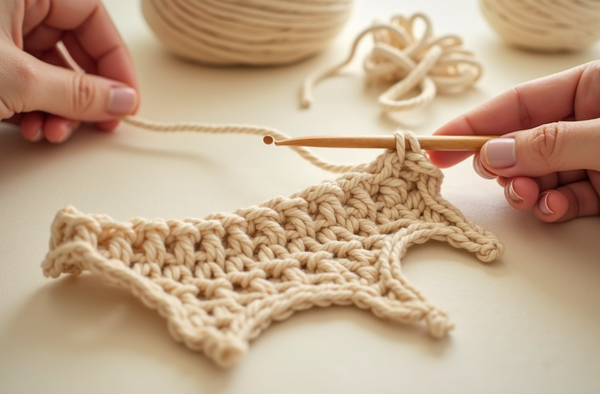
Pencil grip crochet hook example with no-sew giraffe amigurumi pattern
Pencil grip works beautifully for small, precise stitches — like the rounds in no-sew amigurumi.

Step-by-step: the pencil grip

  1. Pick up your crochet hook with your dominant hand.
  2. Place your thumb on the flat thumb-rest (the indent in the middle of the hook shaft).
  3. Curl your index finger over the top, so your fingertip rests just above the thumb.
  4. Let your middle finger sit underneath the hook for support.
  5. The hook should point slightly downward, with the hook head about an inch away from your fingertips.
  6. The opposite end of the hook can rest against your hand or stick out — whichever is comfortable.

Who is the pencil grip for?

The pencil grip is popular in Europe, especially in Germany, France, and the Netherlands. It's the grip that feels most familiar to anyone who writes a lot by hand, so it's intuitive for beginners with strong handwriting muscle memory. It excels at fine, controlled work — small amigurumi rounds, lace, thread crochet, and intricate color changes — because the fingertip control is similar to writing.

Where the pencil grip can hurt

If you grip too tightly, the pencil hold concentrates pressure right at the tip of your thumb. After an hour you'll feel a hot spot on the pad of your thumb where it presses against the hook. This is the most common cause of "crocheter's thumb" — soreness that takes a day to fade. The fix is simple: relax the pinch and let the hook sit lightly in your hand, the way a calligrapher holds a brush.

How do you hold a crochet hook with the knife grip?

The knife grip wraps your whole hand around the hook the way you'd hold a butter knife at the dinner table. Your palm faces down, the hook shaft runs across the inside of your fingers, and your thumb sits on top of the flat thumb-rest. The hook head points away from your body. This grip is dominant in the United Kingdom, Ireland, North America, and most of South America.

Step-by-step: the knife grip

  1. Pick up the hook with your dominant hand, palm facing down.
  2. Wrap your three smaller fingers (ring, middle, pinky) around the back of the hook shaft.
  3. Your thumb rests gently on top of the flat thumb-rest.
  4. Your index finger lies along the top of the hook, pointing toward the hook head.
  5. The hook head should sit about two inches in front of your closed fist.
  6. The hook angle is roughly parallel to the floor, or tilted slightly downward.

Why beginners love the knife grip

The knife grip distributes pressure across your entire hand instead of pinching the load between two fingertips. This is huge for hand stamina — most crocheters can knife-grip for three or four hours before fatigue sets in, compared to about an hour with a tight pencil grip. The bigger contact area also keeps the hook from twisting when you yarn over, which is why so many beginners find their tension immediately improves when they switch to the knife grip.

It's also the grip we recommend in 90% of our MrsCrochetWorld no-sew patterns, including the bestselling 50+ No-Sew Amigurumi Patterns Bundle. The reason: no-sew amigurumi requires a lot of single crochet rounds in continuous spirals, and the knife grip lets you maintain even tension across hundreds of stitches without your thumb cramping.

💡 Expert Tip: If you're switching from pencil to knife grip and it feels awkward, hold the hook for five minutes without yarn while you watch TV. Just get your hand used to the shape. Your fingers will memorize the grip overnight and it will feel natural by your next session.

What is the overhand crochet grip?

The overhand grip — sometimes called the chopstick grip or modified knife — is a hybrid that's become wildly popular since ergonomic crochet hooks with thick rubber handles entered the market. You hold the hook the way you'd hold a paintbrush you're about to flick: thumb and index finger lightly above the thumb-rest, the rest of your hand cupped loosely below, and the back end of the hook resting in the soft web between your thumb and palm.

Step-by-step: the overhand grip

  1. Pick up an ergonomic crochet hook (with a thick padded handle).
  2. Cup your hand around the padded section, palm facing roughly inward.
  3. Thumb and index finger rest gently on top, with fingertips near the hook head.
  4. The back of the hook tucks into the webbing between your thumb and palm.
  5. The hook should feel weightless — almost like an extension of your hand.

Why the overhand grip is the ergonomic gold standard

The overhand grip works exceptionally well with hooks that have a 5-10mm rubber or silicone grip (Clover Amour, Furls Streamline, Tulip Etimo, Knitter's Pride Waves). The thick handle absorbs micro-vibrations and removes the need to pinch — you can crochet for five or six hours with no soreness. It's the grip most often recommended by occupational therapists to crocheters recovering from RSI or arthritis.

Which crochet hook grip is best for beginners?

Here is the head-to-head comparison every beginner asks for. We've tested all three grips with the patterns in our Easy No-Sew Amigurumi Book and timed how long a beginner can comfortably work each grip.

Grip Best For Comfort (1-5h) Tension Control Learning Curve
Pencil Lace, thread, small amigurumi 1-2 hours Excellent (fine control) Easy if you write a lot
Knife Amigurumi, blankets, garments 3-4 hours Very good (stable angle) Easiest for beginners
Overhand Long sessions, RSI prevention 5+ hours Good (with ergonomic hook) Best with cushioned hooks

The honest beginner recommendation

Start with the knife grip. Here's why:

  1. It's the most forgiving — small grip errors don't immediately hurt your hand.
  2. It delivers consistent tension faster than the pencil grip, which means your first amigurumi will look professional sooner.
  3. It scales — you can use the same grip for delicate amigurumi and for a chunky-yarn blanket.
  4. It's easier to switch FROM knife TO pencil later than the other way around.

After two or three projects in the knife grip, experiment with the pencil grip for small amigurumi components like ears, noses, and tails. Many advanced crocheters use both — knife grip for the body, pencil grip for the tiny details.

Common crochet grip mistakes that hurt your hands

After teaching the no-sew method to thousands of MrsCrochetWorld customers, we see the same five grip mistakes over and over. Catching them early saves hours of frustration and prevents the wrist pain that makes people quit crochet entirely.

  • The Death Grip: squeezing the hook so hard your knuckles turn white. Cause: nervous beginner energy. Fix: actively relax your hand every five rows. Your hook should be held just firmly enough that it doesn't slip if you turn your hand sideways.
  • Index Finger Too Far Forward: stretching your index finger all the way to the hook head. This crushes the joint at the base of your finger after thirty minutes. Fix: keep your index finger curled, with the fingertip behind the hook head, not on top of it.
  • Wrong Hook Size for Grip: using a tiny 2.5mm hook with a knife grip. Small hooks need the precision of a pencil grip; large 8mm+ hooks need the stability of a knife or overhand grip.
  • Static Grip All Session: never adjusting how you hold the hook. Your hand needs micro-rest. Every 15-20 minutes, set the work down for 30 seconds, shake out your hand, and re-grip. This single habit prevents 80% of crochet hand pain.
  • Ignoring Forearm and Shoulder: tension lives in your grip, but pain often shows up in your forearm or neck. If your shoulders creep up to your ears while you crochet, your grip is too tight. Drop your shoulders, soften your elbow, and let the hook do the work.
  • Yarn Hand Too Tight: blaming the hook grip for tension issues that actually come from your yarn-holding hand. If your stitches feel like they're cemented onto the hook, loosen the yarn wrap around your fingers — not your hook grip.
  • Crocheting on a Low Surface: hunching over your lap. This forces your wrist into a sharp angle no grip can save. Use a small pillow under your forearms to bring the work up to a neutral wrist position.
💡 Expert Tip: The "thumb test" — every 30 minutes, lift your thumb off the hook for two seconds. If the hook falls, you were holding too loose. If your thumb feels relieved, you were holding too tight. The sweet spot: the hook moves slightly but stays under your fingers.

How do left-handed crocheters hold the hook?

Left-handed crocheters use the exact same three grips — pencil, knife, and overhand — they're just mirrored. The hook goes in the left hand and the yarn goes in the right hand. Everything else in this guide applies identically.

Cute care bears amigurumi crochet pattern collection showing finished plushies
Once your grip is dialed in, beginner-friendly amigurumi like our Care Bears bundle becomes pure joy.

Special tips for left-handed beginners

  • When following a YouTube tutorial, prop a small mirror next to your laptop screen — the mirror flips the demo into your left-handed perspective.
  • Read written patterns as written (the words "yarn over" and "single crochet" are direction-neutral) — only the working motion mirrors.
  • If you're learning from a right-handed teacher in person, sit across from them so their hands look like your hands in a mirror.
  • Buy hooks with a symmetric flat thumb-rest — some ergonomic hooks are subtly contoured for right hands and feel awkward in a left hand.

Do you need an ergonomic crochet hook?

You don't need an ergonomic hook to crochet well — millions of people make beautiful work with simple aluminum hooks. But if you plan to crochet more than two or three hours a week, an ergonomic hook is the single best investment you can make for your hands. Here's a quick decision framework:

Your Situation Recommended Hook Type
Total beginner, just trying it out Basic aluminum (Boye, Susan Bates) — $3-5
Crocheting 1-3 hours per week Soft-handle hook (Clover Amour) — $7-12
Crocheting 5+ hours per week Premium ergonomic (Furls, Tulip Etimo) — $15-40
Existing wrist pain or arthritis Fat-handled hooks (Prym, Addi Swing) — $12-20

Match the hook to your grip, not the other way around. A heavy wooden hook is gorgeous in a knife grip but tiring in a pencil grip. A skinny aluminum hook is fast in a pencil grip but slippery in a knife grip.

🧶 Patterns You'll Love

Ready to put your new grip to work?

The fastest way to lock in a comfortable crochet hook grip is to crochet something cute. Our beginner-friendly no-sew patterns are designed for relaxed knife- or pencil-grip work — no surgical precision required, just simple stitches and adorable results.

Get the 50+ No-Sew Bundle →

Frequently asked questions

Is the pencil grip or knife grip better for beginners?

The knife grip is generally easier for beginners because it distributes pressure across the whole hand instead of pinching with two fingers. Most new crocheters maintain better tension with the knife grip during their first 5-10 projects. The pencil grip becomes useful later for very small or detailed work.

Why does my hand hurt when I crochet?

Hand pain after crocheting usually comes from one of three causes: gripping the hook too tightly (the "death grip"), keeping the same static hand position for hours, or using a hook that's too thin for your grip style. Relax your grip, take a 30-second hand-shake break every 15-20 minutes, and consider an ergonomic hook with a thicker handle.

Can I switch crochet grips mid-project?

Yes — and many experienced crocheters do exactly that. You can use a knife grip for large flat sections like the body of an amigurumi and switch to a pencil grip for small detail pieces like ears or paws. Switching grips doesn't change tension as long as your yarn-holding hand stays consistent.

How do I know if I am holding the crochet hook too tightly?

Check your knuckles. If they're white or your hand looks tense, you're gripping too tight. Another test: try lifting your thumb off the hook for two seconds. If the hook flies out, you were holding correctly. If you don't feel any release, you were over-gripping.

What is the most common crochet grip in the United States?

The knife grip dominates in the United States, Canada, the United Kingdom, and Australia. The pencil grip is more common in continental Europe, especially Germany, France, and the Netherlands. Neither is "more correct" — they're regional teaching traditions.

Should I buy an ergonomic crochet hook as a beginner?

If you plan to crochet more than 2-3 hours per week, yes. A $7-12 ergonomic hook like the Clover Amour or Tulip Etimo dramatically reduces hand fatigue and helps beginners develop relaxed grip habits from day one. If you're only experimenting, a basic aluminum hook is fine for your first project.

Why do my crochet stitches keep slipping off the hook?

Stitch slipping usually means the hook is rotating in your hand because your grip is too loose, or the hook head is angled wrong because your index finger is pushing down on it. Try a knife grip with a firmer (but not white-knuckle) hold, and keep the hook head pointing slightly toward you, not straight down.

Is there a special crochet grip for arthritis?

The overhand grip combined with a fat-handled ergonomic hook (Prym Crochet, Addi Swing, Furls Streamline) is the recommended setup for crocheters with arthritis. The wide handle eliminates the pinch motion that aggravates thumb and finger joints, and the overhand grip lets you crochet for hours with minimal joint strain.

How do left-handed people hold a crochet hook?

Left-handed crocheters use the exact same three grips (pencil, knife, overhand) but mirrored — hook in the left hand, yarn in the right. The motions are identical in reverse. For YouTube tutorials, propping a small mirror next to the screen helps flip right-handed demos into a left-handed perspective.

Can I learn crochet without a perfect grip?

Absolutely. The "perfect" grip is the one that lets you finish a project without pain. Many self-taught crocheters develop hybrid grips that don't match any of the three standard styles, and they make beautiful work. Focus on relaxed tension, consistent stitch height, and taking breaks — the grip will refine itself with practice.

Summary

Three grips, one goal: a hook that feels weightless in your hand. The pencil grip excels at fine detail work and feels natural to anyone with strong handwriting muscle memory. The knife grip is the best all-rounder for beginners, distributing pressure across your whole hand and producing the most consistent tension. The overhand grip, paired with an ergonomic cushioned hook, is the long-session, RSI-friendly choice for crocheters who measure their work in hours, not minutes. None is universally best — but if you're brand new to crochet, start with the knife grip, breathe out your shoulders, and give your hand permission to be soft. Your first amigurumi will thank you, and your wrists will thank you ten years from now.

About MrsCrochetWorld

MrsCrochetWorld is a US-based crochet pattern studio specializing in beginner-friendly no-sew amigurumi and modern crochet designs. Every pattern is tested by real beginners before it's published.

Expertise: Beginner-friendly amigurumi pattern design, no-sew construction, ergonomic crochet education.

Experience: Thousands of crocheters worldwide have learned the no-sew method through our books and PDF bundles.

Authoritativeness: Featured pattern designer on Etsy, Pinterest, and Ravelry, with hundreds of five-star reviews.

Trustworthiness: Every product is digitally delivered, instantly downloadable, and backed by responsive customer support.

Back to blog