


Crochet Hat Size Chart by Age (Newborn to Adult)
Head circumference by age from preemie to adult, finished hat height, and the simple formula so every hat you crochet comes out the right size — the first time.

Crochet hat size chart by age
The table below covers every stage from premature baby to large adult. The "finished hat circumference" column is already sized with standard negative ease built in — meaning the hat is slightly smaller than the head so it hugs rather than slides. All measurements are in inches, with centimeters in parentheses. Whether you are sizing up a newborn crochet hat, a toddler beanie, or an adult beanie size chart entry, this table is your single reference.
| Age / Size | Head circumference | Finished hat circumference | Hat height (no brim) |
|---|---|---|---|
| Preemie | 9–12 in (23–30 cm) | 8–11 in (20–28 cm) | 4–4.5 in (10–11 cm) |
| Newborn (0–3 mo) | 13–14 in (33–36 cm) | 11.5–13 in (29–33 cm) | 5–5.5 in (13–14 cm) |
| Baby (3–6 mo) | 15–17 in (38–43 cm) | 13–15 in (33–38 cm) | 5.5–6.5 in (14–16.5 cm) |
| Baby (6–12 mo) | 17–19 in (43–48 cm) | 15–17 in (38–43 cm) | 6.5–7 in (16.5–18 cm) |
| Toddler (1–3 yr) | 18–20 in (46–51 cm) | 16–18 in (41–46 cm) | 7–7.5 in (18–19 cm) |
| Child (3–10 yr) | 19–21 in (48–53 cm) | 17–19 in (43–48 cm) | 7.5–8 in (19–20 cm) |
| Pre-teen / Teen | 20.5–22 in (52–56 cm) | 19–20.5 in (48–52 cm) | 8–8.5 in (20–21.5 cm) |
| Adult S / Women's average | 21–22 in (53–56 cm) | 19.5–21 in (49.5–53 cm) | 8.5–9 in (21.5–23 cm) |
| Adult M / Men's average | 22–23 in (56–58 cm) | 20.5–22 in (52–56 cm) | 9–9.5 in (23–24 cm) |
| Adult L / Men's large | 23–24 in (58–61 cm) | 21–22.5 in (53–57 cm) | 9.5–10 in (24–25.5 cm) |
The "finished hat circumference" is already 1 to 2 inches smaller than the head circumference. For very stretchy stitches (shell stitch, mesh) subtract closer to 2 inches. For firm, dense fabric (single crochet in the round) subtract about 1 inch.
How to measure head circumference for a hat
Accurate measuring takes about thirty seconds and makes the difference between a hat that perches on top and one that actually fits.
- Use a flexible tape measure — a fabric sewing tape is ideal. A strip of string measured against a ruler works fine if you do not have one.
- Position it correctly. Wrap the tape around the head approximately one inch (2.5 cm) above the eyebrows and across the widest part of the back of the skull — the occipital bone. This is exactly where a hat brim sits.
- Keep it level and snug but not tight. The tape should lie flat against the head all the way around without compressing the hair. Thick, voluminous hair can add half an inch or more — if the recipient wears their hair out, measure over it.
- Read at the point where the tape meets zero. Note the measurement in inches. If you land between two sizes on the crochet hat size chart above, go with the smaller finished measurement — the hat's stretch will cover the gap.
- Measure twice if the result seems surprising. Heads are not always symmetrical and tape can twist slightly.
If you cannot measure the person directly — for surprise gifts, babies at a distance, or custom orders — the age column in the chart above gives reliable averages. Most adult heads fall in the 21 to 23 inch range, which is why the majority of beanie patterns are sized for that window. Once you have your measurement in hand, the gauge calculator can confirm how many stitches your specific yarn-and-hook combination needs to hit that circumference.
Put your skills to work — hat-friendly patterns
Once you have the right measurements, all you need is a great pattern. These MrsCrochetWorld bundles give you plenty to choose from.

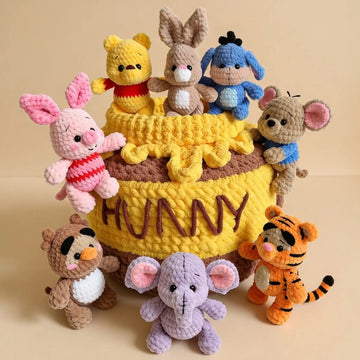
50 No-Sew Amigurumi Bundle
BestsellerFifty fully written amigurumi patterns in US terms — all designed to be finished without sewing. If you are already comfortable sizing hats, these structured patterns will feel instantly familiar. Browse the full free patterns collection for starter options before diving in.

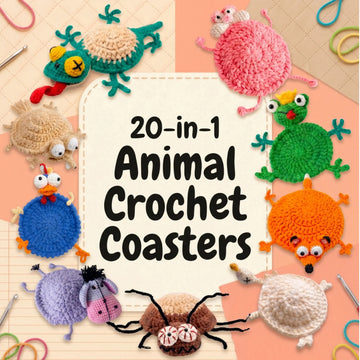
Easy No-Sew Amigurumi — Beginner Book
Great for beginnersFifty simple, beginner-friendly plushie patterns written clearly in US terms with step-by-step guidance. The same careful sizing and gauge thinking that goes into hats applies here — learn the principles once and they carry across every project. Pair it with our complete beginner guide for a solid foundation.

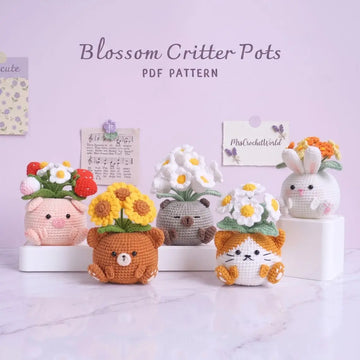
9-in-1 Flower Crochet Bundle
Stunning gift ideaNine distinct flower designs — roses, tulips, iris, daffodil, and more — each written with the same clear US-terms standard as all MrsCrochetWorld patterns. Stitch one onto a finished beanie as a corsage detail and personalize any hat from your size chart. See all pattern options in the full collection.
What size hat to crochet when you cannot measure
When measuring in person is not an option, use these practical shortcuts. For a newborn or baby gift, use the chart and lean toward the larger end — babies grow fast and a slightly roomy hat will still fit. For an adult you know well but cannot measure, 22 inches (56 cm) is the safest single size: it fits the majority of women's and men's heads and stretches enough to accommodate slightly larger heads. For a child, ask the parent which hat size they are buying from a store — "toddler," "child small," or "youth" maps directly to the age ranges in the crochet hat size chart above.
For mail-order knit or crochet gifts, remember that most pattern writers design for the middle of the adult range. If the recipient is petite or has a notably large head, use the specific row in the beanie size chart above rather than relying on the pattern's default size label.
The crochet hat sizing formula explained
Two simple rules govern almost every well-fitting crochet hat. Understanding them lets you adjust any pattern for any head without buying a new pattern.
Rule 1 — Circumference: build in negative ease
Negative ease means the finished hat is slightly smaller than the head it fits. The hat stretches over the head and the crochet fabric grips, keeping the hat from falling down. The standard range for crochet hats is 1 to 2 inches (2.5 to 5 cm) of negative ease. Use 1 inch for firm, dense stitches like single crochet; use up to 2 inches for lacy or stretchy patterns. More than 2 inches of ease risks the hat being so tight it leaves marks; less than 1 inch and it may be too loose to stay put.
Rule 2 — Height: use the one-third formula
A beanie that sits neatly at the ears without bunching at the crown or leaving a gap at the top follows a simple ratio: hat height equals roughly one-third of the head circumference. For a 22-inch head, that gives about 7.3 inches — round to 7.5 inches. Add 1 to 1.5 inches on top of that if you want a folded cuff or brim. Slouchy beanies deliberately break this rule: add 2 to 3 extra inches of height to get that relaxed, draped look. Fitted or "sport" beanies sit closer to the one-third formula or even slightly less.
Adjusting stitch count when resizing
If a pattern is written for a 20-inch hat but you need 22 inches, you need to add stitches — but how many depends on your gauge. First establish your crochet gauge: count how many stitches fit in one inch for your yarn and hook combination. Multiply that by the extra inches (2 inches in our example). Round to the nearest even number, or to whatever number keeps your stitch repeat intact. For a stitch repeat of 4, round to the nearest multiple of 4. This same logic applies to resizing a child's hat up to a teen's, or an adult small up to a large. Our yarn and hook size guide shows the standard hook sizes paired with each yarn weight, which helps you predict your gauge before swatching.
"When in doubt, measure twice and crochet to the smaller end of the range — crochet stretches, and a hat that fits snugly is always warmer and more flattering than one that slides."— Ava, MrsCrochetWorld
Hat height for different hat styles
Not all crochet hats use the same height. The style you choose should guide how tall you make it. A slouchy beanie, a classic fitted beanie, a baby bonnet, and a newsboy cap all start from different height targets even when made for the same head circumference.
| Hat style | Height formula | Notes |
|---|---|---|
| Classic beanie (no brim) | Head circumference / 3 | Sits at or just above the ears. Most universal fit. |
| Beanie with folded cuff | Head circumference / 3 + 1.5 to 2 in | The extra height folds over to form the brim, so the visible portion equals the base formula. |
| Slouchy beanie | Head circumference / 3 + 2 to 3 in | The extra length drapes and folds at the crown. More ease in circumference also helps the slouch. |
| Fitted / sport hat | Head circumference / 3 - 0.5 in | Sits snugly without overhang. Popular for athletic wear. |
| Newsboy / flat cap | Head circumference / 3.5 to 4 | Shorter dome with a structured brim attached separately. The brim is measured and added on. |
| Baby bonnet | Head circumference / 2.5 to 3 (with tie allowance) | Covers more of the head and cheeks; ties under the chin add stability. Use lighter yarns. |
Yarn weight and hook size for crochet hats
The yarn you choose affects both the gauge and the finished look and feel of the hat. Here are the most popular combinations and what they produce. If you want to learn how to select the right yarn before you start, our guide to best yarn for beginners covers every weight and fiber in plain terms.
Worsted weight (the most popular choice)
Worsted weight is the go-to for most crochet hat patterns. It works up quickly, gives a medium-weight fabric that is warm without being heavy, and is widely available. Hook sizes in the 5 mm to 5.5 mm (US H-8 to I-9) range are standard. Typical gauge: 14 to 16 stitches per 4 inches in single crochet. Consult the yarn and hook guide for full weight and hook pairings.
Bulky and super bulky
Bulky yarn crochets fast — an adult beanie in super bulky can be finished in an hour. The trade-off is a thicker, stiffer fabric and higher yarn consumption. Use a 10 mm to 12 mm hook. Bulky hats are excellent for winter wear but can feel heavy on small babies, so reserve them for toddler and adult sizes.
DK and sport weight
These lighter weights produce a thinner, drapier hat — ideal for spring and fall or for detailed textured stitches that show up beautifully in finer yarn. DK works well on a 4 mm hook (US G-6). The finished hat is lighter and slightly more form-fitting. Great for baby hats where a thinner fabric is more comfortable and easier to wash.
Fiber choice matters for babies
For newborn and baby hats, avoid scratchy wool and stick to soft, machine-washable fibers: superwash merino, cotton, bamboo blends, or premium acrylic. Baby skin is sensitive and parents appreciate easy-care fabrics. For newborn hats especially, a soft DK or fingering-weight cotton in a bright, high-contrast color is both comfortable and developmentally engaging for the baby.
Common hat sizing mistakes and how to fix them
Most poorly fitting crochet hats come down to one of six avoidable errors.
Skipping a gauge swatch
Even half a stitch off per inch adds up across the full circumference of a hat. Work a small swatch and compare it to the pattern's gauge before casting on. The gauge calculator makes the math instant.
Using the head circumference as the finished size
The hat needs to be 1 to 2 inches smaller than the head — not the same size. A hat crocheted to the exact head measurement will be loose and may fall forward.
Making the hat too tall or too short
Ignoring the height formula leaves hats that bunch at the crown or barely cover the ears. Measure as you go and use the one-third rule as your guide throughout the project.
Using the wrong yarn weight
Swapping a bulky yarn into a worsted-weight pattern changes the gauge completely. Always match the yarn weight to the pattern, or recalculate your gauge using the yarn and hook guide.
Starting increases too quickly at the crown
If the flat crown circle grows too fast, the hat will flare and splay at the top rather than lying smooth. Follow the pattern's stitch count at each increase round exactly.
Ignoring negative ease for stretchy stitches
Lacy or shell-stitch patterns stretch far more than single crochet. Use 2 inches of negative ease for very open stitches, and test the fabric's stretch before committing to a full hat.
Reading a crochet hat pattern: what the numbers mean
Crochet hat patterns use a handful of consistent shorthand that trips up newer makers. Understanding the numbers makes it much easier to size correctly. If you are still learning pattern notation, the guide on how to read a crochet pattern explains every element in plain English.
Gauge line
Almost every well-written hat pattern opens with a gauge statement such as "14 sc and 16 rows = 4 inches." That is the designer's stitch density. If your gauge is different, the hat will come out a different size. Match this number before you start. Our free gauge calculator will tell you instantly whether you need to change your hook.
Size options
Patterns for multiple sizes typically list stitch counts in parentheses: for example, "chain 60 (66, 72, 80)" means 60 stitches for the smallest size and 80 for the largest. Work through the pattern always using the numbers for your chosen size — it is easy to skip to the wrong number mid-row. Circle or highlight your size before you begin.
US vs. UK crochet terms
Hat patterns use standard stitch names — but a "double crochet" in a US pattern is a "treble crochet" in a UK pattern. Always check which convention the designer is using. Our US to UK crochet terms chart has the full comparison, and the crochet abbreviations chart covers every stitch shorthand you will encounter.
Working in the round
Most crochet hats are worked from the crown downward in continuous rounds, or from the brim upward. The crown-down method is the most common: start with a magic ring, increase in each round until the crown circle is the right diameter, then work straight (no increases) until the hat reaches the correct height. Counting rounds correctly is crucial — our guide on how to count crochet stitches and rows walks through the exact technique.
Crown diameter: how to know when to stop increasing
This is the question that causes the most confusion in top-down hat construction. The flat crown circle should reach a specific diameter before you switch to working straight. The correct diameter is the same as the hat's intended height — because when you fold the flat circle up into a dome, the radius of the circle becomes the depth of the hat. Here is the simple check:
Target diameter = finished hat height (from the beanie size chart above)
Lay the crown flat on a table. Measure straight across the widest point. Once that measurement equals your target height from the chart, stop increasing and begin your straight rounds. For a child's hat with a target height of 8 inches, keep increasing until the flat circle is 8 inches across. You do not need any math beyond that — the geometry does the work.
How many stitches per round for a crochet hat?
The total stitch count in the body of the hat — the straight portion after the crown — determines circumference. Divide your gauge (stitches per inch) by one, then multiply by the finished hat circumference from the chart. For example, if your gauge is 4 stitches per inch and you need a 20-inch hat circumference: 4 × 20 = 80 stitches total. That is your working stitch count for the body rounds. Adjust up or down to the nearest multiple of your stitch repeat. Need help working this out? The crochet yarn calculator can help you estimate yardage once you know your stitch count.
How much yarn does a crochet hat use?
Yarn consumption varies by stitch density, yarn weight, and hat size, but these are useful planning figures. A classic worsted-weight adult beanie typically uses 100 to 200 yards (90 to 180 meters). A newborn hat uses 50 to 75 yards. A bulky adult hat can be done in 80 to 120 yards of super bulky. Check the yarn label for yardage per skein and add 10 to 15 percent for safety. Detailed yardage estimates by project type are available via the yarn calculator.
Stitch density reference by common hat stitches
Different stitches produce different gauges even with the same yarn and hook. Understanding this helps you choose a stitch that will hit your target circumference without fighting your gauge. Single crochet produces the tightest, densest fabric — more stitches per inch and a firmer hat. Half double crochet is slightly looser and produces a softer drape. Double crochet opens up significantly and creates a more flexible, drapier hat — excellent for adult beanies but can look bulky on baby hats. Textured stitches like moss stitch or berry stitch fall between single and half double. If you are not sure which stitch your pattern uses, the crochet glossary defines every stitch in plain terms, and the abbreviations chart decodes the shorthand.
Sizing a crochet hat for special cases
The standard crochet hat size chart covers most situations, but a few special cases call for extra thought.
Preemie and NICU hats
Hats for premature babies need to be made with extra care. Preemie heads can measure as small as 9 inches, and the hat should cover the head fully without covering the face. Use the softest, most breathable fiber you can find — fingering-weight cotton is ideal. Avoid wool even if it is labeled "soft," since preemie skin is uniquely delicate. If you are donating hats to a NICU, always check with the hospital for their specific size and material guidelines, as requirements vary by unit.
Sizing for people with medical hair loss
For chemotherapy patients or those with alopecia, the standard head measurement still applies, but comfort details matter far more. Choose the softest bamboo-cotton blend you can find, keep seams minimal, and add 0.5 inch to the finished circumference — a hat that is very slightly roomier is more comfortable to wear for long periods on bare skin. Height should cover the ears fully, so lean toward the top of the range in the chart.
Hats with earflaps
Earflap beanies use the same head circumference measurement but require an additional measurement: the distance from one ear to the other, measured across the top of the head. This determines where the earflaps are attached and how wide they need to be. The body of an earflap hat is typically 1 to 1.5 inches shorter than a standard beanie, since the earflaps extend the coverage downward.
Crochet hat sizing for dolls and amigurumi
Miniature hats for amigurumi or doll characters scale down proportionally. Measure the doll's head circumference the same way you would a person's — a flexible tape or string around the widest point. Apply the same 10 to 15 percent negative ease. For a doll with a 6-inch head circumference, the finished hat should be about 5 to 5.5 inches around. See the full range of MrsCrochetWorld patterns for amigurumi designs that pair well with custom hats.
Tension and its effect on hat sizing
Even experienced crocheters sometimes find their finished hat does not match the chart — and the culprit is almost always tension rather than measuring error. Tension is the tightness or looseness with which you hold the yarn as you crochet. Tight tension produces smaller, denser stitches; loose tension produces larger, airier ones.
The practical effect: if your tension is slightly tighter than the pattern's gauge, your hat will come out smaller. If you are looser, it will come out larger. A difference of just half a stitch per inch across a 22-inch hat adds up to more than an inch of circumference error — enough to move from a comfortable fit to one that is uncomfortably tight or noticeably baggy. The fix is always to swatch first and adjust your hook size before starting the hat itself. A detailed explanation of why tension varies and how to correct it is in our guide on how to get even crochet tension. For a complete picture of how hook size, yarn, and tension interact, visit the free tools and charts hub.
Crochet hat sizing FAQ
The most common questions about hat sizing, answered clearly and completely.
What size is a standard newborn crochet hat?
A newborn crochet hat is made approximately 11.5 to 13 inches (29 to 33 cm) around, with a height of 5 to 5.5 inches (13 to 14 cm). This fits a head circumference of 13 to 14 inches, which is the average for a full-term newborn in the 0 to 3 month range.
How much smaller should a crochet hat be than the head circumference?
Make the hat 1 to 2 inches (2.5 to 5 cm) smaller than the measured head circumference. This negative ease allows the crochet fabric to stretch over the head and grip snugly. Use 1 inch for dense stitches like single crochet and up to 2 inches for stretchy or lacy stitches.
What is the average adult crochet hat size?
The average adult head circumference is 21 to 23 inches (53 to 58 cm). Most adult crochet hat patterns are written for a finished circumference of 20 to 22 inches (51 to 56 cm) for women and 21 to 22.5 inches (53 to 57 cm) for men, with a hat height of 9 to 10 inches.
How tall should a crochet beanie be?
A classic beanie height equals roughly the head circumference divided by three. For an adult with a 22-inch head, that is approximately 7 to 7.5 inches. Add 1.5 to 2 inches for a folded cuff. Add 2 to 3 inches for a slouchy beanie. These figures are in the hat height column of the crochet hat size chart above.
How do I measure my head for a crochet hat?
Wrap a flexible tape measure around your head about 1 inch above the eyebrows and across the widest part of the back of the skull. Keep the tape level and snug without compressing the hair. Read the measurement in inches. If you land between two sizes, go with the smaller finished hat measurement since crochet stretches to fill the gap.
What size crochet hat should I make for a toddler?
For a toddler aged 1 to 3 years, the average head circumference is 18 to 20 inches (46 to 51 cm). Crochet the hat 16 to 18 inches around with a height of 7 to 7.5 inches. If you are making a hat as a gift without measuring, lean toward 18 inches — toddlers grow quickly.
What is the difference between a baby hat and a newborn hat size?
A newborn hat (0 to 3 months) fits a head circumference of 13 to 14 inches and is made approximately 11.5 to 13 inches around. A baby hat for 3 to 6 months fits a head of 15 to 17 inches and is made 13 to 15 inches around. The height increases by about half an inch between each stage.
What does the hat height column in the size chart mean?
Hat height is the measurement from the brim edge to the top of the finished hat, with the hat sitting flat. It does not include any folded cuff — unfold the brim before measuring. The figures in the chart are for a standard single-layer beanie. Add 1.5 to 2 inches to those figures if your pattern has a fold-up cuff.
Can I use this hat size chart for knitted hats too?
Yes. Head circumference by age is the same regardless of craft. The finished circumference and negative ease guidelines also apply equally to knit hats, since both knitting and crochet produce stretchy fabric. The hat height formula works the same way. The main difference is that knitted fabric typically has more stretch than crochet, so knit hat patterns often use slightly more negative ease — up to 2 to 3 inches.
Find a hat pattern sized for every head
All MrsCrochetWorld patterns list the target size and gauge up front so you can match the crochet hat size chart and start with confidence. Browse free patterns or the full collection below. And when you are ready to take on a bigger project, the crochet blanket size chart uses the same systematic approach for throws and afghans.
Browse all patterns More free tools and chartsLoved by 5,000+ crocheters
Instant PDF downloads — start making in the next five minutes.
Put your new skills to use
Ready for your next crochet project?
Choose a beginner-friendly pattern with clear US terms, helpful photos and an instant PDF download.
Browse beginner-friendly patternsKeep learning — explore the hub 🧶
Pick your next topic. Every free guide, chart and calculator is one tap away.
From the Crochet Blog 📖
View all articles →
Best Yarn for Amigurumi: The Complete Guide to Choosing the Right Fiber
Crochet Tips & How-To Best Yarn for Amigurumi: The Complete Guide to Choosing the Right Fiber Cotton, chenille, or acrylic? Learn exactly which yarn gives your...
Read full article
Crochet for Mindfulness: Present-Moment Focus with Hook and Yarn
Crochet Wellness Crochet for Mindfulness: Present-Moment Focus with Hook and Yarn How the quiet rhythm of stitching pulls you into the present moment — and how...
Read full article
Squishy Summer Buddies: Easy No-Sew Summer Amigurumi Patterns (2026)
Summer Crochet · No-Sew · Beginner By Ava Collins · Updated July 2026 · 🕑 8 min read 🕑 10 min read Squishy Summer Buddies: Easy No-Sew...
Read full article
How to Join Yarn in Crochet: 5 Clean Methods for Seamless Projects
Ran out of yarn mid-row? Learn 5 clean, beginner-friendly ways to join yarn in crochet - the invisible join, magic knot, Russian join and more -...
Read full article