


Crochet Skill Level Guide – Beginner to Advanced
Beginner, easy, intermediate, advanced — what do those labels actually mean, and how do you pick the right crochet pattern for where you are right now? This guide cuts through the confusion and puts you on the fastest path to projects you will finish and love.

Every crochet pattern comes with a skill label. But those labels — beginner, easy, intermediate, advanced — mean different things depending on who wrote the pattern and what organization they follow. The result? A confident beginner picks up a pattern marked "easy" and gets blindsided by an unfamiliar stitch. An intermediate crocheter ignores "beginner" labels and misses genuinely enjoyable projects. This guide gives you a precise, plain-English map of every crochet skill level so you can match yourself to the right pattern every single time.
Why crochet skill level labels matter
Matching your skills to a pattern is the single biggest factor in whether you finish a project — and enjoy it.
The Craft Yarn Council (CYC) publishes the most widely used standardized skill level system in the United States. Their four-tier framework — Beginner, Easy, Intermediate, and Experienced (often relabeled Advanced by indie designers) — gives publishers and makers a shared vocabulary. When a designer follows those definitions, the label genuinely predicts what skills you need. When they do not follow them, or use their own scale, the label can mislead.
Understanding the underlying skills behind each label makes you independent of any one designer's usage. Instead of trusting a word on a cover, you can scan a pattern's stitch list and technique notes and self-assess in under two minutes. That skill alone will save you from dozens of frustrating abandoned projects over your crochet lifetime.
If you are still learning the vocabulary — what "magic ring," "invisible decrease," or "sc2tog" mean — bookmark our crochet glossary before reading further. It will make every pattern description you encounter far easier to decode.
The four crochet skill levels — a definitive breakdown
Here is what each level actually requires, in plain US crochet terms.
| Level | Stitches & Techniques | Typical Projects | Hook Range |
|---|---|---|---|
| Beginner | Chain (ch), slip stitch (sl st), single crochet (sc), magic ring, working in the round, fasten off & weave in ends | Simple flat squares, no-sew amigurumi, scarves, dishcloths | 4.0 mm – 5.0 mm |
| Easy | Half double crochet (hdc), double crochet (dc), basic increases, basic decreases (sc2tog), simple stripe color changes | Hats, simple bags, flat animal shapes, coasters with detail | 4.0 mm – 6.0 mm |
| Intermediate | Invisible decrease, treble crochet (tr), back/front loop only (BLO/FLO), seaming pieces, color changes mid-row, stitch markers for shaping, basic crochet chart reading | Amigurumi with multiple parts, granny square bags, character dolls, shaped wearables | 2.5 mm – 6.0 mm |
| Advanced / Experienced | Tapestry and intarsia colorwork, complex stitch patterns (cables, popcorn, crocodile stitch), multi-part posable builds, wire armatures, complex chart reading, intricate assembly & finishing | Collector-level character amigurumi, fine-gauge garments, sculptural art pieces, large pattern books | 2.0 mm – 8.0 mm |
One nuance worth noting: many pattern designers — MrsCrochetWorld included — add an informal fifth tier, "Confident Beginner" or "Easy Plus." This sits between Beginner and Easy. It means you have finished at least one Beginner project, understand working in the round, and can read a basic row-by-row written pattern without help. If you can do those things, you are ready for Confident Beginner patterns even if you have never tried color changes.
"The label on the pattern is a starting point, not a verdict. Read the stitch list, scan the techniques, and trust your own knowledge — you know more than you think you do."— Ava, MrsCrochetWorld
Start at the right level — patterns that match where you are
Picking a pattern pitched at exactly your crochet skill level is the fastest way to build real confidence and finish more projects.

Perfect for the Beginner level
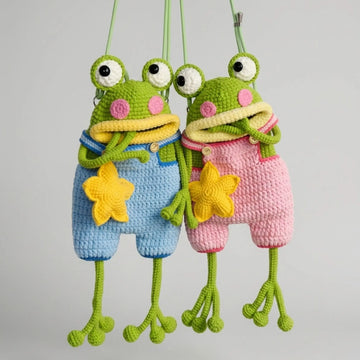
No sewing neededIf you can chain, single crochet, and work a magic ring, you have every skill these 50 no-sew patterns require. Designed specifically for the true Beginner to Confident Beginner range, each plushie uses a clean written pattern, step-by-step photos, and zero seaming. It is the safest possible starting point for anyone asking "am I ready for amigurumi?" — and the answer, with this book, is always yes.
Before you cast on, check our yarn and hook guide to make sure you have the right tools. A 3.5 mm or 4.0 mm hook with smooth DK or worsted weight yarn is all you need.

Bridging Easy to Intermediate
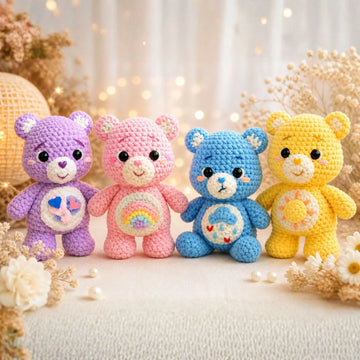
50 patterns, one downloadOnce you have finished a few beginner pieces and feel solid with increases and decreases, this 50-pattern bundle is the ideal next step. Designs range from straightforward Easy-level animals to more character-driven Intermediate builds with multiple parts — all still no-sew, so the complexity comes from the shaping and finishing rather than needlework assembly.
Not sure if you are ready? Read our complete beginner crochet guide and check which stitches you have already mastered. If sc, hdc, increases, and decreases are all familiar, you are in.

For Intermediate and Advanced makers
12 character patternsThis 12-pattern princess bundle sits at the higher end of Intermediate — detailed character faces, color changes, and multi-part assembly that rewards every skill you have been building. You will be seaming parts neatly, managing multiple yarn colors, and reading a pattern that references position and proportion as well as stitch counts.
Want to benchmark your readiness? Work through our free patterns first: start with the free hedgehog, then the free giraffe. If both felt manageable, this bundle is your next adventure.
How to honestly assess your own crochet skill level
Most makers either undersell or oversell themselves. This five-step method gives you a clear, technique-based answer.
Self-assessment is the real skill behind choosing the right crochet pattern difficulty. Many crocheters who have been making for years still call themselves "just a beginner" because they have not tried certain techniques. Others, fresh from their first scarf, grab an Advanced amigurumi and wonder why it falls apart. The method below gives you an honest answer based on what you have actually done, not how long you have been sitting at a hook.
- List every stitch you have used in a finished piece. Chain, single crochet, slip stitch, and magic ring put you firmly at Beginner. Add hdc, dc, and sc2tog and you are at Easy. Invisible decrease, BLO/FLO, and mid-project color changes push you into Intermediate. Tapestry colorwork, cable stitches, and complex chart reading signal Advanced. The key word throughout is finished — attempted but abandoned does not count as a mastered skill.
- Scan the pattern's stitch and technique list. Every well-written pattern lists its required techniques. Cross-reference that list against step 1. If there are two or fewer techniques you have not tried, the pattern is a good growth stretch. Three or more unfamiliar techniques signals it is currently above your level — or that you need a targeted skills practice session first.
- Check the abbreviations list. A pattern's abbreviation list is a window into its true complexity. If you recognize every abbreviation, you are in your comfort zone. If more than a quarter are unfamiliar, consult our crochet glossary and decide whether to learn them before starting or mid-project.
- Look at the part count and assembly notes. A single-piece no-sew design is always simpler than a design with eight or more separate parts requiring precise seaming. Part count is a reliable proxy for complexity regardless of how the designer has labeled the pattern's level.
- Read two or three reviews or comments. Other makers' experiences are invaluable calibration data. If reviewers consistently describe a pattern as "easier than I expected," it skews toward the lower end of its labeled range. If they mention needing to frog and restart multiple times, budget more time and tolerance for the challenge.
For a deeper look at which stitches belong at which level, work through our stitch tutorials in order: chain stitch, single crochet, double crochet, and magic ring. Completing each tutorial in a small swatch before committing to a full pattern is the most reliable way to confirm your actual level.
What "crochet for confident beginners" really means
The phrase crochet for confident beginners appears often in pattern descriptions and has a fairly specific meaning in the MrsCrochetWorld context. It describes someone who:
- Has completed at least one project from start to finish (even if imperfect)
- Understands working in the round and can follow a written row-by-row pattern without step-by-step hand-holding
- Can make a magic ring and close it without a visible hole
- Has a basic grasp of increases (working two stitches into one) and decreases (sc2tog)
- Can read pattern abbreviations in US crochet terms without needing to look every one up
If that is you, patterns labeled "Easy" or "Confident Beginner" are your sweet spot. You will be challenged enough to keep growing but not so overwhelmed that you abandon the project. Browse our beginner crochet patterns collection — everything there is written with this group specifically in mind.
Six things every level-up moment has in common
Whether you are moving from Beginner to Easy or Intermediate to Advanced, these principles apply every time you step up to a new challenge.
One new skill at a time
Every genuine level-up happens by isolating and practicing a single new technique — invisible decrease, color change, or seaming — before adding complexity. Pick a project where that skill is the only new element, and master it completely before moving on to something harder.
Gauge matters at every level
Beginners can often ignore gauge for amigurumi. But the moment you make wearables or precisely-sized pieces, gauge becomes essential. Our crochet gauge calculator takes the guesswork out of it and saves you from ripping out a finished piece because it came out three inches too small.
Pattern difficulty is not fixed
The same pattern can feel very hard to a true beginner and straightforward to a confident one. The label reflects a design target, not your personal ceiling. Use the self-assessment method above and trust your own skill list over the cover label every time.
Free patterns are genuine practice
Before investing in a paid pattern at a new skill level, try a free pattern at the same level first. Our free patterns collection includes a range of difficulties — perfect for calibrating your readiness before you commit time and money to a larger project.
Yarn choice affects perceived difficulty
A chunky yarn on a large hook makes every stitch easier to see and count. The same design in fingering weight on a 2.0 mm hook is a genuinely harder experience. When trying a new skill level, use the recommended yarn weight and hook size. Do not swap until you are comfortable with every technique. See our yarn and hook guide for pairing advice.
Read the pattern fully before you start
Read the entire pattern once before picking up your hook. Advanced-level surprises — a technique introduced in round 47 that you did not know was coming — are far less stressful when you have already spotted them and either practiced the skill or found a tutorial. This habit alone prevents most mid-project panics at every level, and it is the single habit every experienced maker recommends to beginners.
How to choose a crochet pattern by skill level — a practical framework
Three decision points that will save you hours of frustration and unfinished projects.
The most common pattern-selection mistake is choosing by aesthetics alone. You see a gorgeous character amigurumi, buy it, open the PDF, and realize it requires tapestry colorwork you have never attempted. The fix is a three-step filter you run before every purchase or download — it takes under five minutes and it works at every skill level.
Step 1: Match the stitch list to your skill inventory
Open the pattern preview or the "materials and skills" section. List every technique mentioned — stitches, joins, special construction methods. Cross-reference with what you have successfully done in finished projects. If the stitch list includes techniques you have never used, decide: is this a deliberate growth pick, or do I need a more straightforward project right now? Both answers are valid. The mistake is not having the answer before you buy.
Step 2: Check the part count and assembly method
Amigurumi and character patterns list how many separate pieces you will make. A design with a head, body, four limbs, two ears, and a tail is nine pieces — each requiring clean shaping and precise attachment. A no-sew design with one or two pieces is a fundamentally different experience. For crochet pattern difficulty, part count is often more predictive than the skill label on the cover.
Step 3: Read the gauge note and yarn weight
Confirm you have — or can obtain — the correct yarn weight and hook size. Then use our crochet gauge calculator to check whether your natural tension matches the pattern's gauge swatch. A tension mismatch on a beginner project produces a slightly different-sized piece. On an Advanced garment, it can make the finished item an entirely wrong size. Know this before you spend twenty hours crocheting.
For yarn weight recommendations at each skill level, our free crochet tools and charts page includes a downloadable yarn weight comparison chart — a genuinely useful reference to have open while you shop for supplies.
What "intermediate" means in crochet — the most-asked question
When makers ask "what does intermediate mean in crochet," they usually mean one of two things: either they are trying to decide if they are ready for a specific pattern, or they are trying to understand why a pattern they expected to be manageable is giving them trouble.
Intermediate crochet sits at the most technically varied part of the skill spectrum. It is the level where:
- You need to manage shaping — not just follow increases and decreases but understand why they are happening so you can catch errors before they compound across multiple rounds
- Color changes and stripe sequences appear mid-project, requiring you to carry yarn, cut and join, and maintain consistent tension across color boundaries
- Seaming multiple pieces neatly (mattress stitch, slip stitch join, whip stitch) makes the visible difference between a polished finished piece and a lumpy one
- Stitch markers and row counting become non-optional — not helpful extras, but actual requirements for tracking complex shaping sequences
The best Intermediate patterns are ones where each new technique appears exactly once before you are required to apply it repeatedly. If a pattern throws invisible decreases, color changes, and front-loop-only texture all into the same round for the first time, that pattern has been poorly graded — it is effectively Advanced regardless of what the cover says.
Our complete guide to reading crochet patterns in US terms walks you through exactly this kind of analysis, and it is free. Reading it before tackling your first Intermediate pattern will cut your error rate substantially.
Patterns that grow with you
A selection from our shop that spans every beginner, intermediate, and advanced crochet level.

Intermediate: Dinosaur Amigurumi Bundle
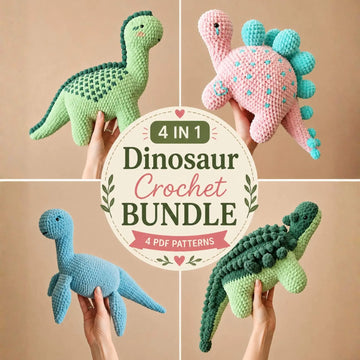
4 patterns in one downloadThis four-design bundle sits solidly in the Intermediate range. Each character involves multiple pieces — body, head, tail, four legs — with smooth shaping sequences that build cleanly on sc and invisible decrease skills. Color choices are straightforward and the assembly instructions are detailed enough that experienced Easy-level makers stepping up for the first time will find the learning curve very manageable.
Pair it with our crochet yarn calculator to figure out exactly how much yarn you need before you order — nothing derails a project faster than running out of a discontinued colorway halfway through a leg.

Beginner to Easy: Stegosaurus Amigurumi
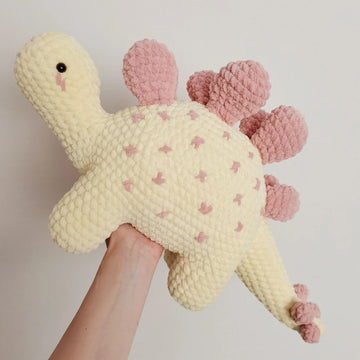
Low-sew, beginner-friendlyThis single-character stegosaurus pattern is the ideal bridge from Beginner to Easy. It uses only sc and basic increases and decreases, stays low-sew (the back plates are worked directly into the body), and gives you a genuinely satisfying finished character in a handful of evenings. It also makes a great gauge-swatch replacement for anyone who wants to test their tension before committing to a larger amigurumi project at a new skill level.
New to making the magic ring? Our magic ring tutorial walks through it in clear steps with photos — you will have it mastered in ten minutes.
Tools and resources that make every skill level easier
The right reference materials are worth as much as the right pattern — bookmark these before your next project.
Free tools to use alongside every pattern
- Crochet glossary. Our crochet glossary defines every US crochet abbreviation you will encounter across Beginner through Advanced patterns — sc, dc, hdc, tr, sl st, BLO, FLO, ch sp, and more. If a pattern uses a term you do not recognize, the glossary is the fastest lookup available.
- Yarn and hook guide. Knowing which yarn weight and hook size pairs go together by skill level prevents the most common beginner frustration: a tension that is rock-hard or floppy regardless of how carefully you crochet. Our yarn and hook guide maps every weight from lace to jumbo with recommended hook ranges and a typical use case at each skill level.
- Gauge calculator. Before you start any Intermediate or Advanced pattern, run your swatch numbers through the crochet gauge calculator. A three-stitch difference per inch compounds across a full garment into several inches of size variance — know it upfront, not after finishing.
- Yarn calculator. Use our crochet yarn calculator to estimate total yardage before you buy. Amigurumi patterns use far less yarn than blankets — the calculator helps you avoid both over-buying (expensive) and under-buying (potentially project-ending).
- Free tools and charts hub. Our free crochet tools and charts hub collects every reference tool in one place: hook size charts, yarn weight comparison tables, conversion calculators, and stitch-count estimators. Bookmark it — you will return to it at every skill level.
- Best yarn and hook guides for beginners. Our curated guides on best yarn for beginners and best crochet hooks for beginners give you specific, ranked recommendations with clear reasons — no overwhelming material overload, just actionable picks.
From beginner to advanced crochet: a realistic timeline
One of the most common questions newer crocheters ask is how long it takes to move through the skill levels. The honest answer is that time spent crocheting matters far less than the variety of projects you complete. A maker who finishes twelve different designs in six months — each one introducing one new technique — will advance faster than someone who spends a year making the same style of scarf on repeat.
A realistic path for someone starting from zero with regular practice:
- Beginner to Easy: 4–8 weeks of regular crocheting, finishing at least two or three complete projects
- Easy to Intermediate: 2–4 months, completing six to eight varied projects that include seaming and color changes
- Intermediate to Advanced: 6–18 months — this is the widest range because Advanced techniques are genuinely varied and some (tapestry colorwork, wire armatures, fine-gauge garments) require sustained, focused practice to execute cleanly
These are averages, not rules. Some makers reach Intermediate competence in a few weeks through intense focused practice. Others stay happily at Easy for years because they love the projects at that level and have no desire to chase complexity. Both are completely legitimate paths. The only wrong choice is picking a pattern so far above your current level that you stop enjoying the process entirely.
Our how it works page explains how MrsCrochetWorld patterns are written and graded, which will help you calibrate any pattern label against the framework above. And if you are at the very start of your journey, the complete beginner guide to crochet is the best first stop before you pick up a hook for the first time.
Frequently asked questions
What are the four crochet skill levels?
The four standard crochet skill levels are Beginner, Easy, Intermediate, and Advanced (also called Experienced). Beginner covers basic stitches — chain, slip stitch, single crochet, and working in the round. Easy adds half double and double crochet, basic increases and decreases, and simple color changes. Intermediate introduces more complex shaping, seaming multiple parts, color changes mid-project, and reading crochet charts. Advanced covers tapestry and intarsia colorwork, complex stitch patterns, multi-part posable construction, wire armatures, and intricate finishing techniques.
What does "easy" mean in a crochet pattern?
An Easy crochet pattern typically requires a short list of familiar stitches — usually chain, single crochet, half double crochet, and double crochet — plus basic increases (working two stitches into one stitch) and decreases (sc2tog). Easy patterns may include simple stripe color changes and minimal seaming. They are designed for someone who has already completed at least one Beginner project and feels confident following a written row-by-row pattern without step-by-step hand-holding. The finished piece is usually straightforward in shape, without complex shaping sequences or multi-part assembly.
What does "intermediate" mean in crochet?
An Intermediate crochet pattern requires skills beyond the basics: the invisible decrease, working in back loops only or front loops only, managing color changes mid-row, seaming multiple separate pieces, and often reading at least basic crochet charts. Intermediate patterns typically have three or more separate parts that must be assembled accurately, and shaping sequences that require you to understand not just what to do but why — so you can catch and fix errors before they compound. Projects at this level include amigurumi characters, shaped bags, and garments with fitted construction.
How do I know if I am ready for an intermediate crochet pattern?
Check the pattern's stitch and technique list against skills you have used in finished projects. If you have successfully completed sc, hdc, dc, magic ring, basic increases, invisible decreases, and at least one simple color change in a finished piece, you are ready for the lower end of Intermediate. If the pattern also requires seaming multiple parts and reading a chart, do a quick scan of the assembly section — if you can follow the logic of it, you are ready. If it looks completely unfamiliar, try one simpler Intermediate project first to build that specific skill before committing to the larger pattern.
What is the difference between beginner and advanced crochet?
Beginner crochet uses a small set of basic stitches — chain, slip stitch, single crochet — and works in simple rounds or rows with no complex shaping, no color changes, and no multi-part assembly. Advanced crochet uses a wide range of stitches including cables, popcorn stitches, and complex colorwork techniques; requires reading multi-layer stitch charts; involves precise construction of many separate parts; and often incorporates non-yarn materials like wire armatures or precisely positioned safety eyes. The skill gap between the two is real and takes consistent practice to bridge, but it is entirely achievable through deliberate, progressive project selection.
What crochet projects are suitable for complete beginners?
Complete beginners should start with flat projects in rows — like a simple swatch, dishcloth, or scarf — before moving to in-the-round work. Once you understand basic tension and can follow a row-by-row written pattern, no-sew amigurumi patterns are an excellent first three-dimensional project. They are small, fast to finish, and the no-sew construction means you do not need any additional needlework skills. Our free beginner patterns and the Easy No-Sew Amigurumi Book for Beginners are both designed specifically for this starting point.
Can I skip the beginner level if I already know basic stitches?
Yes. Crochet skill levels are based on technique, not time served. If you already work comfortably with chain stitch, single crochet, magic ring, and working in the round, and you can follow a basic written pattern without help, you are already at the Confident Beginner or Easy level regardless of how long you have been crocheting. Use the stitch-based self-assessment steps above to confirm your level and find the right entry point in our pattern collections.
What is a "no-sew" crochet pattern and is it easier than regular amigurumi?
A no-sew crochet pattern is one where all pieces are attached during the crocheting process itself — often by working stitches directly into a previous piece — rather than seamed together with a needle after the fact. No-sew designs are generally easier for beginners because they remove the need for neat, invisible mattress stitch or whip stitch joins, which are Intermediate-level finishing skills. All pieces in a no-sew pattern must be made in the correct order, but once you understand the construction logic, they are more forgiving of imperfect tension at joins than traditional seamed amigurumi.
Where can I find free crochet patterns for every skill level?
Our free patterns collection at MrsCrochetWorld includes designs across Beginner through Intermediate levels, all written in clear US crochet terms with step-by-step photos. Start with the free hedgehog or free giraffe amigurumi at the Beginner level, then move to more detailed designs in the Easy range. For skill-building tutorials alongside free patterns, our blog covers every foundational technique: chain stitch, single crochet, double crochet, magic ring, and reading a crochet pattern — all free and written in the same warm, clear style as our paid patterns.
Ready to find your level and start making?
Browse patterns pitched exactly at your crochet skill level — every MrsCrochetWorld design lists its required stitches so you always know what you are getting into before you buy.
Shop beginner patterns Try a free pattern first Browse all patternsMatched to your level: beginner favorites
Start where success is guaranteed — every pattern lists its skill level.
Put your new skills to use
Ready for your next crochet project?
Choose a beginner-friendly pattern with clear US terms, helpful photos and an instant PDF download.
Browse beginner-friendly patternsKeep learning — explore the hub 🧶
Pick your next topic. Every free guide, chart and calculator is one tap away.
From the Crochet Blog 📖
View all articles →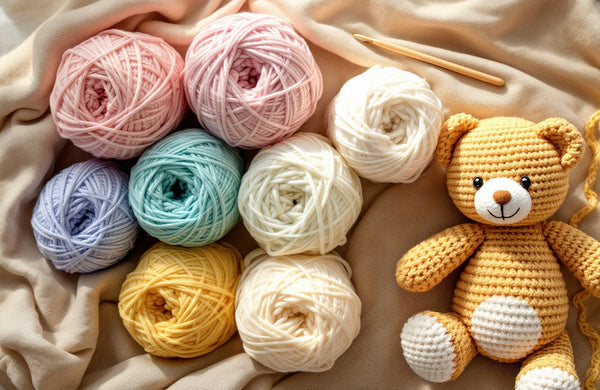
Best Yarn for Amigurumi: The Complete Guide to Choosing the Right Fiber
Crochet Tips & How-To Best Yarn for Amigurumi: The Complete Guide to Choosing the Right Fiber Cotton, chenille, or acrylic? Learn exactly which yarn gives your...
Read full article
Crochet for Mindfulness: Present-Moment Focus with Hook and Yarn
Crochet Wellness Crochet for Mindfulness: Present-Moment Focus with Hook and Yarn How the quiet rhythm of stitching pulls you into the present moment — and how...
Read full article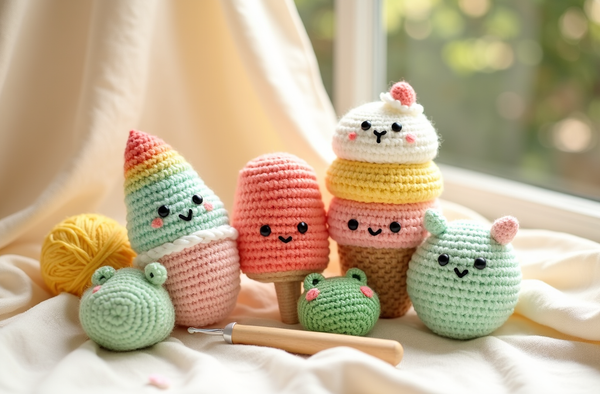
Squishy Summer Buddies: Easy No-Sew Summer Amigurumi Patterns (2026)
Summer Crochet · No-Sew · Beginner By Ava Collins · Updated July 2026 · 🕑 8 min read 🕑 10 min read Squishy Summer Buddies: Easy No-Sew...
Read full article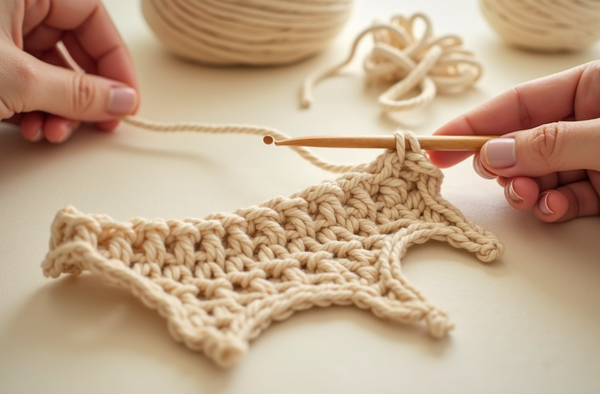
How to Join Yarn in Crochet: 5 Clean Methods for Seamless Projects
Ran out of yarn mid-row? Learn 5 clean, beginner-friendly ways to join yarn in crochet - the invisible join, magic knot, Russian join and more -...
Read full article