


Key Takeaways
- Always join a new ball of yarn at a natural break — never mid-stitch — for the cleanest result.
- The invisible join is best for amigurumi and single crochet; the magic knot is fastest for blankets and scarves.
- Leave 4–6 inch tails on both the old and new yarn so you can weave them in securely.
- Match your join method to your project: tight amigurumi, open lace, and color changes each have a preferred technique.
Every crocheter hits this moment: you're halfway through a cozy blanket or a cute amigurumi, and the ball of yarn in your hand suddenly runs out. Or you're ready to switch to a new color. What you do next decides whether your finished piece looks smooth and professional — or lumpy, holey, and prone to coming apart in the wash.
Joining yarn is one of the most-searched crochet basics, and for good reason: it's a skill you'll use in every single project you ever make. The good news? Once you learn a few reliable methods, it becomes second nature. In this complete guide, we'll walk through five clean, beginner-friendly ways to join yarn in crochet, when to use each one, and how to avoid the most common mistakes.

Why the Way You Join Yarn Matters
A yarn join is a small detail with a big impact. Done badly, it creates a visible bump, a loose tail that works its way out, or a gap where stitches pull apart. Done well, it disappears into the fabric so completely that no one can tell where one ball ended and the next began.
The "right" method depends on three things: the type of project (a stuffed amigurumi hides tails differently than an open lace shawl), whether you're changing color or just adding more of the same, and how much the finished piece will be stretched or washed. Below, we cover every scenario.
The 5 Best Ways to Join Yarn in Crochet
Here's a quick overview before we dive into step-by-step instructions for each. Bookmark this table — it's the fastest way to pick the right method for your current project.
| Method | Best For | Difficulty | Visible? |
|---|---|---|---|
| No-knot overlap | Blankets, scarves, most stitches | Very easy | Nearly invisible |
| Invisible join | Amigurumi, single crochet, rounds | Easy | Invisible |
| Magic knot | Blankets, garments, sturdy joins | Medium | Tiny knot |
| Russian join | Anywhere you want zero tails to weave | Medium | Slight thickening |
| Color-change join | Stripes, colorwork, tapestry | Easy | Clean color line |

Method 1 & 2: The No-Knot Overlap and the Invisible Join
No-knot overlap is the simplest join of all. When your old ball has about 6 inches left, simply drop it, pick up the new yarn, and continue crocheting — leaving both tails hanging on the wrong side. You then weave those tails in securely at the end. It's fast, flexible, and works for nearly every stitch.
The invisible join takes it one step further and is the favorite for amigurumi and anything worked in the round. You work the last stitch with the old yarn until two loops remain on your hook, then yarn over with the new color/ball and pull through to complete the stitch. The transition is buried inside the stitch itself, leaving a flawless surface.
Step-by-Step: The Invisible Join
- Work your stitch (single or double crochet) until the final yarn-over remains — you'll have two loops on your hook.
- Drop the old yarn to the back, leaving a 5-inch tail.
- Yarn over with the new strand, also leaving a 5-inch tail.
- Pull the new yarn through both loops to finish the stitch.
- Continue crocheting with the new yarn. Weave both tails in later on the wrong side.
Pro tip: For amigurumi, always join yarn at the end of a round rather than the middle. Combined with weaving the tail through the stuffing, this makes joins completely undetectable on the finished plushie.

Method 3 & 4: The Magic Knot and the Russian Join
The magic knot is a crocheter's secret weapon for blankets and garments. You tie two small overhand knots — one with each yarn around the other strand — then pull them tight so they slide together into one tiny, extremely strong knot. Trim the tails close and you're done: no weaving required. It holds through countless washes.
The Russian join is the go-to when you want zero tails to weave in and a completely knot-free result. You thread each yarn tail back through the plies of its own strand using a yarn needle, creating two interlocking loops. It thickens the yarn slightly at the join, so it's best for medium and heavier weights.
Step-by-Step: The Magic Knot
- Lay the old and new yarn parallel, tails pointing in opposite directions, overlapping by a few inches.
- Take the old tail and tie a loose overhand knot around the new strand. Don't tighten yet.
- Take the new tail and tie a matching overhand knot around the old strand.
- Pull both working yarns firmly — the two knots slide together and lock.
- Snip the tails close to the knot. The join is secure and nearly invisible in the fabric.
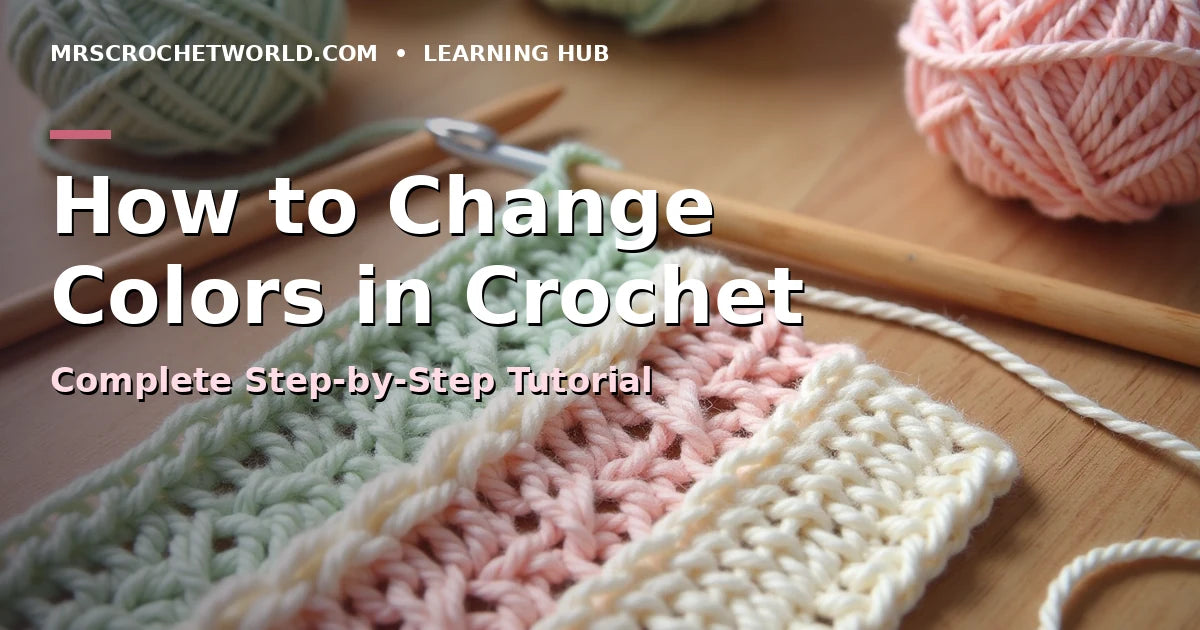
Master seamless color changes for stripes, colorwork, and amigurumi — the perfect companion skill to joining yarn.
Read the guide →Method 5: Joining a New Color
Changing colors is really a special case of joining yarn, and the trick is timing. To get a crisp color line with no muddy last stitch, always make the switch on the final yarn-over of the last stitch in the old color. That way the loop sitting on your hook — which becomes the top of the next stitch — is already the new color.
For stripes worked in rounds, carry the unused color loosely up the inside of the work so you don't cut and rejoin every round. For amigurumi with big color blocks, join fresh and weave the tails through the stuffing for the cleanest finish. If you want the full walkthrough with photos, our dedicated color-change tutorial covers every scenario.
Watch out: Never introduce a new ball right at the very edge of a garment or blanket if that edge will be exposed. Move the join in by a stitch or two so the woven tail is supported by neighboring stitches and won't slip out.
Common Yarn-Joining Mistakes (and How to Fix Them)
- Tails too short. Anything under 4 inches is hard to weave in securely and tends to pop out. Always leave 4–6 inches.
- Joining mid-stitch. Switching yarn in the middle of a stitch creates a weak, visible spot. Complete the stitch structure properly using the invisible-join method instead.
- Weaving in one direction only. Weave each tail in one direction, then reverse for an inch. The change of direction locks it in place.
- Knots on lace or open work. A magic knot can peek through open stitches. Use the no-knot overlap or Russian join for lace instead.
- Skipping the wrong-side check. Always flip your work over and confirm the join sits on the back before you continue.
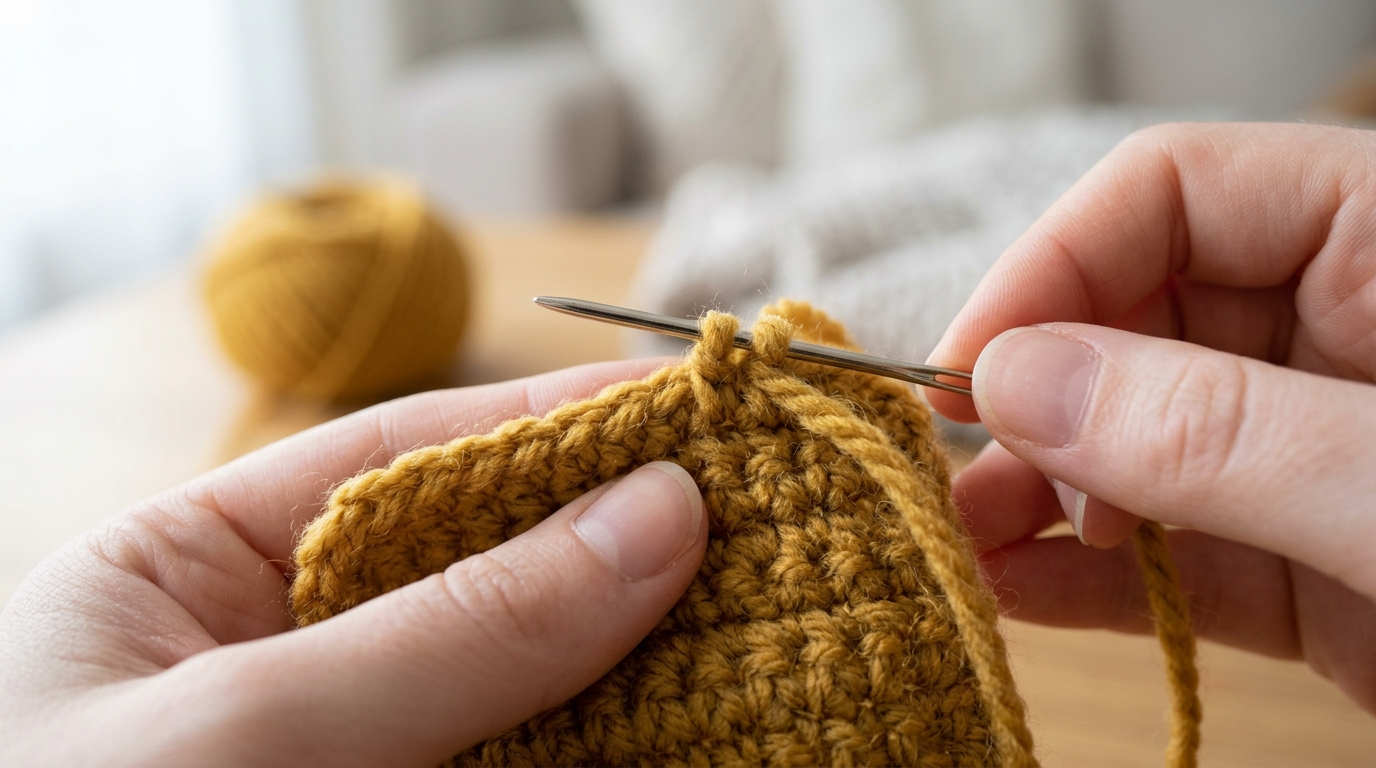
Every join leaves tails. Learn the secure, invisible way to weave them in so your projects survive every wash.
Read the guide →Which Join Should You Use? A Quick Decision Guide
Still unsure? Here's the shortcut our editorial team uses:
- Amigurumi & toys → Invisible join, tails hidden in the stuffing.
- Blankets & scarves → Magic knot for speed, or Russian join for zero weaving.
- Garments & wearables → Russian join or no-knot overlap for softness against skin.
- Lace & open stitches → No-knot overlap; avoid bulky knots.
- Color changes → Switch on the last yarn-over of the previous color.
Ready to Put Your New Skills to Work?
Grab a beginner-friendly amigurumi pattern and practice clean joins on a project you'll actually love.
Browse MCW Patterns →Frequently Asked Questions
Can I just tie a regular knot to join yarn in crochet?
You can, but a plain overhand knot tends to loosen over time, sits as a visible bump, and can pop to the front of your work. If you want a knotted join, use the magic knot instead — it locks tightly and stays put through washing.
How long should I leave the yarn tails when joining?
Leave 4 to 6 inches on both the old and new yarn. That gives you enough length to weave the tails in securely with a yarn needle. Tails shorter than 4 inches are difficult to secure and are more likely to work themselves loose.
What is the invisible join in crochet?
The invisible join completes the final yarn-over of a stitch with the new yarn instead of the old. Because the transition happens inside the stitch structure, the color or ball change disappears into the fabric, leaving no bump or gap. It's the preferred method for amigurumi and anything worked in the round.
Is the magic knot really strong enough for blankets?
Yes. The magic knot is one of the strongest joins available and holds up to repeated washing and wear, which makes it a favorite for blankets and garments. Just make sure you tighten both overhand knots fully before trimming, and avoid it on very open lace where the tiny knot might show.
How do I join yarn without any tails to weave in?
Use the Russian join. You thread each yarn tail back through the plies of its own strand with a yarn needle, forming two interlocking loops. When you trim the ends, there's nothing left to weave in. It slightly thickens the yarn at the join, so it works best with medium and heavier weights.
Should I join yarn at the end of a row or in the middle?
Whenever possible, join at the end of a row or round. Edge joins are easier to hide and the woven tail is supported by the seam. If you must join mid-row, use the invisible join and complete the stitch properly so there's no weak spot.
How do I join a new color for stripes?
Change color on the last yarn-over of the final stitch in the old color. The loop that remains on your hook — which forms the top of the next stitch — will already be the new color, giving you a crisp, clean color line with no muddy transition stitch.
Why does my yarn join keep coming undone?
The most common causes are tails that are too short, weaving in only one direction, or a knot that wasn't tightened fully. Leave longer tails, weave each one in one direction and then reverse for about an inch to lock it, and always check the join on the wrong side before continuing.
Can I use the magic knot on amigurumi?
It's usually better to use the invisible join for amigurumi. Because amigurumi is worked in tight rounds, the invisible join blends in seamlessly and the tails can be hidden inside the stuffing. Save the magic knot for flatter projects like blankets and scarves.
Do I join yarn the same way for double crochet as single crochet?
The principle is identical: complete the stitch until the final yarn-over remains, then finish that yarn-over with the new strand. Because double crochet has more yarn-overs, just be sure you're at the last pull-through before switching. The no-knot overlap and magic knot work the same across all stitch heights.
What tools do I need to join and secure yarn?
Very few: a blunt yarn or tapestry needle for weaving in tails and Russian joins, and small scissors for trimming. That's it. The no-knot overlap and magic knot need no extra tools at all beyond your regular hook.


