How to count crochet stitches and rows (stop losing count)
Losing count mid-row is every crocheter's least favourite moment — here's the simple, foolproof system that keeps your stitch count accurate every single time.

You're halfway through a row, you look down, and suddenly you have no idea whether you're on stitch 14 or stitch 16. Sound familiar? Counting crochet stitches trips up beginners and experienced crafters alike — but once you understand exactly what you're looking at (and have a few handy tricks up your sleeve), you'll never lose your place again.
What does a crochet stitch actually look like?
Before you can count stitches, you need to know what you're counting.
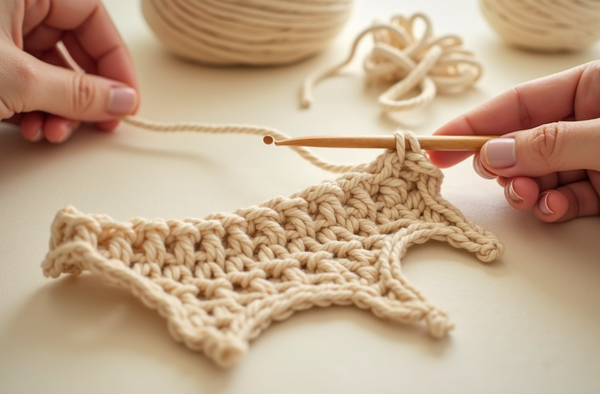
Look at the top edge of your crochet fabric. Each completed stitch forms a small V-shape (two loops that sit side by side). Those Vs are your stitches. When you work a single crochet, you insert your hook under both loops of that V — and it becomes the base for your next row.
New crocheters often confuse the chain stitches in the turning chain with real stitches. Here's the rule of thumb: a turning chain at the start of a row does not count as a stitch for single crochet, but it does count as the first stitch for double crochet. Your pattern will always tell you — so read that first line carefully before you begin.
How to count stitches in a flat row
Lay your work flat on a table and look along the top edge. Starting from the left (or right — pick one and always start the same way), count each V from left to right. Use your fingertip or the tip of your hook to touch each V as you count — physical contact reduces skipped stitches dramatically.
If you're following a crochet pattern that calls for 24 stitches across, count after every row and before you turn. Catching a stitch-count error on the row you just finished is much easier than ripping back four rows later.
How to count rows
Rows are easier to count on the side edge of your work. Each raised horizontal bar or bump along the side represents one row. Lay your piece flat and count those bumps from bottom to top. For double crochet rows, you'll see taller posts — count from the foundation chain upward, one post per row.
If your fabric is curling or bunching (check out why crochet curls for help), block it lightly with a damp cloth before counting rows — it makes the bumps far easier to see.
"Place a stitch marker every 10 stitches. Your future self will thank you every single row."— Ava, MrsCrochetWorld
Three patterns perfect for practising your stitch counts
Simple, satisfying projects where accurate counting pays off immediately

50 No-Sew Amigurumi Bundle
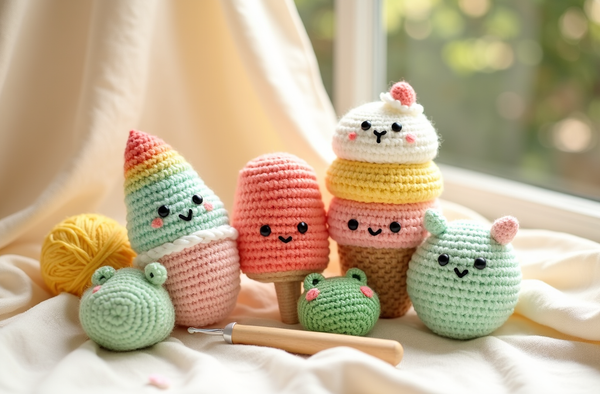
Best for building count confidenceAmigurumi rounds are worked in a spiral, so each stitch is right next to the last — perfect for practising counting in the round. With 50 designs to choose from, you'll be counting stitches in your sleep (in the best possible way).

Granny Square Bag Pattern
Great for row counting practiceGranny squares have a very regular stitch pattern — once you know the repeat, counting becomes almost automatic. Learning to crochet a granny square is a brilliant way to train your eye to spot stitches quickly.

Stegosaurus Amigurumi Pattern
Fun beginner-friendly count challengeThis adorable dino uses increases and decreases in every section, so you'll get plenty of real-world practice tracking your stitch count as your piece grows and shrinks. Check our guide on amigurumi increases and decreases before you start.
Six ways to track your stitch count
Small habits that save big ripping-out sessions
Stitch markers every 10
Place a locking stitch marker (or a piece of contrasting yarn) after every 10th stitch. You only ever need to count groups of 10 — much easier than counting 40 stitches in one go.
Say it out loud
Whispering numbers as you work activates a different part of your brain and dramatically reduces skip errors. It sounds silly — it works every time.
Use a tally counter app
Free row-counter apps (or a basic mechanical tally counter) let you tap after each completed row without losing your place in the pattern. Great for blankets and scarves where row count matters.
Write it down
Keep a sticky note next to your work and tally each row with a pencil mark. Old-fashioned but completely reliable — especially when you crochet in front of the TV.
Count after every row
Make it a habit to count your stitches before you turn at the end of every single row. One minute of checking now saves 20 minutes of frogging later. If you do find an error, see our guide on fixing crochet mistakes.
Start with a structured guide
If stitches still look confusing, our complete beginner guide to crochet walks you through every stitch visually — the perfect foundation for confident counting.
Quick tips for counting in the round (amigurumi & circles)
- Mark your round start: Always place a stitch marker in the first stitch of each round. When you see your marker again, you know the round is complete — move it up before starting the next one.
- Don't count the magic ring chain: When you start with a magic ring, the stitches you work into the ring are your stitch count — not the ring itself or the closing slip stitch.
- Count before you pull tight: After working a round, count your stitches before you pull the magic ring closed or slip-stitch to join. It's much easier to count an open ring than a tightened one.
- Watch for the jog: In continuous spiral rounds, your last stitch sits slightly higher than your first. Don't count it twice — your marker tells you where the round began.
- Recount after every increase or decrease row: Any row that changes stitch count (sc2tog, inc) needs an immediate recount. Beginner amigurumi patterns always give you the expected stitch count in brackets — use that number to verify.
Ready to put your counting skills to work?
Browse our beginner-friendly patterns — every one comes with clear stitch counts in brackets so you always know exactly where you should be.
Get a free pattern Shop beginner patternsFrequently asked questions
How do I count stitches in a crochet row?
Look at the top edge of your work. Each V-shape (two loops side by side) equals one stitch. Touch each V with your fingertip as you count from left to right. Don't count the turning chain as a stitch when you're working single crochet rows.
Does the turning chain count as a stitch?
It depends on the stitch. For single crochet, the turning chain does not count as a stitch — skip it and work into the first stitch below. For double crochet, the turning chain (usually ch 3) counts as the first double crochet, so you skip the first stitch at the base and work into the second one instead. Your pattern will specify which approach to follow.
How do I count crochet rows?
Look at the side edge of your work. Each horizontal bump or bar along the edge equals one row. Count from the foundation chain upward, touching each bump as you go. For taller stitches like double crochet, the posts are easier to see — count one post per row.
Why do I keep ending up with the wrong number of stitches?
The most common reasons are accidentally working into the turning chain instead of the first real stitch, missing the last stitch at the end of a row (it often hides under the turning chain), or working two stitches into one by mistake. Count after every single row — catching errors early means far less frogging.
How do I count stitches when crocheting in the round?
Place a stitch marker in the first stitch of every round. When your marker comes back around, you've completed one round. Count each V along the round before removing the marker and moving it into the first stitch of the new round. The closing slip stitch does not count as a stitch.
What is the easiest way to keep track of rows?
Use a row counter app on your phone, a mechanical tally counter, or a simple tally chart on paper. Tap or mark after each completed row rather than trying to remember the number. If you put your work down mid-project, always note the row number before you stop.
How do stitch markers help with counting?
Place a locking stitch marker after every 10th stitch as you work across a row. Instead of counting 40 or 50 stitches in one stretch, you only need to count groups of 10 between markers. This cuts errors dramatically and makes recounting after a break much faster.
Can I count stitches if my crochet is curling?
Curling makes counting harder because the stitches bunch together. Lay your work on a flat surface and gently stretch it. For stubborn curling, lightly dampen the piece and smooth it flat — the stitches and rows become much easier to see and count. Check our guide on why crochet curls for tips on preventing it from happening in the first place.