


Crochet Yarn Calculator - How Much Yarn Do I Need?
Find out exactly how much yarn you need for any crochet project — in yards, metres, and number of balls or skeins. Pick your project type and yarn weight for an instant estimate so you buy enough the first time and never run out mid-row.

Estimates assume standard single/double crochet at average tension and include a small safety margin. Lacy stitches use more yardage; very dense stitches use a little less. Always buy one extra ball from the same dye lot.
Yarn yardage and metres reference chart
Quick yardage and metres estimates for the most common crochet projects in medium / worsted (CYC 4) yarn. For other weights, use the calculator above — thinner yarn needs more yardage, thicker yarn needs less.
| Project | Approx. yards | Approx. metres | Grams (worsted est.) |
|---|---|---|---|
| Dishcloth / coaster | 60–100 | 55–90 | 35–60 g |
| Amigurumi (small) | 50–150 | 45–140 | 30–90 g |
| Amigurumi (large) | 200–400 | 180–365 | 120–240 g |
| Beanie / hat (adult) | 150–250 | 140–230 | 90–150 g |
| Scarf | 350–550 | 320–500 | 210–330 g |
| Shawl | 600–1,000 | 550–915 | 360–600 g |
| Tote bag | 300–450 | 275–410 | 180–270 g |
| Baby blanket (~30 × 35 in) | 700–1,000 | 640–915 | 420–600 g |
| Toddler / crib blanket | 1,200–1,800 | 1,095–1,645 | 720–1,080 g |
| Throw / lap blanket (~50 × 60 in) | 1,800–2,400 | 1,645–2,195 | 1,080–1,440 g |
| Twin blanket | 3,200–4,000 | 2,925–3,660 | 1,920–2,400 g |
| Full / double blanket | 4,200–5,400 | 3,840–4,935 | 2,520–3,240 g |
| Queen blanket | 4,800–6,000 | 4,390–5,485 | 2,880–3,600 g |
| King blanket | 5,800–7,200 | 5,305–6,585 | 3,480–4,320 g |
| Adult sweater / cardigan | 1,000–1,500 | 915–1,370 | 600–900 g |
Gram estimates are approximate for a standard worsted-weight acrylic at roughly 170 yards / 100 g. Cotton is heavier; wool varies by breed. Always check the actual yardage on the yarn label rather than relying on grams alone.
Patterns that make the most of your yarn
Once you know how much yarn you need, these MrsCrochetWorld pattern bundles give you a gorgeous project to put it toward.

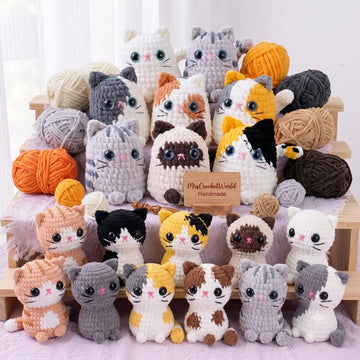
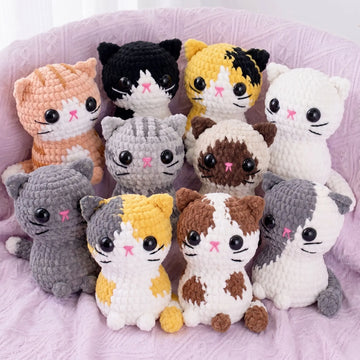
50 No-Sew Amigurumi Bundle
Small yarn, big resultsAmigurumi are one of the most yarn-efficient projects you can crochet — a single 150-yard skein of worsted-weight yarn can make two or three palm-sized critters. This 50-pattern bundle gives you a full catalog of no-sew designs to match any yarn stash. Calculate your yardage above, then pick your animal. Browse the full amigurumi pattern collection for even more options.

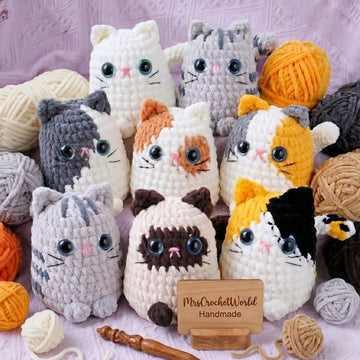
Easy No-Sew Amigurumi for Beginners
Perfect first projectIf you have never crocheted an amigurumi before and are wondering how much yarn to buy for your very first toy, this beginner-friendly book takes the guesswork out entirely. Each pattern lists the exact yardage and yarn weight you need, so you can use this calculator to confirm your ball count and then cast on with confidence. Pair it with our complete beginner guide to crochet for a smooth start.

Granny Square Tote Bag Pattern
Great for stash yarnA tote bag is one of the best projects for using up leftover yarn from other projects — each granny square only needs a small amount per color, making it a natural stash-buster. The standard tote uses around 300–450 yards of worsted-weight yarn, and this pattern includes a video tutorial so you can see every step. For tension tips that help you keep every square the same size, visit our guide on how to get even crochet tension.
"Running out of yarn halfway through a blanket is one of the most frustrating things in crochet — and almost entirely preventable. Calculate first, buy an extra ball, check the dye lot, and you will never have to stop mid-row again."— Ava, MrsCrochetWorld
How the crochet yarn calculator works
The answer to "how much yarn do I need for a crochet project" comes down to three things: the project size, the yarn weight, and the stitch pattern you choose. This crochet yarn calculator starts from a tested worsted-weight baseline for each project type, then scales up or down for your chosen yarn weight. The logic is straightforward: thinner yarn means more, smaller stitches covering the same area, so more yardage is consumed; thicker yarn lays down fabric faster, so less yardage is needed. If you enter the yards per ball or skein printed on your yarn label, the calculator also works out the number of balls to buy — always rounding up and adding a spare to give you insurance against running out.
For a deeper understanding of gauge and how it connects to yardage, visit the crochet gauge calculator. Gauge is the number of stitches per inch in your crocheted fabric, and it is the foundation of every accurate yarn estimate.
Yardage and metres — why they both matter
Yarn labels in the United States almost always list yardage first. Labels from UK, European and Australian manufacturers typically list metres. Both are measures of the same thing: the total length of yarn wound into the ball or skein. This calculator shows you both yardage and metres so you can match whichever unit appears on your label without having to convert. The standard conversion is approximately 1 yard = 0.914 metres, or 1 metre = 1.094 yards.
What the label often shows first — and what many beginners focus on — is the weight in grams. Grams tell you how heavy the ball is, not how long it is. Two 100 g balls can contain very different amounts of yarn: a cotton DK ball at 100 g might hold only 230 yards, while an acrylic worsted at 100 g can hold 364 yards, because the fibres have different densities. This is why planning with yardage or metres is the reliable method for estimating yarn requirements. Our yarn and hook size guide walks you through every number on a yarn label in plain language.
Yarn weight and how it changes your yarn requirements
Yarn weight — the Craft Yarn Council's categories from 0 (lace) to 7 (jumbo) — is the single biggest factor in how much yarn a project consumes. Here is the practical breakdown for estimating yarn for a blanket, scarf, hat, amigurumi or any other crochet project:
| CYC weight | Category name | Typical hook (US) | Yardage relative to worsted baseline |
|---|---|---|---|
| 0 | Lace | B/1 or smaller | Uses ~2.6x the worsted yardage |
| 1 | Super Fine (fingering / sock) | B/1 – E/4 | Uses ~2.0x the worsted yardage |
| 2 | Fine (sport) | E/4 – 7 | Uses ~1.5x the worsted yardage |
| 3 | Light (DK) | 7 – I/9 | Uses ~1.2x the worsted yardage |
| 4 | Medium (worsted / aran) | I/9 – K/10.5 | Baseline |
| 5 | Bulky | K/10.5 – M/13 | Uses ~0.7x the worsted yardage |
| 6 | Super Bulky | M/13 – Q | Uses ~0.5x the worsted yardage |
| 7 | Jumbo | Q and larger | Uses ~0.35x the worsted yardage |
These multipliers are what the calculator applies behind the scenes. Not sure which weight your yarn is? Check the skein label or consult our yarn and hook size guide for a full chart of typical yardage ranges per weight category and recommended hook sizes.
How to estimate yarn for a blanket
Blankets are the project where running out of yarn stings the most. A single dye lot issue — where the new ball you buy weeks later is slightly lighter or darker — can leave a visible stripe across your work. Here is how to estimate yarn for a crochet blanket reliably, step by step:
Step 1 — Know your finished dimensions. Measure or decide the width and length in inches. Check our crochet blanket size chart for standard measurements by age and bed size. A lap throw is typically 50 × 60 inches; a queen blanket is roughly 90 × 108 inches before the border is added.
Step 2 — Work a gauge swatch. Crochet a 6 × 6 inch test piece in your chosen stitch and yarn. Count how many stitches fit in 4 inches horizontally, and how many rows in 4 inches vertically. This swatch tells you exactly how many stitches per row you need and how many rows to work to reach your target length. Visit the crochet gauge calculator if you need help with the math.
Step 3 — Scale from the reference chart. The worsted-weight baselines in the yardage chart above are calibrated to standard blanket dimensions. For non-standard sizes, scale proportionally: a blanket that is twice as wide needs roughly twice the yarn. A 70 × 90 inch throw uses more yarn than a 50 × 60 inch throw by roughly the same ratio as their areas.
Step 4 — Add a safety margin and check your dye lot. Always buy at least one extra ball beyond the calculation. For king or queen blankets, add two. Find all your yarn from the same dye lot — the number is printed on the label, usually near the color code — and buy it all at once. This is the most reliable way to prevent a color mismatch mid-project. You can read more about managing long projects in our guide on how long it takes to crochet a blanket.
How to estimate yarn for a hat
Hats use far less yarn than blankets but still reward a careful estimate — especially when you are working colorwork or stripes across multiple shades. A standard adult beanie in worsted weight needs 150–250 yards. A child's hat is closer to 100–160 yards. A newborn hat can be completed with as little as 50–80 yards. Bulky or super-bulky yarn cuts those figures roughly in half, which is why bulky beanies are such popular quick-gift projects that can be finished in a single evening. Check the crochet hat size chart for circumference and height targets by head size before you finalize your estimate.
How to estimate yarn for an amigurumi
Amigurumi yarn estimates depend mostly on the size of the finished toy. A palm-sized creature — about 4–6 inches tall — typically needs 50–150 yards of worsted-weight yarn for the main body, plus smaller amounts for each contrast color used in the face, limbs, and details. A larger doll or animal at 10–12 inches can need 300–500 yards total across all colors. Fingering or DK weight amigurumi use more yardage because each stitch is smaller; bulky-weight toy-safe yarn uses noticeably less per cubic inch of stuffed toy. The no-sew bundles in our amigurumi pattern collection list exact yarn requirements for each design.
How to estimate yarn when substituting brands
Substituting yarn is common: the pattern's yarn is discontinued, out of stock, or out of budget. The key rule is substitute by yardage, not by weight in grams. If a pattern calls for 3 skeins of a yarn with 200 yards each — totaling 600 yards — you need 600 yards of your substitute regardless of how many grams each skein of the substitute weighs. The practical steps for a safe yarn substitution:
First, match the yarn weight category. A DK-weight pattern works best with DK-weight yarn. Switching to worsted changes your gauge and your yardage requirements significantly. Our yarn and hook size guide lists typical yardage ranges per weight so you can spot-check whether your candidate substitute is in the right ballpark. Second, swatch to confirm gauge — even within the same weight category, different fibers and constructions behave differently. Third, calculate the total yardage the pattern needs and divide by the yardage in your substitute skein. The crochet yarn calculator above handles the ball-count math once you know your total yardage target.
For deeper guidance on fiber properties and choosing the right yarn for a first project, see our guide to the best yarn for beginners.

Princess Doll Bundle — 12 Amigurumi Patterns
Great yarn challengeColorwork amigurumi dolls with multiple skin tones, hair colors, and dress details are one of the most rewarding ways to use up a varied yarn stash. Each princess doll uses a main yarn for the body and skin, plus smaller accent amounts for hair, clothing, and accessories — making yardage planning genuinely interesting. This 12-pattern bundle gives you a full cast of characters to crochet through. Use the calculator above to estimate each color before you shop, and check our crochet abbreviations chart to decode any pattern notation you encounter.
Understanding ball bands — reading yardage and metres on your yarn label
Every commercially sold yarn comes with a ball band (also called a skein label or yarn wrapper) that contains all the information you need to calculate yarn requirements accurately. Here is what the key numbers mean so you can use this crochet yarn calculator to its full potential:
Weight in grams or ounces — how heavy the ball is. Common standards are 50 g, 100 g, and 200 g. As discussed above, this alone is not enough to plan a project. A 100 g cotton ball and a 100 g acrylic ball can hold very different lengths of yarn because of fiber density differences.
Length in yards and / or metres — the actual length of yarn in the ball. This is the number that drives every yardage and metres estimate in this guide. Always look for it. If the label only shows grams and the manufacturer's website does not list the yardage, move on to a yarn whose label gives you the complete information.
CYC weight symbol — the numbered skein icon (0 through 7) that tells you the yarn weight category. This determines which row of the reference chart above applies and which hook sizes the manufacturer recommends.
Recommended hook size — the manufacturer's suggestion for achieving a standard gauge with this yarn. Treat it as a starting point; your actual gauge swatch tells you whether to adjust. For a complete hook size conversion from US letters to mm to UK sizes, see our yarn and hook size guide.
Fiber content — what the yarn is made of. This affects drape, stretch, washability, and how the yarn behaves when crocheted. Cotton has almost no stretch and is ideal for washable items like dishcloths and tote bags. Wool stretches and springs back, making it forgiving for garments. Acrylic is consistent and machine-washable. Fiber content also affects density, which is why grams per skein is not a reliable proxy for yardage.
Dye lot number — buy all skeins for one project from the same lot. Even balls of the same colorway from different dye lots can show subtle color variation when crocheted side by side under different light conditions. Learn how to read every element of a pattern in our guide on how to read a crochet pattern.
Tips to avoid running out of yarn mid-project
Running out of yarn is one of the most common frustrations beginners face, and it happens to experienced crocheters too when they skip the calculation step. Beyond buying enough yarn upfront, there are a few habits that keep projects on track and help you manage yardage and meters with confidence:
Always buy from the same dye lot. Yarn manufacturers dye yarn in batches. Two balls from different batches of the same colorway can look identical in the store but show a subtle difference once crocheted side by side in natural light. The dye lot number is printed on the label. Buy every ball you need from the same lot at the start of the project.
Work an accurate gauge swatch before you start. Your stitch size is the foundation of every yardage estimate. If you crochet tighter than average, you use more yarn per inch than the calculator's baseline. If you crochet looser, you use less. A quick swatch lets you verify whether the baseline applies to your tension or needs adjusting upward. See the crochet gauge calculator for help interpreting your swatch.
Weigh the remaining yarn periodically on a kitchen scale. Many crocheters work through their first ball, note how much of the project is done as a fraction of the total, then weigh the remaining yarn to confirm they are on track. This method is especially reliable when you have multiple balls of the same dye lot — you can redistribute the remaining yarn across the project if one ball is running noticeably low.
Join new yarn at the start of a row, not in the middle. Joining at the edge of the work gives you cleaner seams and makes weaving in ends less visible. If you need to count your stitches accurately as you go, our guide on how to count crochet stitches and rows explains every technique used by experienced makers.
Common yarn-planning mistakes — and how to avoid them
Six habits that lead to running out of yarn or buying too much — and the simple fix for each.
Planning by grams, not yards
Grams measure weight, not length. Two 100 g balls from different yarn lines can have yardage that differs by 150 yards or more. Always plan with the yardage or metres printed on the label.
Skipping the gauge swatch
If you crochet tighter than the calculator's baseline, you use more yarn per square inch. A quick swatch shows whether the estimate applies to your tension or needs adjusting upward.
Ignoring the dye lot
Two balls from different dye lots can look slightly different once crocheted. Buy all the yarn for one project at once, from the same lot number printed on the label.
Not accounting for the stitch pattern
Lacy, openwork stitches use more yarn than single crochet for the same area. Very dense stitches use a little less. The calculator baseline assumes average single or double crochet.
Forgetting borders and finishing
A decorative border around a blanket can add 200–500 yards of yarn consumption. Factor in any planned edging, fringe or surface crochet before you finalize your yarn order.
Switching yarn weight mid-project
Changing from the specified yarn weight mid-project changes both your gauge and your yardage rate per row. If you must substitute, recalculate from scratch with the new weight using the calculator above.
Free crochet tools that work alongside this calculator
Yarn planning does not happen in isolation. These free tools on MrsCrochetWorld work together to help you prepare before you cast on your first stitch — from understanding how much yarn you need to confirming your hook size and decoding pattern terminology:
- Crochet gauge calculator — check whether your tension matches the pattern's gauge and find out whether to go up or down a hook size before committing to a full project.
- Crochet blanket size chart — standard finished dimensions by bed size and age so you can target the right yardage from the start.
- Crochet hat size chart — head circumference and height measurements by age so your hat fits perfectly before you cast on.
- Yarn and hook size guide — full hook size conversion chart, yarn weight categories, and how to read every number on a yarn label.
- Crochet abbreviations chart — US crochet terms decoded so you know exactly which stitches a pattern is calling for before you start swatching.
- US vs UK crochet terms — side-by-side conversion table for the most common stitch name differences between American and British patterns, so you never misread a sc as a UK dc again.
- All free crochet tools and charts — the full library of calculators, charts, and reference guides on MrsCrochetWorld.
If you are new to crochet and still learning the terminology, the crochet glossary explains every word you are likely to encounter, and the complete beginner guide to crochet covers everything from holding a hook to completing your first full project.
Frequently asked questions
How much yarn do I need for a crochet project?
It depends on the project type and yarn weight. A worsted-weight baby blanket needs roughly 700 to 1,000 yards, a throw needs about 1,800 to 2,400 yards, a beanie needs 150 to 250 yards, and a small amigurumi needs about 50 to 150 yards. Use the crochet yarn calculator at the top of this page for a project-specific estimate based on your chosen yarn weight.
How does the crochet yarn calculator work?
The calculator starts from a tested worsted-weight yardage baseline for each project, then multiplies that baseline by a factor based on your chosen yarn weight. Thinner yarn needs more yardage; thicker yarn needs less. If you enter the yards per ball printed on your yarn label, the calculator also tells you how many balls to buy, rounding up and adding one spare ball as a safety margin.
How much yarn do I need for a crochet blanket?
In worsted weight, a baby blanket of about 30 by 35 inches needs 700 to 1,000 yards, a throw of about 50 by 60 inches needs 1,800 to 2,400 yards, a twin blanket needs 3,200 to 4,000 yards, and a queen blanket needs 4,800 to 6,000 yards. Use the reference chart on this page for other sizes, and always buy one or two extra balls from the same dye lot.
How much yarn do I need for a crochet hat?
An adult beanie in worsted weight typically needs 150 to 250 yards. A child's hat needs roughly 100 to 160 yards, and a newborn hat can be made with as little as 50 to 80 yards. Bulky or super-bulky yarn cuts the yardage roughly in half. Check the crochet hat size chart for exact circumference targets by age before estimating.
How much yarn do I need for amigurumi?
A small palm-sized amigurumi needs about 50 to 150 yards of worsted-weight yarn. A larger toy at 10 to 12 inches tall can need 300 to 500 yards across all colors. Contrast colors for face details and limbs each add a smaller amount, typically 10 to 50 yards per color depending on how much coverage they need.
Should I plan yarn by yardage or by grams?
Always plan by yardage or metres, not by grams. Grams measure the weight of the ball, not the length of yarn inside it. Cotton is denser than acrylic, so a 100 gram cotton ball holds far fewer yards than a 100 gram acrylic ball. The yardage and metres figures on the yarn label are the reliable numbers for estimating yarn requirements.
How do I calculate how many balls of yarn to buy?
Divide the total yardage your project needs by the yards per ball printed on your yarn label. Round up to the next whole number, then add one extra ball as a safety margin. For example, if you need 900 yards and each ball contains 364 yards, 900 divided by 364 is 2.47, which rounds up to 3, so buy 4 balls total. The calculator at the top of this page does this math for you once you enter the yards per ball figure.
What happens if I run out of yarn mid-project?
If you run out and need more yarn, try to find the exact same yarn in the same dye lot number printed on the label. If the dye lot is no longer available, buy a new ball and test it against your existing work in natural light before joining it to the project. To avoid running out, always buy from the same dye lot at the start and add one extra ball to your order as insurance.
How does yarn weight affect how much yarn I need?
Lighter, thinner yarn creates smaller individual stitches, so you need more yards to cover the same area of fabric. Heavier, thicker yarn creates larger stitches, covering ground faster and using fewer yards per square inch. Compared to worsted-weight baselines, lace-weight yarn needs roughly 2.6 times as many yards, while super-bulky yarn needs only about half as many yards for the same finished project.
Ready to start your next project?
Every MrsCrochetWorld pattern lists the exact yarn type, weight, and yardage you need — so you can calculate, buy the right amount, and start with complete confidence.
Browse all patterns More free tools & chartsPlanning a bigger make? Bundles = best value
Many patterns in one download — save up to 66% vs single patterns.
Put your new skills to use
Ready for your next crochet project?
Choose a beginner-friendly pattern with clear US terms, helpful photos and an instant PDF download.
Browse beginner-friendly patternsKeep learning — explore the hub 🧶
Pick your next topic. Every free guide, chart and calculator is one tap away.
From the Crochet Blog 📖
View all articles →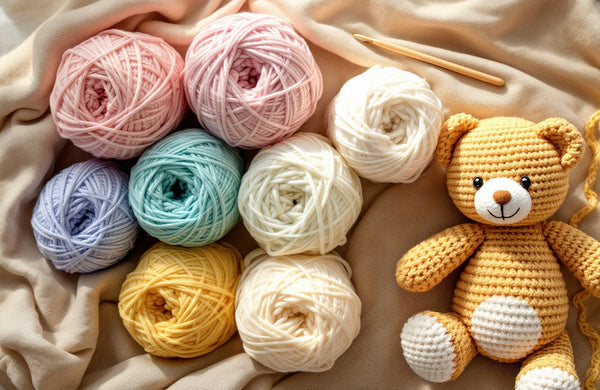
Best Yarn for Amigurumi: The Complete Guide to Choosing the Right Fiber
Crochet Tips & How-To Best Yarn for Amigurumi: The Complete Guide to Choosing the Right Fiber Cotton, chenille, or acrylic? Learn exactly which yarn gives your...
Read full article
Crochet for Mindfulness: Present-Moment Focus with Hook and Yarn
Crochet Wellness Crochet for Mindfulness: Present-Moment Focus with Hook and Yarn How the quiet rhythm of stitching pulls you into the present moment — and how...
Read full article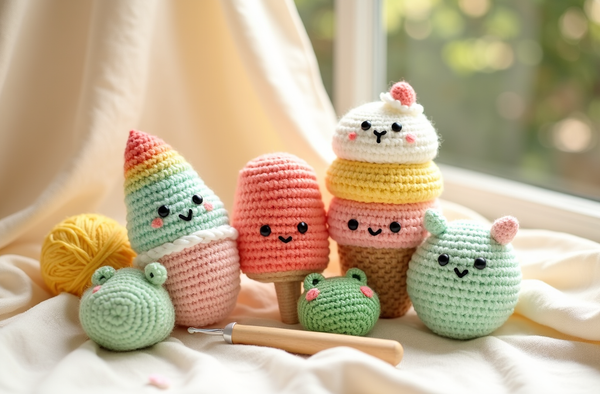
Squishy Summer Buddies: Easy No-Sew Summer Amigurumi Patterns (2026)
Summer Crochet · No-Sew · Beginner By Ava Collins · Updated July 2026 · 🕑 8 min read 🕑 10 min read Squishy Summer Buddies: Easy No-Sew...
Read full article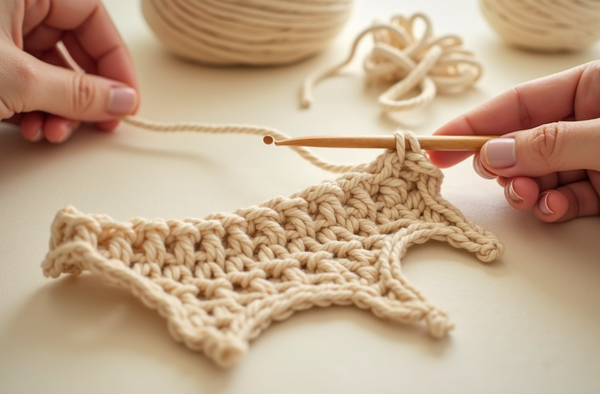
How to Join Yarn in Crochet: 5 Clean Methods for Seamless Projects
Ran out of yarn mid-row? Learn 5 clean, beginner-friendly ways to join yarn in crochet - the invisible join, magic knot, Russian join and more -...
Read full article