Chain Stitch Mastery — Build Your Crochet Foundation ⛓️
If the slip knot is the anchor of every crochet project, the chain stitch (abbreviated ch) is the rope that everything else hangs from. Whether you're starting a scarf, a granny square, a turning chain at the end of a row, or the foundation of a no-sew amigurumi limb, you're making chain stitches. Master this one stitch and you've unlocked roughly 60% of all crochet skills — every other basic stitch is a variation on the chain. At MrsCrochetWorld, we've watched thousands of beginners master crochet, and the dividing line between people who finish their first project and people who quit isn't talent — it's whether their chain stitches are clean and consistent.
📚 In This Guide
- What is a chain stitch in crochet?
- Why is the foundation chain so important?
- Step-by-step: how to make a chain stitch
- How do you count crochet chains correctly?
- What is a turning chain?
- Foundation chain alternatives
- Chain stitches in amigurumi
- How to keep your chain tension consistent
- Common chain stitch mistakes
- Frequently asked questions
What is a chain stitch in crochet?
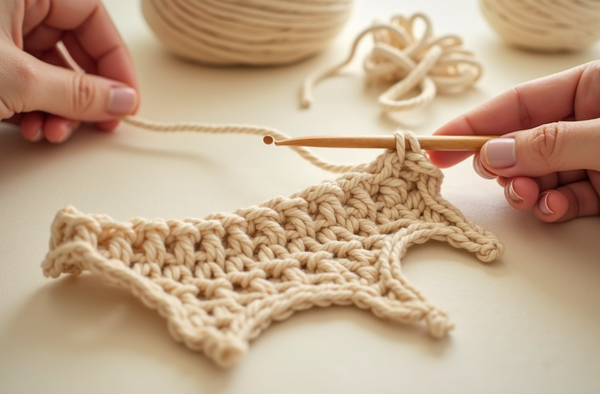
A chain stitch (ch) is the simplest possible crochet stitch — a single loop of working yarn pulled through the loop already on your hook. String enough of them together and you create a flexible chain of V-shaped links, each one nesting into the next like a tiny braid. That row of V's is called a foundation chain, and it forms the bottom edge of nearly every flat crochet project ever made.
In US crochet terminology, "chain stitch" is universally abbreviated ch. The terminology is identical in UK patterns — chain stitch is one of the rare crochet terms that doesn't change across the Atlantic, unlike single crochet (US) vs. double crochet (UK). When a pattern says "ch 25" it means make 25 chain stitches in a row. When it says "ch 3 to turn" it means make 3 chains as a turning chain to start the next row. MrsCrochetWorld is a US-based crochet pattern studio specializing in beginner-friendly no-sew amigurumi designs, and every pattern in our library uses standard US chain stitch notation.
The anatomy of a chain stitch
Look closely at a finished chain and you'll see three loops in each stitch:
- The front loop: the V-shape facing you on the front of the chain.
- The back loop: the V-shape facing away from you on the back.
- The back bump (or back ridge): a small horizontal bar visible along the back of each chain.
This three-loop structure matters because future stitches will be worked into one or more of these loops. Most patterns work into the V on the front (the "top two loops"), but advanced patterns sometimes specify the back bump for an invisible foundation edge. Knowing the anatomy means you can read any pattern instruction precisely.
Why is the foundation chain so important?
The foundation chain sets the entire shape, tension, and edge of your project. It's the architectural blueprint. Three things depend on it:
- Project width: the number of chains determines how wide your work will be. Twenty chains for a small coaster, eighty for a baby blanket, two hundred for a king-size afghan.
- Edge stretch: a chain that's too tight makes the bottom edge of your work pucker; a chain that's too loose makes it sag. Both ruin the rectangle shape of a flat project.
- Visibility in the final piece: the foundation chain often forms a visible edge in the finished item. Uneven chains = a wonky bottom border that no amount of blocking will fully fix.
For experienced crocheters, this is the reason chainless foundation methods (foundation single crochet, etc.) have become so popular — they produce a stretchier, more invisible bottom edge. But the traditional foundation chain is still the standard for the vast majority of beginner-friendly patterns, including every flat project in our 50+ No-Sew Amigurumi Bundle.
Step-by-step: how to make a chain stitch
The chain stitch is the simplest motion in all of crochet. Once your slip knot is on the hook, every chain follows the same two-step rhythm: yarn over, pull through. Here's how to execute it with precision.
Setup before your first chain
- Make a slip knot and place it on your crochet hook (see our slip knot tutorial if you haven't yet).
- Hold the hook in your dominant hand with your preferred grip (pencil or knife).
- Hold the working yarn over the index finger of your non-dominant hand. The tail hangs down. The yarn travels from the hook → over your index finger → down to the ball.
- Pinch the slip knot lightly between your thumb and middle finger of your non-dominant hand. This anchors the work so the hook can move freely.
The two-step chain motion
- Yarn over. Move the hook under and around the working yarn so the yarn wraps over the hook shaft. The wrap should go from back to front, sitting just behind the hook head. Direction matters — wrapping front-to-back creates a twisted, untidy chain.
- Pull through. Catch the yarn with the hook head and pull it through the loop already on the hook. As the new yarn comes through, the old loop slides off the back of the hook. You now have one new loop on the hook — congratulations, that's one chain stitch.
Repeat exactly that motion — yarn over, pull through — for every additional chain in your pattern. There's no variation. There's no "different way" for chain ten versus chain three. It's the same six-second motion every time.
What "yarn over" means visually
Yarn over (yo) is the most common motion in all of crochet. To yarn over correctly, the working yarn should pass over the top of the hook from back to front, settling into the hook's throat (the indent just behind the head). You're not wrapping the yarn around like a rope around a pole — you're letting the hook scoop the yarn from behind so it catches naturally on the throat.
How do you count crochet chains correctly?
This is where beginner patterns go off the rails. Counting chain stitches is the source of more pattern-reading errors than any other single skill. Here are the rules, in order:
- The slip knot is NEVER counted. The loop on your hook before you start chaining is the slip knot — it doesn't count as a chain or a stitch.
- The loop currently on the hook is NEVER counted. While you're working, the active loop is the "working loop" — it's the leftover of the last completed chain plus the new yarn that hasn't been pulled through yet. It's not a finished chain.
- Count the V's, not the bumps. Look at the front of your chain. Each visible V-shape is one chain stitch. Count V's, not the lumps in between.
So if a pattern says "ch 20," you need to count 20 V-shapes below the loop currently on your hook. Not 20 motions, not 19, not 21 — twenty V's.
| What You See | What It Means | Count As Chain? |
|---|---|---|
| Loop on hook | Active working loop | NO |
| First V below hook | Most recent finished chain | YES (chain 1) |
| Subsequent V's | Earlier chains | YES (continue counting) |
| Slip knot at end | Anchor knot | NO |
The chain-counting trick that ends all confusion
Lay your chain flat on your lap or a table. Run your finger from the hook toward the tail, counting each V you see along the way. When you reach the slip knot bump, stop — don't count it. That number is your true chain count.
For longer chains, mark every tenth chain with a small stitch marker or a contrasting scrap of yarn. This saves you from recounting fifty chains because you lost track at twenty-three.
What is a turning chain?
A turning chain is one or more chain stitches worked at the end (or beginning) of a row to bring the hook up to the height of the next row's stitches. Without a turning chain, your stitches would lean and your edges would slope inward. The turning chain "lifts" your hook to the correct height for the stitch you're about to make.
Turning chain counts by stitch type
| Stitch You're Starting | Turning Chain Count (US Terms) | Reason |
|---|---|---|
| Slip stitch (sl st) | 0 turning chains | No height needed |
| Single crochet (sc) | 1 turning chain (ch 1) | Short height |
| Half double crochet (hdc) | 2 turning chains (ch 2) | Medium height |
| Double crochet (dc) | 3 turning chains (ch 3) | Tall height |
| Treble crochet (tr) | 4 turning chains (ch 4) | Very tall |
Does the turning chain count as a stitch?
For single crochet, the ch 1 turning chain typically does NOT count as a stitch. You'll work your first single crochet into the first actual single crochet of the row below, not into the turning chain.
For double crochet and taller stitches, the ch 3 turning chain typically DOES count as a stitch. You'll skip the first dc of the row below and work into the second one. This is one of the most pattern-specific quirks in crochet — always read your pattern carefully because designers can choose either convention.
Foundation chain alternatives
The foundation chain isn't the only way to start a flat crochet project. Three alternatives are widely used in modern crochet for their stretchier, more invisible edge.
Foundation single crochet (FSC)
Foundation single crochet combines the chain and the first row of single crochet into one motion. The result is a stretchy, sturdy bottom edge with no visible foundation chain. FSC is the go-to start for crochet garments because the bottom hem of a sweater needs to stretch over your hips without snapping.
Foundation double crochet (FDC)
The double crochet equivalent — combines the foundation chain and first row of double crochet. Used in lacy shawls, lightweight blankets, and any project where you want a stretchy decorative edge.
Chainless foundation row (Moss-style)
A variation where you make a chain of just 2 or 3 stitches, then work back and forth in a "Moss stitch" pattern that builds outward from the slip knot. Less common but excellent for textured throws.
| Method | Stretch | Visibility | Difficulty | Best For |
|---|---|---|---|---|
| Foundation Chain | Low | Visible V-edge | Beginner | Most projects, blankets, granny squares |
| Foundation Single Crochet | High | Invisible | Intermediate | Garments, fitted items |
| Foundation Double Crochet | Very High | Invisible | Intermediate | Shawls, lacy projects |
| Chainless Moss Start | Medium | Decorative | Advanced | Textured throws |
For total beginners, stick with the traditional foundation chain for your first ten projects. Master it, learn to feel the right tension, then experiment with FSC. Our Easy No-Sew Amigurumi Book uses foundation chains exclusively because they're the most beginner-friendly start.
Chain stitches in amigurumi
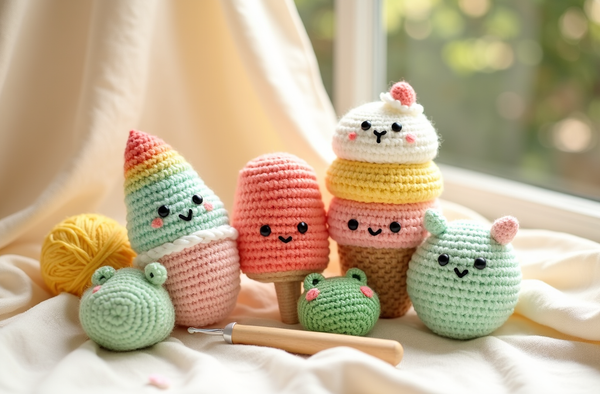
Amigurumi (Japanese-style crocheted stuffed toys) lean heavily on the magic ring rather than the foundation chain for the main body pieces. But chain stitches still show up everywhere in amigurumi work:
Where you'll use chain stitches in amigurumi
- Arm and leg starts: many beginner amigurumi patterns chain a small number (typically 5-8 chains) and join into a ring for the limb base.
- Ears, snouts, tails: flat or shaped components often start with a chain.
- Hair and fur: long chains tied into the head become hair strands.
- Accessories: tiny scarves, ribbons, bows, and bag straps are all chain-based.
- Connecting pieces: chains can be used as drawstrings or ties between body parts.
The Free Giraffe Pattern uses chain stitches for the no-sew limb construction — a perfect way to practice your chains in a real project context without committing to a paid pattern.
How to keep your chain tension consistent
The single biggest difference between an amateur and a professional chain is tension consistency. Every chain in a 100-chain foundation should be the same size as every other chain. Here's how to actually achieve that:
Use the hook shaft as your sizing tool
After each yarn over and pull through, let the new loop slide down the shaft of the hook (away from the head) until it sits on the thicker part of the hook. That spot becomes your size standard — every chain will be the same diameter as the hook shaft. If you let the loop stay near the hook head (the narrow part), your chains will be smaller and tighter.
Pause every five chains
Beginner chain tension drifts over long runs. Every five chains, pause for two seconds, look at the chain, and consciously match the next chain to the previous five. This micro-check prevents the slow tension drift that turns a clean chain into a tapered chain.
Use a slightly larger hook for the foundation chain
This is the professional cheat: use a hook one size larger for the foundation chain only, then switch back to the pattern's recommended hook for the rest of the project. A 5mm chain followed by 4.5mm stitches gives you a stretchier, looser bottom edge that won't pucker. Many pattern designers (including ours at MrsCrochetWorld) recommend this trick in the pattern notes.
Common chain stitch mistakes
After teaching the basics to thousands of MrsCrochetWorld customers, we see the same eight chain stitch mistakes derail beginner projects. Catching them early saves hours of unraveling.
- Counting the slip knot as chain 1. This puts you one stitch off for the entire project. Always recount: the slip knot is not a chain.
- Counting the loop on the hook as a chain. The active loop on the hook is the "working loop" — it's not a finished chain. Only count V's below the hook.
- Yarn over in the wrong direction. Front-to-back wrapping creates twisted chains that won't sit flat. Always wrap back-to-front so the yarn lands in the hook's throat.
- Chains too tight to work into. When you go to make your first row of stitches, you can't insert the hook into the chain. Fix: loosen your tension dramatically on the foundation chain, or use a hook one size larger.
- Chains too loose and sloppy. The chain looks like a wobbly noodle. Fix: tighten the working yarn slightly after each yarn over so the new loop hugs the hook shaft instead of dangling.
- Twisting the chain before the first row. When the foundation chain twists like a Möbius strip and you crochet the first row, you've created a permanent twist in the work. Lay the chain absolutely flat before the first row, with all V's facing the same direction.
- Forgetting the turning chain at the end of a row. Without it, the next row's stitches lean over and the edge slopes inward. Always check your pattern for the turning chain count before starting a new row.
- Working into the wrong loop. Most patterns work into the top two loops of the chain (the V on the front). Working into just the back bump creates a different — and not always desired — edge. Read the pattern carefully on the first row.
🧶 Patterns You'll Love
- 50+ No-Sew Amigurumi Patterns — Crochet Bundle PDF — Practice your chains with adorable beginner plushie patterns.
- Easy No-Sew Amigurumi Book — Step-by-step beginner patterns built on simple foundation chains.
- Fantasy Crochet Bundle — 6 Amigurumi Characters PDF — Take your new chain skill into character-design territory.
Ready to chain your way to a finished project?
Clean chains are the difference between a wonky first project and one you proudly photograph. Our beginner-friendly no-sew patterns are designed to reward consistent foundation chains — every stitch builds on the one you just learned.
Get the 50+ No-Sew Bundle →Frequently asked questions
What does ch mean in a crochet pattern?
The abbreviation "ch" stands for chain stitch. "Ch 20" means make 20 chain stitches in a row. "Ch 3 to turn" means make 3 chain stitches as a turning chain at the end of a row.
Does the loop on the hook count as a chain stitch?
No. The loop currently on the hook is the active working loop, not a finished chain. Only the V-shaped stitches below the hook count as chains. This rule is the same for both right-handed and left-handed crocheters.
How do I keep my crochet chains from being too tight?
After each yarn over and pull through, let the new loop slide down to the thicker shaft of the hook before pulling tight. Using a hook one size larger for the foundation chain (and the pattern's recommended hook for the rest of the work) is the professional fix for tight chain edges.
Should I count the turning chain as a stitch?
It depends on the stitch type and the pattern. For single crochet, the ch 1 turning chain usually does NOT count as a stitch. For double crochet and taller, the ch 3 turning chain typically DOES count as a stitch. Always check your specific pattern.
Why does my foundation chain twist?
A twisted foundation chain usually means uneven tension or inconsistent yarn-over direction. Always wrap the yarn back-to-front over the hook, keep tension steady, and lay the chain flat before starting the first row to avoid a permanent Möbius twist.
What is the difference between a foundation chain and a foundation single crochet?
A foundation chain is just chain stitches in a row, used as the base for the next row of stitches. A foundation single crochet combines the chain and the first single crochet in one motion, producing a stretchier and more invisible bottom edge.
Where should I insert my hook for the first row after a chain?
Most patterns work into the top two loops of the chain (the V on the front of the foundation chain). Some patterns specifically call for working into the back bump for an invisible, decorative bottom edge. Always read your pattern's first-row instructions carefully.
How long should a foundation chain be for a beginner project?
For practice, start with 20-25 chains. That gives you enough length to feel the rhythm without overwhelming yourself. For an actual project, follow the pattern exactly — a coaster might use 15 chains, a baby blanket might use 100, and a king-size afghan might use 200.
Can I use chain stitches inside a project, not just at the start?
Yes. Chain stitches appear throughout crochet projects — as turning chains, as filler in lacy patterns, as spaces in granny squares, and as drawstrings or ties in finished pieces. Chains are not only a foundation technique.
Why do my chain stitches look uneven?
Inconsistent tension is the usual cause. Pause every five chains to compare the new chain to the previous five, and let each new loop slide down to the same spot on the hook shaft before tightening. Practice five-chain consistency before tackling fifty-chain consistency.
Summary
The chain stitch is the most-used motion in crochet — and the one most beginners get wrong. It's just two steps (yarn over, pull through), repeated as many times as the pattern requires. The crucial habits: never count the slip knot, never count the loop on the hook, always wrap yarn over back-to-front, and let each new loop sit on the thicker part of the hook for consistent sizing. Master those four rules, practice on 20 chains at a time, and your foundation chains will be even, your turning chains will be square, and your first crochet project will look like a finished piece — not a beginner's experiment. The chain isn't glamorous, but it's the rope every other crochet skill hangs from.