There's a particular kind of quiet that settles over you a few minutes into a row of stitches. The chatter softens. Your shoulders drop. Your attention narrows to the small, warm world between your hands. That's not a coincidence — it's the heart of crochet for mindfulness: using the gentle, repeating motion of hook and yarn to draw your attention firmly into the present moment.
Mindfulness doesn't have to mean sitting cross-legged in silence. For a lot of people, it's far easier to find calm while doing something with their hands. Crochet offers exactly that — a portable, cozy, endlessly repeatable practice where the goal isn't a perfect finished object, but the simple experience of being here, now, one stitch at a time. This guide walks through what mindful crochet really is, how to reach that absorbed "flow" state, and how to build a mindful crochet routine that fits into an ordinary, busy life.
What Crochet for Mindfulness Really Means

Mindfulness, at its simplest, is the practice of paying gentle, non-judgmental attention to what's happening right now. Not the meeting tomorrow. Not the conversation from yesterday. Just this breath, this sensation, this moment. It sounds easy, but anyone who has tried to sit quietly and "just be present" knows how quickly the mind wanders off.
This is where crochet becomes such a natural ally. Instead of asking your mind to stay still on its own, you give it a soft, rhythmic task to rest on. The steady cycle — insert the hook, wrap the yarn, pull it through — becomes an anchor. Each repetition is a tiny invitation back to the present. You're not fighting your thoughts; you're simply giving your attention a warm, comfortable place to land.
A Doing Kind of Mindfulness
Traditional meditation asks you to be still. Mindful crochet lets you be present through movement — which, for a lot of people, is far more sustainable. Your hands are busy, so your mind isn't left staring into an intimidating void. The activity is pleasant, so you actually want to keep going. And because there's a gentle, forgiving structure to it, you experience the calm of focus without the pressure of performance.
Process Over Product
The single most important shift in crochet for mindfulness is this: the goal is the process, not the finished object. When you stitch mindfully, you're not racing to complete a project. You're noticing the way the yarn slides over your finger, the small resistance as the hook catches a loop, the tidy little bump each stitch leaves behind. The finished piece is a lovely bonus — but the real practice happens in the quiet minutes along the way.
Present-Moment Focus: How Stitching Anchors You

Anxiety and mental clutter almost always live in the past or the future. We replay a moment we wish had gone differently, or we rehearse a moment that hasn't happened yet. The present — the actual, physical here-and-now — is usually the calmest place to be, if only we could stay in it. Crochet gives you a set of anchors that keep pulling you back.
The Four Anchors of Mindful Crochet
When your mind drifts (and it will — that's completely normal), you have four gentle anchors to return to:
| Anchor | What to Notice | Why It Grounds You |
|---|---|---|
| Touch | The softness of the yarn, the smoothness of the hook, the tension in your fingers | Physical sensation is always in the present tense |
| Rhythm | The repeating loop of your stitch motion | A predictable pattern soothes a restless nervous system |
| Count | One, two, three — the quiet counting of stitches | Gives the busy mind a small, harmless task |
| Breath | Letting your breath slow and match your stitching pace | Slow breathing is a classic, portable calming tool |
You don't need to juggle all four at once. Pick whichever feels most natural in the moment. When you notice you've drifted into thinking about dinner or an email, simply return — without any self-criticism — to the feel of the yarn or the count of the stitch. That returning, over and over, is the practice. There's no failing at it.
Why "Just Enough" Attention Works
Crochet occupies a sweet spot of difficulty. A task that's too easy lets the mind wander freely back to worry; a task that's too hard creates frustration and pressure. A familiar crochet pattern sits comfortably in between — engaging enough to hold you, gentle enough to relax you. That balance is exactly what makes the present moment easy to stay inside of.
Reaching the Meditative Crochet Flow State

You've probably felt it before, even if you didn't name it: that absorbed state where time seems to melt, your worries go quiet, and you're completely wrapped up in what you're doing. That's flow — and it's one of the most rewarding places mindful crochet can take you.
Flow tends to appear when an activity is perfectly balanced: challenging enough to hold your full attention, but not so demanding that it becomes stressful. Crochet is almost tailor-made for it. Once a stitch pattern becomes familiar, your hands take over, and your conscious mind gets to rest in a state of soft, effortless focus.
How to Invite Flow (You Can't Force It)
Flow can't be commanded, but you can set the stage for it:
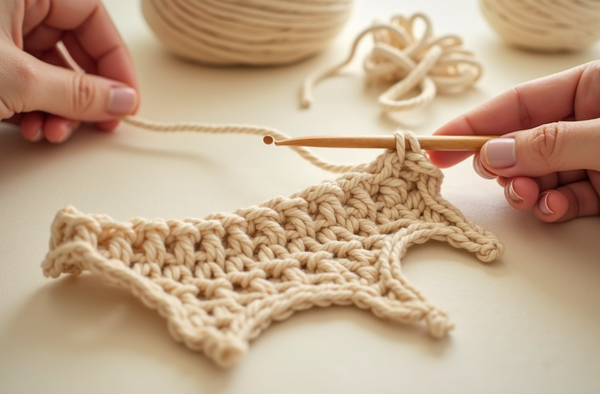
- Choose a familiar, moderately simple pattern. Something you can do mostly by feel, without constantly checking instructions.
- Reduce distractions. Put your phone across the room. Close the extra browser tabs in your mind by writing down anything nagging you first.
- Settle into a comfortable spot. Good light, a supportive chair, a warm drink within reach.
- Give it a few minutes. Flow usually arrives after five to ten minutes of steady stitching — the on-ramp is part of the process.
- Let go of the outcome. Remind yourself you're here for the stitching itself, not to finish by a deadline.
When flow arrives, you'll know: the counting becomes automatic, the stitches appear almost on their own, and that low hum of everyday stress fades into the background. It's one of the gentlest, most accessible forms of moving meditation there is.
When Flow Doesn't Come
Some days, your mind is too busy to settle, and that's okay. Mindful crochet isn't about achieving a perfect state — it's about showing up and paying attention, even imperfectly. On a scattered day, lower the bar: just do one calm row, notice one texture, take three slow breaths. That still counts. That's still practice.

Building a Cozy Mindful Crochet Routine
A single mindful session feels lovely, but the real magic comes when crochet becomes a gentle, recurring part of your day. You don't need a rigid schedule — you need small, low-friction habits that make it easy to reach for your hook when you want a moment of calm.
Anchor It to an Existing Habit
The easiest way to build a routine is to attach it to something you already do. Crochet with your morning coffee. Stitch a few rows while your evening tea steeps. Pick up your hook the moment you sit down after dinner. By linking mindful crochet to an existing anchor, you skip the hardest part — remembering and deciding — and let the habit carry itself.
Create a Calm Corner
Having a dedicated, cozy spot signals to your brain that it's time to slow down. It doesn't need to be elaborate: a comfortable chair, a soft blanket, a small basket with your current project, good light, maybe a candle. When the space is ready and inviting, you're far more likely to actually use it.
Keep Sessions Guilt-Free
Mindful crochet works best when it's free of pressure. Let go of "I should finish this by Friday." There's no productivity quota on calm. Some days you'll stitch for forty minutes; some days for four. Both are complete. The moment crochet starts to feel like another obligation, it stops being mindful — so protect its gentleness fiercely.
Let Small Finishes Reward You
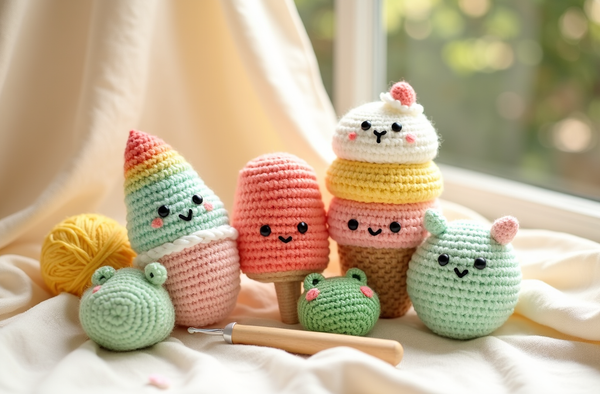
Completing something small — a little amigurumi, a coaster, a single flower — gives a quiet, satisfying sense of closure. In a life full of open loops and unfinished tasks, that small "done" is genuinely soothing. Building your routine around small, completable projects means you get to feel that gentle reward often, which keeps the whole practice inviting.

Best Projects for Mindful Crochet
Not every project supports a mindful, present-focused state equally well. The ones that work best share a few traits: a steady, repeatable rhythm, quick visible progress, forgiving construction, and low stakes if you make a mistake. Here's how common project types compare for mindful stitching.
| Project Type | Mindfulness Fit | Why It Works |
|---|---|---|
| Small no-sew amigurumi | ⭐⭐⭐⭐⭐ Excellent | Continuous rounds, quick finish, no stressful assembly |
| Granny squares | ⭐⭐⭐⭐⭐ Excellent | Modular, endlessly repeatable, deeply rhythmic |
| Simple crochet flowers | ⭐⭐⭐⭐⭐ Excellent | Short, repetitive petals; satisfying quick wins |
| Coasters & small motifs | ⭐⭐⭐⭐ Great | 30–45 minute projects, useful and calming |
| Simple scarves / long rows | ⭐⭐⭐⭐ Great | Pure rhythm, no shaping, meditative repetition |
| Complex colorwork garments | ⭐⭐ Moderate | Higher cognitive load can interrupt the calm |
| Intricate lace patterns | ⭐ Low | Demands constant focus; better when already calm |
Why No-Sew Amigurumi Suits Mindfulness So Well
Traditional amigurumi ends with sewing several parts together — and that fiddly finishing step can inject a spike of pressure right when you wanted to stay calm. No-sew patterns avoid this entirely by working the whole piece in continuous rounds. You end each session with something visually complete, no stressful assembly required. That smooth, uninterrupted rhythm is exactly what a mindful practice thrives on.
Start Simple, Stay Present
If mindful crochet is new to you, resist the urge to pick your most ambitious project. Begin with something small and repetitive that you can do mostly by feel. The simpler the stitch, the faster you'll settle into that quiet, present state — and the more likely you are to come back tomorrow.
Engaging the Senses: Yarn, Color & Sound
Because mindful crochet is so deeply sensory, the materials and environment you choose have a real effect on how calming the practice feels. A little intention here goes a long way.
Texture: Choose Yarn That Feels Good
Your fingers are in constant contact with the yarn, so its texture matters. Soft, smooth cotton or a gentle acrylic offers a consistently pleasant tactile experience that supports the calming effect. Scratchy or splitty yarn, by contrast, can create tiny moments of friction that pull you out of the flow. For dedicated mindful sessions, treat yourself to yarn that genuinely feels lovely in your hands.
Color: Set the Mood
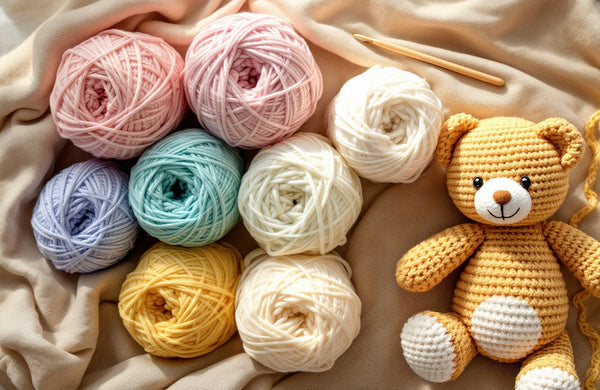
Color influences mood in quiet, real ways. Soft, muted tones — sage, dusty lavender, warm cream, gentle blush — tend to feel soothing and are wonderful for calming sessions. Brighter, cheerful colors can lift your energy when you want a more playful, joyful kind of present-moment focus. Choosing your palette on purpose turns even picking your yarn into a small act of self-care.
Sound: Build a Calm Soundscape
The audio around you shapes the experience. For deeper present-moment focus, try gentle instrumental music, soft ambient sound, nature recordings, or simply quiet. Save the gripping podcast or dramatic show for when you just want to relax rather than practice mindfulness — the more your attention is pulled elsewhere, the less present you tend to be with the yarn.
Scent & Light: The Finishing Touches
A softly scented candle, warm low lighting, and a cozy blanket complete the sensory picture. These small comforts help your body recognize that it's safe to slow down. Over time, this combination of cues becomes its own gentle trigger: sit in your calm corner, light the candle, pick up the hook — and the present moment opens up almost on its own.
Ready to Start Your Mindful Crochet Ritual?
Explore soft, beginner-friendly patterns designed for calm, repetitive, present-focused stitching — perfect for building your cozy mindful routine.
Browse MrsCrochetWorld Patterns →Frequently Asked Questions
What does crochet for mindfulness actually mean?
Crochet for mindfulness means using the rhythmic, repetitive motion of stitching as a way to gently anchor your attention in the present moment. Instead of letting your mind race through worries or to-do lists, you focus on the feel of the yarn, the movement of the hook, and the quiet count of each stitch. It turns an ordinary hobby into a calm, meditative ritual.
Is crochet a real form of mindfulness or meditation?
Crochet is not formal seated meditation, but it shares many of the same qualities: present-moment focus, gentle repetition, and sustained attention on a physical sensation. Many people find craft-based activities an accessible, enjoyable way to practice informal mindfulness. It's a wellness hobby rather than a clinical technique, but the calming, grounding effect is very real for those who practice it.
How is crochet for mindfulness different from crochet for stress relief?
They overlap, but the emphasis differs. Stress relief focuses on lowering tension after a hard day. Mindful crochet focuses on cultivating present-moment awareness while you stitch — noticing textures, breath, and rhythm on purpose. In practice, a mindful approach often deepens the calming effect, because you're actively paying attention rather than just distracting yourself.
Do I need to be experienced to crochet mindfully?
No. In fact, simple beginner stitches are often the most mindful, because a steady, easy rhythm helps you settle into flow quickly. You don't need perfect tension or advanced skills — you only need a repeatable stitch and the willingness to pay gentle attention to the process rather than rushing to the result.
What is a crochet flow state and how do I reach it?
Flow is the absorbed, time-melts-away feeling you get when an activity is challenging enough to hold your attention but not so hard that it stresses you. To reach it in crochet, pick a familiar, moderately simple pattern, remove distractions, and let yourself settle into the repeated motion. After a few minutes, the counting and stitching often become almost automatic, and your mind grows quiet and focused.
What kind of projects are best for mindful crochet?
Small, repetitive, low-stakes projects work best: small amigurumi worked in continuous rounds, granny squares, simple flowers, or coasters. These give you a steady rhythm and quick, satisfying progress without complex shaping or stressful finishing. No-sew amigurumi is especially good because you avoid the pressure of a fiddly assembly step.
How long should a mindful crochet session be?
There's no required length. Even five to ten minutes of slow, attentive stitching can shift how you feel. Many people enjoy a longer session of twenty to forty minutes in the evening, but short, regular check-ins with your hook are just as valuable. Consistency matters more than duration.
Can I practice mindful crochet while watching TV?
You can, though pure background TV can pull attention away from the mindful quality. If your goal is present-moment focus, try quiet music, ambient sound, or even silence for part of your session. If your goal is simply to relax, pairing an easy project with a gentle show is perfectly fine — just notice when your attention drifts and softly bring it back to the yarn.
What if I keep making mistakes — doesn't that ruin the calm?
Mistakes are part of mindful crochet, not a failure of it. Noticing a dropped stitch, pausing, and calmly frogging back is itself a small mindfulness practice: staying present with what is, without harsh self-judgment. Choosing forgiving patterns and soft yarn makes this easier, so a mistake feels like a gentle reset rather than a frustration.
Can mindful crochet help me sleep or wind down?
Many crocheters use a short, slow session as an evening wind-down ritual. Stepping away from screens, softening the lights, and stitching a few calm rows can signal to your body that the day is ending. As always, treat it as a soothing habit that complements good sleep hygiene, not as a medical remedy.
Is crochet for mindfulness suitable for anxiety or busy minds?
Many people with busy, restless minds find mindful crochet a welcoming practice, because it gives the hands something to do while gently occupying the part of the mind that tends to spiral. It's a supportive wellness habit and community-loved ritual — but it isn't a treatment for clinical conditions. If anxiety significantly affects your daily life, please seek professional support alongside any calming hobby.
Do I need special yarn or hooks to crochet mindfully?
Not at all. You only need yarn that feels pleasant in your hands and a comfortable hook. Because mindful crochet is so tactile, many people do gravitate toward soft, smooth yarns in soothing colors, and an ergonomic hook can make longer sessions more comfortable — but none of it is required to begin today.
Summary: Present-Moment Focus, One Stitch at a Time
Crochet for mindfulness turns something you may already love into a gentle, portable way to come home to the present moment. You don't need a quiet room, a special cushion, or years of meditation practice. You need soft yarn, a comfortable hook, a repeatable stitch, and the willingness to pay warm, unhurried attention to the process.
Let your four anchors — touch, rhythm, count, and breath — draw you back whenever your mind wanders. Set the stage for flow with a familiar project and a calm corner. Build a cozy routine you actually look forward to, and choose small, soothing projects that let you feel the quiet reward of finishing. Above all, remember that the goal isn't a perfect object; it's the peaceful, present minutes you spend making it.
When you're ready to begin, a set of small, repetitive patterns is the easiest on-ramp. The 50-in-1 No-Sew Amigurumi Bundle and the 9-in-1 Flower Bundle from MrsCrochetWorld are both wonderful, low-pressure places to start your mindful crochet practice. Wishing you many calm, present, cozy stitches ahead.