Crochet for self care: how a simple yarn ritual helps you slow down
If your days feel loud and your evenings feel rushed, a small hook and a ball of yarn can become a quiet anchor you actually look forward to.

Crochet for self care is one of the gentlest ways to build a calming daily ritual with your own two hands. It isn't about being productive or finishing fast — it's about giving yourself a protected pocket of calm where your hands do something gentle and rhythmic while your mind settles. Even ten quiet minutes counts.
What does crochet for self care actually mean?
The key word is intentional — a pocket of calm you protect on purpose, not a task on a to-do list.
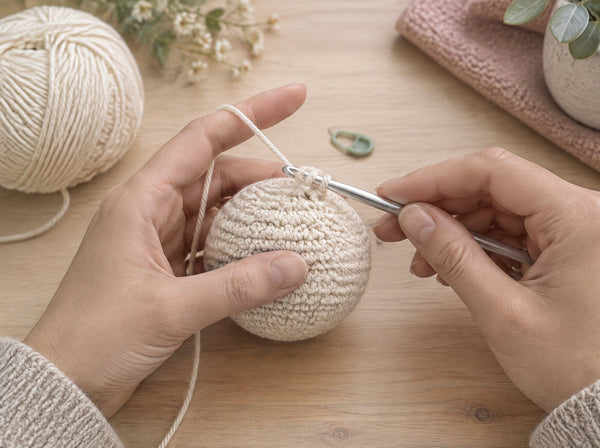
Self care is any small, deliberate habit you choose to look after your own wellbeing. Crochet for self care simply means treating your stitching time as one of those habits. You sit down, pick up a familiar stitch — often nothing fancier than a single crochet repeated in the round — and let the rhythm carry you. That mindset shift, from "making stuff" to "making space," is what turns an ordinary hobby into a ritual.
Because it's hands-on and screen-free, crochet also gives you a natural break from scrolling. Many makers describe it as their "off switch" at the end of a busy day: a cozy, tactile signal that the evening is winding down. And if you're worried you're not skilled enough to relax into it, don't be — here's why crochet isn't as hard as beginners fear.
Why does a simple crochet ritual feel so calming?
Repetition, rhythm, and small finishable wins — the same reasons people love kneading dough or gardening.
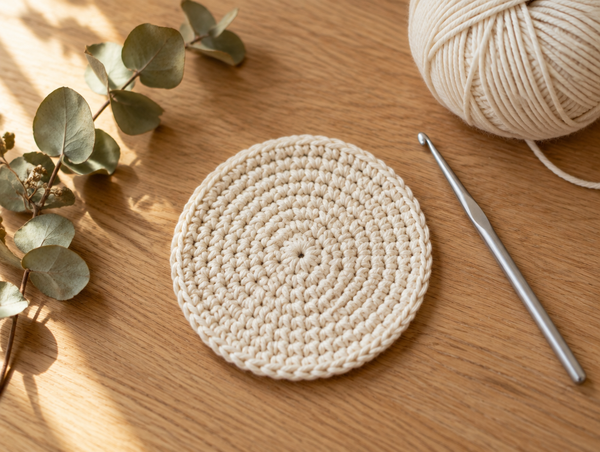
A big part of the calm comes from repetition. Amigurumi and coaster patterns often repeat the same few stitches in the round, so once you find your rhythm, your hands almost move on their own. That steady, predictable motion is easy to sink into, and it quietly trains even, relaxed tension at the same time.
There's also the comfort of a small, finishable goal. A tiny plush or a single coaster is achievable in one or two cozy sittings, so you get a genuine "I made this" feeling without a huge commitment — the same reason one-skein projects are so satisfying. To be clear and honest: crochet is a hobby, not a medical treatment, and it can't replace professional care when you need it. What we can say from years of teaching beginners is that a gentle, repeatable making ritual is a lovely, low-cost addition to a balanced routine.
Which crochet projects are best for winding down?
The most soothing projects share three traits: they're small, they repeat, and they're forgiving.
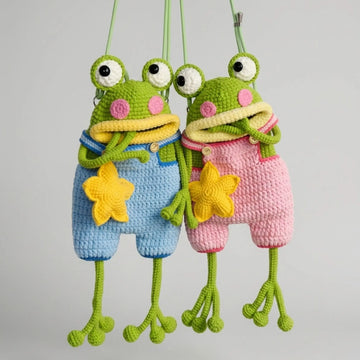
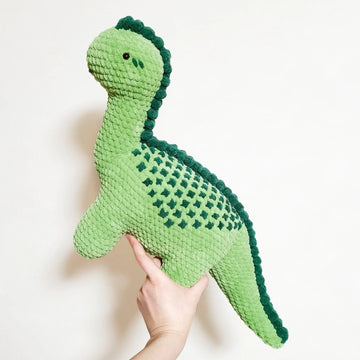
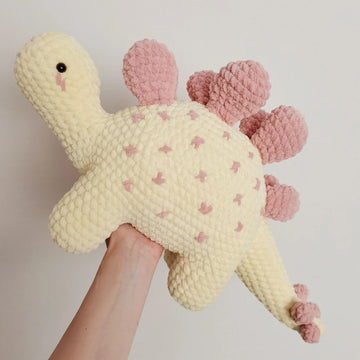
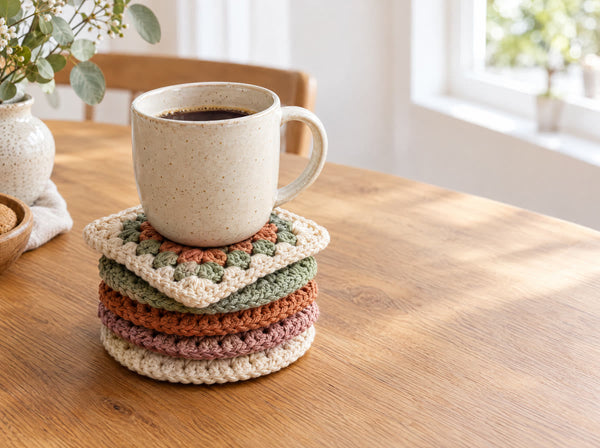
No-sew amigurumi are a favorite because the pieces come together with minimal assembly — less finicky sewing to interrupt your flow, and a cute, cuddly result at the end. Coasters and mini keychains are equally relaxing: each one is a quick, self-contained round of stitching, so you can make just one and feel finished. That "one and done" quality is ideal for a nightly ritual, with no half-built project nagging at you. Soft character plushies add an extra layer of comfort — there's something genuinely heartwarming about making a huggable friend by hand, and handmade pieces double as thoughtful gifts too.
"You are not crocheting to finish. You are crocheting to slow down — the plushie is just a lovely bonus."— Ava Collins, MrsCrochetWorld
Low-stress patterns for cozy evenings
Small, repetitive, forgiving — these three are made for slow, feel-good stitching.

50 No-Sew Amigurumi Patterns Bundle
Best sellerFifty low-stress, minimal-assembly plushies — perfect for tired evenings when you want the calm of stitching without any fiddly sewing at the end. Keep one in your basket as your permanent "no-pressure" project.

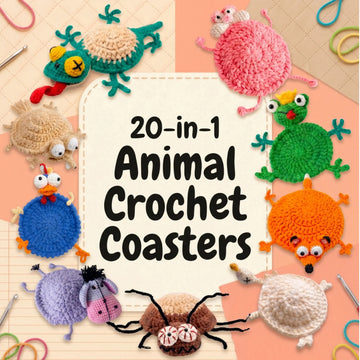
20-in-1 Animal Crochet Coasters Bundle
One and doneEach coaster is a small, self-contained round of stitching you can finish in a single wind-down session. Twenty cute animals means your nightly ritual stays fresh for weeks — read the full coaster bundle guide.

9-in-1 Flower Crochet Bundle
Gentle repeatsRoses, tulips, irises, and daffodils that never wilt. Flower patterns repeat the same soothing petal rounds, so your hands settle into rhythm quickly — and a finished bloom makes a sweet little gift for someone you love.
How do you build a crochet self-care routine?
You don't need a big plan — just a repeatable cue and a low bar you can actually keep.
Anchor it to a daily cue
Attach your stitching to something you already do — evening tea, a bath, the hour before bed. Same chair, same warm drink, same basket of yarn: the routine becomes the signal to slow down.
Start with ten minutes
A short, guilt-free window is far more sustainable than an ambitious goal you skip when tired. If ten minutes turns into forty because you're enjoying it, wonderful — the low bar is what keeps you coming back.
Keep a ready-to-go basket
Zero setup friction. A hook, one soft skein, and a simple project waiting by your favorite chair means you skip the "what should I make?" hurdle and go straight to the calm part.
Match project to energy
On a drained evening, choose a repeat-stitch coaster or a no-sew plush you could almost make with your eyes closed. Save count-heavy patterns for a fresh, focused morning.
Let done be enough
No finish-line pressure, no comparing your stitches to photos online. Your ritual isn't a competition — messy rows still count, and "good enough" is genuinely good enough.
Brand new to crochet?
Our complete beginner guide to crochet walks you through hooks, yarn, and your first stitches — everything you need before your first cozy session.
Keep it cozy: mistakes that turn relaxing crochet stressful
- Starting too hard: a complex, count-heavy pattern on a tired night feels like homework. Save advanced designs for fresh days.
- Chasing speed: racing to finish undoes the relaxation. Let slow be the point.
- Working in bad light: squinting causes tension headaches and tight shoulders. A warm, well-lit corner changes everything.
- Choosing splitty yarn: fighting your materials is the opposite of soothing — pick a smooth, soft, easy-to-see yarn from our beginner yarn guide.
- Making it a chore: if you "should" yourself into it, it stops being self care. Keep it optional and inviting.
- Skipping comfort: an ergonomic mid-size hook (around 3.5–4.0 mm for amigurumi) and a supportive chair let your body relax into the activity instead of bracing against it.
Ready to start your cozy crochet ritual?
Try a free pattern tonight, or pick a low-stress beginner design and give your evenings a calm little anchor — ten minutes is all it takes.
Get a free pattern Shop beginner patternsFrequently asked questions
Is crochet actually good for self care?
Many makers find crochet a calming, screen-free ritual that helps them unwind. It's a hobby, not a medical treatment, but it can be a lovely part of a balanced self-care routine.
Can a total beginner use crochet for relaxation?
Yes. Beginners often find repetitive, no-sew projects the most soothing because they're forgiving and don't require complex counting. Start with one simple stitch repeated in the round — our 7-day beginner guide gets you there gently.
How much time do I need for a crochet self-care ritual?
As little as ten minutes. A short, guilt-free window is easier to keep up than a long session, and it still gives you that hands-on, calming break.
What are the most relaxing crochet projects?
Small, repetitive, forgiving projects — no-sew amigurumi, flower and animal coasters, and mini keychains are favorites for winding down.
Does crochet help with stress?
Lots of makers describe stitching as a helpful way to slow down and refocus. Everyone is different, so treat it as a gentle addition to your routine rather than a guaranteed fix.
Is crochet better than knitting for relaxing?
Neither is objectively better — it's personal. Some find crochet's single-hook rhythm easier to relax into, especially for small amigurumi projects worked in the round.
When is the best time to crochet for self care?
Whenever you naturally want to unwind. Evenings and the hour before bed are popular because the slow rhythm pairs well with winding down.
What if I keep making mistakes?
Mistakes are part of the craft. For a relaxing ritual, choose forgiving patterns where small imperfections don't show, and let "good enough" be enough.
Do I need expensive supplies to start?
No. A comfortable mid-size hook, a soft smooth yarn, and good lighting are plenty. Comfort matters more than cost for a cozy session.
Can crochet be part of a bedtime routine?
Yes — a short, screen-free stitching session can be a pleasant wind-down cue. Keep it low-count and easy so it soothes rather than stimulates.