


Crochet Yarn & Hook Size Guide – Complete Reference
Everything you need to choose the right yarn weight and hook size for any crochet project — from lace to jumbo, mm to US letter, fiber types to amigurumi tips.

Pick up any crochet pattern and the very first line asks for a yarn weight and a hook size. For beginners — and even experienced makers switching to a new project type — that single line can feel like a wall. This guide tears it down. You will learn what yarn weight categories actually mean, how hook sizes translate between metric, US letter, and UK number systems, which fibers work best for which projects, and how to apply all of it the moment you cast on your first stitch.
What does "yarn weight" actually mean?
It describes thickness, not how heavy a ball is — and it controls everything about your finished piece.
The name is a little misleading. Yarn weight has nothing to do with how much a ball tips a scale. It describes the thickness of the strand. The Craft Yarn Council (CYC) established eight standard categories numbered 0 through 7 so crocheters everywhere can communicate clearly. A CYC number on a pattern, a ball band, or a hook label means the same thing whether you are shopping in New York or online at midnight. Knowing your weight is the single most important step in choosing materials, because it determines your hook size, how much yarn you need, and the final size of your project.
Thinner yarn (lower numbers) makes finer, more delicate fabric and works up slowly. Thicker yarn (higher numbers) covers ground fast and feels cozy and substantial. Neither is better — they simply suit different projects. The key is matching the yarn weight to the purpose: a delicate lace shawl and a chunky throw blanket live at opposite ends of the scale, and trying to swap them leads to frustration. For more on choosing projects that suit your current skill level, the skill level guide is a great starting point.
Standard yarn weight chart — CYC 0 to 7
This chart covers every category from lace thread to jumbo roving. The hook ranges listed are standard guidelines for normal-tension crochet; for amigurumi you will often use a smaller hook than shown here to close the fabric tighter.
| CYC # | Yarn weight name | Also called | Common uses | Typical hook (mm) | US letter |
|---|---|---|---|---|---|
| 0 | Lace | Fingering 10-count, crochet thread | Doilies, lacework, fine shawls, thread crochet | 1.5–2.25 mm | Steel 7–B-1 |
| 1 | Super Fine | Fingering, Sock, Baby | Socks, baby garments, fine amigurumi detail | 2.25–3.5 mm | B-1–E-4 |
| 2 | Fine | Sport, Baby | Baby items, light accessories, lightweight hats | 3.5–4.5 mm | E-4–7 |
| 3 | Light | DK, Light Worsted | Amigurumi, garments, dishcloths, lightweight toys | 4.5–5.5 mm | 7–I-9 |
| 4 | Medium | Worsted, Aran, Afghan | Amigurumi, blankets, bags, home décor, hats | 5.5–6.5 mm | I-9–K-10½ |
| 5 | Bulky | Chunky, Craft, Rug | Chunky hats, baskets, scarves, quick accessories | 6.5–9 mm | K-10½–M/N-13 |
| 6 | Super Bulky | Super Chunky, Roving | Cozy throw blankets, statement accessories | 9–15 mm | M/N-13–Q |
| 7 | Jumbo | Roving, arm-crochet yarn | Arm crochet, oversized décor, giant amigurumi | 15 mm+ | S and above |
Most beginners start with medium / worsted (CYC 4) because the strand is easy to see, stitches are straightforward to hook into, and it is available everywhere. Our beginner pattern collection is written primarily for worsted weight so you can pick up any design and go. Once worsted feels comfortable, DK (CYC 3) is a natural next step for amigurumi — the finer strand lets you work on a tighter hook and your toys come out neater and more defined.
"The right yarn and hook do not guarantee a perfect project, but the wrong ones almost guarantee a frustrating one. Take five minutes with this chart before you buy — future-you will be very grateful."— Ava, MrsCrochetWorld
Hook size conversion chart — mm, US letter, and UK number
American patterns use letter codes. Metric hooks show mm. UK patterns use an older number system that runs in reverse. Here is the full translation so any pattern makes immediate sense.

Put your new hook knowledge straight to work
50 Patterns IncludedEvery design in the 50 No-Sew Amigurumi Bundle lists the exact hook size and yarn weight you need — mm and US letter both — so you can shop with total confidence. No sewing required on any of the 50 projects, and step-by-step photos walk you through every stitch.
| Metric (mm) | US size | UK size | Best for (crochet) |
|---|---|---|---|
| 2.0 mm | — | 14 | Thread crochet, lace doilies, fine detail |
| 2.25 mm | B-1 | 13 | Fine amigurumi, lace, thread work |
| 2.5 mm | — | 12 | Tight amigurumi with DK yarn |
| 2.75 mm | C-2 | 12 | Amigurumi with fingering or DK yarn |
| 3.25 mm | D-3 | 10 | Amigurumi, tight stitch definition |
| 3.5 mm | E-4 | 9 | Amigurumi, small toys, crisp fabric |
| 3.75 mm | F-5 | — | Worsted amigurumi, tight fabric |
| 4.0 mm | G-6 | 8 | Worsted toys, blanket squares, beginners |
| 4.5 mm | 7 | 7 | Garments, soft toys, DK weight |
| 5.0 mm | H-8 | 6 | Blankets, bags, beginners with worsted |
| 5.5 mm | I-9 | 5 | Bags, chunky toys, dishcloths |
| 6.0 mm | J-10 | 4 | Blankets, home décor, chunky scarves |
| 6.5 mm | K-10½ | 3 | Bulky accessories, chunky hats |
| 8.0 mm | L-11 | 0 | Bulky blankets, thick yarn projects |
| 9.0 mm | M/N-13 | — | Super bulky yarn, cozy throws |
| 10.0 mm | N/P-15 | — | Super bulky, arm crochet prep |
| 15.0 mm+ | P/Q and above | — | Jumbo / arm crochet, giant décor |
When you are shopping in the US and a UK pattern calls for a "size 9" hook, that is 3.5 mm / US E-4 — not the chunky hook you might imagine. UK numbers run in the opposite direction to US sizes: a higher UK number means a smaller hook. Always verify with the mm measurement, which is universal. Our free tools and charts page has a downloadable version of this table you can keep next to your hook case.
Hook materials — which type suits you?
Hook size determines your stitch; hook material determines your comfort over a long session.
Crocheters often obsess over hook size and barely think about material, but the material you hold for two hours straight matters enormously. Here is a plain-English breakdown of what each type offers:
Aluminium
The all-rounder. Smooth, fast, and inexpensive. Yarn glides easily on the shiny surface, which suits most standard acrylics and cottons. The default starting point for most crocheters and works with almost any yarn type.
Ergonomic (soft-grip)
A metal or plastic shaft seated inside a wide, cushioned handle. Dramatically reduces hand fatigue and wrist strain during long sessions. Worth every penny if you crochet regularly or have any joint discomfort. Highly recommended for beginners building up stamina.
Bamboo and Wood
Slightly more grip than metal, which slows slippery yarns — silk, bamboo fibre, satin-finish acrylic — and keeps them from sliding off accidentally. Warm in the hand, quiet, and beautiful to look at. Avoid soaking in water.
Steel (thread hooks)
Very fine hooks for lace and thread crochet (CYC 0). Sized by number in reverse — a higher steel hook number means a smaller hook. Beginners do not need these; they come into play once you explore doilies and fine lacework.
Plastic and Resin
Lightweight and often very affordable. Good for chunky to jumbo yarns where you need a large hook without the weight of metal. Colour-coded sets are popular with beginners because each size is visually distinct. See our tools and charts page for comparisons.
Tunisian hooks
Long hooks, sometimes with a stopper or cable extension, used for Tunisian crochet — a hybrid technique with a woven-looking fabric. Not needed for standard amigurumi or garment crochet, but worth exploring once your basics are solid. Browse our full pattern collection for ideas.
Fiber types — matching yarn to purpose
Beyond the CYC number, the fiber your yarn is spun from shapes how your project looks, feels, and wears over time.

Learn yarn selection while you make
Beginner FriendlyThe Easy No-Sew Amigurumi Book for Beginners includes 50 simple plushie patterns, each with fiber and weight recommendations already chosen for you. It is the fastest way to build material confidence without overthinking. Pair it with the complete beginner guide for a full foundation.
| Fiber | How it feels | Best for | Watch out for |
|---|---|---|---|
| Acrylic | Soft, springy, lightweight | Beginners, kids' toys, blankets, large projects on a budget — see top picks | Can pill over time; some brands feel squeaky on metal hooks |
| Cotton | Firm, smooth, structured | Amigurumi with crisp stitch definition, bags, dishcloths, summer accessories | Less stretch than acrylic; heavier on the hands over long sessions |
| Wool | Warm, elastic, forgiving | Hats, garments, and any project you will wet-block to shape | Many wools need hand-washing; untreated wool can itch |
| Cotton-acrylic blend | Smooth with a gentle give | Amigurumi and soft toys — combines stitch clarity with softness | Quality and fiber ratio vary widely by brand; read the label carefully |
| Chenille / velvet | Ultra-plush, mink-like surface | Cuddly toys, baby blankets, luxury gift items | Stitches hide in the pile — hard to count and correct; beginners should wait until tension is steady |
| Bamboo blends | Silky, drapey, cool to the touch | Lightweight wearables, summer shawls, cool-weather accessories | Can split on metal hooks; requires even, consistent tension |
| Mohair and alpaca | Airy, halo-effect, incredibly soft | Delicate garments and accessories where a fluffy halo is desired | Difficult to frog (unravel); not recommended for beginners or tight amigurumi work |
For most makers starting out, a smooth acrylic or a cotton-acrylic blend in worsted weight (CYC 4) is the easiest, most affordable, and most forgiving choice. Save the slippery velvet and the splitty bamboo for once your tension is steady and confident. When you are ready to explore specific brand options, the best yarn for beginners article goes deeper with names and links.
Cotton vs. acrylic for amigurumi — the definitive comparison
The most common question on every amigurumi forum — answered plainly, with no fence-sitting.

Cotton's crisp stitch definition in action
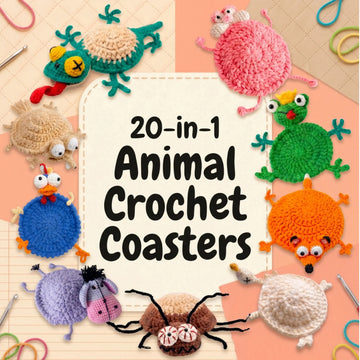
BestsellerOur 20-in-1 Animal Coasters Bundle is a perfect test-drive for cotton yarn. Coasters are small, fast, and the flat fabric really shows off how sharply cotton defines every stitch. Once you feel the difference, you will know exactly when to reach for cotton versus acrylic. Try our free patterns to test a small cotton project at no cost.
| Cotton yarn | Acrylic yarn | |
|---|---|---|
| Stitch definition | Crisp, sharp — shows every detail beautifully | Softer and slightly fuzzier — stitches blend a little |
| Feel and drape | Firm, structured, holds shape without much stuffing | Soft, squishy, cuddly — great for huggable toys |
| Weight on the hook | Heavier; hands may tire faster on large projects | Lightweight; comfortable for long sessions |
| Budget | Generally pricier per yard | Very affordable; available in hundreds of colours |
| Care | Usually machine washable on gentle; may shrink if tumble dried hot | Machine washable; dries quickly; very durable |
| Best for | Collector-quality display pieces, detailed face work, bags, dishcloths | Kids' toys, beginner projects, big blankets, anything washed frequently |
Our recommendation: use cotton when you want a crisp, display-worthy result where every stitch stands out. Use acrylic for soft, cuddly, budget-friendly toys and for anything made for children that will see heavy washing. Whichever you pick, choose DK (CYC 3) or worsted (CYC 4) and a hook one to two sizes smaller than the ball band recommends. The tighter fabric means stuffing never peeks through the stitches.
Understanding gauge — and when it actually matters
Gauge connects hook size, yarn weight, and finished dimensions. Here is when to measure carefully and when to relax.
Gauge (also called tension) is the measurement of how many stitches and how many rows fit within a 10 cm × 10 cm (4" × 4") square of your crocheted fabric. A pattern's gauge tells you what the designer's hands produced with the specified yarn and hook, and your goal is to match it closely. If your gauge is off, the finished size will be off — which matters more for some projects than others.
When gauge matters, and when it does not
- Garments, bags, and wearables: Gauge controls the final dimensions directly. Make a 15 cm × 15 cm swatch, measure it, and adjust your hook size — up if your stitches are too small, down if too large — before starting the full project. Use the gauge calculator to convert swatch measurements into finished dimensions automatically.
- Amigurumi and toys: Exact gauge matters less here. What matters is that your fabric is firm and gap-free so the stuffing never shows. If you can see daylight through your stitches, drop down a hook size. If the fabric feels stiff and hard to work into, go up a size.
- Blankets and home décor: Some flexibility is fine, but a significant gauge difference will make a blanket notably smaller or larger than planned. A quick swatch saves a lot of ripping back later.
Yarn substitution — how to swap without losing your mind
The yarn a pattern specifies is not always available. Maybe it is discontinued, outside your budget, or simply not sold in your country. You can almost always substitute, but the key is matching the CYC weight number — not just the gram weight on the label. Two worsted yarns may weigh the same in grams but have very different yardages per ball, which changes how much you need to buy. Always compare yards per 100 g when substituting.
For amigurumi, substitution is very forgiving — if the substitute is the same weight category and a similar fiber type, you will be fine. For garments, make a gauge swatch in your substitute yarn before committing to the full supply. Use the yarn calculator to estimate how many balls of your substitute you need based on total yardage.
How to read a yarn label (ball band)
Every ball of yarn is wrapped in a label packed with the information you need. Knowing what each section means turns shopping from guesswork into confidence.
- Weight symbol (0–7): A small skein icon with a number inside — the CYC category. Match this to your pattern's required weight first.
- Fiber content: Listed as a percentage breakdown, e.g. "100% cotton" or "50% wool, 50% acrylic." This affects care, feel, and which hook material works best.
- Yardage and grams: The amount of yarn in the ball. Always compare yardage (not just grams) when buying substitutes or calculating how many balls you need.
- Recommended hook size: A useful starting point — for amigurumi you will usually go one to two sizes smaller to tighten your fabric.
- Care instructions: Icons for machine wash, hand wash, do not bleach, tumble dry settings. Essential for baby toys and anything given as a gift.
- Dye lot number: Balls from different dye lots can vary slightly in colour. Buy all the yarn you need from a single dye lot so your finished piece is consistent. Grab one extra ball for safety.
- Gauge swatch info: Usually shows stitches × rows per 10 cm with the recommended hook. Use this as a cross-check alongside your pattern's gauge.
Once you can decode a ball band in thirty seconds, you can shop confidently anywhere — yarn store, online retailer, or craft fair. More tool and chart resources are always on the free tools and charts page.
How much yarn do you need? A practical planning guide
Yarn requirements vary with project size, stitch height, and yarn weight — taller stitches and thicker yarn cover more area per yard so they use less. Here are reliable worsted weight (CYC 4) estimates to guide your shopping. Always buy from the same dye lot and grab one extra ball as a buffer.
Worsted weight yardage estimates by project type
- Small amigurumi (palm-sized toy, approx. 6–8 inches): 50–150 yards
- Medium amigurumi (10–14 inches): 150–300 yards
- Large amigurumi or tote bag: 300–500 yards
- Beanie hat (adult): 150–250 yards
- Baby blanket: 700–1,000 yards
- Throw blanket (approx. 50" × 60"): 1,800–2,400 yards
- Adult sweater: 1,000–1,600 yards depending on size and stitch
For DK weight (CYC 3), yardage requirements drop because the finer yarn creates denser fabric at a tighter hook. A palm-sized DK amigurumi may only need 40–100 yards. The yarn calculator does the math automatically once you enter your project dimensions and chosen yarn weight. Every MrsCrochetWorld pattern lists exact yardage so you never have to guess at the yarn store.
How to hold your hook and yarn — the basics
Comfort and even tension start before you make a single stitch. There are two standard hook grips: the pencil grip (between thumb and forefinger, resting on the middle finger like a pen) and the knife grip (the hook shaft rests in the palm with thumb and forefinger near the thumb rest). Neither is correct or incorrect — try both and keep whichever feels natural and pain-free.
For yarn tension, run the working yarn loosely over the index finger of your non-hook hand so it feeds smoothly with each stitch. If your stitches are tight and hard to insert the hook into, relax your grip on the yarn. If your stitches are loose and floppy, hold the yarn a little firmer. Tension settles naturally within the first project, so choose a forgiving beginner pattern and let your hands find their rhythm. Our complete beginner guide to crochet covers the first steps in full detail, including photos of both grip styles.
Beginner materials checklist
Before your first session — or your hundredth — make sure these essentials are within reach:
What every crocheter needs in their kit
- Yarn in the weight your pattern specifies (plus one extra ball from the same dye lot)
- The correct hook size plus one size up and one size down for tension adjustments
- Locking stitch markers — a lifesaver for working in the round or marking row starts
- Sharp scissors with a pointed tip for clean cuts and trimming ends close to the fabric
- Yarn needle (blunt-tip tapestry needle) for weaving in ends and seaming pieces together
- Polyester fiberfill for stuffing amigurumi and toys
- Safety eyes in assorted sizes, or embroidery thread for stitched faces
- Row counter or notepad to track rounds and stitch counts as you go
- A small ruler or gauge ruler for swatch measuring and checking your hook size
That is everything you genuinely need to start beautiful projects today. As you grow as a maker, you will naturally discover your preferred yarn brands, hook styles, and tools — but do not let the search for the "perfect" supplies delay your first cast-on. Explore patterns in our beginner collection to get started right now, and bookmark the crochet glossary for whenever a pattern term puzzles you.
Linking hooks, yarn, and stitches — putting it all together
Every stitch tutorial you follow assumes you have the right yarn and hook in hand, because the pairing shapes the outcome. When you learn the single crochet, the tightness of your fabric depends on your hook-to-yarn ratio. When you lay a chain stitch foundation, a heavy hook on thin yarn gives you a floppy, stretched chain; the right match gives you a neat, even row. The double crochet is where hook size has the most visible effect — on a 5 mm hook with worsted, your doubles are open and drapey; drop to a 3.5 mm hook on the same yarn and the fabric becomes dense and firm.
Starting a project with a magic ring is especially dependent on hook-yarn fit. On the wrong pairing, the ring either will not close properly or the stitches crowd each other. Understanding how to read a crochet pattern in US terms will also help you interpret hook and weight notation correctly before you start. The skill level guide maps projects to experience levels, and the gauge calculator confirms whether your swatch matches the pattern in seconds.
Frequently asked questions
What size crochet hook should I use for amigurumi?
Most amigurumi patterns call for a hook one to two sizes smaller than the yarn label recommends — typically 2.5 mm to 4.0 mm with DK or worsted yarn. The smaller hook creates dense, gap-free fabric so stuffing never shows through. If you can see light through your stitches, drop down one hook size. Every MrsCrochetWorld pattern lists the exact size so you never need to guess.
What is the best yarn for beginners to crochet with?
A smooth, light-coloured medium / worsted weight (CYC 4) acrylic yarn is the best starting point for most beginners. It is affordable, widely available, and the plump strand is easy to see and hook into. Avoid dark colours (hard to spot mistakes), fuzzy or chenille yarns (stitches hide in the pile), and novelty yarns until your tension is consistent. Our best yarn for beginners guide names specific brands worth trying.
How do I convert hook sizes from mm to US letters?
A few key benchmarks: 4.0 mm = US G-6, 5.0 mm = US H-8, 6.0 mm = US J-10. For UK sizes, note that UK numbers run in reverse — a higher UK number means a smaller hook. The mm measurement is the universal standard, so always verify by mm whenever a pattern gives only a letter or number code. The full table is on this page.
Does yarn weight mean how heavy the ball is?
No — yarn weight describes the thickness of the strand, not how much the ball weighs on a scale. The Craft Yarn Council system runs from 0 (lace — very thin thread) to 7 (jumbo — thick as a rope). Two balls that weigh the same number of grams can be completely different yarn weights, because finer yarn needs more length to reach the same gram weight.
Is cotton or acrylic yarn better for amigurumi?
Both are excellent choices that suit different goals. Cotton gives crisp, sharp stitch definition and a firm, display-worthy finish — ideal for collector pieces and detailed faces. Acrylic is softer, cheaper, machine-washable, and more forgiving for beginners — ideal for cuddly toys that children will hug and wash repeatedly. Cotton-acrylic blends offer a solid middle ground. Choose based on the look, feel, and care requirements of your project.
How do I know if my gauge is correct?
Work a swatch larger than you need — aim for at least 15 cm × 15 cm — then measure 10 cm × 10 cm in the centre (away from curling edges). Count the stitches across and the rows down. If you have more stitches than the pattern specifies, your stitches are too small — go up a hook size. If you have fewer stitches, go down a hook size. For amigurumi, forget exact counts; just aim for fabric with no visible gaps. Use our gauge calculator to run the numbers automatically.
How much yarn do I need for a small beginner project?
For worsted weight (CYC 4), here are reliable starting estimates: a small palm-sized amigurumi needs roughly 50–150 yards; a beanie hat needs 150–250 yards; a baby blanket needs 700–1,000 yards. Always check the yardage on the ball band rather than just the gram weight, and buy one extra ball from the same dye lot as a buffer. The yarn calculator gives you a precise figure for any project.
What hook material is best for beginners?
An aluminium hook with an ergonomic soft-grip handle is the best all-round choice for beginners. The smooth metal surface lets yarn glide easily, and the wide cushioned handle reduces hand fatigue during practice sessions. A quality ergonomic aluminium hook in size G-6 (4.0 mm) or H-8 (5.0 mm) covers the vast majority of beginner-friendly worsted weight patterns. Our guide to the best crochet hooks for beginners covers specific models in detail.
Can I substitute a different yarn than the pattern calls for?
Yes, with one important rule: match the CYC weight number of the original yarn. A yarn in the same weight category will behave similarly on the same hook. Beyond that, compare yards per 100 g (not just gram weight) to calculate how many balls you need, and make a gauge swatch in your substitute before starting a garment. For amigurumi, substitution is very forgiving as long as the weight category matches. Use the yarn calculator to work out exact quantities.
Ready to put your yarn and hook knowledge to work?
Browse patterns that already have every material detail chosen for you — yarn weight, hook size in mm and US letter, total yardage, and step-by-step instructions in plain US crochet terms.
Try a free pattern Shop beginner patternsLoved by 5,000+ crocheters
Instant PDF downloads — start making in the next five minutes.
Put your new skills to use
Ready for your next crochet project?
Choose a beginner-friendly pattern with clear US terms, helpful photos and an instant PDF download.
Browse beginner-friendly patternsKeep learning — explore the hub 🧶
Pick your next topic. Every free guide, chart and calculator is one tap away.
From the Crochet Blog 📖
View all articles →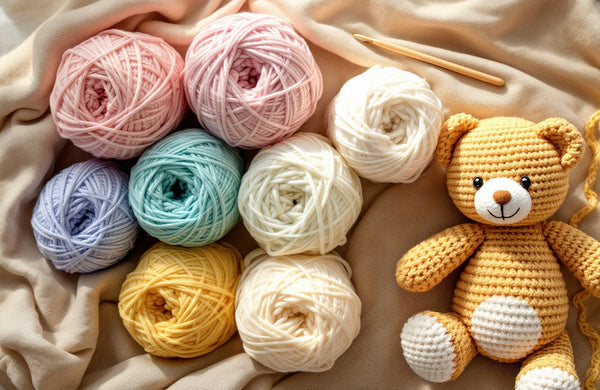
Best Yarn for Amigurumi: The Complete Guide to Choosing the Right Fiber
Crochet Tips & How-To Best Yarn for Amigurumi: The Complete Guide to Choosing the Right Fiber Cotton, chenille, or acrylic? Learn exactly which yarn gives your...
Read full article
Crochet for Mindfulness: Present-Moment Focus with Hook and Yarn
Crochet Wellness Crochet for Mindfulness: Present-Moment Focus with Hook and Yarn How the quiet rhythm of stitching pulls you into the present moment — and how...
Read full article
Squishy Summer Buddies: Easy No-Sew Summer Amigurumi Patterns (2026)
Summer Crochet · No-Sew · Beginner By Ava Collins · Updated July 2026 · 🕑 8 min read 🕑 10 min read Squishy Summer Buddies: Easy No-Sew...
Read full article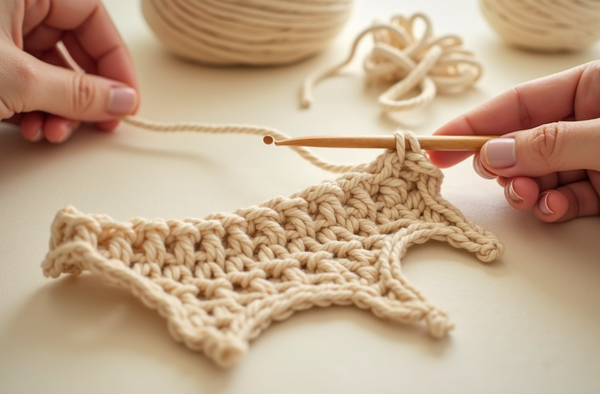
How to Join Yarn in Crochet: 5 Clean Methods for Seamless Projects
Ran out of yarn mid-row? Learn 5 clean, beginner-friendly ways to join yarn in crochet - the invisible join, magic knot, Russian join and more -...
Read full article