


Crochet Glossary — 50+ Terms Every Maker Should Know
Every stitch name, abbreviation, and technique term explained in plain English — your permanent reference guide from chain stitch to invisible decrease and beyond.

A pattern drops a term you don't recognize and suddenly the whole project stalls. That moment of confusion is exactly why this crochet glossary exists. Whether you're wondering what sc means in crochet, puzzling over a "yo" or "FLO" instruction, or trying to decode the difference between US and UK crochet terms, this page has your answer — organized, expanded, and explained in the warm, practical style you'll find across every MrsCrochetWorld pattern.
Think of this page as your permanent crochet dictionary — bookmark it now and return whenever a pattern uses unfamiliar crochet terminology. Every term is cross-linked to deeper tutorials so you can go from definition to detailed walkthrough in one click. New to the craft entirely? Start with the Complete Beginner Guide to Crochet before diving in here.
Why crochet terminology matters
Crochet patterns are written in a compressed shorthand. A single line — "Rnd 4: (sc, inc) x6 (18)" — contains four distinct concepts: a round number, a stitch name, a technique, and a stitch count. Once you know the crochet stitch terms, that line becomes instantly clear. Until you do, even a "beginner-friendly" pattern can feel like a foreign language.
The good news: the core vocabulary is small. Master roughly thirty abbreviations and you can read the vast majority of patterns in print, on Etsy, and across every MrsCrochetWorld design. This crochet dictionary covers all of them — plus the intermediate and finishing terms that unlock more complex projects as you grow.
One important note before we begin: US and UK crochet terms use the same words to mean different stitches. A US single crochet is called a double crochet in the UK. Every MrsCrochetWorld pattern clearly states "US terms" at the top, so you'll never be left guessing which convention applies. If you want to quickly check hook sizes or convert gauge numbers, our free crochet tools and charts page has every reference chart in one place.
"Learning crochet terminology is a one-time investment that pays off every single time you open a pattern — spend an afternoon with this glossary and nothing will stop you."— Ava, MrsCrochetWorld
The six essential crochet stitches — US terms explained
Six foundational stitches form the backbone of almost every pattern you will ever encounter. Know these and you can read the majority of crochet designs in existence.

Chain (ch) and Slip Stitch (sl st)
Foundation stitchesThe chain stitch (ch) is the very first thing every crocheter learns. You pull a loop through another loop to create a flexible, linked foundation. Almost every project starts with a foundation chain or a magic ring, and chains appear throughout patterns as turning chains, decorative picots, and structural spaces. Our full step-by-step guide on how to chain stitch in crochet walks you through the motion and common mistakes to avoid.
The slip stitch (sl st) is the flattest, shortest stitch in the crochet vocabulary — it adds almost no height and is used in three key ways: joining the end of a round to its beginning, moving your yarn to a new position without building height, and creating a firm surface-crochet join. When a pattern says "sl st to join," you insert your hook, yarn over, and pull through both the stitch and the loop already on your hook in one motion.

Single Crochet (sc) and Half Double Crochet (hdc)
Core stitchesThe single crochet (sc) is the workhorse of the crochet world — tight, sturdy, and precise. It forms the backbone of amigurumi, washcloths, and countless other projects. To work a sc: insert hook into the stitch, yarn over and pull up a loop (two loops on hook), yarn over again and pull through both loops. One loop remains on the hook and you've completed one sc. Our how to single crochet tutorial covers it in depth with photos for every step.
The half double crochet (hdc) sits between sc and dc in height and creates a softer, slightly drapier fabric. You yarn over before inserting the hook, which creates three loops on the hook after pulling up the loop, then you yarn over and draw through all three at once. The result is quicker than sc and produces a lovely texture for hats, scarves, and lightweight garments.

Double Crochet (dc) and Treble Crochet (tr)
Height stitchesThe double crochet (dc) is arguably the most versatile stitch in the crochet terminology toolkit. Roughly twice the height of sc, it creates beautiful drape and builds fabric fast. Method: yarn over, insert hook, yarn over and pull up a loop (three loops on hook), yarn over and pull through two loops (two remain), yarn over and pull through the final two loops. See our full how to double crochet guide for photos of every step.
The treble crochet (tr) — also called triple crochet — is even taller and creates an open, airy fabric. You yarn over twice before inserting the hook, resulting in four loops, then work off two loops at a time in three separate steps. Treble crochet appears in lace patterns, filet crochet, and any stitch pattern that needs dramatic vertical height.
Complete A–Z crochet abbreviations meaning guide
Every abbreviation you'll encounter in US-term patterns — with its full meaning, pronunciation, and practical context.
| Abbreviation | Full Term | What it means in practice |
|---|---|---|
| BLO | Back loop only | Insert hook under the back loop of the stitch only. Leaves the front loop as a visible horizontal ridge on the fabric face. |
| BPdc | Back post double crochet | Work a dc around the post (vertical bar) of the stitch below, inserting from behind. Creates raised ribbing on the back side of the fabric. |
| BPsc | Back post single crochet | Same technique as BPdc but using sc height — used in textured and ribbed fabrics. |
| ch | Chain | A basic interlocked loop. "ch 12" means make 12 chain stitches in a row. |
| ch-sp | Chain space | The open loop or gap formed by chaining. You work into the space itself, not into the chain stitches. |
| cl | Cluster | Multiple incomplete stitches worked into different anchor points, then closed together as one — creates a gathered, textured effect. |
| cont | Continue | Keep working in the established pattern without changing anything. |
| dc | Double crochet | US term: yo once, insert, yo, pull up loop, (yo, pull through 2 loops) twice. Medium-height stitch — the most versatile in the vocabulary. |
| dc2tog | Double crochet 2 together | A dc decrease: work two incomplete dcs into adjacent stitches, then close all together. Removes one stitch from your count. |
| dec | Decrease | Reduce stitch count by one. In sc patterns this is sc2tog or an invisible decrease (invdec). |
| dtr | Double treble crochet | Yarn over 3 times before inserting — an extra-tall stitch for lace and specialty stitch patterns. |
| FLO | Front loop only | Insert hook under the front loop only — leaves the back loop standing as a ridge on the wrong side. |
| FPdc | Front post double crochet | Work a dc around the post from the front — creates raised ribbing visible on the right side of the fabric. |
| FPsc | Front post single crochet | Same as FPdc using sc height — used for surface texture and ribbed bands. |
| hdc | Half double crochet | Yo before inserting hook, then draw through all three resulting loops at once. Sits between sc and dc in height. |
| inc | Increase | Work 2 stitches into the same stitch — adds one to your stitch count and expands the circumference or width. |
| invdec | Invisible decrease | Insert hook through front loops of next 2 stitches simultaneously, yo, pull through both front loops, yo, pull through remaining 2. Produces a seamless decrease — essential for smooth amigurumi surfaces. |
| lp(s) | Loop(s) | Refers to loops on the hook or at the top of a stitch. |
| MR | Magic ring / magic loop | An adjustable starting loop for in-the-round work that closes completely with no center hole. See our magic ring tutorial. |
| pb | Picot | A small decorative loop formed by chaining 3 (or specified number) and slip-stitching back into the first chain. Common in lace edgings. |
| PM | Place marker | Insert a stitch marker at this point to track the round start or mark a key stitch position. |
| rep | Repeat | "Rep from *" or "(sc, inc) x6" — work the indicated sequence again as many times as stated. |
| rnd | Round | One complete circuit when working in the round (circles, spirals, tubes). |
| row | Row | One pass across the work when crocheting back and forth to make flat pieces. |
| RS | Right side | The face of the fabric that should show on the finished item. |
| sc | Single crochet | US term: insert hook, yo, pull up loop, yo, pull through both loops. The tightest standard stitch — backbone of amigurumi. |
| sc2tog | Single crochet 2 together | Pull up loops in next 2 stitches separately (3 loops on hook), yo and draw through all three at once. An sc decrease. |
| sk | Skip | Pass over the next stitch without working into it. |
| sl st | Slip stitch | Insert hook, yo, pull through both the stitch and the loop on hook in one motion. Adds no height. |
| sp | Space | An open area — usually a chain space — that you work stitches into rather than into a stitch. |
| st(s) | Stitch(es) | A generic term for any worked loop in the fabric. |
| t-ch | Turning chain | Chains made at the end of a row before turning — may or may not count as the first stitch depending on the pattern. |
| tog | Together | Used in decrease instructions — sc2tog, dc2tog, etc. |
| tr | Treble crochet | Yo twice before inserting hook — creates a tall, open stitch used in lace and openwork patterns. |
| WS | Wrong side | The back of the fabric — usually hidden inside a finished item. |
| yo | Yarn over | Wrap the working yarn over the hook from back to front. The fundamental motion in every crochet stitch. |
Need to double-check gauge before starting? Our crochet gauge calculator converts stitch counts instantly. To match yarn weight to hook size, the Yarn and Hook Size Guide has the full reference chart.
Yarn and hook crochet terminology explained
Understanding yarn weight, gauge, and hook sizing unlocks every pattern's materials list and helps you substitute yarn confidently.

Yarn Weight (CYC System)
Materials termYarn "weight" describes thickness, not mass on a scale. The Craft Yarn Council (CYC) scale runs from 0 to 7: 0 (lace / thread), 1 (super fine / sock / fingering), 2 (fine / sport), 3 (light / DK), 4 (medium / worsted), 5 (bulky), 6 (super bulky), 7 (jumbo). Most beginner amigurumi patterns call for CYC 4 (worsted) or CYC 3 (DK). CYC 4 is the most forgiving — the fabric is easy to see, the scale of the stitches makes counting simple, and mistakes are easy to spot before you've worked too far. The yarn and hook guide lists recommended hook sizes for every weight and includes a conversion chart for international sizing systems. For estimating how much yarn a project needs, use the crochet yarn calculator.

Gauge and Tension
Sizing termGauge (US) — also called tension in UK patterns — is the number of stitches and rows that fit into a given measurement, typically a 4-inch (10 cm) square. Gauge is the single most important factor in making a finished item come out at the right size. If your gauge is tighter than the pattern specifies, your work will be smaller; looser gauge produces a larger result.
For amigurumi, gauge matters somewhat less than for wearables — a slightly off-gauge toy is just bigger or smaller, not ill-fitting. But gauge still controls how densely packed the fabric is, which affects whether stuffing shows through. Most toy patterns recommend a hook one size smaller than the yarn label suggests to produce a tighter, sturdier fabric. Use our gauge calculator to convert between gauges when substituting yarn.
Technique terms: from foundation to finishing
These crochet dictionary entries cover the how-to actions you'll encounter throughout any pattern — from the very first stitch to the final weave-in.
Working in the round vs. working flat
Working flat means crocheting back and forth in rows, turning the work at the end of each pass. You make a turning chain to reach the correct height for the next row's first stitch. Flat work produces rectangles and squares — scarves, dishcloths, blanket panels, and flat motifs.
Working in the round means crocheting in a continuous spiral or in joined rounds without turning. Most amigurumi is worked this way, starting from a magic ring and spiraling upward and outward. In a spiral (the standard for amigurumi), there is no joining slip stitch at the end of a round — you place a stitch marker at the first stitch of each round and simply keep working. For flat circular motifs like granny squares, each round is joined with a sl st and begins with a turning chain.
Magic ring (MR)
The magic ring — also called magic loop or adjustable ring — is the standard way to begin working in the round for amigurumi. You form an adjustable loop around your fingers, work the specified number of stitches into it, then pull the tail closed to eliminate any gap. This leaves no visible hole in the center, which is essential for amigurumi faces and round motifs. Our detailed magic ring tutorial shows every step with photos and common troubleshooting tips.
Increase (inc) and invisible decrease (invdec)
An increase means working 2 complete stitches into one stitch, adding one to your total count. Increases spaced evenly around a round grow the circle outward — the foundation of every amigurumi sphere or flat circle motif. The standard increase for sc-based work is simply "2 sc in next st."
The invisible decrease is the preferred method for amigurumi because it lies flat against the fabric without a visible bump or hole. Insert your hook through the front loops only of the next two stitches simultaneously, yarn over, pull through both front loops at once, yarn over and pull through the remaining two loops. Compare this to sc2tog (which inserts into the full stitch both times) and you'll notice invdec produces a noticeably cleaner surface — worth the extra attention. The skill level guide explains when each decrease is the right choice.
Front and back loop techniques (FLO / BLO)
Every crochet stitch has two loops at its top: the front loop (facing toward you) and the back loop (facing away). Working into FLO (front loop only) or BLO (back loop only) leaves the unused loop standing up as a visible ridge. This technique is used for ribbing bands, textured joins, and design details throughout toys and garments. It's a subtle intervention — just a different insertion point — but the visual effect is striking.
Post stitches (FPdc / BPdc)
Post stitches are worked around the vertical bar (the "post") of a stitch from the previous row or round, rather than into the top two loops as normal. Front post double crochet (FPdc) creates raised ridges on the right side of the fabric; back post double crochet (BPdc) creates them on the wrong side, which pushes raised texture to the right side. Alternating FPdc and BPdc across a row produces classic ribbing — a standard technique for hat brims, cuffs, and waistbands.
Bobble, cluster, and shell stitches
A bobble is made by working multiple dc stitches into one stitch, each left incomplete (last yarn-over not pulled through), then closing all loops together at once. The gathered tops push outward, creating a three-dimensional bump on the fabric surface. Clusters are similar but worked across multiple different anchor points — incomplete stitches span adjacent stitches before being closed together. A shell is several complete stitches worked into a single stitch or chain space, fanning outward. Shells are a cornerstone of decorative edgings, ripple afghans, and lace patterns.
Weaving in ends
Every time you finish a color or cut the yarn, you're left with a tail. Weaving in ends means threading that tail onto a tapestry (blunt) needle and running it through the wrong side of surrounding stitches in multiple directions until secure and invisible. In amigurumi, ends are typically woven into the stuffed interior so there's no trace on the outside surface. Do not simply tie a knot — knots work loose over time.
Blocking
Blocking is the process of gently shaping a finished piece using moisture and light tension, then allowing it to dry in the desired shape. Wet blocking (soaking, pressing out excess water, and pinning to measurements on a foam mat) is most effective for natural fibers such as cotton, wool, and bamboo. Acrylic responds better to steam or a light spritz. Blocking smooths uneven tension, opens lace patterns fully, and ensures flat items like coasters and motifs lie perfectly flat.
Frogging and tinking
Frogging means unraveling your work by pulling the hook out and pulling the yarn to rip back a significant number of stitches or rounds. The name comes from "rip it, rip it" (ribbit). Experienced makers frog constantly — it is a normal part of the process, not a failure. Tinking (knit spelled backwards) refers to undoing stitches one at a time, the reverse of how they were made. Use tinking when you only need to correct a stitch or two rather than pulling back an entire section.
Six key crochet concepts every maker should know
From reading pattern notation to understanding project structure — the ideas behind the terminology.
Stitch count
The number in parentheses at the end of a round instruction — e.g. "(18)" — is your expected total after completing that round. Always verify it. Off by one? Recount before moving forward. Free counting aids are on our free tools and charts page.
Reading pattern notation
"(sc, inc) x6" means repeat the group in parentheses six times. An asterisk marks the start of a repeated section: "rep from * to end" means return to that asterisk and continue. Full explanation at our guide on how to read a crochet pattern.
US vs. UK terms
US sc = UK dc. US hdc = UK htr. US dc = UK tr. US tr = UK dtr. When a pattern doesn't specify, look at the stitch description — if "sc" requires two yarn-over steps, it's US. All MrsCrochetWorld patterns use US terms throughout, stated clearly at the top of every PDF.
Turning chain
When working flat, you chain a set number at the end of a row before turning. sc rows: ch 1 (does not count as a stitch). hdc rows: ch 2 (counts as first hdc in many patterns). dc rows: ch 3 (counts as first dc). Always check the pattern's specific instruction rather than assuming.
Foundation chain
The very first row of chains forming the base of a flat project. Count carefully — one extra or missing chain changes the finished width. When working into a foundation chain, check whether the pattern asks you to work into the top loop, the back bump, or both loops.
Yarn fiber types
Acrylic is durable and machine-washable — ideal for toys and gifts. Cotton is firm and absorbent — great for dishcloths. Wool blocks beautifully but may felt in hot water. See our best yarn for beginners guide for specific brand picks at every price point.
Specialty and intermediate crochet terms explained
Once you have the basics covered, these crochet terminology entries open up a wider world of patterns and techniques to explore.
Amigurumi
The Japanese art of crocheted (or knitted) stuffed toys. In crochet, amigurumi is almost always worked in the round in a continuous spiral using single crochet. The tight sc fabric prevents stuffing from showing through gaps, and the uniform structure makes shaping limbs, ears, and appendages reliable and repeatable. MrsCrochetWorld specializes in amigurumi — browse the easy beginner patterns if you're just starting out, or explore the full collection for hundreds of designs at every skill level.
Granny square
A classic motif worked in the round, traditionally built from clusters of double crochets separated by chain spaces. Each cluster is three or more dc worked into the same chain space, creating the characteristic "petal" look. Granny squares are worked in joined rounds (not a spiral), often with color changes at each round's start, and can be joined into blankets, bags, cushion covers, and garments. The motif has hundreds of variations — hexagons, flowers, solid squares — but all share the same basic construction logic.
Tapestry crochet (colorwork)
A technique for crocheting images or geometric motifs by carrying unused yarn colors across the wrong side of the work and crocheting over them as you go. The result is a thick, structured fabric with a colored motif visible on the front — popular for bags, baskets, purses, and wall hangings. Because both yarns are always present (one being worked, one being carried), the fabric is double-stranded in thickness.
Tunisian crochet
A hybrid technique that uses a long hook (like a knitting needle with a hook at one end, or a hook with an extension cable). On the forward pass you pick up all stitches across the row, leaving them on the hook. On the return pass you work them off two at a time. The resulting fabric looks woven and textile-like — smooth on the front, with a distinctive barred texture on the back. Tunisian simple stitch, full stitch, and smock stitch are the most common variants.
Surface crochet
A decorative technique worked on top of a finished fabric. Insert the hook through existing stitch gaps on the right side, hook the working yarn from behind, and pull it through — this creates a raised chain line on the surface. Use surface crochet to add stripes, outlines, lettering, or cartoon-like features to completed pieces without constructing them separately.
Seaming methods
Flat pieces are typically joined with one of three methods: a slip stitch seam (on the RS for a decorative raised ridge, on the WS for a clean invisible seam), a single crochet seam (creates a visible, textured ridge that can be a design feature), or a mattress / whip stitch sewn with a tapestry needle. MrsCrochetWorld no-sew patterns eliminate seaming entirely by crocheting parts directly onto the body — see the 50 no-sew amigurumi bundle for a fully worked example.
Stash and WIPs
The stash is the collection of unused yarn a crocheter accumulates. "Stash busting" means deliberately choosing small projects that use up existing yarn rather than buying new. Amigurumi, coasters, and keychains are all classic stash busters. WIPs (Works in Progress) are projects that have been started but not yet finished — most committed crocheters have several running at once.
Ready to put these terms to work? The how it works page explains exactly how MrsCrochetWorld patterns are structured, then you can dive straight into the full pattern collection or the free patterns to practice with zero risk. If you want to check your skill level before selecting a pattern, the skill level guide explains what beginner, intermediate, and advanced means in practical, honest terms.
Quick reference: US to UK crochet term conversion
- US chain (ch) = UK chain (ch) — same in both systems
- US slip stitch (sl st) = UK slip stitch (sl st) — same in both systems
- US single crochet (sc) = UK double crochet (dc)
- US half double crochet (hdc) = UK half treble crochet (htr)
- US double crochet (dc) = UK treble crochet (tr)
- US treble crochet (tr) = UK double treble crochet (dtr)
- US double treble (dtr) = UK triple treble (trtr)
- All MrsCrochetWorld patterns use US terms — this is stated at the top of every PDF.
Hook sizes, materials, and equipment terminology

Hook Size Systems and Materials
Equipment termsCrochet hooks are sized by shaft diameter in millimeters — the universal system. The US also assigns letter and number codes: G/6 = 4.0 mm, H/8 = 5.0 mm, I/9 = 5.5 mm, J/10 = 6.0 mm. These US codes don't always align precisely between brands, so always go by the millimeter number. Hook materials affect how yarn glides: aluminum is slippery and fast for most yarn types; bamboo or wood grips yarn slightly, giving beginners more control; inline hooks (like Susan Bates) have a pronounced throat; tapered hooks (like Clover Amour) have a gentler throat geometry that many makers find easier on the hands. Ergonomic rubber-handled hooks reduce fatigue significantly during long sessions. Our best crochet hooks for beginners guide compares the most popular options side by side.
Frequently asked questions about crochet terminology
What does sc mean in crochet?
SC stands for single crochet — the most fundamental US crochet stitch. To work it: insert your hook into the stitch, yarn over and pull up a loop (two loops on hook), yarn over again, and pull through both loops. One loop remains on your hook and you have completed one sc. Single crochet produces a tight, sturdy fabric and is the backbone of amigurumi and washcloth patterns. Our how to single crochet tutorial covers every step in detail.
What does dc mean in crochet?
DC stands for double crochet — a medium-height US stitch roughly twice as tall as a single crochet. Method: yarn over, insert hook into stitch, yarn over and pull up a loop (three loops on hook), yarn over and pull through two loops (two remain), yarn over and pull through the final two loops. Double crochet creates drape and builds fabric quickly, making it ideal for blankets, garments, and decorative pieces. Our how to double crochet guide shows every step with photos.
What does hdc mean in crochet?
HDC stands for half double crochet — a US stitch that sits in height between single and double crochet. Yarn over before inserting your hook, pull up a loop (three loops on hook), then yarn over and draw through all three loops at once. The resulting stitch is soft, slightly taller than sc, and faster to work than dc. It is widely used for hats, baby items, and any project where you want more drape than sc provides without the full height of dc.
What does sl st mean in crochet?
SL ST stands for slip stitch — the flattest stitch in the crochet toolkit. It adds almost no height to the work. To make one: insert your hook into the indicated stitch, yarn over, and pull through both the stitch and the loop on your hook in a single motion. Slip stitches are used to join rounds, to travel across stitches without adding height, and to create an invisible seam when joining two edges together.
What is the difference between US and UK crochet terms?
US and UK crochet systems use the same names for different stitches — a common source of confusion. Key differences: US single crochet (sc) = UK double crochet (dc); US half double crochet (hdc) = UK half treble (htr); US double crochet (dc) = UK treble crochet (tr); US treble crochet (tr) = UK double treble (dtr). Always check which term set a pattern uses before you begin. All MrsCrochetWorld patterns use US terms exclusively, stated clearly at the top of every PDF.
What does MR mean in a crochet pattern?
MR stands for magic ring, also called magic loop or adjustable ring. It is the standard method for starting projects worked in the round — especially amigurumi — because it allows you to pull the center completely closed with no visible hole. You form an adjustable loop around your fingers, crochet the specified number of stitches into it, then pull the tail to close. Our magic ring tutorial covers the full technique with step-by-step photos.
What does inc and dec mean in crochet?
INC (increase) means working two stitches into the same stitch, adding one to your total count and making the work grow wider or increasing the circumference of a round. DEC (decrease) means working two stitches together as one, removing a stitch and drawing the work inward. In amigurumi, strategic increases and decreases sculpt three-dimensional shapes. The invisible decrease (invdec) is preferred for amigurumi because it lies flat without a visible ridge or bump on the surface.
What do the numbers in parentheses mean at the end of a crochet round?
The number in parentheses at the end of a round or row instruction is your expected stitch count after completing that step. For example, "Rnd 5: (sc, inc) x6 (18)" means you should have exactly 18 stitches after finishing round 5. Always count your stitches and verify this number before moving on. If your count does not match, recount or look for the error — catching a mistake immediately is far easier than frogging many rounds later.
Where can I find free crochet tools and reference charts?
MrsCrochetWorld has a dedicated resource section: visit the free crochet tools and charts page for stitch references, hook size conversion charts, and printable aids. The yarn calculator estimates yardage for any project, and the gauge calculator converts between stitch gauges when you substitute yarn. The skill level guide explains beginner, intermediate, and advanced ratings in practical terms.
Ready to put this crochet glossary to work?
Now that every abbreviation and technique term is clear, pick up your hook and start making. Browse free patterns to practice with zero cost, or dive straight into a beginner-friendly collection.
Get a free pattern Shop beginner patternsPractice the terms on a real pattern
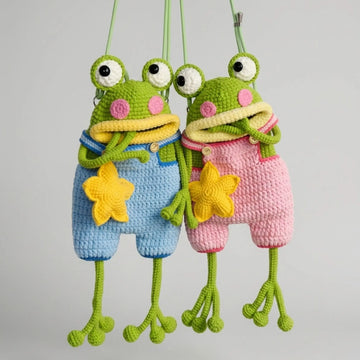
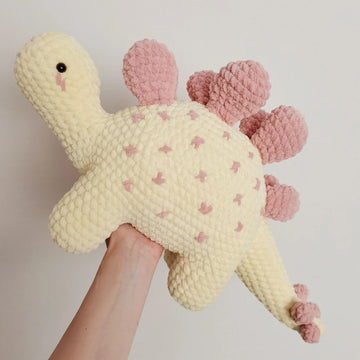
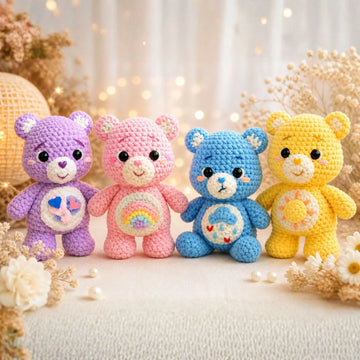
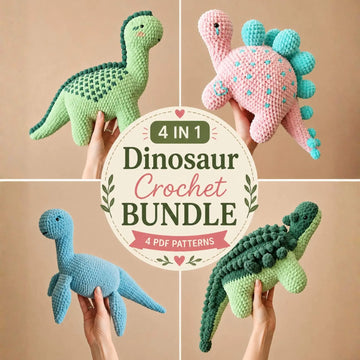
Beginner-friendly patterns written in the exact US terms from this page.
Put your new skills to use
Ready for your next crochet project?
Choose a beginner-friendly pattern with clear US terms, helpful photos and an instant PDF download.
Browse beginner-friendly patternsKeep learning — explore the hub 🧶
Pick your next topic. Every free guide, chart and calculator is one tap away.
From the Crochet Blog 📖
View all articles →
Best Yarn for Amigurumi: The Complete Guide to Choosing the Right Fiber
Crochet Tips & How-To Best Yarn for Amigurumi: The Complete Guide to Choosing the Right Fiber Cotton, chenille, or acrylic? Learn exactly which yarn gives your...
Read full article
Crochet for Mindfulness: Present-Moment Focus with Hook and Yarn
Crochet Wellness Crochet for Mindfulness: Present-Moment Focus with Hook and Yarn How the quiet rhythm of stitching pulls you into the present moment — and how...
Read full article
Squishy Summer Buddies: Easy No-Sew Summer Amigurumi Patterns (2026)
Summer Crochet · No-Sew · Beginner By Ava Collins · Updated July 2026 · 🕑 8 min read 🕑 10 min read Squishy Summer Buddies: Easy No-Sew...
Read full article
How to Join Yarn in Crochet: 5 Clean Methods for Seamless Projects
Ran out of yarn mid-row? Learn 5 clean, beginner-friendly ways to join yarn in crochet - the invisible join, magic knot, Russian join and more -...
Read full article