Amigurumi patterns for beginners are the fastest way into the world of crochet — no complicated stitches, no giant projects, just a hook, some yarn, and a finished plushie in your hands within hours. Whether you've never held a crochet hook or you've tried before and given up in frustration, this complete 2026 guide walks you through every step: tools, techniques, the best starter patterns, and common mistakes to avoid. MrsCrochetWorld has helped thousands of crafters worldwide stitch their very first amigurumi — and this is where your journey starts.
To start amigurumi you need a 3.5–4.0mm crochet hook, worsted weight yarn (size 4) in a light color, polyester fiberfill stuffing, stitch markers, safety eyes, and a tapestry needle. Master the magic ring and single crochet in the round — those two techniques cover 90% of all beginner amigurumi patterns. Your first plushie can be ready in under 3 hours.
Why Is Amigurumi Perfect for Beginners?
Most people who try to learn crochet start with a scarf or dishcloth — and quit after three rows because it feels repetitive and takes forever to see results. Amigurumi flips that experience entirely. A small stuffed animal or keychain charm uses the same two or three stitches, but you see a finished, three-dimensional result in an afternoon instead of a week.
The word amigurumi comes from Japanese: ami (crocheted/knitted) + nuigurumi (stuffed doll). The craft exploded in Japan in the 1990s and spread globally through Etsy, Pinterest, and YouTube in the 2010s. Today it's one of the fastest-growing craft categories worldwide, with millions of patterns available — from beginner-friendly single-piece designs to professional-level character plushies.
What makes amigurumi beginner-friendly? Three reasons: small size (projects fit in your hand), forgiving technique (small imperfections disappear once stuffed), and instant gratification (most beginner patterns take 1–4 hours). You don't need advanced skills. You need curiosity and a hook.
What Tools & Materials Do You Need?
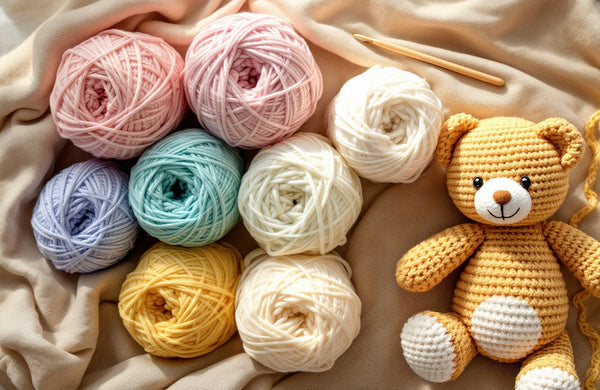
Good news: starting amigurumi costs less than $20. Here's everything you need — and why each item matters.
| Item | Recommended Spec | Why It Matters | Beginner Budget |
|---|---|---|---|
| Crochet Hook | 3.5mm – 4.0mm | Tighter than yarn label = smaller gaps | $2–5 |
| Yarn | Worsted weight (size 4), acrylic or cotton | Easy to see stitches in light solid colors | $4–8 |
| Polyester Fiberfill | Standard stuffing bag | Lightweight, washable, hypoallergenic | $4–6 |
| Stitch Markers | Locking plastic markers or paper clips | Track round starts — essential for continuous rounds | $2–4 |
| Tapestry Needle | Blunt tip, large eye | Weave ends + sew parts together | $1–3 |
| Safety Eyes | 6mm–9mm plastic with washer | Secure, professional finish | $3–6 |
| Scissors | Small craft scissors | Clean yarn cuts | $2–4 |
Hook size tip: If your yarn label says "use 5.0mm hook," try 4.0mm for amigurumi. The tighter gauge prevents stuffing from showing through the stitches. This single adjustment makes the biggest difference in how professional your finished plushie looks.
Yarn color tip: Start with a medium gray, cream, or pastel. Dark colors (black, navy) hide stitch definition and make it nearly impossible to learn proper technique. Once you're comfortable counting stitches, graduate to any color you like.
Which Techniques Do Beginners Need to Know?
You don't need to master 20 different stitches before your first amigurumi. In fact, you can make almost any beginner project with just four techniques:
1. The Magic Ring (Magic Circle)
The magic ring is how almost all amigurumi starts. It creates an adjustable loop so you can work stitches in a circle without leaving a hole in the center of your piece. Most beginners need 5–10 tries before it feels natural — that's normal. Watch a slow-motion tutorial, practice on scrap yarn, and it clicks quickly.
2. Single Crochet (sc)
Single crochet is the foundation stitch of amigurumi. One loop in, pull through, pull through again. Nearly every amigurumi pattern is 90–100% single crochet worked in continuous rounds. If you can single crochet, you can make amigurumi.
3. Increase (inc) and Decrease (dec)
Increases (working 2 single crochets into one stitch) make your piece wider. Decreases (merging two stitches into one) make it narrow. These two techniques let you shape spheres, ovals, cones — essentially any 3D form. The invisible decrease (invdec) is worth learning early: it creates nearly invisible joins that look much cleaner than standard decreases.
4. Finishing: Stuffing & Closing
Add fiberfill gradually as you work — don't wait until the end. Stuff each piece firmly so it holds its shape. Close the last round with a tapestry needle by threading through front loops only, then pulling tight. Weave the tail securely inside the piece.
The 10 Best Amigurumi Pattern Types for Beginners (2026)
Not all beginner patterns are equal. These ten types are ordered from simplest (least assembly, fewest pieces) to slightly more advanced (more parts, more shaping):
1. Simple Round Ball / Sphere
Before attempting any animal, practice the perfect sphere. Magic ring → increase rounds → even rounds → decrease rounds → close. Master this and you can make heads, bodies, and ornaments in any size. Takes 15–20 minutes and teaches you everything about gauge and tension.
2. Keychains & Mini Charms
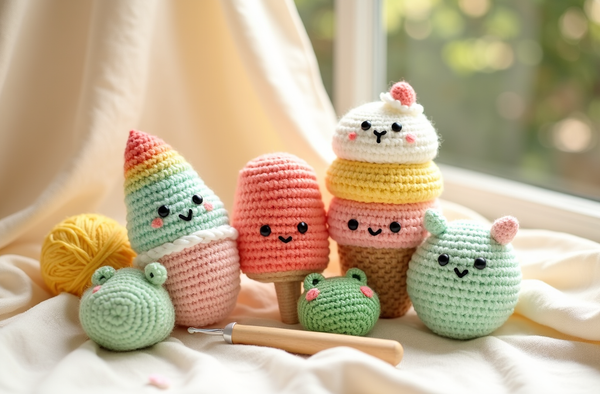
Mini keychains are the fastest amigurumi you'll ever make — many finish in 20–40 minutes. The Tiny Crochet Friends Mini Amigurumi Keychain Bundle from MrsCrochetWorld is a brilliant starter set: the miniature scale actually trains your stitch control faster than full-size projects.
3. Egg-Shaped "Bobble" Animals
An egg shape is one piece — no assembly required. Add safety eyes and a simple embroidered smile, and you have a complete character. Perfect for beginners who find sewing intimidating.
4. Star & Heart Plushies
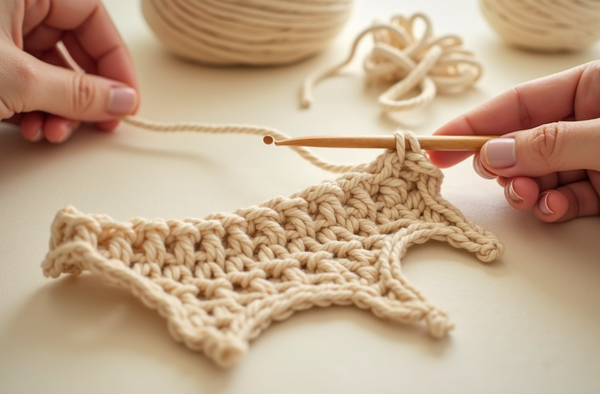
Stars and hearts are crocheted flat (in rows) then sewn around the edges and stuffed — a completely different technique from round amigurumi, and a useful skill to add early. They make great ornaments, gift toppers, and decorations.
5. Simple Crochet Cat
The classic amigurumi starting point: round head, oval body, triangle ears, short tail. You'll practice increases/decreases, color changes for facial features, and basic assembly. The Starter Amigurumi Bundle ($9.90) includes a beginner cat pattern with full photo tutorials — one of the most-used beginner kits on MrsCrochetWorld.
6. Baby Horse / Pony
A horse teaches you elongated snouts and simple limb attachment. The long mane is also an introduction to fringe or loop stitches — a fun texture technique. This pattern is included in the Starter Bundle alongside the cat.
7. Crochet Sloth (Sid)
Sloths are wonderfully forgiving shapes — long arms and a relaxed posture mean minor stitch inconsistencies just add character. The Crochet Sloth Pattern "Sid" ($3.90) is one of MrsCrochetWorld's most-loved beginner designs, with step-by-step photo guidance for every single piece.
8. Diplodocus Dinosaur
The long neck of a diplodocus makes this pattern excellent for practicing cylindrical shaping and stitch counting in the round. The Diplodocus Crochet Dinosaur Pattern ($3.90) uses clear, photo-illustrated steps for every piece. Kids love it; parents love how quickly it comes together.
9. Easy Stegosaurus (Low-Sew)
Those iconic plates along the back conveniently hide any slightly uneven stitching — making this pattern genuinely forgiving for beginners. The Easy Stegosaurus Pattern ($4.90) uses a low-sew design: minimal assembly means you spend time crocheting, not sewing.
10. Mix-and-Match Custom Characters
Once you've completed three or four patterns, start experimenting. Swap the cat's body for the horse's head. Add the sloth's arms to the stegosaurus. Custom amigurumi made by remixing patterns you already know is where the craft becomes truly addictive — and where you'll develop your own style as a crafter.
Pattern Comparison: Which One Should You Start With?
Use this table to choose your first pattern based on your current skill level and what you want to learn:
| Pattern | Difficulty | Time | Assembly | Best For | Price |
|---|---|---|---|---|---|
| Tiny Keychain Bundle | ⭐ Easiest | 30–45 min | Minimal | Absolute first-timers | Shop → |
| 50+ No Sew Bundle | ⭐ Easiest | 1–2 hrs | None | Sewing-averse beginners | $14.90 |
| Starter Bundle (4 patterns) | ⭐⭐ Easy | 2–3 hrs each | Light | Best all-around starter | $9.90 |
| Sloth Pattern (Sid) | ⭐⭐ Easy | 2–3 hrs | Light | Character lovers | $3.90 |
| Diplodocus Dino | ⭐⭐ Easy | 2–4 hrs | Moderate | Dino fans, limb practice | $3.90 |
| Easy Stegosaurus | ⭐⭐ Easy | 2–4 hrs | Low-sew | Detail lovers, gifts | $4.90 |
| Maine Coon Cat Pattern | ⭐⭐⭐ Intermediate | 4–6 hrs | Moderate | Cat lovers, detail work | $4.90+ |
Pro Tips for Perfect Amigurumi Stitches
Always Use Stitch Markers
Amigurumi is worked in continuous rounds — meaning you never join at the end of each round with a slip stitch. Without a stitch marker in the first stitch of every round, it becomes almost impossible to track where you are. Use a locking marker, or thread a piece of contrasting yarn through the stitch. Move it up as you complete each round.
Count After Every Round
Speed comes second. Accuracy comes first. After completing each round, stop and count your stitches. One missed increase can throw off the entire shape by round 8 — and you won't notice until you're trying to stuff a misshapen lump that won't close properly. Count every round, especially during increases and decreases.
Match Your Tension to Your Pattern
Tension is how tightly you hold the yarn as you work. Too loose and you'll see stuffing poking through; too tight and the piece will feel stiff and be painful to crochet. A good amigurumi tension is firm — your stitches should be clear and defined, not squishy and see-through. If you're not happy with your tension, try the next hook size down.
Insert Safety Eyes Before Stuffing
Safety eyes come in two pieces: a front post and a back washer. Once you snap the washer onto the post inside the piece, they're permanent — you cannot remove them without cutting. Always insert safety eyes while the piece is still open and before you stuff it. Test the placement by looking at the face from multiple angles.
Stuff Gradually, Not All at Once
Adding all your stuffing at the end is the most common beginner mistake. Instead, stuff each piece bit by bit as you crochet the closing rounds. This gives you much more control over the final shape and prevents lumpy, misshapen pieces. Small pieces (ears, noses) need only a tiny pinch of stuffing — or none at all.
What Is No-Sew Amigurumi and Why Does It Matter?
Traditional amigurumi involves crocheting each piece separately (head, body, arms, legs, ears) and then sewing them together with a tapestry needle and mattress stitch. For many beginners, that assembly step is where projects get abandoned — either because the seams look messy or because it feels overwhelming after the crocheting is done.
No-sew amigurumi solves this completely. Each piece is worked continuously as part of the body — arms, legs, and ears are crocheted directly into the main piece as you go, with no separate assembly required. The result is seamless, faster, and far less frustrating for beginners.
The 50+ No Sew Amigurumi Patterns Bundle ($14.90) from MrsCrochetWorld contains over 50 patterns specifically designed to be crocheted in one continuous piece — no sewing required. It's the ideal starting point for anyone who finds traditional amigurumi assembly intimidating.
Common Amigurumi Mistakes Beginners Should Avoid
- Using the wrong hook size: Always go one size smaller than your yarn label recommends. A 4.0mm hook on size 4 yarn gives tight, clean stitches. Anything larger creates visible gaps where stuffing shows through.
- Skipping stitch markers: Even experienced crocheters use stitch markers for amigurumi. Working continuous rounds without markers guarantees miscounting. Use them every single round.
- Inserting safety eyes after stuffing: Once stuffed and closed, you can't get safety eyes in properly. Insert and secure them while the piece is open — always before the final stuffing stage.
- Using dark or variegated yarn first: Dark yarn hides individual stitches, making it impossible to see mistakes and correct them while learning. Start with a light, solid color until your stitch definition is confident.
- Stuffing all at once at the end: Waiting to stuff until the very last few rounds makes it impossible to distribute stuffing evenly. Add small amounts of fiberfill every few rounds instead.
- Rushing through decreases: Each decrease reduces your stitch count by one. If you miss a decrease — or do an extra one — your shape distorts. Slow down during decrease sections and count obsessively.
- Buying cheap acrylic for amigurumi that'll be washed: Low-quality acrylic pills and loses shape after washing. If your plushie is for a child (and will be washed repeatedly), choose a quality washable acrylic or cotton from the start.
- Comparing your first piece to experienced makers' photos: Every expert crocheter has a box of lumpy first attempts. Your first amigurumi will not look like the pattern photo — and that's completely normal. Make five pieces before you judge your skill level.
Why Amigurumi Plushies Make the Best Handmade Gifts
There's something uniquely meaningful about a handmade plushie. Unlike a store-bought toy, an amigurumi took someone hours of focused work and skill. Recipients understand that — and they treasure it accordingly. Here's why amigurumi has become one of the most popular handmade gift categories:
- Baby showers: Soft, stuffed, and 100% customizable to the nursery theme — without button eyes or loose parts for newborns (embroider instead of safety eyes for babies under 3).
- Children's birthdays: Choose their favorite animal, color, or character. A handmade version of their beloved pet or favorite dinosaur is priceless to a child.
- Pet lovers: Crochet a miniature version of someone's real cat or dog — customized with the right color yarn and even a collar detail.
- Get well soon & sympathy: A soft, cute plushie sends warmth in a way a card never could.
- Christmas and holiday gifting: Small enough for stockings, meaningful enough to keep for decades. Amigurumi ornaments are particularly popular as keepsake gifts.
- Weddings and anniversaries: Crocheted "couple" animals (matching bears, cats, or penguins) make genuinely unforgettable personalized gifts.
Since most beginner amigurumi patterns take just 2–4 hours, you can make a personalized gift set over a single weekend. With the Starter Amigurumi Bundle, you get four patterns for one low price — enough variety to make a personalized set for any recipient.
Your Beginner Amigurumi Learning Path (2026)
The fastest way to go from "never crocheted" to "confident amigurumi maker" is a structured path. Here's what works:
- Week 1 — Learn the magic ring and single crochet. Make 5 spheres in different sizes. Count every stitch. Don't move on until your spheres are consistently round.
- Week 2 — Your first complete pattern. Start with the Starter Bundle's cat or sloth. Follow the photo tutorial exactly. Accept that it won't be perfect — finish it anyway.
- Week 3 — Practice assembly. Make the horse from the Starter Bundle, focusing on attaching legs and mane neatly. Assembly gets dramatically easier after the second attempt.
- Week 4 — Explore no-sew technique. Try one pattern from the 50+ No Sew Bundle to see the one-piece construction method.
- Month 2+ — Free-form creating. Start adapting patterns, changing colors, creating your own characters. Look at the full MrsCrochetWorld pattern collection for your next challenge.
🎀 Ready to Crochet Your First Amigurumi?
Every MrsCrochetWorld pattern comes with step-by-step photo tutorials, a complete materials list, US crochet terminology, and instant PDF download. Start your plushie collection today!
Browse All Beginner Patterns →Frequently Asked Questions About Amigurumi for Beginners
What is amigurumi?
Amigurumi is the Japanese art of crocheting (or knitting) small stuffed toys — typically animals, characters, or cute food shapes. The word combines ami (crocheted) and nuigurumi (stuffed doll). Most amigurumi are worked in continuous rounds using single crochet, making them one of the most beginner-accessible styles of crochet.
Is amigurumi hard for complete beginners?
Amigurumi is genuinely one of the easiest styles of crochet to start with. You only need the magic ring and single crochet to complete most beginner patterns. The small project size means you see results quickly and mistakes are small enough to be inconsequential. Most beginners finish their first piece in under 3 hours.
What hook size is best for amigurumi?
A 3.5mm–4.0mm hook is the sweet spot for worsted weight (size 4) yarn. This is typically one size smaller than the yarn label recommends — intentionally. Tighter stitches prevent stuffing from showing through the finished piece. If you're using sport weight (size 3) yarn for tiny amigurumi, try a 2.5mm–3.0mm hook.
What type of yarn is best for beginner amigurumi?
Start with worsted weight (size 4) acrylic or cotton yarn in a light, solid color. Light colors make individual stitches visible so you can count and learn correctly. Avoid fuzzy, chenille, or variegated yarns for your first few projects — they hide your stitch definition and make counting nearly impossible.
How long does it take to finish an amigurumi?
Keychain-sized mini amigurumi: 20–45 minutes. Beginner animals (cat, sloth, dino): 2–4 hours. Larger multi-piece amigurumi: 6–10 hours. A full weekend crocheting session can produce an entire set of beginner plushies for gifting.
Do I have to sew amigurumi parts together?
Traditional amigurumi involves sewing separate pieces together. But no-sew amigurumi patterns (like the ones in MrsCrochetWorld's 50+ No Sew Bundle) are crocheted as a single continuous piece — zero sewing required. Many beginners prefer starting with no-sew designs before learning traditional assembly.
What is a magic ring and how do I do it?
A magic ring (magic circle) is an adjustable loop that lets you start crocheting in the round with no hole in the center. Wrap yarn around two fingers, insert your hook, pull a loop through, chain 1, then work your starting stitches into the ring. Pull the tail to close. Practice it 10 times on scrap yarn — it becomes completely intuitive very quickly.
When should I insert safety eyes?
Always insert safety eyes before stuffing and before closing the final round. They're permanent once the plastic washer is snapped on — they cannot be removed without cutting. Lay out the face piece flat, test your eye placement from multiple angles, then secure the washers before moving on. For toys for babies or children under 3, embroider eyes with yarn instead.
Can I sell finished amigurumi made from purchased patterns?
Most independent pattern designers — including MrsCrochetWorld — allow you to sell finished items made from their patterns, typically with credit given to the designer. Always read the license note on each pattern before selling. Reselling the PDF pattern itself is not permitted.
What are the best beginner amigurumi patterns from MrsCrochetWorld?
The Starter Amigurumi Bundle ($9.90) — 4 patterns with photo tutorials — is the top recommendation for first-timers. The 50+ No Sew Bundle ($14.90) is ideal for sewing-averse beginners. Individual patterns like the Crochet Sloth ($3.90) and Diplodocus Dino ($3.90) are perfect budget-friendly starting points.
How do I stuff small amigurumi pieces properly?
Use polyester fiberfill and add it in small pinches as you work the final closing rounds — not all at once at the end. For very small pieces (ears, tiny noses), a tiny pinch is enough. For larger pieces, stuff firmly enough that the shape holds without distorting the fabric. A pencil or chopstick helps push stuffing into tight corners.
What does "work in continuous rounds" mean?
It means you crochet in a continuous spiral without joining at the end of each round with a slip stitch. Each round flows directly into the next. This creates the smooth, seamless surface characteristic of amigurumi. A stitch marker in the first stitch of each round is essential to track your position — without it, counting goes wrong very quickly.
Summary: Your Amigurumi Journey Starts Here
Amigurumi is the most satisfying, fast, and accessible way to learn crochet. With just a 3.5–4.0mm hook, worsted weight yarn, and polyester stuffing, you can hold a finished plushie in your hands in a single afternoon. Master the magic ring, single crochet, increases, and decreases — and you have 90% of what every amigurumi pattern requires.
Start with round spheres to calibrate your gauge, then move to complete patterns from the MrsCrochetWorld Starter Bundle. If sewing feels daunting, jump straight into no-sew designs. Count every stitch, use stitch markers religiously, and stuff gradually — those three habits make the biggest difference between a frustrating and a fulfilling first project.
The crafting community around amigurumi is warm, supportive, and endlessly creative. Share your makes with #MrsCrochetWorld and tag us — we love seeing every first plushie, no matter how lumpy or lopsided. Everyone starts somewhere.
🧶 Start Crocheting Today
Instant PDF download. Step-by-step photo tutorials. US crochet terms. Beginner-tested patterns. Your first amigurumi is just a few stitches away.
Shop MrsCrochetWorld Patterns →