How to crochet the shell stitch (step by step)
Master one of crochet's most elegant fan patterns — perfect for blankets, bags, and baby items — with clear row-by-row instructions you can follow today.

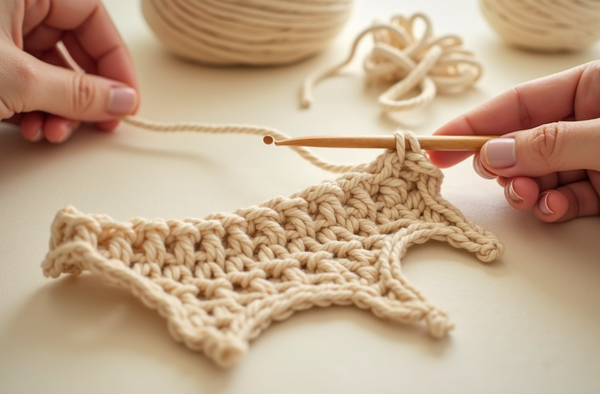
The shell stitch is one of those patterns that looks far more impressive than it actually is to crochet. A cluster of double crochets fanned out from a single stitch creates a scalloped, lacy texture that works beautifully on scarves, blankets, bags, and children's clothing. Once you learn the basic shell — typically five double crochets in one stitch — a whole world of variations opens up.
What you need before you start
Gather these basics and you are ready to swatch your first shell row.
You do not need any special equipment — just your regular hook and yarn. For practice, a medium-weight (worsted, Category 4) acrylic or cotton yarn works well because the stitches are easy to see. Pair it with a 5.0 mm (H/8) or 5.5 mm (I/9) hook. If you are unsure which hook to grab, check the beginner hook guide or glance at your yarn label.
You also need to be comfortable with the chain stitch, the double crochet, and the slip stitch. That is it — no magic ring, no increases, nothing fancy. If double crochet is still new to you, spend ten minutes with the 7-day beginner guide first, then come back here.
Understanding the shell stitch formula
Every shell follows the same simple rhythm once you know the math.
A standard shell = 5 dc in 1 stitch. Between each shell you skip 2 stitches (one on each side), so each shell "uses" 5 stitches total: 2 skipped + 1 center + 2 skipped. That means your starting chain must be a multiple of 6, plus 2 (for the turning chain). Common beginner chain counts: 26, 32, 38, 44.
The ch-2 turning chain at the start of each row counts as the first dc, so you always begin your very first shell in stitch 4 of your foundation chain. Keep a stitch count as you go — it is easy to accidentally skip an extra stitch and lose a shell.
Step-by-step: your first shell stitch row
Follow these instructions for a flat practice swatch in US crochet terms.
Foundation chain: Chain 32 (5 shells across). Turn.
Row 1 (set-up row — optional but helpful): Sc in every chain across. Chain 3, turn. This gives you a neater base.
Row 2 (first shell row):
- Chain 3, turn (counts as first dc).
- Skip the first 2 stitches.
- Work 5 dc in the 3rd stitch — this is your first shell. You should see a little fan forming.
- Skip 2 stitches, sc in the next stitch. This "locks" the shell in place.
- Skip 2 stitches, work 5 dc in the next stitch. Second shell done!
- Repeat (skip 2, sc 1, skip 2, 5 dc in 1) across the row. End with dc in the last stitch.
Row 3 (chain and return): Chain 1, turn. Sc in the first dc. *Work 5 dc in the sc from the previous row (the "valley" between shells). Sc in the center (3rd) dc of the shell below.* Repeat across, ending with sc in the top of the turning chain.
Repeat Rows 2–3 until your swatch is the length you want. You will notice the shells naturally "nest" — each new row's shells sit in the valleys of the row below, creating that classic scalloped look. If you find your fabric is curling, see the guide on why crochet curls — tension is usually the culprit.
Tension tips for an even shell stitch
Because you are stacking five double crochets into one stitch, that center stitch can get tight fast. Keep your yarn slightly looser than usual, especially on the third and fourth dc of each shell. If your shells look pinched rather than fanned, go up half a hook size. For a full deep dive into getting even tension, that article walks through every common fix.
"The shell stitch rewards patience — slow down on those five double crochets and your fabric will bloom like a fan every single time."— Ava, MrsCrochetWorld
Put your shell stitch to work
These patterns are designed for crocheters who have just learned a new stitch and want a satisfying project right away.

Granny Square Tote Bag Pattern
Beginner-friendlyOnce you are comfortable with clustered stitches like the shell, a granny square bag is the perfect next step. This PDF includes a video tutorial so you can follow along in real time. A great way to build on your granny square skills.

The Humble Bag — Granny Square Tote
US terms PDFA structured, modern tote written in clean US terms — the same terminology used throughout this tutorial. The repetitive stitch pattern makes it ideal for practicing consistent tension across rows. Browse more in the bags and accessories collection.

9 Modern Crochet Bag Patterns Bundle
Best valueNine beginner-friendly bag designs in one PDF download — a huge variety of shapes and textures to try once your stitch skills are solid. Shell and cluster-style rows feature in several of the designs. A popular pick in our mega bundles collection.
Six things the shell stitch is brilliant for
Use this list to decide what to make with your first swatch.
Scarves and cowls
A straight shell-stitch strip becomes a cozy scarf in an evening. The drape is naturally soft and the scalloped edge means no finishing border needed.
Baby blankets
The lacy fan texture keeps fabric airy and light — ideal for swaddles and pram covers. Use a soft cotton or bamboo blend for gentle skin contact.
Market bags
The open shell structure stretches beautifully, making it great for reusable shopping bags. Crochet in cotton twine for extra strength.
Cardigan and vest borders
Add a shell-stitch edging to any cardigan or sweater pattern to give the hem and cuffs an elegant scalloped finish.
Home décor
Table runners, pillow covers, and curtain panels all benefit from the repetitive rhythm of the shell. It works up quickly in chunky yarn for a boho look.
Ready to learn more stitches?
The shell stitch is just one of many beautiful textures waiting for you. Visit the complete beginner guide to map out your full crochet journey.
Quick tips for shell stitch success
- Mark your center stitch. Place a stitch marker in the 3rd (center) dc of each shell on your first row — it makes finding the sc placement in the next row effortless.
- Count after every shell. Losing one skip means your shells drift off-center. A quick count every three shells catches mistakes early. The stitch counting guide has a full method.
- Check your chain multiple. Before you even pick up your hook, confirm your starting chain is (multiple of 6) + 2. 26, 32, 38, 44, 50 — all work.
- Loosen up at the center stitch. That one stitch takes all five double crochets, so insert your hook loosely and pull up a slightly larger loop than usual.
- Try a 7-dc shell for drama. Once the 5-dc shell feels natural, swap in 7 dc for a wider, more open fan — gorgeous in lace-weight yarn.
- Weave as you go. With so many yarn-overs in each shell, ends build up fast. Weave each end in after joining a new skein so finishing is painless. See the weaving-in guide for the neatest method.
Love textured stitches? Grab a free pattern
The shell stitch is just the beginning. Our free patterns collection has beautiful designs that put your new skills to work immediately — no purchase needed to get started.
Get a free pattern Shop beginner patternsFrequently asked questions
What is the shell stitch in crochet?
The shell stitch is a cluster of multiple double crochets (usually five) all worked into the same stitch, creating a fan or shell shape. Stitches are skipped on either side of the cluster to give the fabric its scalloped, lacy look.
How many chains do I need to start a shell stitch pattern?
You need a multiple of 6 chains, plus 2 for the turning chain. Common starting counts are 26, 32, 38, and 44. Always double-check your count before you begin the first row.
Can a beginner learn the shell stitch?
Yes — if you are comfortable with the chain stitch and double crochet you have everything you need. The shell stitch is simply five double crochets in one stitch, so it is a natural next step after learning the basics.
What yarn and hook size are best for the shell stitch?
A medium-weight worsted (Category 4) yarn paired with a 5.0 mm to 5.5 mm hook is ideal for beginners. The stitches are large enough to see clearly, and the swatch works up quickly so you can practice the pattern repeat several times.
Why do my shells look uneven or pinched?
Uneven shells are almost always a tension issue. The center stitch that holds all five double crochets tends to pull tight. Try inserting your hook more loosely into that center stitch, or go up half a hook size. Checking your gauge on a small swatch before starting a big project helps too.
How do I turn at the end of a shell stitch row?
Chain 3 at the end of the row (this counts as your first double crochet of the next row) and turn your work. On the return row, place a single crochet into the single crochet valley between shells from the previous row, then work the next shell into the center (3rd) double crochet of the shell below.
What projects are good for the shell stitch?
Scarves, baby blankets, market bags, shawls, cardigan borders, table runners, and pillow covers all look beautiful in the shell stitch. It works fastest in worsted or bulky yarn, so home decor and blankets are especially satisfying projects for beginners.
How is the shell stitch different from the fan stitch?
They are essentially the same structure. Some designers call a 5-dc cluster a shell and a wider 7-dc or 9-dc cluster a fan, but there is no strict industry rule. The technique — multiple double crochets into one stitch with skipped stitches on each side — is identical for both names.