Crochet anxiety relief: 7 calming habits that work
The rhythm of hook and yarn can quiet a racing mind. Here are seven gentle habits that turn a few minutes of stitching into your favorite calm-down ritual.

If you have ever picked up a crochet hook during a stressful week and felt something quietly shift, you are not imagining it. Crochet is one of the most accessible calming rituals there is — a way to give nervous hands something purposeful and a busy mind a soft place to land. Not a medical treatment, but a feel-good daily habit that thousands of makers return to precisely because it helps.
Crochet & anxiety: what the sources say
| Large crochet survey | Happy Hookers study (Burns & Van Der Meer, Perspectives in Public Health 2021): 8,391 valid responses from 87 countries; 78.5% said they crochet to relax[1] |
|---|---|
| How crochet made them feel | calmer 89.5%, happier 82%, more useful 74.7% – self-reported, not a clinical trial[1] |
| Mood before vs. after | average self-rated mood rose from 4.19 before to 5.78 after crocheting[1] |
| Everyday anxiety vs. anxiety disorder | NIMH: “Feeling anxious is a normal part of life”, but in anxiety disorders anxiety “does not go away, is felt in many situations, and can get worse over time”[3] |
| Self-help the NHS mentions | talking to others, regular exercise and relaxation techniques like meditation[2]; learning new skills and paying attention to the present moment can improve mental wellbeing[4] |
| When to get help | NHS: you may need medical help if you are struggling to cope and the things you are doing are not helping[2]. US: call or text 988[3]. Germany: TelefonSeelsorge 0800 1110111, 0800 1110222 or 116 123 – free, day and night[5] |
| Calm-kit bundles in this guide | 50+ no-sew minis (beginner-friendly), 16 cats (7 chonky + 9 tiny, intermediate), 6 fantasy characters (intermediate) |
| What crochet is not | a medical treatment or a substitute for professional mental health care |
What the numbers mean: 89.5% of 8,391 is about 7,510 people who said crochet made them feel calmer, and the average mood score rose by 1.59 points (about 38%)[1]. These are self-reports – the authors describe “perceived links” between crochet and wellbeing – not proof that crochet treats anxiety.
This is general information, not medical advice. If anxiety affects your daily life, please talk to your doctor or a licensed mental health professional.
Why crochet naturally calms a busy mind
Crochet lives in a comfortable middle zone: engaging enough to anchor your attention, gentle enough to create zero pressure.
An anxious mind usually runs ahead of the present — replaying conversations, rehearsing problems, looping through worries that never resolve. Crochet gently interrupts that loop. Your hands are moving, your eyes track a growing shape, your count — one, two, three — pulls attention back to right now. That is why so many crocheters call their stitching time "the only part of the day where my brain goes quiet."
One honest note before we go further: crochet is a wellness habit, not a treatment. If anxiety is significantly affecting your daily life, professional support comes first — crochet makes a lovely companion practice, never a substitute. The NHS says you may need medical help if you are struggling to cope with anxiety and the things you are doing are not helping[2], and NIMH notes that in anxiety disorders, anxiety “does not go away” and “can get worse over time”[3]. In the US, if you are struggling or having thoughts of suicide, call or text 988 (Suicide & Crisis Lifeline)[3].
The rhythm effect: why repetition soothes
The steady cycle of insert hook, yarn over, pull through — repeated hundreds of times — creates a predictable sensory loop, a bit like rhythmic breathing, rocking or walking. Counting stitches adds a layer of informal mindfulness: you are not forcing your mind to go blank, just giving it a narrow, harmless thing to track, which quietly crowds out the worry spiral. When your mind is racing, work rows of the simplest stitch there is — single crochet — and count softly as you go. How quickly you feel calmer differs from person to person, so simply notice what happens for you.
The 7 calming crochet habits
Crochet becomes a wellness practice when you bring a little intention to it. These seven habits do exactly that.
- 1. The five-minute wind-down. Set a timer before bed and stitch slowly for five minutes. No goals, no row counts — just a signal to your body that the day is over.
- 2. The one-round rule. Feeling restless? Commit to a single round of whatever is on your hook. The bar is low enough that you will always start — and the rhythm usually carries you further.
- 3. Stack it onto something you love. Pair crochet with herbal tea, a podcast, or a comfort show. Soon, picking up the hook triggers relaxation before the first stitch.
- 4. Keep a project at every wait spot. A small work-in-progress in your bag turns waiting rooms and pickup lines from anxiety traps into stitching time.
- 5. Choose colors on purpose. Sage greens, dusty blues, and warm creams when you want calm; sunny brights when you need cheer. Choosing a color you love is a tiny act of self-care.
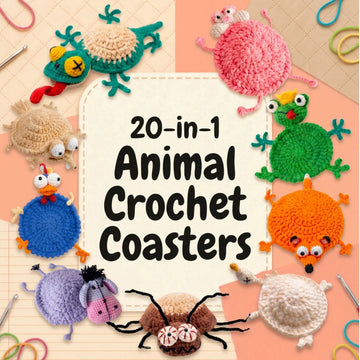
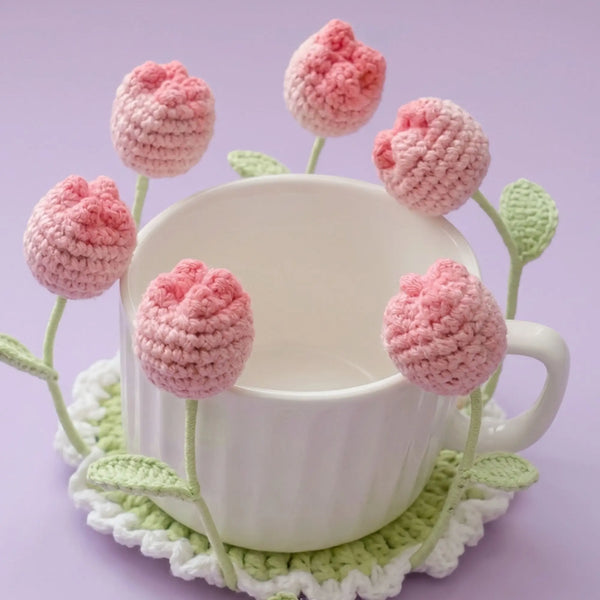
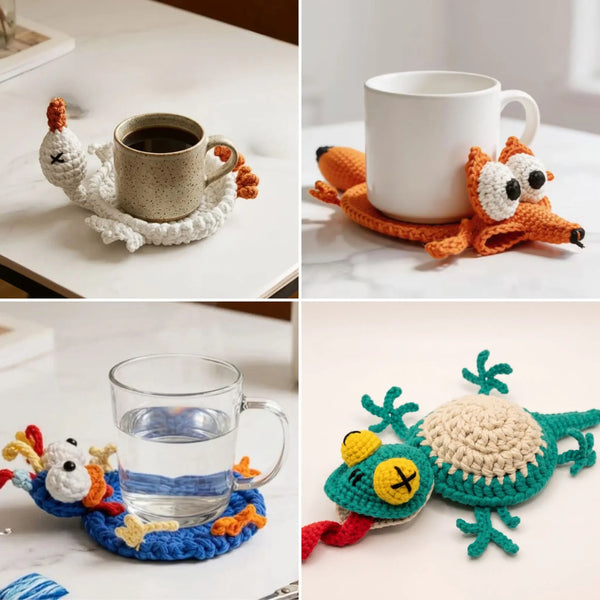
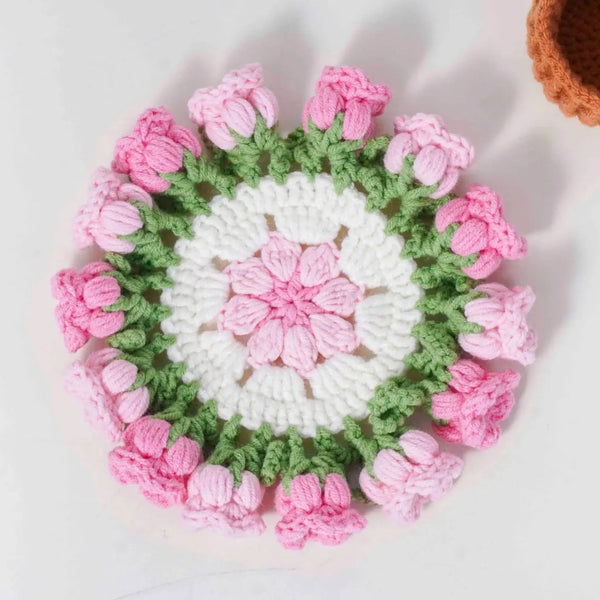
- 6. Finish small things often. Completion is its own comfort — proof that something worked out. Small projects like animal coasters and one-skein makes deliver that feeling weekly, not yearly.
- 7. Crochet with others. Stitch alongside a friend, join a virtual crochet-along, or share progress photos in a maker community. Connection plus craft is a powerful combination.
What to crochet when you need calm
The most soothing projects share four qualities: quick visible progress, simple repetitive stitches, low stakes for mistakes, and pleasant texture. Small no-sew amigurumi and granny squares top the list; sprawling blankets and complex garments sit at the bottom, because slow progress and heavy stitch-counting can work against relaxation. No-sew patterns are especially kind to an anxious maker — everything is worked in continuous rounds, so no assembly step looms at the end.
Yarn matters too. Soft, smooth worsted yarn with a 5.5 mm (US I-9) hook is a good choice: easy to see, quick to grow, gentle on the hands — our guide to the best yarn for beginners points you to fibers that feel as good as they look. And no, you do not need to be skilled to benefit: crochet is very learnable, and simple stitches are all you need to find a calming rhythm.
"The goal of a calming crochet session is never a perfect project. It is ten minutes of a gentler mind — and the wonky stitch that got you there counts as a win."— Ava Collins, MrsCrochetWorld
Calm-kit patterns we reach for
Small, soothing projects that make it easy to keep the habit going — one cozy round at a time.

50 no-sew amigurumi patterns bundle
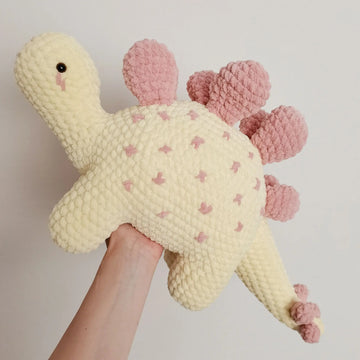
mega bundleThe ultimate calm-kit filler: 50+ small, satisfying mini plushies and characters in one instant download, all worked in continuous rounds with zero sewing stress. Start with the easiest amigurumi first and let the rhythm do the rest.

Chonky & Tiny Cats — 16-in-1 pattern bundle
feel-good stitchingRound, plump, extra-squishy chonky cats and their smaller tiny kittens: pure comfort to make and to hold. Sixteen designs — 7 chonky cats and 9 tiny kittens — each with its own colors and markings, and a whole household of handmade felines at the end — the perfect antidote to a stressful week from our amigurumi collection.

Fantasy bundle, 6 characters
creative escapeFor when you want your calming time to feel a little magical. Six whimsical characters for intermediate crocheters to make entirely at your own pace — gentle creative distraction with a storybook finish, and one of the coziest picks in our mega bundles.
Match the project to your mood
The sweet spot is a task that keeps your brain busy, but not stretched.
Many makers describe a state of easy absorption while they stitch: hands moving, time slipping by, worries a little further away. It tends to show up when a project is just challenging enough to hold your attention but not so hard that you feel frustrated. That balance changes from day to day, so it helps to choose your project by how you feel rather than by what is next on your list.
- Loud, frazzled day: pick something you have made before, or plain single crochet in the round. Your hands can run on autopilot.
- Steady, curious day: try a new stitch or follow a pattern with a little shaping. Counting and reading ahead gives the thinking part of your mind something useful to do.
- Flat, restless day: choose a small project with a quick finish, like a coaster or a tiny amigurumi, so you get that satisfying "done" within an hour.
If a pattern starts to feel tense, that is useful information, not a failure. Put it down, switch to your familiar project, and come back when you feel more settled. Our guide to fixing crochet mistakes calmly can also take some of the sting out of ripping back a row.
Let your senses do the anchoring
If sitting still with your eyes closed feels impossible when you are anxious, crochet gives your attention a physical place to land instead. Try a slow minute of noticing before you start stitching:
- Touch: feel the texture of the yarn and the smooth weight of the hook in your fingers.
- Sight: look at one color in your stitches and follow a single row with your eyes.
- Sound: listen to the tiny sounds of yarn sliding through your fingers.
- Breath: let one slow exhale happen on every third stitch.
Some stitch patterns are almost made for this. Textured, repeating stitches like the moss stitch or the waffle stitch have a rhythm that is easy to memorize, and flat circles or mandala-style rounds give you a clear, repeating shape to follow. If you lose track, our tips on counting stitches and rows help you pick up the thread without stress. None of this needs to be done perfectly: it is simply a gentle way to arrive in the moment.
When to pick up the hook
Everyday stress moments where a few rounds of crochet can help.
Before a hard conversation
A few minutes of stitching gives nervous energy somewhere to go, so you may arrive a little more settled.
Instead of doomscrolling
Swap the evening scroll for rounds of yarn. Hands busy, eyes on something real, and you made something.
In waiting rooms
A small project bag turns idle waiting — where worry loves to grow — into unexpectedly pleasant making time.
After the workday
A short session after closing the laptop is a physical signal that work mode is over and home mode has begun.
On sleepless nights
A familiar pattern in a dim room can be a gentler way to wind down than a glowing screen.
Brand new to crochet?
Learn every basic in our complete beginner guide to crochet — then come back and build your calm kit.
Ava's calm-kit checklist
- Keep it packed. Current project in a small pouch, hook attached, pattern bookmarked — reachable within seconds when you need it.
- Start tiny. "One round while the tea steeps" builds a habit; "an hour every evening" builds guilt.
- Anchor it to a pause. Morning coffee, the commute home, the last twenty minutes before bed — attach crochet to a pause your day already has.
- Choose yarn that feels lovely. Soft and smooth supports calm; scratchy and splitty quietly works against it. Touch before you commit.
- Honor the practice, not the product. If frogging comes from perfectionism rather than preference, leave the uneven stitch and keep going.
- Stash a spare skein. Running out of yarn mid-wind-down is the opposite of relaxing.
Build your calm kit today
A hook, a skein of soft yarn in a color you love, and one small pattern — that is all a calming crochet ritual needs to begin. Start tonight with a small coaster or a gentle beginner project made for slow, happy stitching.
Browse relaxing patternsShop beginner patternsFrequently asked questions
Does crochet really help with anxiety?
Many people find crochet calming: in a large survey of 8,391 crocheters, 89.5% said it made them feel calmer. The rhythmic, repetitive motion can quiet a busy mind, gives nervous hands something productive to do, and creates gentle focus that makes relaxing easier. It will not replace professional support for clinical anxiety, but as a daily calming habit it is widely loved.
Why does repetitive motion feel calming?
Repetitive physical actions like rocking, rhythmic breathing, and crocheting create a predictable rhythm that gives your attention something steady to hold on to. Crochet adds visible, growing progress on top, which encourages you to stay in the rhythm longer.
What kind of crochet project is best for calming?
Simple, repetitive patterns are the most soothing: small amigurumi, coasters, and granny squares with quick progress and consistent stitch rhythm. No-sew patterns are especially good because there is no stressful assembly step at the end.
How long should I crochet to feel calmer?
There is no required duration. Some people feel calmer quickly, others need longer, and even a five-minute session before bed or in a waiting room can help. Follow what feels right for you.
Can I crochet while watching TV or listening to a podcast?
Absolutely. Once you know a stitch pattern well it needs very little visual attention, so pairing crochet with a podcast, audiobook, or comfort show keeps your hands engaged and your mind gently entertained — many people find the combination extra relaxing.
Is crochet good for nervous or fidgety hands?
Yes. Crochet redirects restless energy into a rhythmic, tactile activity that produces something beautiful. Instead of tapping, picking, or scrolling, your hands get a purposeful, soothing job to do.
Do I need to be good at crochet to get the calming benefits?
Not at all. The calm comes from rhythm and focus, not from perfect stitches. Simple stitches like single crochet are all you need to find a relaxing rhythm.
Is crochet a replacement for therapy or medical care?
No. Crochet is a wellness habit, not a medical intervention. If anxiety significantly affects your daily life, professional support is the right first step — crochet works beautifully as a companion practice alongside it. In the US, you can call or text the 988 Suicide and Crisis Lifeline if you are struggling or having thoughts of suicide.
What yarn feels most calming to work with?
Soft, smooth yarn in a medium worsted weight with a 5.5 mm (US I-9) hook is a good choice: easy to see, pleasant to touch, and quick to show progress. Choose a color you personally associate with feeling settled, and avoid scratchy or splitty yarns for wind-down sessions.
What is a good first calming project for a complete beginner?
A small no-sew amigurumi or a simple granny square. Both use repetitive stitches, grow quickly, forgive mistakes, and end with something sweet to hold — which makes it easy to come back tomorrow.
Which stitch patterns feel the most calming to crochet?
Many makers find simple, repeating patterns the most soothing: single crochet in the round, moss stitch, waffle stitch and granny squares. Once the sequence is in your hands you can stop thinking about the next step and just enjoy the rhythm. The best calming stitch is simply one you enjoy and do not have to look up.
Is crochet a good alternative if I find meditation hard?
Some people find that crochet feels easier than sitting still with their thoughts, because your attention rests on something you can touch and watch: the yarn, the hook and the growing fabric. Many makers use both. Crochet is a gentle, enjoyable habit and not a replacement for professional support if anxiety is affecting your daily life.
Related guides
Sources
- Burns & Van Der Meer, Perspectives in Public Health 141(3), 2021: Happy Hookers – findings from an international study exploring the effects of crochet on wellbeing (survey of 8,391 crocheters, abstract), checked 21 Nov 2026
- NHS: Get help with anxiety, fear or panic (self-help and when to get medical help), checked 21 Nov 2026
- National Institute of Mental Health (NIMH): Anxiety Disorders, checked 21 Nov 2026
- NHS: 5 steps to mental wellbeing (learning new skills, paying attention to the present moment), checked 21 Nov 2026
- TelefonSeelsorge Germany: free, anonymous support line, day and night (German), checked 21 Nov 2026
Keep reading
Hand-picked guides from our crochet blog that go with this one.

Crochet & ADHD: Why Your Brain Loves the Hook
If you have ADHD and you've ever picked up a crochet hook, you already know something magical happens. Crochet and ADHD turn …
Read the guide →
Crochet for Better Sleep: Your Cozy Evening Wind-Down Routine
There's something almost magical about picking up your crochet hook when the day is finally winding down. The house gets …
Read the guide →
Crochet for Holiday Stress: A Calm, Cozy Routine for a Busy Season
A gentle, non-medical guide to crochet for holiday stress: a short, cozy routine with quick ornament projects, a seven-step …
Read the guide →