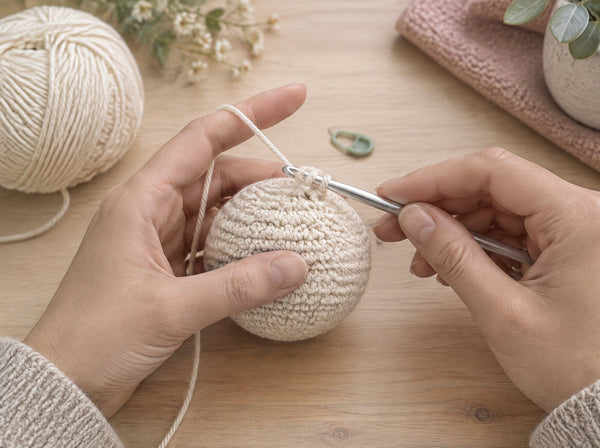
If you have ADHD and you've ever picked up a crochet hook, you already know something magical happens. Crochet and ADHD turn out to be a surprisingly powerful combination — and it's not just anecdotal. Thousands of people in the ADHD community on Reddit, TikTok, and beyond swear that crochet does something that very little else can: it quiets the noise, anchors the hands, and lets the brain finally settle into a rhythm. This article breaks down exactly why, and how to make the most of it.
Why Does Crochet Help ADHD? The Neuroscience Behind the Hook
ADHD — Attention Deficit Hyperactivity Disorder — is fundamentally a dopamine regulation challenge. The ADHD brain struggles to sustain attention on tasks that don't provide immediate, frequent reward signals. This is why boring tasks feel impossible and hyperfocus on something exciting happens effortlessly. The brain is constantly scanning for stimulation.
Crochet addresses this at a neurological level in several ways. First, it engages the hands and eyes simultaneously, creating what researchers call a dual-task sensorimotor loop. The hook moving through yarn, the tactile pressure of the thread, the rhythmic repetition — these physical inputs occupy the brain's sensory-seeking channels. The result: less mental noise, better anchor for attention.

A landmark 2025 study published in Scientific Reports (PMID 39900664) found that crochet measurably increases attention through motor skill learning. Participants who crocheted regularly showed improved sustained attention compared to control groups. The researchers attributed this to the way repetitive fine-motor activity engages and trains attentional control networks — the same circuits that are underactive in ADHD.
The Idle Hands Problem — Solved
People with ADHD often fidget because the body is doing what the brain needs: seeking just enough physical stimulation to allow the prefrontal cortex (the planning, focus center) to function. Crochet gives that stimulation in a controlled, productive form. Unlike tapping, pacing, or scrolling, a crochet hook produces something real — and that tangible output is crucial for motivation and self-esteem.
What the ADHD Community Says
On Reddit's r/ADHD (over 1.4 million members), threads about crochet consistently rank among the most upvoted. Common experiences reported: being able to sit through entire movies for the first time, reduced anxiety during difficult conversations when crocheting simultaneously, and the ability to maintain flow state for 2–3 hours — something many ADHD adults report almost never experiencing otherwise.
"Crochet is the only thing that lets my brain fully arrive somewhere. My hands do the work and my mind finally goes quiet."
— Community member, r/ADHD
The Dopamine & Focus Loop: Why Crochet Keeps Your Brain Engaged
Understanding why crochet sustains attention for ADHD brains requires understanding the dopamine feedback cycle. In neurotypical brains, dopamine is released steadily in response to moderate stimulation. In ADHD brains, dopamine release is less predictable — it surges with novelty and high-stimulation activities, and drops off quickly with routine tasks.
Crochet engineers a micro-reward loop that feeds the dopamine system efficiently:
- Each completed stitch = micro-confirmation of progress
- Each completed row = visible, measurable advance
- Finished section / color change = mini milestone reward
- Completed project = major dopamine event + physical object to show
- Sharing the finished item = social reward + identity reinforcement
This loop runs every few seconds to every few minutes — far more frequently than most tasks. Compare this to writing a report (reward only at the end) or cleaning a room (reward invisible until hours in). Crochet makes progress visible and tactile in real time.

Flow State and ADHD
Flow — the state of effortless, absorbed concentration — is often described by ADHD adults as something they crave but rarely access intentionally. Crochet's combination of mild challenge, clear structure, and continuous feedback creates exactly the conditions that psychologist Mihaly Csikszentmihalyi identified as prerequisites for flow. The skill level (using a slightly ambitious pattern) must slightly stretch the crocheter's current ability — not too easy, not overwhelming. This calibration explains why many ADHD crocheters instinctively seek out new pattern challenges rather than repeating projects they've already mastered.
Body Doubling Through Craft
Body doubling — having another person physically or virtually present while working — is one of the most consistently recommended ADHD productivity strategies. Crocheting in a group, in a café, during a Zoom call, or while watching a movie with someone creates a natural body-double effect. The social ambient presence activates accountability circuits, and crochet occupies the fidget-seeking part of the brain, leaving attention available for the ambient interaction. This is why ADHD crafters often report getting more done in group crochet sessions than alone at a desk.
Best Crochet Projects for ADHD Brains: Short Wins Over Long Marathons
Not all crochet is equally ADHD-friendly. The key criterion is time-to-visible-progress. Projects that show satisfying advancement in a 20–45 minute session align perfectly with typical ADHD attention cycles. Here's how to choose:
| Project Type | ADHD Friendliness | Why It Works | Typical Session Size |
|---|---|---|---|
| Small amigurumi (no-sew) | ⭐⭐⭐⭐⭐ Excellent | Fast results, 3D shape visible quickly, tactile reward | Completable in 1–2 sessions |
| Coaster / dishcloth | ⭐⭐⭐⭐⭐ Excellent | Very small scope, multiple color options, no commitment | Done in 30–60 minutes |
| Animal amigurumi bundle | ⭐⭐⭐⭐⭐ Excellent | Each animal = separate mini-project, variety prevents boredom | 1–3 sessions per animal |
| Granny square | ⭐⭐⭐⭐ Great | Repetitive, modular, collect many = larger win | 15–20 minutes each |
| Large blanket | ⭐⭐ Challenging | Progress slow to see, easy to abandon midway | Months — high dropout |
| Complex garment | ⭐ Difficult | Many steps, stitch counting stress, delayed reward | Months — overwhelming |
Why No-Sew Amigurumi Is the Gold Standard for ADHD
Traditional amigurumi requires sewing body parts together at the end — and that finishing step is notorious for killing ADHD motivation. The project is "done" in the brain's reward system before the assembly happens, and the tedious sewing feels like a whole new task. No-sew amigurumi patterns eliminate this entirely: each piece is crocheted together as you go, so every session ends with something visually complete. This design philosophy aligns perfectly with ADHD's need for closure.
Yarn Choice Matters for ADHD
Texture is a significant sensory factor for many people with ADHD. Smooth, high-quality cotton or soft acrylic yarn reduces tactile friction and makes the repetitive motion genuinely soothing rather than scratchy and distracting. Bright, saturated colors also help — visual contrast between yarn and hook, and watching a colorful shape emerge, both enhance the visual feedback that keeps attention engaged. Avoid fuzzy or hairy yarn (hard to see individual stitches) and very thin yarn (slow progress, harder to count).
How to Get Started With Crochet When You Have ADHD
Starting a new hobby with ADHD carries its own specific challenges: the enthusiasm surge at the beginning, the risk of abandonment if the learning curve is steep, and the classic pile of half-finished projects that becomes evidence of "another thing I failed at." Here's how to sidestep those traps entirely.
Step 1: Lower the Entry Barrier to Zero
Buy one ball of medium-weight (worsted) yarn in a color you love, and a 5mm crochet hook. Nothing else. Don't buy a "complete kit" with fourteen things to organize — that's future-you's problem and present-you's overwhelm. One hook, one yarn, one pattern. That's the ADHD starter setup.
Step 2: Choose a Pattern With Clear Section Breaks
Patterns written in clearly numbered rounds (Round 1, Round 2, etc.) give the ADHD brain natural stopping points. After each round, you can pause, feel accomplished, and return easily. Avoid patterns that are written as continuous instructions without visible milestones — they're technically fine for neurotypical crocheters but feel like a wall for ADHD readers.
Step 3: Use a Row Counter (Physical or App)
Losing count is the number one ADHD crochet frustration, and it's completely avoidable. A small click counter worn on a finger, or a stitch counter app on your phone, removes the mental load of tracking. This is not a workaround — it's legitimate tools removing an unnecessary barrier. Professionals use them too.
Step 4: Pair Crochet With Passive Listening
Many ADHD crocheters report their best sessions happen while listening to podcasts, audiobooks, or having a show on in the background. This isn't distraction — it's dual engagement: the hands are occupied with crochet (preventing restlessness), while the ears and partial attention are engaged with the audio. The result is often 2–3 hours of sustained crochet that wouldn't have been possible in silence.
Step 5: Start With a Bundle, Not a Single Pattern
Bundles of small patterns solve the ADHD novelty problem brilliantly. When you finish one small animal and feel the completion high, the next animal is immediately available without needing to search, buy, or decide. The momentum is already there. A 20-in-1 or 50-in-1 bundle provides months of variety without the decision fatigue of starting fresh each time.
Crochet vs. Other ADHD Focus Tools: How Does It Compare?
| ADHD Tool | Dopamine Hit | Portable? | Productive Output? | Social Dimension? | Cost |
|---|---|---|---|---|---|
| Crochet | ⭐⭐⭐⭐⭐ | ✅ Yes | ✅ Yes (finished item) | ✅ Strong community | Low–Medium |
| Fidget toys | ⭐⭐⭐ | ✅ Yes | ❌ No | ❌ None | Low |
| Meditation apps | ⭐⭐ | ✅ Yes | ❌ No | ❌ Minimal | Low (subscription) |
| Video games | ⭐⭐⭐⭐⭐ | ✅ Yes (mobile) | ❌ No | ⭐⭐ Some | Medium–High |
| Exercise | ⭐⭐⭐⭐ | ⭐ Limited | ✅ Health outcome | ⭐⭐ Some | Low–Medium |
| Knitting | ⭐⭐⭐⭐ | ✅ Yes | ✅ Yes | ✅ Community | Medium |
What makes crochet uniquely powerful among these options is the combination of high dopamine reward + productive output + low barrier to entry + strong community. Video games match the dopamine hit but leave nothing tangible behind. Meditation is low-reward (making it especially hard for ADHD brains to sustain). Fidget toys occupy hands but don't create anything or connect to a larger sense of purpose and identity. Crochet does all of these simultaneously.
It's also worth noting that crochet — unlike many ADHD tools — is socially legible. You can do it in public, at meetings, on the couch with your family, or in a waiting room. People around you see what you're doing and understand it. This social acceptance reduces the stigma that often comes with visible ADHD management strategies.
Common Mistakes to Avoid (Especially With ADHD)
- Starting with a massive project. A king-size blanket is not where ADHD crochet begins. Choose something you can finish in 1–3 sessions. Save the epic projects for after you've built the habit.
- Buying too many supplies before you start. The dopamine hit of "preparing to crochet" can substitute for actually crocheting. One hook, one yarn, one pattern.
- Choosing a pattern that's too easy. Garter stitch scarves quickly become boring for ADHD brains. Mild challenge is necessary for flow state — pick something slightly above your comfort zone.
- Ignoring the importance of finishing. ADHD and unfinished projects are deeply connected. Choosing no-sew patterns, small-scope patterns, and bundle formats structurally prevents this trap.
- Trying to crochet in silence. For many ADHD brains, ambient audio (podcasts, music, TV) is not a distraction — it's a co-regulation tool. Don't force conditions that don't work for your brain.
- Not using a stitch counter. Counting stitches mentally with ADHD leads to errors, frustration, and quitting. Use a counter. Always.
- Beating yourself up for project abandonment. Abandoning projects is part of ADHD — it's not moral failure, it's neurology. Set down the project guilt-free, start something new, and return later (or not). The goal is crochet as a tool for wellbeing, not a test of character.
- Following patterns not designed for ADHD. Long, dense written patterns with minimal visual cues are frustrating. Look for patterns with photos at each stage, clear round numbers, and visual progress indicators.
🧶 ADHD-Friendly Patterns You'll Love
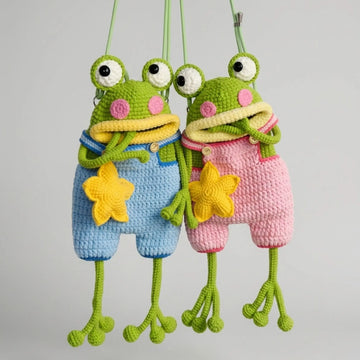
- 50-in-1 No-Sew Amigurumi Bundle — No assembly stress, 50 small projects = instant next-project momentum. The ultimate ADHD crochet collection.
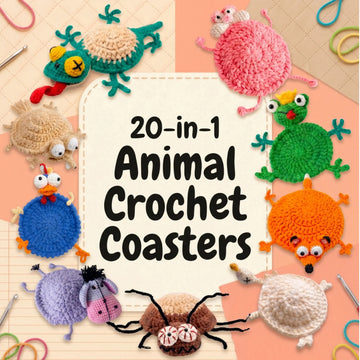
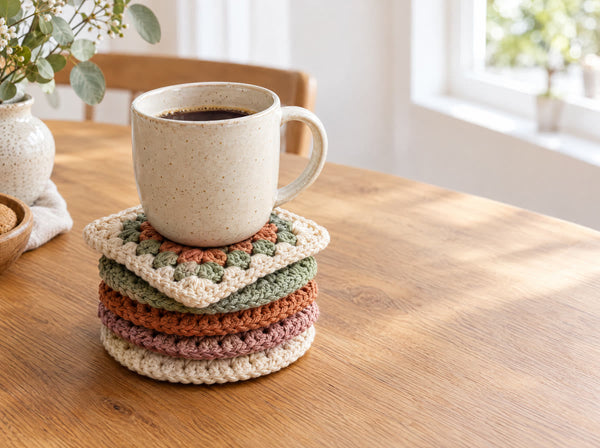
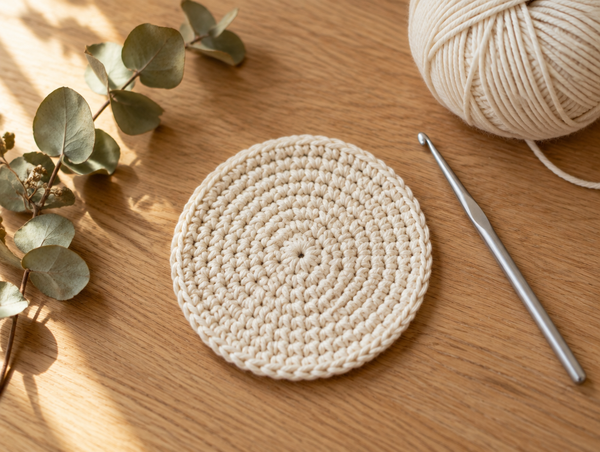
- 20-in-1 Animal Coasters Bundle — Tiny, fast, adorable. Each coaster takes 30–45 minutes. Perfect for short ADHD focus windows.
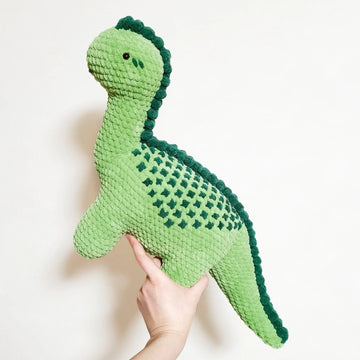
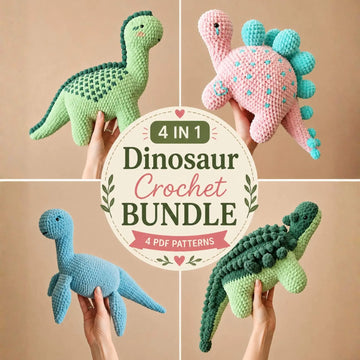
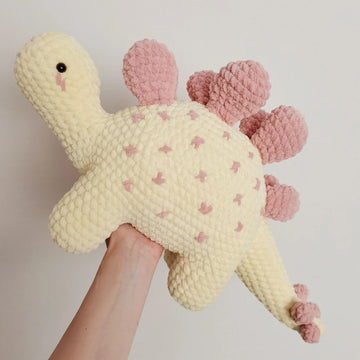
- 4-in-1 Dinosaur Amigurumi Bundle — Hugely satisfying visual rewards. Each dino is a complete achievement. Great for ADHD adults who love pop culture and collectibles.
- Browse All MCW Pattern Books — Full library of beginner-to-intermediate patterns, all designed with clear round notation and visual guides.
🧶 Ready to Give Your ADHD Brain What It Loves?
Start with the No-Sew Amigurumi Bundle — 50 small, satisfying projects, zero assembly frustration. Instant PDF download, made for real crochet sessions.
Get the Bundle →Frequently Asked Questions About Crochet and ADHD
Does crochet actually help with ADHD?
Yes, based on both scientific evidence and widespread community experience. A 2025 study in Scientific Reports (PMID 39900664) found crochet increases attention through motor skill learning. The repetitive hand movements occupy sensory-seeking channels, the stitch-by-stitch progress creates a steady dopamine loop, and the mild cognitive challenge sustains engagement without overwhelming the ADHD brain.
Why does repetitive movement help ADHD?
Repetitive movement provides a stable, predictable sensory input that satisfies the ADHD brain's need for stimulation without requiring constant novelty. It functions similarly to fidgeting — a self-regulatory mechanism — but in a controlled, productive form. The rhythm also activates the cerebellum and basal ganglia, brain regions involved in timing and attention regulation, both of which are relevant to ADHD.
Can I crochet AND watch TV or listen to something?
Absolutely — and for ADHD brains, this is often recommended. Crochet occupies your hands and part of your attention in a way that eliminates restlessness, making it much easier to actually absorb the audio or video content. Many ADHD adults report that they retain podcast/audiobook content better when crocheting compared to sitting still.
What type of crochet is best for someone with ADHD?
Small, no-sew amigurumi and coaster/dishcloth projects are generally best. They deliver visible progress quickly, have natural stopping points after each round, and can be completed in one or two sessions. Bundles are especially effective because the next project is always immediately available, preventing the motivation drop that comes with needing to choose and source a new pattern.
I always start projects but never finish them. Is that an ADHD thing?
It's one of the most universally recognized ADHD patterns, and it doesn't mean you've failed. It means the reward/interest dropped below the effort threshold — a neurological event, not a character flaw. Choosing smaller projects, no-sew patterns, and bundle formats structurally solves this by delivering completion rewards before the attention window closes.
Can crochet replace ADHD medication?
No — crochet is a complementary tool, not a medical treatment. It can meaningfully improve daily functioning, reduce anxiety, and enhance focus for many people, but it addresses symptoms rather than the underlying neurological condition. Always work with a healthcare provider for ADHD diagnosis and treatment decisions. Crochet works beautifully alongside medication, therapy, and other strategies.
Is crochet better than knitting for ADHD?
Both can work well, but crochet has some ADHD-specific advantages: it uses only one hook (simpler to manage than two needles), stitches can't "run" if you drop the work, and progress tends to build more quickly, which means more frequent visible milestones. That said, the best craft is the one you'll actually do — if knitting clicks for you, that's equally valid.
How long should I crochet in one session?
Work with your natural attention window, not against it. For many ADHD adults, 20–45 minutes is a natural cycle. Setting a soft timer for 25 minutes (Pomodoro-style), completing a full round or section, then deciding whether to continue or stop is an effective structure. Ending on a completed row rather than mid-row makes it much easier to return to the project later.
What yarn is best for ADHD crocheters?
Medium-weight (worsted, #4) smooth cotton or acrylic yarn is generally recommended. The weight moves quickly on the hook (faster visible progress), the smoothness makes repetitive movement soothing rather than irritating, and the stitch definition is clear enough to count easily. Bright colors enhance visual feedback, making each stitch more satisfying to see completed.
Are there online ADHD crochet communities?
Yes — several thriving ones. Reddit's r/ADHD and r/crochet both have frequent threads celebrating crochet as an ADHD tool. TikTok's #ADHDcrochet and #crochetADHD tags have millions of views. Ravelry has ADHD-specific groups. These communities provide body-doubling via virtual presence, pattern recommendations, and the deeply validating experience of others who share your brain type and your craft.
Can crochet help with anxiety that comes alongside ADHD?
Yes — anxiety and ADHD frequently co-occur, and crochet addresses both. The rhythmic repetitive motion activates the parasympathetic nervous system (the "rest and digest" state), reducing physiological stress markers. Multiple studies on craft-based interventions document reductions in self-reported anxiety. The focus-absorbing nature of crochet also interrupts rumination cycles, which are common in anxiety-ADHD combinations.
Summary: Crochet Is a Legitimate ADHD Tool — and a Joyful One
Crochet and ADHD are a remarkably good match. The repetitive hand movements satisfy sensory-seeking behavior, the stitch-by-stitch progress creates a sustainable dopamine loop, and the mild, structured challenge generates the flow state conditions that ADHD brains crave. Science is catching up to what the community has known for years: motor skill learning through craft demonstrably improves attention in adults.
The practical keys are choosing the right format — small no-sew projects, bundles, coasters — that delivers completion rewards within natural ADHD attention windows. Pair it with audio, use a stitch counter, don't judge unfinished projects, and let the hook do what it does best: give your brain exactly the kind of input it was looking for all along.
MrsCrochetWorld's no-sew and bundle patterns are specifically designed to make every session feel productive and satisfying — which makes them a natural fit for the ADHD crochet toolkit. Whether you're new to crochet or coming back after a long break, there's a project here that fits your brain and your busy life.
🦕 Start Small, Finish Often
Browse our Dinosaur Amigurumi Bundle and Animal Coasters Bundle — both designed for fast, rewarding sessions that actually get done.
Browse All Patterns →