If you've ever picked up a crochet hook during a stressful week and felt something quietly shift — you're not imagining it. Crochet anxiety relief is a real, accessible, and deeply personal practice that thousands of crafters return to, again and again, precisely because it works. Not as a medical treatment — but as a calming daily habit, a way to give nervous hands something purposeful, and a ritual that brings genuine warmth to a hectic day.
This guide explores exactly how and why crochet can become your go-to calm-down tool — and how to build seven simple habits that make it even more effective.
Why Crochet Is a Natural Calming Habit
Crochet sits at an interesting crossroads: it's creative, productive, social, and quietly meditative all at once. Unlike activities that demand your full cognitive attention (solving a puzzle, writing an email), crochet operates in a comfortable middle zone — just enough to anchor your mind, not so much that it creates pressure. That middle zone is where calm lives.
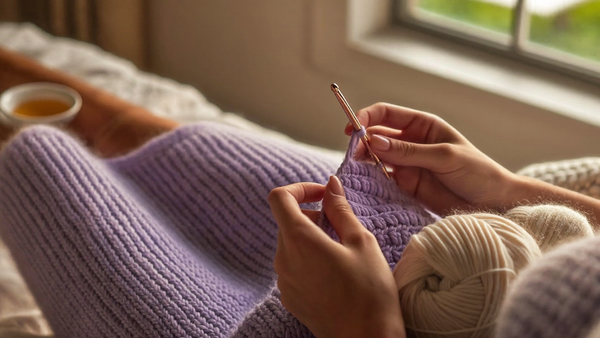
The experience of being anxious often involves a mind running ahead of the present — replaying past conversations, imagining future problems, looping through worries that don't resolve. Crochet gently interrupts that loop. Your hands are doing something. Your eyes are tracking the growing shape. Your fingers feel the texture of the yarn. Your count — one, two, three — pulls attention back to right now.

This is why so many crocheters describe their stitching time as "my quiet hour" or "the only part of the day where my brain shuts up." It isn't magic — it's the natural result of giving restless hands and a busy mind a gentle, shared task to focus on together.
Crochet as a Feel-Good Ritual (Not a Treatment)
It's important to name this clearly: crochet is a wellness habit, not a medical intervention. If you're experiencing clinical anxiety that significantly affects your daily life, professional support — therapy, medical care, or both — is the right first step. Crochet can be a wonderful companion practice, but it doesn't replace that.
What it does do beautifully is give you a portable, affordable, endlessly enjoyable tool to incorporate into your daily calming routine. Many people who practice meditation, breathing exercises, or mindful movement find that crochet gives them a similar sense of anchored calm — but with the bonus of a finished project they can hold, gift, or use.
The Wellness Community and Crochet
On platforms like Reddit's r/crochet and r/crafttherapy, discussions about crochet and anxiety are among the most engaged. Crafters share stories of crocheting through hospital waiting rooms, through insomnia, through grief, and through high-stress work periods — not to avoid the difficulty, but to have something steady and beautiful to hold onto while moving through it. This shared experience is itself part of the wellness benefit: the sense of belonging to a community of makers who understand.
How Rhythm and Repetition Ease a Busy Mind
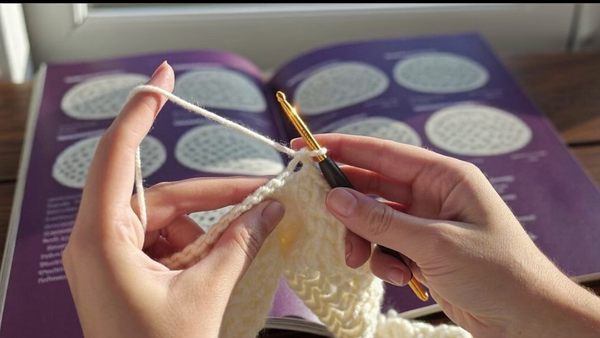
At the heart of crochet's calming power is rhythm. The steady, predictable cycle of insert hook, yarn over, pull through — repeated hundreds of times — creates a gentle, self-sustaining sensory loop. This is the same principle behind other well-known calming practices: the rhythmic breath of meditation, the repetitive motion of rocking, the back-and-forth of walking.
Repetitive, rhythmic physical movement tends to activate the parasympathetic nervous system — the "rest and digest" branch that counterbalances the stress response. You're not directly controlling your nervous system, of course. But you're giving it conditions it finds naturally settling: predictability, gentle sensory engagement, and a pace that isn't rushing anywhere.
The Focus-Without-Pressure Effect
One of the distinct things about crochet is that it demands just enough attention to quiet internal chatter, without creating the performance pressure that makes other focused activities stressful. There are no deadlines on a granny square. No right or wrong feeling about how your single crochet looks. The hook moves, the yarn follows, the stitches appear. That gentle, consequence-free focus is itself deeply restorative for an anxious mind.

Stitch Counting as Gentle Mindfulness
Many people find the practice of counting stitches to be quietly meditative. You're not forcing your mind to go blank — that's an unrealistic ask for most people, especially when anxious. Instead, you're giving it a narrow, harmless thing to track: one, two, three, four. This gentle counting gently crowds out the worry spiral, not by fighting it, but by simply occupying the space where the loop usually runs.
This is exactly why therapists who practice mindfulness-based approaches sometimes recommend craft activities like knitting and crochet as accessible, informal mindfulness practices. The mechanism is similar — present-moment attention on a physical, sensory experience — but wrapped in something creative and enjoyable.
7 Crochet Habits for Anxiety Relief That Actually Work
Crochet doesn't automatically become a wellness practice just by picking it up — it becomes one when you bring intention to how you use it. Here are seven habits that transform crochet from a hobby into a genuinely calming daily ritual.
Habit 1: The Five-Minute Wind-Down
Before bed, set a timer for five minutes and crochet. Don't try to finish anything. Don't aim for a row count. Just stitch slowly. This brief ritual signals to your nervous system that the day is over and it's safe to wind down. Many people who use this habit report that they fall asleep more easily on nights when they crochet before bed. The key is keeping it short and pressure-free — five minutes is easier to commit to than an hour.
Habit 2: The One-Round Rule
When you feel restless or anxious and don't know what to do with yourself, commit to crocheting just one round of whatever project is on your hook. Just one. The bar is low enough that you'll almost always start — and once you're in the rhythm, you'll often continue naturally. This habit builds consistency without pressure, and consistency is what turns crochet into a real anxiety relief practice.
Habit 3: Pair Crochet With Something You Already Enjoy
Stack crochet onto an existing calming activity: a cup of herbal tea, your favorite podcast, a comfort TV show, or quiet music. The habit becomes stronger when it's paired with something already associated with calm. Over time, picking up the hook triggers the relaxation response before you've even started stitching — because your brain associates the action with the feeling.
Habit 4: Keep a Project At Every "Wait Spot"
Anxiety is often worst in waiting situations: doctor's offices, school pickup lines, long commutes. Keep a small project bag with a work-in-progress amigurumi or a simple square in your car, your bag, or next to your favorite chair. Having the project immediately accessible removes the friction barrier — you don't have to find it when you need it, it's just there.
Habit 5: Choose Colors That Match Your Mood Intention
Color affects mood in gentle but real ways. When you want to feel calmer, reach for soft, muted yarns — sage greens, dusty blues, warm creams. When you want to feel energized and cheerful, the bright pinks and yellows of a playful amigurumi are wonderful. Being intentional about yarn color turns the act of choosing your next project into a tiny, meaningful act of self-care.
Habit 6: Finish Small Things Regularly
The feeling of completion — holding a finished object — has its own particular calming quality. It's evidence that something worked out. Something is done. In the middle of life's uncertainties, that matters. Build your crochet habit around small projects — amigurumi, coasters, small creatures — so you experience that completion feeling often. Bundles of small patterns are ideal for this: finish one animal, the next one is immediately waiting.
Habit 7: Crochet With Others (Even Virtually)
Social connection is one of the most powerful anxiety regulators there is. Crocheting alongside someone else — in person, over video call, or even just sharing photos in an online crochet community — combines the calming effect of the craft with the grounding effect of connection. Virtual "crochet alongs" on YouTube, Instagram, or Discord channels are wonderfully low-pressure ways to experience this community warmth.
Best Crochet Projects for Calming Anxiety
Not every crochet project is equally calming. The most anxiety-friendly projects share a few key qualities: quick visible progress, simple repetitive stitch patterns, low consequences for mistakes, and satisfying tactile feedback. Here's how different project types compare:
| Project Type | Calming Level | Why It Works | Best For |
|---|---|---|---|
| Small no-sew amigurumi | ⭐⭐⭐⭐⭐ Excellent | Fast to complete, adorable result, repetitive rounds | Everyday wind-down, gift-making |
| Granny squares | ⭐⭐⭐⭐⭐ Excellent | Modular, endlessly repeatable, satisfying color combinations | Long relaxing evenings |
| Animal coasters | ⭐⭐⭐⭐⭐ Excellent | 30–45 minute projects, useful and cute | Short anxious moments, waiting |
| Simple scarves / infinity loops | ⭐⭐⭐⭐ Great | Pure rhythm, no shaping, deeply meditative | Mindless TV sessions |
| Fantasy / character amigurumi | ⭐⭐⭐⭐ Great | Fun creative engagement, playful distraction | When you want distraction + calm |
| Large blankets | ⭐⭐ Moderate | Deeply rhythmic but slow progress can feel discouraging | Long-term projects only |
| Complex garments | ⭐ Low | High cognitive load, stitch counting stress — can increase anxiety | When you're already calm and focused |
Why No-Sew Amigurumi Is the Anxiety-Friendly Choice
Traditional amigurumi involves sewing separate body parts together at the end — and for someone who crochets partly to calm down, that finishing step can feel like sudden pressure. No-sew amigurumi patterns cleverly avoid this by crocheting everything in continuous rounds. You end each session with something visually complete — even if it's just one body part. There's no stress-inducing assembly at the end. Just a finished, adorable creature ready to sit on your shelf.

For anyone new to crochet as a wellness practice, starting with a beginner-friendly no-sew bundle removes all the barriers at once: you get clear instructions, small scope, no sewing stress, and immediate results. That combination is almost uniquely good at building the "just ten minutes of crochet always helps" habit.
The Power of Cute
There's a reason amigurumi — those round, expressive, impossibly cute crocheted creatures — have become a global phenomenon. Interacting with cute things (even ones you made yourself) triggers a warmth response that's genuinely pleasant. Choosing to make a tiny bear, a cheerful turtle, or a wide-eyed giraffe is choosing to spend your calming time in the company of something joyful. That's not trivial — it's self-care with craft supplies.
How Yarn Color and Texture Affect Your Mood While Crocheting
One of the often-overlooked dimensions of crochet as a calming practice is the sensory role of the yarn itself. Crochet is a deeply tactile activity — your fingers are in constant contact with the yarn — and that tactile experience contributes significantly to how calming or stimulating the session feels.
Texture: Soft Is Calming
Smooth, soft yarn — high-quality cotton, fine merino, or soft acrylic — creates a consistently pleasant tactile experience that supports the calming effect of stitching. Rough, scratchy, or fuzzy yarn (while sometimes aesthetically interesting) can be distracting or mildly irritating in a way that works against relaxation. For your dedicated calming crochet sessions, choose yarn that genuinely feels nice in your hands. Touch it before you commit to a project.
Color: Intentional Choices Matter
Color associations are personal, but there are widely shared tendencies. Cool blues, soft greens, warm creams, and dusty lavenders are commonly associated with calm. Bright, saturated primaries are energizing and cheerful. Deep, rich jewel tones feel luxurious and grounding. When you choose your next project specifically as a calming practice, consider reaching for a yarn color that you personally associate with feeling settled and at ease.
The act of choosing — picking a color you love, for no reason other than that it makes you feel good — is itself a small, important act of kindness to yourself.
Weight: Medium Weight Is the Sweet Spot
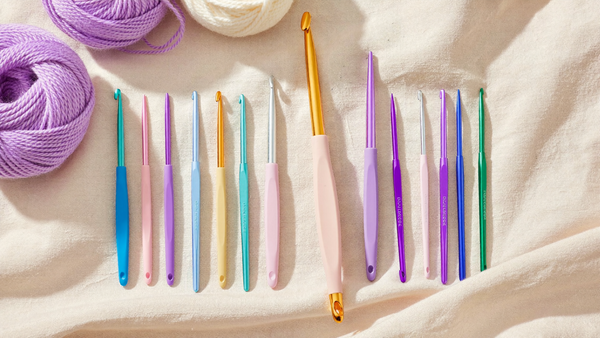
Worsted weight (medium weight) yarn with a 5mm hook is the most broadly recommended combination for relaxed crochet. It's large enough to see clearly without effort, small enough to make satisfying shapes quickly, and works up at a pace that provides good visual feedback. Very thin yarn (laceweight, fingering) slows progress dramatically and strains the eyes. Very thick yarn (bulky) can feel heavy and fatiguing. Worsted is the Goldilocks zone.
Building a Calming Crochet Routine: Practical Steps
A wellness habit is only as strong as the routine that carries it. Here's how to build a crochet routine that actually sticks — without putting pressure on yourself to be consistent every single day.
Start With a Tiny Commitment
The most common mistake with new habits is making them too ambitious. "I'll crochet for an hour every evening" sounds lovely and almost never happens consistently. Instead: "I'll crochet for ten minutes before I check my phone in the morning." Or: "I'll do one round of my current project while the tea steeps." Tiny commitments build the habit muscle without requiring willpower you might not always have.
Connect Crochet to Existing Rituals
The most durable habits are anchored to existing routines. Think about moments in your day that already have a "pause" built in: morning coffee, the commute home, after dinner but before the cleanup starts, the last twenty minutes before bed. Attach crochet to that existing pause. Over time, the pause and the crochet become so linked that one naturally triggers the other.
Have Your Tools Ready Before You Need Them
When anxiety spikes unexpectedly, the last thing you want is to search for your hook, untangle yarn, and find your pattern. Keep a "calm kit" assembled and ready: current project in a small pouch, hook tucked in, pattern bookmarked or printed. When you need it, you can reach for it within seconds. Friction is the enemy of calming habits.
✔ Current project in a drawstring bag or small pouch
✔ Hook already attached to the project
✔ Pattern bookmarked (app or printed page)
✔ Row counter or small tally counter nearby
✔ Extra yarn in the same color (so you don't run out mid-session)
✔ A cozy spot claimed as "your crochet spot" (optional but lovely)
Don't Judge the Work — Honor the Practice
Perfectionism and anxiety frequently travel together. If you find yourself feeling stressed about whether your stitches look right, that tension is working against the calming purpose. Remind yourself: the goal of a calming crochet session is not a perfect project. The goal is ten minutes of a gentler mind. A wonky stitch that got you there is a success.
Frogging (unraveling stitches you don't like) is absolutely allowed — but if the urge to frog comes from anxiety about imperfection rather than genuine preference, notice that. Sometimes the most calming thing you can do is leave the uneven stitch exactly where it is and keep moving forward.
When to Pick Up the Hook: Everyday Stress Moments That Crochet Helps With
Part of making crochet a genuine anxiety relief tool is recognizing the moments in daily life where picking up the hook could genuinely help. Here are common situations where many crocheters find the practice particularly valuable:
Before a Difficult Conversation or Meeting
Crocheting for ten to fifteen minutes before a stressful interaction can help you arrive calmer, with nervous energy already redirected. The rhythmic stitching helps move excess adrenaline through the body productively, rather than having it pool in your shoulders and jaw. You'll likely feel more centered going into the conversation.
During the "Doomscrolling" Hour
Many people have a habit of scrolling through social media or news in the evening — and many of those same people notice it makes anxiety worse, not better. Crochet makes an excellent replacement. Your hands are occupied, your eyes are focused on something physical, and you're making something rather than passively consuming. Ten minutes of crochet instead of ten minutes of scrolling can make a significant difference in how you feel by bedtime.
While Waiting (Doctor's Office, Appointments, Queues)
Waiting is an anxiety trap for many people — the idle time leaves the mind free to catastrophize. A small project bag in your purse or backpack turns waiting time into unexpectedly pleasant stitching time. Many experienced crocheters say they almost look forward to waiting rooms now.
The Post-Work Decompression
The transition from work mode to home mode is one of the trickiest moments of the day — especially for people who work from home and find the boundary between "work" and "not work" blurry. A ten-to-fifteen minute crochet session after closing the laptop can act as a clear, physical signal that the work day is over. The tangible shift — from screen to yarn, from output-driven to process-driven — is remarkably effective at changing mental gears.
During Insomnia
Crochet in a dim room — a simple, familiar pattern you don't need to think hard about — is much better for sleeplessness than reaching for your phone. The low light, the gentle rhythm, and the non-stimulating nature of the activity support the return of sleepiness in a way that screens actively block.
🧶 Calming Crochet Patterns We Recommend
- 50+ No-Sew Amigurumi Bundle — The ultimate calm-kit filler. 50 small, satisfying projects in one instant PDF download. No sewing stress, just cozy stitching.
- Easy No-Sew Amigurumi Beginner Book — Perfect for building the habit from scratch. Simple, beautiful, beginner-friendly. Great first project for calming crochet.
- Care Bears Amigurumi Bundle — Four cheerful, nostalgic bears. Playful and heartwarming — the perfect antidote to a stressful week.
- Fantasy Crochet Bundle – 6 Characters — For when you want your calming crochet to be a little magical. Six charming fantasy creatures to make at your own pace.
🧶 Build Your Calming Crochet Kit Today
Start with the No-Sew Amigurumi Bundle — 50 small, satisfying projects in one instant PDF download. No sewing, no stress, just pure cozy stitching whenever you need it most.
Get the Bundle — $14.90 →Frequently Asked Questions About Crochet Anxiety Relief
Does crochet really help with anxiety?
Many people find crochet a genuinely calming activity. The rhythmic, repetitive motion of stitching can help quiet a busy mind, give nervous hands something productive to do, and create a gentle sense of focus that makes it easier to relax. It won't replace professional support for clinical anxiety, but as a calming daily habit it is widely valued in the wellness community.
Why does repetitive motion feel calming?
Repetitive physical actions — like rocking, rhythmic breathing, or crocheting — are well-known self-soothing behaviors. They create a predictable sensory loop that gives the nervous system something stable to anchor to, which many people experience as physically calming. Crochet adds the bonus of visible, growing progress, which provides extra encouragement to continue.
What kind of crochet is best for calming anxiety?
Simple, repetitive patterns tend to be most soothing — small amigurumi, coasters, or granny squares where the stitch rhythm is consistent and progress is quick. No-sew patterns are especially good because you avoid the stress of a complex finishing step. Soft yarn in a color you love also adds to the sensory pleasure.
How long should I crochet to feel calmer?
Most crocheters report noticing a shift in mood after 10–20 minutes of continuous stitching. Even a short session during a stressful moment — waiting for an appointment, winding down before bed — can help create a sense of calm. There's no required duration; follow what feels right for you.
Can I crochet while watching TV or listening to a podcast?
Absolutely. Many crocheters find that pairing stitching with a podcast, audiobook, or favorite show enhances the calming effect. The hands stay engaged, the mind has gentle entertainment, and the combination makes it easier to fully relax. Once you know a stitch pattern well, it requires very little visual attention, leaving you free to enjoy audio content.
Is crochet good for nervous or fidgety hands?
Yes — crochet gives nervous hands a calming, purposeful focus. Instead of tapping, picking, or scrolling, your hands are engaged in a rhythmic, tactile activity that produces something beautiful. Many people with fidgety tendencies find crochet one of the most satisfying ways to redirect that restless energy.
Do I need to be good at crochet to get the calming benefits?
Not at all. The calming effect comes from the rhythm and focus of stitching, not from making perfect work. Beginners often find simple stitches like single crochet especially soothing precisely because they can enter a relaxed, flowing rhythm quickly. Starting simple is the best approach.
Summary: Crochet Anxiety Relief, One Stitch at a Time
Crochet anxiety relief isn't complicated or expensive. It begins with a hook, a ball of soft yarn in a color you love, and the decision to give your hands and mind something gentle to do together. The seven habits in this guide — the wind-down, the one-round rule, sensory yarn choices, keeping projects accessible, finishing small things, crocheting with others — are all practical, low-barrier ways to deepen a practice that already works beautifully on its own.
You don't need to be a skilled crocheter. You don't need perfect stitches or an impressive project. You need a few minutes, something soft in your hands, and the willingness to move through one round at a time. The calm tends to arrive without you looking for it — somewhere between the third and the thirtieth stitch.
If you're building or refreshing your calming crochet kit, the No-Sew Amigurumi Bundle from MrsCrochetWorld is a wonderful place to start: 50 small, satisfying, no-assembly patterns in one instant download. Plenty of calm stitching ahead.