Crochet for self care: how a simple yarn ritual helps you slow down
If your days feel loud and your evenings feel rushed, a small hook and a ball of yarn can become a quiet anchor you actually look forward to.

Crochet for self care is one of the gentlest ways to build a calming daily ritual with your own two hands. It isn't about being productive or finishing fast — it's about giving yourself a protected pocket of calm where your hands do something gentle and rhythmic while your mind settles. Even ten quiet minutes counts.
Crochet & self-care: what the sources say
| What self-care is | NIMH: “taking the time to do things that help you live well and improve both your physical health and mental health”[1] |
|---|---|
| Self-care ideas NIMH lists | regular exercise, a regular sleep schedule with less screen time before bed, relaxing activities or low-stress hobbies, gratitude, and staying connected[1] |
| NHS 5 steps to mental wellbeing | learning new skills and paying attention to the present moment are two of the five steps[2] |
| Why crocheters crochet | Happy Hookers survey (8,391 responses): to be creative 82.1%, to relax 78.5%, for a sense of accomplishment 75.2%[3] |
| How crochet made them feel | calmer 89.5%, happier 82%, more useful 74.7% – self-reported, not a clinical trial[3] |
| Ritual size in this guide | start with 10 minutes; on packed days the five-minute version (two rounds) still counts |
| When to get help | NIMH: seek professional help for severe or distressing symptoms that last 2 weeks or more; in the US call or text 988, free and available 24/7[1] |
| What crochet is not | a medical treatment or a substitute for professional mental health care |
What the numbers mean: 10 minutes a day is 70 minutes a week – just over an hour, small enough to keep up. In the Happy Hookers survey, 89.5% of 8,391 is about 7,510 people who said crochet made them calmer[3] – a self-report that shows how crocheters feel, not proof of a health effect.
This is general information, not medical advice. If you are struggling, please talk to your doctor or a licensed mental health professional.
What does crochet for self care actually mean?
The key word is intentional — a pocket of calm you protect on purpose, not a task on a to-do list.
Self care is any small, deliberate habit you choose to look after your own wellbeing. Crochet for self care simply means treating your stitching time as one of those habits. You sit down, pick up a familiar stitch — often nothing fancier than a single crochet repeated in the round — and let the rhythm carry you. That mindset shift, from "making stuff" to "making space," is what turns an ordinary hobby into a ritual.
Because it's hands-on and screen-free, crochet also gives you a natural break from scrolling. Many makers describe it as their "off switch" at the end of a busy day: a cozy, tactile signal that the evening is winding down. And if you're worried you're not skilled enough to relax into it, don't be — here's why crochet isn't as hard as beginners fear.
Why does a simple crochet ritual feel so calming?
Repetition, rhythm, and small finishable wins — the same reasons people love kneading dough or gardening.
A big part of the calm comes from repetition. Amigurumi and coaster patterns often repeat the same few stitches in the round, so once you find your rhythm, your hands almost move on their own. That steady, predictable motion is easy to sink into, and it quietly trains even, relaxed tension at the same time.
There's also the comfort of a small, finishable goal. A tiny plush or a single coaster is achievable in one or two cozy sittings, so you get a genuine "I made this" feeling without a huge commitment — the same reason one-skein projects are so satisfying. To be clear and honest: crochet is a hobby, not a medical treatment, and it can't replace professional care when you need it. What we can say from years of teaching beginners is that a gentle, repeatable making ritual is a lovely, low-cost addition to a balanced routine.
Which crochet projects are best for winding down?
The most soothing projects share three traits: they're small, they repeat, and they're forgiving.
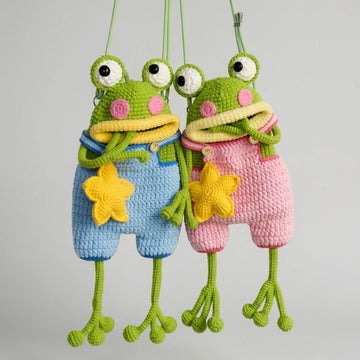
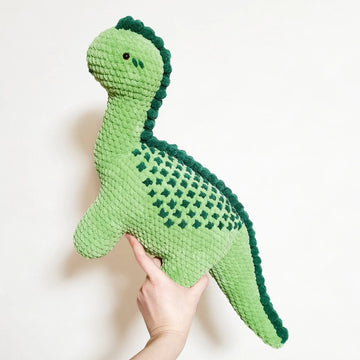
No-sew amigurumi are a favorite because the pieces come together with minimal assembly — less finicky sewing to interrupt your flow, and a cute, cuddly result at the end. Coasters and mini keychains are equally relaxing: each one is a quick, self-contained round of stitching, so you can make just one and feel finished. That "one and done" quality is ideal for a nightly ritual, with no half-built project nagging at you. Soft character plushies add an extra layer of comfort — there's something genuinely heartwarming about making a huggable friend by hand, and handmade pieces double as thoughtful gifts too.
"You are not crocheting to finish. You are crocheting to slow down — the plushie is just a lovely bonus."— Ava Collins, MrsCrochetWorld
Low-stress patterns for cozy evenings
Small, repetitive, forgiving — these three are made for slow, feel-good stitching.

50 No-Sew Amigurumi Patterns Bundle
Best seller50+ low-stress, no-sew mini plushies and characters — perfect for tired evenings when you want the calm of stitching without any fiddly sewing at the end. Keep one in your basket as your permanent "no-pressure" project.

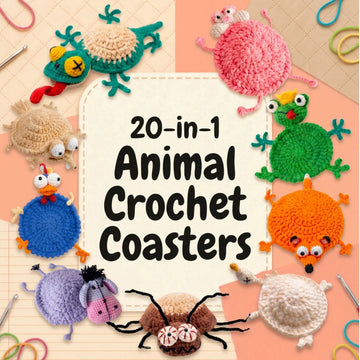
21-in-1 Animal Crochet Coasters Bundle
One and doneEach coaster is a small, self-contained round of stitching you can finish in a single wind-down session. Twenty-one cute animals mean your nightly ritual stays fresh for weeks — read the full coaster bundle guide.

9-in-1 Flower Crochet Bundle
Gentle repeatsRoses, tulips, irises, and daffodils that never wilt. Flower patterns repeat the same soothing petal rounds, so your hands settle into rhythm quickly — and a finished bloom makes a sweet little gift for someone you love.
How do you build a crochet self-care routine?
You don't need a big plan — just a repeatable cue and a low bar you can actually keep.
Anchor it to a daily cue
Attach your stitching to something you already do — evening tea, a bath, the hour before bed. Same chair, same warm drink, same basket of yarn: the routine becomes the signal to slow down.
Start with ten minutes
A short, guilt-free window is far more sustainable than an ambitious goal you skip when tired. If ten minutes turns into forty because you're enjoying it, wonderful — the low bar is what keeps you coming back.
Keep a ready-to-go basket
Zero setup friction. A hook, one soft skein, and a simple project waiting by your favorite chair means you skip the "what should I make?" hurdle and go straight to the calm part.
Match project to energy
On a drained evening, choose a repeat-stitch coaster or a no-sew plush you could almost make with your eyes closed. Save count-heavy patterns for a fresh, focused morning.
Let done be enough
No finish-line pressure, no comparing your stitches to photos online. Your ritual isn't a competition — messy rows still count, and "good enough" is genuinely good enough.
Brand new to crochet?
Our complete beginner guide to crochet walks you through hooks, yarn, and your first stitches — everything you need before your first cozy session.
Prefer mornings? A calm start with your hook
The same slow ritual, claimed before the day makes its demands.
Evenings are the classic time for a crochet ritual, but plenty of makers prefer mornings. In the morning you have not yet carried the whole day to your chair, so settling into a rhythm can feel easier than replaying a tricky conversation. It also sets an unhurried note before the phone and the notifications take over, and even two rounds give you something real you made before breakfast.
Here is a small checklist you can do tonight to make tomorrow morning easy:
- Pick the spot first. Choose one chair, ideally near some natural light. Habits attach to places more reliably than to good intentions.
- Anchor it to something you already do. After the kettle goes on, after you open the curtains, after you feed the cat. The old habit pulls the new one along.
- Choose one simple project. A single morning project means no decisions before coffee. Continuous single crochet rounds, a coaster spiral or a granny square you know by heart are ideal.
- Pack the basket and leave it on the chair. Your project with the hook already in it, small scissors, a few stitch markers and a card noting your last round. Future you should only have to sit down.
- Set a very small target. One round, ten stitches or until your tea has cooled. A clear, reachable finish line means you can stop without guilt, and you will often keep going anyway.
- Keep the phone in another room. If you want a longer guide, our article on a screen-free crochet routine goes into detail.
A light-colored yarn is easier to see in dim early light, and winding your yarn into a center-pull ball the night before stops it rolling across the floor.
Three versions of the ritual, and what to do when it falls apart
Most people end up with a few versions of the same habit and switch depending on the day.
- The five-minute version: for packed mornings. Basket up, two rounds, basket down. It is short enough to have no excuse and long enough to feel like a real pause.
- The slow-coffee version: a warm drink and a simple project when you can start a little earlier. It is worth protecting on weekends and days off, even if you only get it once or twice a week.
- The commute version: a keychain-size project or a mini amigurumi in a small pouch for trains, waiting rooms or a parked car. Keep that kit permanently packed in the bag you actually carry.
Routines wobble: someone gets ill, a deadline lands, you go on holiday. Treat your ritual as a chair you can always come back to rather than a streak to protect. After a missed week, skip the make-up marathon and do the smallest possible version: sit down, do one round, put it back. If it keeps collapsing in the same place, adjust the routine and not yourself. Too early? Move it later. Too long? Halve it. Project too fiddly? Swap it for something you could make with your eyes closed. If you enjoy the idea of bookending your day, our guide to a crochet evening routine for better sleep is the natural partner. This is a comfort habit and a general source of calm, not a treatment. If stress or low mood feels severe or lasts two weeks or more, please talk to a doctor or mental health professional[1].
Keep it cozy: mistakes that turn relaxing crochet stressful
- Starting too hard: a complex, count-heavy pattern on a tired night feels like homework. Save advanced designs for fresh days.
- Chasing speed: racing to finish undoes the relaxation. Let slow be the point.
- Working in bad light: squinting can leave you with tight shoulders and tired eyes. A warm, well-lit corner changes everything.
- Choosing splitty yarn: fighting your materials is the opposite of soothing — pick a smooth, soft, easy-to-see yarn from our beginner yarn guide.
- Making it a chore: if you "should" yourself into it, it stops being self care. Keep it optional and inviting.
- Skipping comfort: an ergonomic mid-size hook (around 3.5–4.0 mm for amigurumi) and a supportive chair let your body relax into the activity instead of bracing against it.
Ready to start your cozy crochet ritual?
Pick a relaxing pattern tonight, or choose a low-stress beginner design and give your evenings a calm little anchor — ten minutes is all it takes.
Browse relaxing patterns Shop beginner patternsFrequently asked questions
Is crochet actually good for self care?
Many makers find crochet a calming, screen-free ritual that helps them unwind. It's a hobby, not a medical treatment, but it can be a lovely part of a balanced self-care routine.
Can a total beginner use crochet for relaxation?
Yes. Beginners often find repetitive, no-sew projects the most soothing because they're forgiving and don't require complex counting. Start with one simple stitch repeated in the round — our 7-day beginner guide gets you there gently.
How much time do I need for a crochet self-care ritual?
As little as ten minutes. A short, guilt-free window is easier to keep up than a long session, and it still gives you that hands-on, calming break.
What are the most relaxing crochet projects?
Small, repetitive, forgiving projects — no-sew amigurumi, flower and animal coasters, and mini keychains are favorites for winding down.
Does crochet help with stress?
Lots of makers describe stitching as a helpful way to slow down and refocus. Everyone is different, so treat it as a gentle addition to your routine rather than a guaranteed fix.
Is crochet better than knitting for relaxing?
Neither is objectively better — it's personal. Some find crochet's single-hook rhythm easier to relax into, especially for small amigurumi projects worked in the round.
When is the best time to crochet for self care?
Whenever you naturally want to unwind. Evenings and the hour before bed are popular because the slow rhythm pairs well with winding down.
What if I keep making mistakes?
Mistakes are part of the craft. For a relaxing ritual, choose forgiving patterns where small imperfections don't show, and let "good enough" be enough.
Do I need expensive supplies to start?
No. A comfortable mid-size hook, a soft smooth yarn, and good lighting are plenty. Comfort matters more than cost for a cozy session.
Can crochet be part of a bedtime routine?
Yes — a short, screen-free stitching session can be a pleasant wind-down cue. Keep it low-count and easy so it soothes rather than stimulates.
Can I do my crochet self-care ritual in the morning instead of the evening?
Yes. Many makers prefer a short morning session because the day has not yet piled up on their shoulders. Keep it small, use one simple project that you can work half-awake, leave your basket on your chair and give yourself a clear stopping point such as two rounds or the last sip of tea.
How do I remember which round I was on when I stop mid-way?
Jot the round number on a small card every time you put the work down, even if you stop mid-round, and keep it in your basket. For amigurumi worked in a continuous spiral, a locking stitch marker in the first stitch of the current round does the same job.
Sources
- National Institute of Mental Health (NIMH): Caring for Your Mental Health (self-care tips, when to seek help), checked 21 Nov 2026
- NHS: 5 steps to mental wellbeing (learning new skills, paying attention to the present moment), checked 21 Nov 2026
- Burns & Van Der Meer, Perspectives in Public Health 141(3), 2021: Happy Hookers – findings from an international study exploring the effects of crochet on wellbeing (survey of 8,391 crocheters, abstract), checked 21 Nov 2026
- TelefonSeelsorge Germany: free, anonymous support line, day and night (German), checked 21 Nov 2026