Crochet Tension Problems Solved: The Complete Guide to Even, Perfect Stitches
Why your stitches turn out too tight or too loose, how to diagnose the cause, and the exact habits that give you even, consistent tension on every project.

If your crochet fabric puckers, flares, curls, or looks lumpy no matter how carefully you count stitches, the real culprit is almost always tension. Tension is the amount of tightness in each loop as you pull the yarn through, and it decides whether your stitches land even and smooth or jump between tight knots and loose gaps. The good news: crochet tension problems are a skill issue, not a talent issue, and they are completely fixable once you understand what is going on in your hands.
In this guide you will learn exactly what causes tight and loose tension, how to diagnose your own tension with a simple swatch test, how hook size and yarn weight change the result, and seven reliable techniques to fix and hold even tension. Everything uses standard US crochet terms, so you can apply it to any pattern on MrsCrochetWorld or anywhere else.
What causes crochet tension problems?
Before you can fix uneven stitches, you need to know whether your tension runs tight, loose, or inconsistent — and why.
Tension is simply how firmly you hold and release the working yarn as you make each stitch. Every crocheter develops a personal tension, and there is no single "correct" tightness. The problem is not being tight or loose — it is being inconsistent, or being so far off that your fabric no longer matches the pattern. Three patterns show up again and again.
Tension that is too tight. Tight tension is the most common complaint, especially among beginners and anxious hands. When you grip the yarn hard and pull each loop down snug against the hook, the stitches become small, stiff, and hard to insert the hook into on the next row. Amigurumi crocheters often want tight stitches so the stuffing does not show, but over-tightening causes cramped hands, split yarn, and fabric that curls at the edges. If you have to fight to push your hook into the previous row, your tension is too tight.
Tension that is too loose. Loose tension produces large, floppy, gappy stitches. The fabric feels soft and drapey, which can be fine for a blanket but is a disaster for amigurumi, bags, or anything that needs structure. Loose tension usually comes from not maintaining any grip on the working yarn at all, letting it feed freely without resistance. You will see holes between stitches, uneven stitch height, and a finished piece that is bigger than the pattern says.
Tension that is inconsistent. This is the trickiest problem because the fabric looks fine in places and wrong in others. One row is tight, the next is loose; the first few stitches of a round are neat and the last few sprawl. Inconsistent tension comes from changing your grip, speeding up and slowing down, crocheting while tired or distracted, or putting your project down mid-row and picking it up with a different hand position. The fix is building a repeatable rhythm, which we cover below.
Other hidden causes feed into all three: the wrong hook for the yarn, a hook with a sharp or sticky head that drags, slippery or grabby yarn fiber, and simple fatigue. We will untangle each of these so you can find your own cause instead of guessing.
Diagnose, measure, and fix your tension
Three practical stages: test what you have, understand how your tools change it, then lock in even tension for good.

How to diagnose your tension — the swatch test
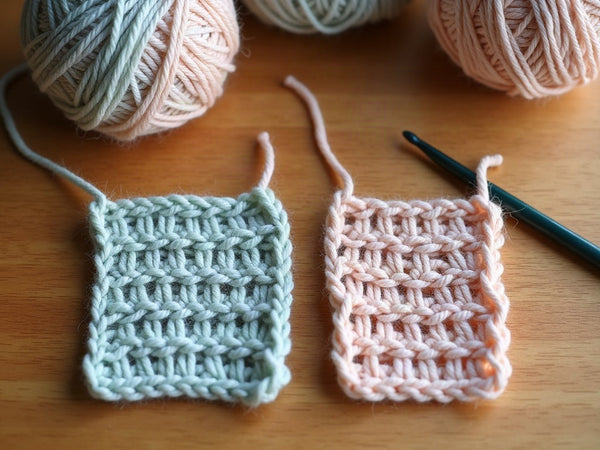
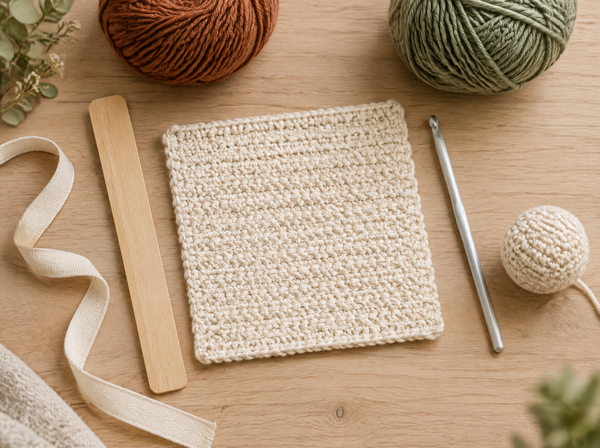
The fastest way to see your true tension is a gauge swatch. Pick the hook and yarn your pattern calls for, chain about 20, then work single crochet rows until the piece is roughly 4 inches tall. Lay it flat without stretching and measure a 4-inch square in the center, counting how many stitches fit across and how many rows fit down. Compare that to the gauge printed in your pattern.
If you get more stitches per inch than the pattern, your tension is too tight — go up a hook size. If you get fewer stitches per inch, your tension is too loose — go down a hook size. Just as important, run your fingertip across the swatch: it should feel even, with stitches the same size and no sudden tight knots or loose gaps. A swatch takes ten minutes and saves you from frogging an entire project that came out the wrong size. Our beginner-friendly no-sew bundle lists gauge for every pattern so you always have a target to test against.
Practice gauge with the No-Sew Bundle →
Hook size and yarn weight — how they affect tension
Your hook and yarn are the two biggest tension levers you control. A larger hook makes bigger loops and looser, airier fabric; a smaller hook makes tighter, denser fabric. Yarn weight sets the baseline: fingering yarn with a small hook gives fine, dense stitches, while bulky yarn with a large hook gives big, open stitches. The yarn label suggests a hook range, but that is only a starting point — your personal tension decides the final choice.
Here is the practical rule. If your stitches come out too loose and gappy, drop down one hook size before changing anything else. If they come out cramped and stiff, go up one size. For amigurumi specifically, most crocheters use a hook one or two sizes smaller than the yarn label suggests, because tight, closed stitches keep the stuffing from peeking through. Matching the hook head shape to your yarn also helps: a pointed head slides into tight stitches, while a rounded, inline head grips slippery yarn. The right pairing removes half of all tension trouble before you make a single stitch.
Start simple with the Easy No-Sew Book →
7 techniques to fix and maintain even tension
Even tension comes from repeatable habits, not luck. First, set a consistent yarn-feeding grip — most crocheters wrap the working yarn around the pinky and over the index finger so it feeds with gentle, steady resistance. Second, hold the hook the same way every time, whether you use the pencil grip or the knife grip, and do not switch mid-project. Third, keep your working loop sitting on the widest part of the hook shaft, not choked up against the narrow throat.
Fourth, slow down and find a rhythm; speed is the enemy of consistency until the motion is automatic. Fifth, relax your shoulders and hands — death-gripping the yarn creates tight tension and sore wrists. Sixth, crochet in good light when you are rested, because tired, distracted stitching drifts loose. Seventh, if you set a project down, finish the current row first so you restart with the same hand position. Practice these on a forgiving, repetitive project — our cuddly animals bundle is perfect for building muscle memory round after round.
Build your rhythm with Cuddly Animals →Hook size, yarn weight, and tension at a glance
Use this quick reference to match your tools to the fabric you want. When in doubt, swatch first.
| Yarn weight | Typical hook range | Go smaller for | Tension result |
|---|---|---|---|
| Lace / fingering (1–2) | B-1 to E-4 (2.25–3.5 mm) | Fine amigurumi, dense detail | Tight, closed, no gaps |
| Sport / DK (3) | E-4 to 7 (3.5–4.5 mm) | Small plushies, structured bags | Firm with soft drape |
| Worsted / aran (4) | H-8 to J-10 (5–6 mm) | Most amigurumi, toys | Even and sturdy |
| Bulky (5) | K-10.5 to M-13 (6.5–9 mm) | Firmer baskets, cushions | Chunky, quick, warm |
| Super bulky (6) | M-13 to Q (9–15 mm) | Tighter texture, less flop | Very open, fast fabric |
Pro tension tips
- Keep the working loop on the fat part of the hook shaft — never choke it up against the narrow throat.
- Wind yarn into a center-pull ball so it feeds smoothly without sudden tugs that tighten random stitches.
- Blocking evens out minor tension wobbles on flat pieces; wet or steam block before you judge a swatch.
- For amigurumi, size down one or two hooks so stuffing never shows through the stitches.
- Warm up with ten throwaway stitches at the start of each session to reset your grip before real work.
- If one hand cramps, you are gripping too hard — loosen up and let the yarn carry some of the work.
Even tension is not about crocheting harder — it is about letting the yarn flow the same way, stitch after stitch, until your hands forget they ever did it any other way.— Ava, MrsCrochetWorld
How to do a tension swatch, step by step
Ten minutes now saves hours of frogging later. Follow these steps before any project where size matters.
- Gather your tools. Use the exact hook and yarn you plan to use for the project, plus a ruler or tape measure and a pair of stitch markers.
- Make the foundation. Chain at least 20 stitches so your measuring square sits in the middle, away from the tighter edges.
- Work the swatch. Crochet in the stitch the pattern uses — usually single crochet for amigurumi — until the piece is about 4 inches tall. Keep your normal, relaxed rhythm; do not try to crochet "neater" than usual or the test is useless.
- Rest and flatten. Set the swatch on a flat surface and let it relax. Do not stretch or pin it yet; you want its natural, unstretched size.
- Measure stitches. Place markers 4 inches apart in the center and count the stitches between them. Then count the rows over 4 inches vertically.
- Compare to the pattern gauge. Match your numbers to the pattern. More stitches per inch means tight tension; fewer means loose tension.
- Adjust and re-swatch. Change your hook one size in the needed direction and repeat until your gauge matches. Now your project will come out the right size with even, confident stitches.
Keep exploring

Small, fast keychain projects are the ideal way to practice steady tension round after round.
View pattern →When uneven tension means ripping back, these recovery methods get you back on track fast.
Read the guide →Warm up first
Start each session with a few throwaway stitches so your grip settles before the real work begins.
One grip, always
Pick a hook hold and a yarn-feed path, then keep them identical from the first stitch to the last.
Swatch, don't guess
A ten-minute gauge swatch tells you more about your tension than any amount of counting ever will.
Frequently asked questions
Why is my crochet tension so tight?
Tight tension usually comes from gripping the working yarn too hard and pulling each loop down snug against the hook. It is common for beginners and for anyone crocheting while tense. Relax your shoulders and hands, let the yarn feed with gentle resistance rather than a death grip, keep the loop on the fat part of the hook, and go up a hook size if the fabric is still cramped.
Why is my crochet tension too loose?
Loose tension happens when the working yarn feeds too freely with no resistance, making large, gappy stitches. Add a little control by wrapping the yarn around your pinky and over your index finger so it drags slightly as it feeds. If the fabric is still floppy, drop down one hook size for a firmer, denser result.
How do I make my crochet stitches more even?
Even stitches come from a repeatable rhythm. Hold the hook the same way every time, feed the yarn through the same finger path, keep the working loop on the widest part of the hook, and slow down until the motion is automatic. Practicing on a simple, repetitive project builds the muscle memory that produces consistent tension.
What is a gauge swatch and do I really need one?
A gauge swatch is a small test piece you crochet with your project hook and yarn to measure how many stitches and rows fit in 4 inches. You need one whenever size matters — garments, bags, and anything that must fit. For loose decorative pieces you can skip it, but for amigurumi it still helps you confirm your stitches are tight and even.
Does hook size change my tension?
Yes, directly. A larger hook makes bigger loops and looser fabric; a smaller hook makes tighter, denser fabric. Changing hook size is the quickest fix for tension that is off: go up a size if your stitches are too tight, down a size if they are too loose.
Why does my tension change partway through a project?
Inconsistent tension usually means your grip or rhythm changed. Common triggers are speeding up and slowing down, crocheting while tired or distracted, switching hand positions, or putting the project down mid-row. Finish each row before stopping and restart with the same grip to keep tension steady from start to finish.
How should I hold the yarn for consistent tension?
Most crocheters wrap the working yarn around the pinky, across the palm, and over the index finger. The index finger lifts to feed yarn and the pinky adds gentle resistance so loops stay uniform. The exact path matters less than using the same one every time.
Why does my amigurumi have gaps that show the stuffing?
Gaps mean your tension is too loose for stuffed work. Amigurumi needs tight, closed stitches so the filling cannot peek through. Go down one or two hook sizes from the yarn label suggestion and keep steady, firm tension. Dense single crochet in continuous rounds gives the closed fabric amigurumi needs.
Can blocking fix uneven tension?
Blocking helps with minor wobbles on flat pieces like garments, scarves, and squares — wetting or steaming the fabric relaxes the fibers and evens out small inconsistencies. It will not rescue severely uneven stitches or stuffed amigurumi, so treat blocking as a finishing touch, not a substitute for good tension.
Does the type of yarn affect tension?
It does. Slippery yarns like bamboo or mercerized cotton feed fast and tend toward loose tension, while grabby wool or acrylic can drag and tighten stitches. Smooth, plied worsted-weight yarn is the most forgiving for learning even tension. Match a rounded hook head to slippery yarn and a pointed head to tight stitches.
How long does it take to develop even tension?
Most crocheters see a clear improvement within a few focused projects, usually a couple of weeks of regular practice. Even tension is muscle memory, so consistent, relaxed stitching matters more than hours logged. Repetitive projects like small amigurumi or granny squares build it fastest.
Should I crochet tighter or looser as a beginner?
Aim for a relaxed middle rather than forcing tight or loose. Beginners often grip hard and end up too tight, which strains the hands and makes the next row difficult. Focus on a comfortable, steady feed and let hook size handle the fine adjustments.
Practice even tension on patterns made for it
Build steady, confident stitches with beginner-friendly no-sew and small amigurumi patterns that give you plenty of repeats to groove your rhythm.
Browse all patterns Get a free pattern