Focus feels harder to hold onto than it used to. Between endless notifications, open browser tabs, and a to-do list that never quite empties, many of us end the day feeling scattered — busy for hours, yet unable to point to a single thing we gave our full attention to. If that sounds familiar, there's a surprisingly simple, cozy practice worth trying: pick up a crochet hook.
In this guide, we're exploring crochet for focus and concentration — how the steady, repetitive rhythm of hook and yarn can help you settle a restless mind, build gentler attention habits, and enjoy the increasingly rare pleasure of doing just one thing at a time. No medical promises here, and no dramatic claims. Just practical ideas, honest experiences from the crochet community, and a warm invitation to slow down and pay attention in a way that actually feels good.
— A member of the MrsCrochetWorld community
Why Crochet Is Such a Natural Focus Anchor
Ask crocheters what happens when they settle in with a project, and you'll hear the same thing again and again: the noise in their head gets quieter. There's a real reason crochet lends itself so well to focused attention, and it comes down to how the craft engages your mind and hands together.
It gives your attention a clear anchor. A wandering mind is often a mind with nothing specific to hold onto. Crochet solves that beautifully. There's always a next stitch, a stitch count to keep, a row to finish. That simple, concrete task gives your attention a gentle place to rest — and when your mind drifts (as minds do), the pattern is right there to guide you back.
The rhythm is repetitive but not mindless. This is the sweet spot. If a task is too easy, the mind wanders off looking for stimulation. If it's too hard, you feel stressed and overwhelmed. Crochet lives in the pleasant middle: repetitive enough to feel soothing, engaging enough to keep you present. That balance is exactly what makes it so easy to sink into.
It's a single-tasking sanctuary. We spend so much of our day fragmenting our attention across screens and tasks that we forget what sustained focus even feels like. Crochet is gloriously single-purpose. You can't really crochet and scroll at the same time. Your hands are busy, and that alone quietly protects you from the pull of distraction.
Progress is visible and rewarding. Every completed round, every finished amigurumi limb, gives your brain a small, satisfying sense of progress. Those tiny wins help keep you engaged, making it easier to stay with the task rather than abandoning it for something shinier.

How to Use Crochet to Practice Focus
Crochet can be a passive hobby, or it can be an intentional way to gently strengthen your attention. The difference lies in how you approach the session. Here's how many crafters turn their crochet time into genuine focus practice:
1. Start with a single, clear intention
Before you pick up your hook, decide what "done for now" looks like: finish this round, complete this ear, work five rows. A clear, small goal gives your attention a defined target — and helps you resist the scattered feeling of not knowing where you're headed.
2. Notice when your mind wanders — and gently return
Here's the actual focus practice: your mind will drift. That's not failure — it's completely normal. The skill is simply noticing the drift and returning your attention to the next stitch. Every time you do that, you're gently exercising the same "come back" muscle that focus depends on.
3. Remove one distraction at a time
You don't need a silent, screen-free retreat. Just remove the biggest distraction first — usually the phone. Put it face-down or in another room. Notice how much more easily your attention settles when it isn't competing with a buzzing device.
4. Let the pattern do the guiding
A good beginner-friendly pattern is like a set of gentle rails for your attention. You always know what comes next, so there's no decision fatigue pulling you out of flow. This is why simple, well-written patterns are so calming to work with.

The Best Crochet Projects for Deep Concentration
Some projects pull you into a focused state almost effortlessly, while others scatter your attention with constant chart-checking. If concentration is your goal, look for projects that are steady, rhythmic, and forgiving.
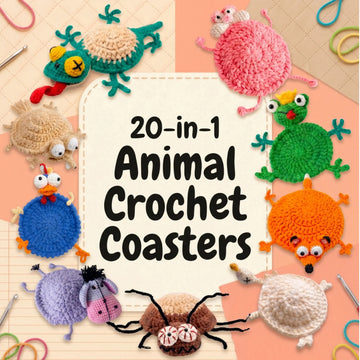
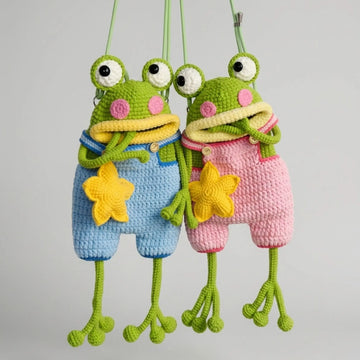
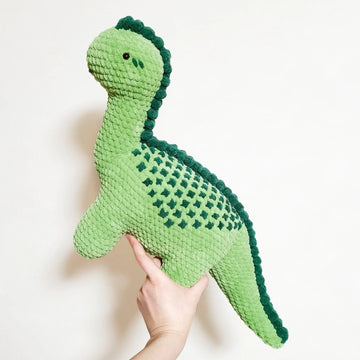
Amigurumi worked in the round
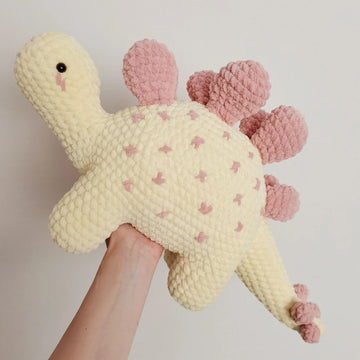
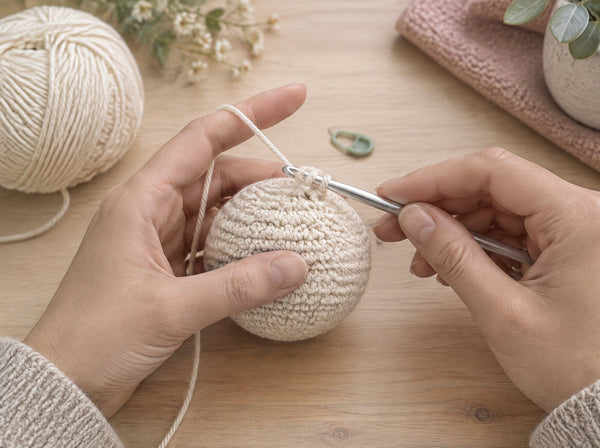
Working continuous rounds to build a little body or head is one of the most absorbing things in crochet. The stitch count is predictable, the shape grows before your eyes, and there's a lovely momentum to it. Many MCW crafters describe amigurumi as their "flow state" project — the one where an hour disappears in the best way.
Repeat-stitch scarves, cowls, and blankets
A simple shell stitch or a basic v-stitch repeats so quickly that your hands learn it fast — and then you can settle into a long, smooth rhythm. These larger, repetitive projects are ideal when you want extended, uninterrupted concentration without frequent stops.
No-sew amigurumi
If losing focus at the finishing stage frustrates you, try no-sew amigurumi patterns. You work the whole creature in one continuous flow with no fiddly assembly to break your concentration at the end. It's crochet designed to keep you in the zone from start to finish.
Granny squares, one at a time
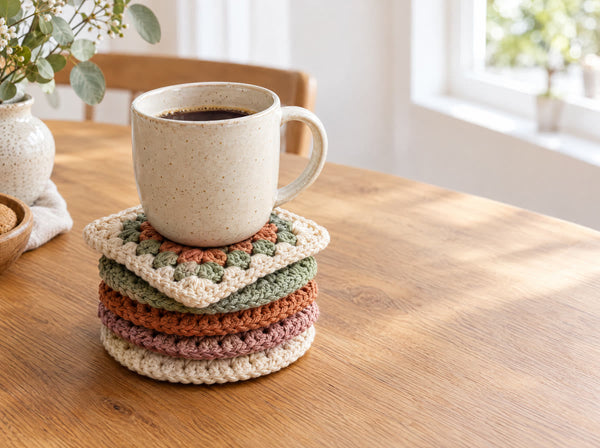
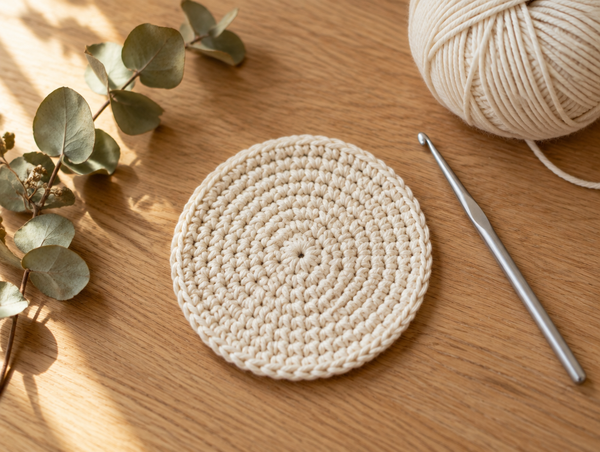
A single granny square is a perfect focus-sized task: small enough to complete in one sitting, structured enough to hold your attention, and endlessly repeatable. Many crafters use "one square per session" as a satisfying, self-contained concentration ritual.

Setting Up a Focus-Friendly Crochet Space
Concentration is much easier when your environment supports it. A few small adjustments to your crochet corner can make the difference between a distracted session and a genuinely absorbing one:
Keep the surface clear
A cluttered space quietly pulls at your attention. Clear away everything except your current project, your hook, and maybe a drink. One project in front of you means one thing for your mind to focus on.
Choose calm background audio — or silence
Some crafters focus best in quiet; others do well with soft instrumental music, lo-fi, or a familiar podcast. The key is low-demand audio: nothing with a gripping plot or emotional intensity that competes for the attention you're trying to give your stitches.
Set a gentle time block
Even 20–30 minutes of focused crochet is meaningful. Giving yourself a defined window ("I'll crochet until this playlist ends") removes the low-grade distraction of wondering whether you should be doing something else. This is your time to do one thing well.
Make your phone genuinely out of reach
This is the single biggest lever for concentration. A phone that's visible — even face-down — still quietly splits your attention. Place it across the room, or in another room entirely. You'll be amazed how much more deeply you settle into your project when the pull of the screen simply isn't an option.
Have your project ready to grab
Friction is the enemy of any good habit. Keep your current project, hook, and yarn together in a basket beside your chair. The easier it is to start, the more often you'll actually give yourself these calm, focused pockets of time.

50-in-1 No-Sew Amigurumi Bundle
Fifty absorbing, no-sew projects worked in one flow — perfect for sinking into a calm, focused crochet session with no fiddly finishing.
Shop the Bundle →
Easy No-Sew Amigurumi Book
Super-simple patterns with clear steps — the gentle "rails" that keep your attention on track and your mind pleasantly settled.
Get the Book →Crochet vs. Doomscrolling: Two Very Different Kinds of Attention
Here's something many crafters notice: crochet and phone scrolling both fill time, but they do completely opposite things to your attention.
Scrolling trains your mind toward rapid, shallow, jumpy attention. Every swipe delivers a new hit of novelty, and your brain gets used to constant switching. It can be entertaining, but it rarely leaves you feeling settled — and it often makes it harder to concentrate afterward.
Crochet trains the opposite. It rewards staying. You can't shortcut a row; you have to work through it stitch by stitch. Over time, that steady practice of holding your attention on one gentle task can feel like a small, quiet antidote to the fragmentation of digital life. Many community members at MrsCrochetWorld describe swapping evening scrolling for crochet and noticing that their attention feels a little calmer and steadier overall — not because of any dramatic transformation, but simply because they're regularly practicing focus instead of practicing distraction.
How Crochet Supports "Flow" — the Focused State We All Crave
You've probably experienced "flow" — that wonderful state of being so absorbed in something that time seems to disappear. Flow tends to happen when a task has a clear goal, gives immediate feedback, and sits at just the right level of challenge. Crochet checks all three boxes.
- Clear goal: Finish this round, complete this piece. You always know what you're working toward.
- Immediate feedback: Each stitch either works or it doesn't. You can see and feel your progress in real time.
- Balanced challenge: A well-chosen pattern is engaging without being stressful — the exact conditions where flow thrives.
This is why so many crocheters describe those deeply absorbed, time-melts-away sessions. When you find a project at the right level for you, crochet becomes one of the easiest on-ramps to focused flow you can find.
A Simple 25-Minute Crochet Focus Session to Try Today
Want to give your concentration a gentle workout? Try this simple template:
- Minute 0 — Clear the deck. Put your phone in another room. Clear your surface so only your project, hook, and a drink remain.
- Minute 1 — Set one small goal. "I'll finish this amigurumi head" or "I'll work five rows." Keep it concrete and achievable.
- Minute 2 — Begin, slowly. Start with a few deliberate stitches. Feel the yarn, notice the rhythm. No rush.
- Minutes 3–24 — Just stitch. When your mind wanders, notice it kindly and return to the next stitch. That gentle return is the practice.
- Minute 25 — Pause and notice. How does your mind feel now compared to when you started? Most crafters feel noticeably calmer and more collected.
That's the whole thing. No app, no streak to maintain, no pressure. Just twenty-five minutes of giving one calm task your full attention — and letting the rest of the noise fade for a while.
More Crochet Wellness Reading
If this resonated with you, you might also enjoy these related articles from the MrsCrochetWorld blog:
Frequently Asked Questions: Crochet for Focus and Concentration
Can crochet really help improve focus and concentration?
Many crafters find that crochet helps them settle a scattered mind and stay present. The steady, repetitive motion gives your attention a simple, concrete anchor, and the single-tasking nature of the craft naturally limits distraction. This is a general wellbeing and routine benefit that countless people in the crochet community describe — not a medical claim or treatment.
Why does crochet feel so absorbing and easy to focus on?
Crochet sits in a lovely middle zone: repetitive enough to feel soothing, but engaging enough to keep your mind occupied. You have a clear goal (the next round), immediate feedback (each stitch), and a comfortable level of challenge. Those are exactly the conditions that make an activity easy to sink into and stay with.
What are the best crochet projects for concentration?
Steady, rhythmic, forgiving projects work best. Amigurumi worked in continuous rounds, no-sew amigurumi, repeat-stitch scarves and blankets, and one-at-a-time granny squares are all excellent. They give you a predictable rhythm and a clear goal, so your attention has somewhere calm to settle.
How long should a focus crochet session be?
Even 20–30 minutes is meaningful. A defined time block — like "until this playlist ends" — helps remove the nagging feeling that you should be doing something else, so you can fully commit to the session. There's no need to crochet for hours; short, regular, focused sessions are wonderful.
My mind keeps wandering while I crochet. Am I doing it wrong?
Not at all — a wandering mind is completely normal. In fact, noticing that your mind has drifted and gently returning your attention to the next stitch is the focus practice. Every time you come back, you're strengthening the same "return to task" muscle that concentration relies on. Be kind to yourself and just keep returning.
Is crochet good for a restless or overactive mind?
Many crafters with busy, restless minds love crochet precisely because it gives their hands something to do while their attention has a clear anchor. Keeping the hands occupied can make it feel easier to slow racing thoughts. It's a personal routine benefit that many people find helpful, rather than a clinical intervention.
Should I crochet in silence or with background noise for better focus?
It depends on you. Some crafters focus best in quiet; others prefer soft instrumental music, lo-fi beats, or a familiar podcast. The key is choosing low-demand audio — nothing with a gripping plot or emotional intensity that competes for your attention. Experiment and notice what helps you settle most easily.
Can beginners use crochet to build focus?
Absolutely — and in some ways beginners benefit even more. Learning basic stitches requires just enough attention to quiet other thoughts without being overwhelming. Starting with a simple beginner amigurumi or a single-crochet rectangle lets you build a new skill and a calmer attention habit at the same time.
How is crochet for focus different from crochet for relaxation?
They overlap, but the emphasis differs. Crochet for relaxation is about the soothing, unwinding feeling during the session. Crochet for focus is about intentionally practicing sustained attention — setting a clear goal, noticing when your mind drifts, and gently returning. The same project can serve both; it's mostly about how you approach the session.
Do I need a special pattern to crochet for concentration?
No special pattern is required, but a clear, well-written beginner-friendly pattern helps a lot. A good pattern acts like gentle rails for your attention — you always know what comes next, so there's no decision fatigue pulling you out of flow. Simple no-sew amigurumi and repeat-stitch projects are especially easy to focus on.