Crochet Skill Levels Explained: Beginner, Intermediate & Advanced (with Pattern Picks)
Not sure which patterns you're ready for? This guide breaks down every crochet skill level so you can choose projects with confidence — and keep growing.

You've spotted a pattern you love — but the label says "intermediate" and you have no idea if that's you. Sound familiar? Skill level labels can feel like a secret code, and different designers use them differently. This guide gives you a plain-English breakdown of what beginner, intermediate, and advanced really mean in crochet, so you can pick patterns that challenge you in the best possible way.
What Do Crochet Skill Level Labels Actually Mean?
Most patterns use one of four labels — beginner, easy, intermediate, or advanced — but the definitions aren't universal. Here's how Ava defines them at MrsCrochetWorld.
Think of skill levels as a rough map, not a strict rule. A confident beginner can often tackle an "easy" pattern, and an intermediate crocheter who has never tried colorwork might feel lost in a "beginner" tapestry piece. That said, these labels are still the fastest way to scan whether a pattern is in your wheelhouse. Learn what they mean and you'll save yourself a lot of frogging.
If you're just getting started and want a full roadmap, the beginner crochet guide: stitches, tools and your first project in 7 days is the best place to land before you pick a pattern.
Beginner Level: Just Starting Out
Beginner patterns use only the most fundamental stitches and very simple construction. You should be comfortable with chain stitches, slip stitches, single crochet, and double crochet before calling yourself a beginner — not because those stitches are hard, but because you need to execute them consistently. If your tension is still all over the place, practice a small swatch first.
Beginner patterns typically include: basic flat shapes (squares, rectangles), simple in-the-round projects like coasters, wash cloths, and flat amigurumi parts, and minimal shaping (increases and decreases are usually written out row by row).
What beginner patterns usually don't include: colorwork, complex stitch patterns, advanced assembly, or working from a chart. Struggling to read a crochet pattern? That's completely normal at this stage — take it one abbreviation at a time.
Easy Level: Beginner Plus
Many designers use "easy" as a step above beginner. You know the basic stitches and can read a pattern with confidence, but you haven't tackled complex stitch combinations or advanced shaping yet. Easy patterns might introduce half-double crochet, basic color changes, or simple garment shaping. If you've made a few beginner projects and want to grow, these beginner patterns build confidence and bridge you naturally into easy territory.
"The best pattern for you isn't the easiest one — it's the one that's just a tiny stretch beyond where you are right now."— Ava, MrsCrochetWorld
Intermediate Level: Building Real Skills
Intermediate crocheters have a solid foundation and are ready to combine techniques in new ways.
At this level you're comfortable with all basic stitches and can handle: multiple yarn colors in the same project, textured stitch patterns (bobble, puff, shell, waffle), working in the round with consistent tension, reading both written instructions and basic stitch charts, and assembling multi-part projects like amigurumi figures with sewn-on limbs.
Intermediate patterns often assume you know how to adjust tension and can troubleshoot minor mistakes. That's a skill worth practicing deliberately — check out how to fix crochet mistakes for the most common ones and how to recover from them without starting over.
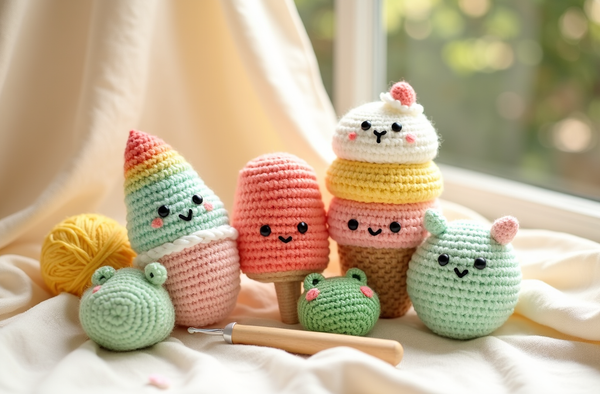
Multi-piece amigurumi are a classic intermediate project: they use simple stitches you already know, but challenge your tension consistency, assembly skills, and patience with small parts. Dinosaur amigurumi are a fan favorite at this level — they're bulky enough to work up quickly, but the details (spines, horns, legs) teach you a lot about shaping and sewing amigurumi parts neatly.
Advanced Level: Complex and Rewarding
Advanced patterns expect you to bring significant experience to the table. Expect: complex colorwork (tapestry, fair isle, intarsia), intricate stitch combinations worked from charts, precise garment fitting and shaping, fine-yarn lacework, and multi-character sets with detailed finishing. Advanced patterns often provide less hand-holding in the written instructions — they assume you can make judgment calls.
Getting comfortable reading symbol charts is one of the biggest unlocks at this level. If you haven't tried them yet, how to read crochet symbol charts is a great starting point. Advanced crocheters also tend to customize patterns confidently — resizing, recoloring, or swapping yarns without stress. If that sounds appealing, how to customize a crochet pattern safely walks through the approach.
Not sure which level you are right now? Read through the skill level overview — if most of the intermediate list feels comfortable, you're probably ready to explore advanced territory one project at a time. And remember: there are 10 key skills that take you from beginner to intermediate, and they're all learnable.
Pattern Picks by Skill Level
Real patterns from MrsCrochetWorld, matched to where you are right now.

50 No-Sew Amigurumi Bundle — Perfect for Beginners
Beginner FriendlyFifty adorable plushie patterns, every single one designed without sewing. No-sew construction means you focus entirely on your crochet stitches rather than assembly — exactly the right starting point. Each pattern uses only basic stitches so you can build speed and consistency project after project. Learn more about no-sew amigurumi techniques before you dive in.

4-in-1 Dinosaur Bundle — Great for Intermediate Crocheters
IntermediateFour dinosaur amigurumi in one bundle: T-Rex, Stegosaurus, and friends. Multi-part construction, shaped limbs, and surface detail make these a satisfying intermediate challenge. The patterns are written clearly with step-by-step shaping rows, so you're never left guessing. If you want to explore more amigurumi options, we have a huge range across all levels.

Fantasy 6-Character Bundle — A Challenge for Advanced Makers
AdvancedSix intricate fantasy characters — dragons, wizards, and more — with detailed shaping, multi-color work, and complex assembly. This bundle rewards crocheters who enjoy pushing their skills. Each character has its own unique construction approach, which means plenty of learning packed into one purchase. Browse the full amigurumi patterns collection for more advanced options.
How to Know When You're Ready to Level Up
Six honest signals that it's time to try something harder.
You finish projects without frogging
When you can complete a pattern of your current level with only minor corrections, you're ready to step up.
Your tension is consistent
Even tension is the single biggest skill unlock. If your gauge matches the pattern, you're already doing one of the hardest things in crochet.
You read patterns fluently
If you can scan a new pattern and understand it without looking up every abbreviation, you're ahead of most beginners. Check the crochet abbreviations glossary to fill any gaps.
You want more texture
Craving bobbles, shells, or waffle stitch? That appetite for texture is a great sign you're ready for intermediate stitch patterns.
You're bored with single-color projects
Wanting to try color changes or stripes is a natural intermediate milestone. Start with a simple two-color stripe before jumping to tapestry.
You want a structured path
Our complete beginner guide to crochet maps the whole journey from your very first stitch to confident independent crocheter.
Ava's Tips for Moving Through Skill Levels Faster
- Pick one new technique per project. Don't try to learn color changes, charts, and complex shaping all at once. One new skill per project lets it actually stick.
- Swatch every new stitch pattern. A small 4×4 inch swatch tells you your gauge and lets you practice the stitch before it counts. It's not wasted yarn — it's paid tuition.
- Read the full pattern before you start. Intermediate and advanced patterns often have construction notes that change how you approach early rows. Knowing what's coming prevents surprises.
- Count your stitches every round. Especially in amigurumi, an off-count in round 3 causes a visible problem in round 20. Counting stitches and rows is a habit worth building early.
- Join a crochet community. Being able to ask "does this look right?" accelerates your learning faster than almost anything else. Online communities, local groups, or even Instagram DMs to designers all count.
- Let go of perfect. Your first intermediate project won't be gallery-worthy — and that's fine. The goal is learning, not a flawless finished object.
Find Your Next Perfect-Level Pattern
Whether you're just starting out or ready to tackle something seriously challenging, MrsCrochetWorld has patterns designed for exactly where you are. Start with a free pattern to test the waters, or browse our beginner-friendly collection and work your way up.
Get a free patternShop beginner patternsFrequently asked questions
What is a beginner crochet skill level?
A beginner skill level means the pattern uses only the most basic crochet stitches — typically chain, slip stitch, single crochet, and double crochet — with simple construction and step-by-step written instructions. No experience with colorwork, charts, or complex shaping is required.
What is considered an intermediate crochet level?
Intermediate patterns assume you can work all basic stitches with consistent tension and are ready to combine techniques. This includes color changes, textured stitches like bobbles or shells, working in the round, assembling multi-part projects, and reading standard crochet abbreviations without looking them up.
What skills do you need to be an advanced crocheter?
Advanced crocheters are comfortable with complex colorwork such as tapestry or fair isle, fine-yarn lacework, intricate stitch patterns worked from symbol charts, garment fitting, and detailed multi-piece assembly. Advanced patterns also assume you can troubleshoot and make judgment calls without extra guidance from the pattern.
How do I know what crochet skill level I am?
Think about the most complex technique you've used comfortably. If you can only do basic flat stitches, you're a beginner. If you've made multi-part amigurumi or used color changes confidently, you're intermediate. If you regularly work from charts, handle complex shaping, or tackle garments with ease, you're advanced. When in doubt, try a pattern one level above your comfort zone on a small test project.
Can a beginner do an intermediate crochet pattern?
Sometimes, yes — especially if the "intermediate" label is mainly due to assembly rather than complex stitches. Read through the pattern before you start and check whether you know every technique listed. If you're missing just one, look it up and practice it on a swatch before beginning. Take it slowly and count your stitches every row.
How long does it take to go from beginner to intermediate?
There is no fixed timeline — it depends entirely on how often you crochet and how deliberately you practice new skills. Many crocheters reach intermediate level after completing five to ten projects and intentionally trying at least one new technique per project. Regular practice of even 20 to 30 minutes a day accelerates progress significantly.
What crochet stitches should a beginner learn first?
Start with the slip knot, chain stitch, and single crochet. Once those feel comfortable, add double crochet and half double crochet. These five foundational stitches cover the majority of beginner patterns and give you the muscle memory you need before moving on to textured or combined stitches.
Are amigurumi patterns beginner or intermediate level?
Amigurumi patterns span all skill levels. Simple no-sew single-piece designs are genuinely beginner friendly, while multi-part characters with detailed shaping and color changes are intermediate. Complex fantasy or character bundles with intricate surface detail can reach advanced territory. Always check the specific pattern's listed techniques rather than assuming all amigurumi are the same difficulty.