12 Best Beginner Crochet Patterns to Build Confidence Fast
Small, forgiving projects that teach one skill at a time — and reward you with a finished make you'll actually be proud of. This is the exact order we'd start in.

Starting crochet is equal parts exciting and overwhelming. You've got a hook, a ball of yarn and a head full of Pinterest dreams — but where do you actually begin so you don't get frustrated and quit? The secret isn't talent. It's choosing the right first projects: small, forgiving makes that teach one new skill at a time and hand you a quick, satisfying win.
What makes a pattern truly beginner-friendly?
A great first pattern uses just a few stitches, finishes fast, forgives wobbly tension, and — most importantly — has clear instructions with photos. If you can make a slip knot, chain and single crochet, you can make almost everything below.
"You don't have to be perfect to make something beautiful. You just have to begin — one stitch at a time."— Ava, MrsCrochetWorld
Start here — 5 confidence-builders
Work through these in order. Each one adds just one new skill, so you never feel out of your depth.

The granny square
Teaches: chains · double crochet · working in the roundThe granny square is the "hello world" of crochet — and for good reason. You work outward in simple rounds of double-crochet clusters, so you quickly learn to read your own stitches, count clusters and turn corners without a pattern holding your hand. It's almost impossible to truly "fail" one: if a corner pulls in or flares out, you spot it instantly and fix it on the next round — which is exactly why it builds confidence so fast. Start with a single square as a coaster (ten minutes!), then keep going to make a cushion, a bag, or join dozens into a blanket. Use a smooth worsted yarn and a 5.0 mm hook, and change colour each round for that classic look. Follow our step-by-step granny square tutorial and you'll finish your first motif in well under an hour — plus a skill you'll reuse in hundreds of projects.
See a granny-square make →
Coasters
Teaches: rounds · increasing · fastening offCoasters are tiny, quick and seriously impressive for the effort. Each one teaches you to start a tidy magic ring, increase evenly so the circle lies flat (the number-one thing beginners practise here), and weave in your ends so the back looks neat. Because they finish in 15–20 minutes, they're the perfect low-stakes playground: try a new stitch, a new colour combo or a new yarn without committing a whole evening. Cotton yarn keeps them sturdy and absorbent. Make a matching set of four and you've got a genuinely lovely first handmade gift — the kind that makes people say "you made that?". And here's a free lesson built in: if your circle ruffles, you've added too many increases; if it cups, too few — a quick, visible demonstration of how crochet shaping actually works.
Browse coaster patterns →
A no-sew amigurumi
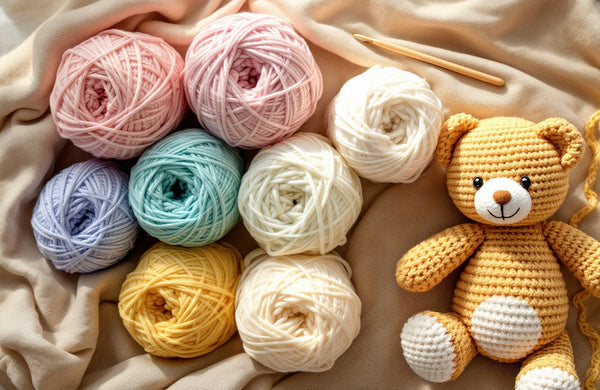
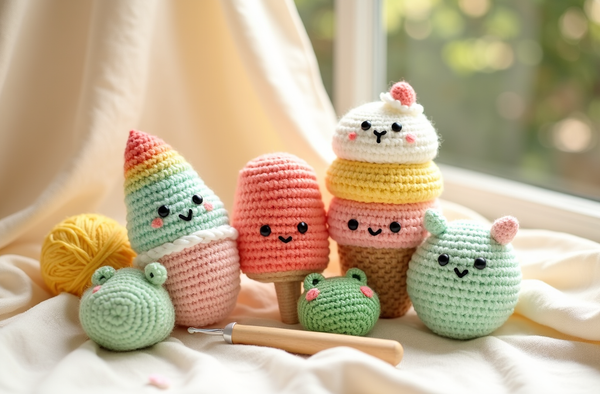
Teaches: spirals · stuffing · 3D shapingCute crochet animals (amigurumi) are the reason a huge number of people pick up a hook in the first place — and a no-sew design is the ideal first one, because the fiddliest, most frustrating part (sewing separate arms, legs and ears onto a round body) is removed entirely. Instead you work the whole creature in one continuous spiral, learning the three skills every amigurumi relies on: the increase (to grow the shape), the decrease (to close it up) and stuffing it firmly so it keeps its form. Use a soft worsted or "velvet" chenille yarn with a slightly smaller hook than the label suggests, so the stitches stay tight and the stuffing never peeks through. Add safety eyes and suddenly you're holding a character with a personality — the exact moment most beginners fall head-over-heels for the craft. Try a free no-sew pattern first to prove to yourself you can do it.
Get a free amigurumi →
A simple tote bag
Teaches: bigger rounds · handles · sturdy stitchesA simple tote is where your new skills graduate into something you'll actually use every single day — and there's no faster confidence boost than carrying a bag you made yourself. You'll practise working bigger rounds, keeping tension even over a larger piece, and attaching sturdy handles that won't stretch out. The best part for beginners: a slightly open, textured stitch is wonderfully forgiving, so the small inconsistencies that feel enormous to you simply disappear into the fabric. Reach for a firm cotton or cotton-blend yarn so the bag holds its shape and can carry real weight — soft acrylic tends to sag here. A granny-square tote is a brilliant bridge project, because you already know the square; you're just joining a few and adding handles. Make one and you'll catch yourself crocheting bags as gifts for everyone you know.
Easy bag patterns →
Little crochet flowers
Teaches: petals · colour changes · finishingCrochet flowers are the fastest "pretty win" there is — just a few rounds and you're holding a bloom that never wilts. They're the perfect place to practise changing colours cleanly (petals vs centre) and to feel how working into specific stitches creates shape and texture. Because each flower takes only minutes, you get rapid repetition — and repetition is exactly how stitches stop feeling awkward and start feeling automatic. Use up small amounts of leftover yarn (flowers are a brilliant scrap-buster) with a hook one size down for crisp, firm petals. Once you've made a few, the possibilities open fast: stitch them onto a plain beanie or bag as appliqués, glue them to clips and bookmarks, or wire a whole bunch into a bouquet that lasts forever. One cosy evening on the sofa is enough to make a dozen — and a jar of handmade blooms is a gift people genuinely treasure.
Flower patterns →7 more quick wins to keep your streak going
Once the first five feel easy, these add a single new skill each — from your first wearable to your first "big" finish.
06 · Dishcloth
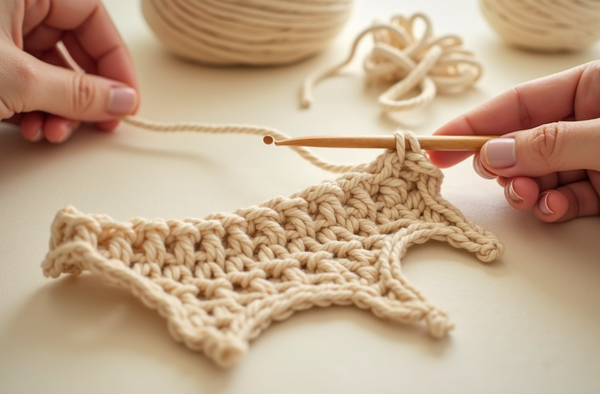
Even rows · tensionThe most useful practice piece there is — rows of single crochet until it's square. Straight edges, real result.
07 · Simple scarf
Rhythm · long rowsJust a very long rectangle — perfect for building muscle memory until your hands move on autopilot.
08 · Cowl / infinity scarf
Joining · seamingAdds one skill: joining your work into a loop. Learn to seam neatly once, use it forever.
09 · Headband
Gauge · fitYour gentle intro to making something fit. Short enough for one evening, boutique-worthy with a button or bow.
10 · Beanie hat
Increasing · shapingFeels advanced, isn't: start at the crown, increase in rounds, work straight down. Our hat size chart nails the fit.
11 · Baby blanket
Stamina · finishingYour first "big" project in one repetitive stitch. Build stamina — and use our blanket size chart to size it right.
12 · Storage basket
Flat base → sidesThe satisfying graduation make: a flat base built up into firm sides. Chunky yarn = a structured finish you'll show off.
5 tips to build confidence faster
- Use smooth, light-coloured yarn so you can actually see your stitches — save the fluffy black for later.
- Make a small swatch first. Ten minutes of practice saves hours of frustration — try our gauge calculator.
- Count your stitches at the end of every row. Catching a slip early is the biggest confidence-saver there is.
- Forget perfection. Crochet undoes instantly — just pull the yarn. Every maker's first squares are wonky.
- Finish things. A wonky finished coaster beats a perfect unfinished blanket every single time. Momentum is everything.
How long until I feel confident?
Most people feel genuinely comfortable within their first two or three projects — often just a week or two of casual practice. The basic stitches take an afternoon; the confidence comes from finishing real things. That's exactly why this list starts tiny and grows slowly: each make quietly proves you can, until one day you realise you're not a beginner anymore. When you're ready to level up, the skill level guide helps you pick what's next.
Ready to make your first one? 🧶
Grab a free, beginner-friendly pattern and feel that "I made this!" rush today — no shipping, instant download.
Get a free pattern Shop beginner patternsFrequently asked questions
What is the easiest thing to crochet for a beginner?
A granny square, dishcloth or coaster is the easiest first project. They use only basic stitches, finish quickly, and don't require perfect tension — ideal for building confidence.
What should I crochet first?
Start with a granny square or simple dishcloth to learn chaining and single crochet, then move on to coasters, a scarf, a beanie and a no-sew amigurumi. Work small to large, one new skill at a time.
How many stitches do I need to know to start crocheting?
Just three: the slip knot, the chain and the single crochet. With those you can make most beginner projects. The half double and double crochet come naturally soon after.
Is amigurumi good for beginners?
Yes — especially a no-sew amigurumi, which removes the trickiest step. It uses simple repeated stitches worked in rounds, so it's very beginner-friendly and hugely rewarding.
What yarn and hook should a beginner use?
A smooth, light-coloured worsted (aran) weight yarn and a 5.0 mm (US H-8) hook are the easiest combination to learn with, because the stitches are big enough to see clearly. Our yarn & hook guide explains every weight and size.
How much does it cost to start crocheting?
Very little — a hook and one ball of yarn cost less than a couple of coffees, and a single skein can make a whole small project. You can even start with a free pattern before spending anything on a paid one.
Can I teach myself crochet at home?
Absolutely. Most people learn entirely from step-by-step photo tutorials. Follow our free complete beginner's guide in order and practise a little each day.
Should I learn crochet or knitting first?
Crochet is often easier to start with: you use a single hook, mistakes are quick to undo (just pull the yarn), and you can finish small projects fast. Many makers find it less fiddly than knitting for the first few weeks.
How long does it take to learn to crochet?
The basic stitches take about an afternoon to learn. Real comfort and even tension usually come within your first two or three finished projects — often just a week or two of casual practice.