What Is Amigurumi? The Complete Beginner's Guide
The cute crochet toys taking over the internet — what amigurumi actually is, how they're made, and why they're a perfect beginner project.

Amigurumi (pronounced ah-mee-goo-roo-mee) is the Japanese art of crocheting small, stuffed creatures — cuddly animals, characters and little objects with big personalities. The word combines the Japanese ami ("crocheted") and nuigurumi ("stuffed doll"). If you've ever seen an impossibly cute crochet bear, frog or dinosaur online, that's amigurumi — and the good news is it's far more beginner-friendly than it looks.
Amigurumi at a glance
| Core stitches (US terms) | Magic ring, single crochet (sc), increase (inc) and decrease (dec), often worked as sc2tog = “single crochet 2 stitches together”[3] |
|---|---|
| US vs UK terms | US single crochet = UK double crochet; US double crochet = UK treble[3] – check which terms your pattern uses |
| How it is worked | In a continuous spiral: no slip stitch at the end of a round, so mark the first stitch of each round with a stitch marker |
| Worsted yarn (#4) | Craft Yarn Council hook range 5.5–6.5 mm (US I-9 to K-10½)[1]; amigurumi use a smaller hook (often 3.0–4.0 mm) on purpose |
| Hook sizes | 3.25 mm = US D-3, 3.5 mm = US E-4, 3.75 mm = US F-5, 4 mm = US G-6[2] |
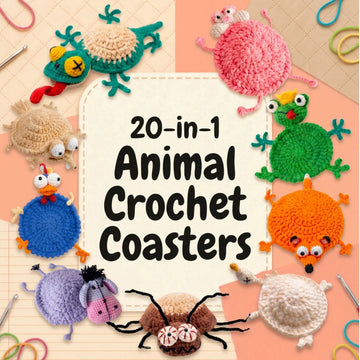
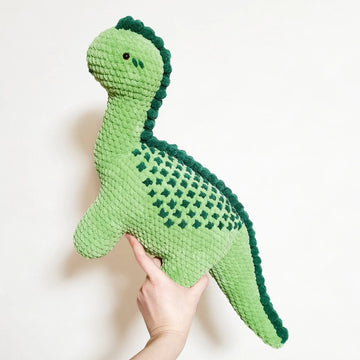
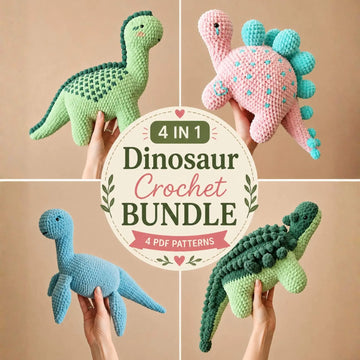
| Patterns in this guide | 50-in-1 No-Sew Bundle (50+ minis, chenille yarn, 3.75 mm hook, keychains 8–10 cm / 3–4 in, beginner) · Maine Coon cat (about 35 cm / 14 in, 3.5 and 5 mm hooks, plush yarn, sew or crochet-on assembly) · 4 dinosaurs (beginner to easy intermediate) |
| Toys for children under 3 (US rule) | 16 CFR 1501 covers “stuffed, plush, and flocked animals and other figures”; a toy fails if a piece that comes off in use-and-abuse testing fits the small-parts test cylinder[4] – so embroider the eyes |
Hook math: the 3.0–4.0 mm hooks used for amigurumi are 1.5–3.5 mm smaller than the 5.5–6.5 mm the Craft Yarn Council lists for worsted yarn (5.5 − 4.0 = 1.5; 6.5 − 3.0 = 3.5)[1] – that tight fabric keeps the stuffing hidden.
Hook sizes are Craft Yarn Council guidelines; the hook in your pattern and your own gauge come first. How long an amigurumi takes depends on your speed, yarn and size.
How is amigurumi made?
Almost every amigurumi follows the same recipe: start with a magic ring, work single crochet in a spiral, increase to grow the shape and decrease to close it, then stuff it firmly and add a face. Master those five moves and you can make almost any creature.
What you need
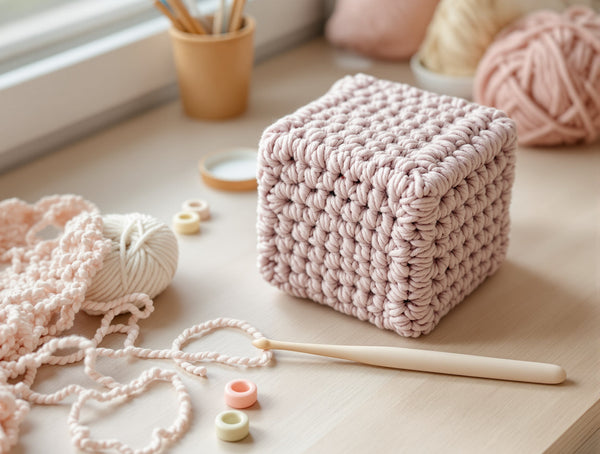
A medium hook (often 3.0–4.0 mm for tight stitches), soft worsted or "velvet" chenille yarn, polyester stuffing, a yarn needle, and optional safety eyes. Tip: use a hook smaller than the yarn label suggests, so stitches stay tight and the stuffing never peeks through. With worsted yarn, the 3.0–4.0 mm above is 1.5–3.5 mm below the label range of 5.5–6.5 mm[1].
"The moment you add the eyes and your little creature looks back at you — that's when everyone falls in love with crochet."— Ava, MrsCrochetWorld
No-sew vs. sewn — and great first makes
Some amigurumi are made in one piece (no-sew) — ideal for beginners. Others have separate arms, legs and ears you sew on. Start no-sew, then level up.

No-sew amigurumi (start here)
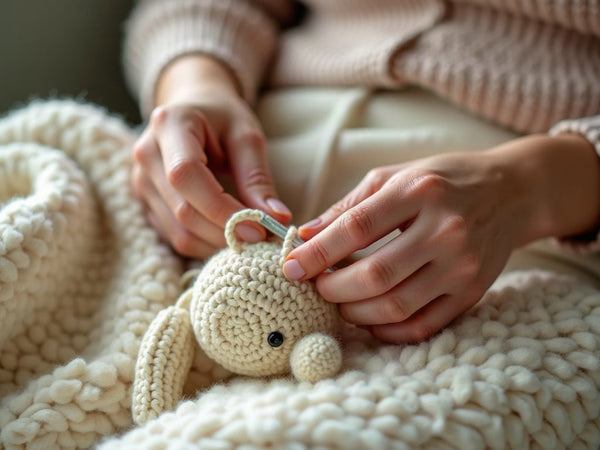
One piece · no sewingThe whole creature is worked in one continuous piece, so there's nothing to sew together — the part beginners find fiddliest is simply removed. Try a no-sew amigurumi pattern and learn the no-sew techniques first.

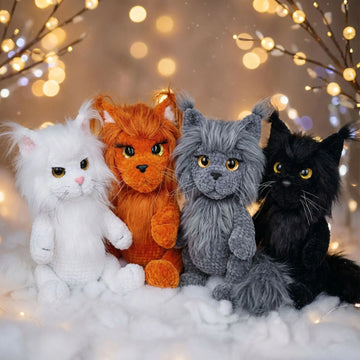
Maine Coon Cat Crochet Pattern
Sew or crochet-onOnce you're comfortable, you can move on to detailed plush animals like this realistic Maine Coon cat, about 14 in (35 cm) when finished. The pattern lets you choose between two assembly methods, sewing or a crochet-on technique, so learn to attach parts neatly and add safety eyes for that polished look.

Animals, dinos & beyond
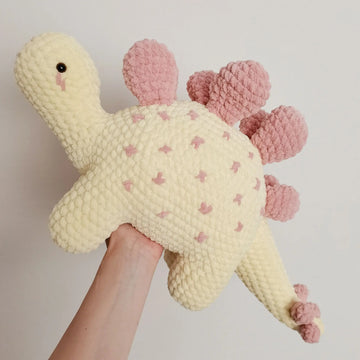
Endless varietyFrom cuddly dinosaurs to woodland animals and pop-culture favourites, amigurumi can be anything you imagine. Pick a beginner-rated design and follow it stitch by stitch — see our easy beginner patterns.
The 5 core amigurumi skills
Magic ring
A tidy, adjustable starting circle so there's no hole in the middle.
Working in a spiral
Continuous rounds of single crochet — use a stitch marker to track your start.
Increase & decrease
Add or skip stitches to sculpt the 3D shape — the heart of amigurumi.
Stuffing
Fill firmly and evenly so your creature holds its shape and stands proud.
Faces & finishing
Safety eyes and a few stitches give your make its personality.
Beginner amigurumi tips
- Go down in hook size from the yarn label for tight stitches and no gaps.
- Use a stitch marker to mark the first stitch of each round — spirals are easy to lose count on.
- Stuff as you go for small parts; you can't reach in once it's nearly closed.
- Start no-sew to skip the assembly step entirely for your first make.
How to choose your first amigurumi pattern
Before you buy, check the stitch terms, yarn weight and assembly photos. Our guide to buying amigurumi patterns compares where to shop and gives you a ten-point checklist.
Choosing between one pattern and a set? See how to tell if a crochet pattern bundle is worth it based on the projects you actually want to make.
Make your first cuddly creature 🧸
Start with a beginner-friendly amigurumi — instant download, clear photos, no sewing.
Get the 50-pattern no-sew bundle Shop beginner patternsFrequently asked questions
What is amigurumi?
Amigurumi is the Japanese art of crocheting small, stuffed toys — cute animals, characters and objects. The name combines "ami" (crocheted) and "nuigurumi" (stuffed doll).
Is amigurumi good for beginners?
Yes — especially no-sew designs. Amigurumi uses just a few simple stitches worked in a spiral, so it's very beginner-friendly and extremely rewarding.
What stitches do I need for amigurumi?
Mostly single crochet, plus a magic ring, increases and decreases. Master those and you can make almost any creature.
What yarn and hook are best for amigurumi?
Soft worsted or velvet chenille yarn with a hook smaller than the label suggests (often 3.0–4.0 mm for worsted), so stitches stay tight and the stuffing doesn't show.
What does "no-sew" amigurumi mean?
The whole toy is worked in one continuous piece, so there are no separate parts to sew together — perfect for your very first amigurumi.
How long does an amigurumi take to make?
A small, simple amigurumi is a short project, though how long it takes depends on your speed and yarn; larger, detailed characters take longer. Beginners should start small for a quick win.
Do I need safety eyes?
They give a polished look, but you can also embroider eyes with yarn — a safe choice for toys intended for very young children.
Why does my amigurumi have gaps?
Usually your tension is too loose or your hook is too big. Go down a hook size and keep your stitches snug so the stuffing stays hidden.
Sources
- Craft Yarn Council: Standard Yarn Weight System (yarn weights and recommended hook sizes), checked 21 Nov 2026
- Craft Yarn Council: Hooks & Needles (mm to US hook size chart), checked 21 Nov 2026
- Craft Yarn Council: Crochet Abbreviations Master List (US and UK terms), checked 21 Nov 2026
- 16 CFR Part 1501 – small-parts rule for toys for children under 3 (Cornell Law School, Legal Information Institute), checked 21 Nov 2026
Keep reading
Hand-picked guides from our crochet blog that go with this one.

More Than Just Stitches: 5 Playful Lessons Amigurumi Teaches Us About Crochet (and Life)
What can a pair of safety eyes, a wobbly ear and a little crocheted family teach us? Five playful amigurumi lessons on …
Read the guide →
Best Crochet Patterns of 2026 — Complete Roundup
Ava's favorite crochet patterns of 2026 in one place: no-sew amigurumi, dinosaurs, cats, coasters, bags, flowers, seasonal …
Read the guide →
Diplodocus Dinosaur Amigurumi Crochet Pattern — Beginner-Friendly PDF Guide
This long-necked beauty is simpler than you think. Follow along and you'll have a squishy Diplodocus to love (or gift) by …
Read the guide →