Labubu-style doll crochet: the complete maker guide
Everything you need to choose the right labubu crochet pattern and hook your own pointy-eared companion — ears, grin, fuzz, and all.

Few toys have taken over shelves, handbags, and social feeds quite like the mischievous pointy-eared monster doll. If you have been hunting for a labubu crochet pattern so you can make your own instead of gambling on yet another blind box, you are in exactly the right place. In this guide I will walk you through how these grinning little creatures are built in yarn, which techniques actually matter, and how our fan-inspired Labu Boo designs let you crochet the whole crew — outfits and keychains included.
Why the pointy-eared monster doll conquered the world
A quirky grin, rabbit-long ears, and a blind box you cannot peek into — the recipe behind one of the biggest collectible crazes in recent memory.
The monster-doll trend grew out of the designer-toy world, where figures are sold in sealed blind boxes so you never know which variant you will unbox. That surprise turned collecting into a game: people trade doubles, chase rare editions, and film unboxings for millions of views. When pop stars and fashion lovers started clipping the dolls to their handbags as charms, the grinning creature jumped from collector shelves to street style almost overnight.
For crocheters, the appeal is obvious. The character is essentially an amigurumi already: a soft rounded body, oversized head, dramatic ears, and one unforgettable facial expression. If you can crochet a basic plushie, you can absolutely crochet a Labubu-style doll — and if amigurumi is new to you, start with our complete beginner's guide to amigurumi and come right back.
What to look for in a labubu crochet pattern
First, an honest note, because I believe makers deserve transparency: there is no official crochet pattern for the trademarked collectible. Every crochet version you see online — including ours — is a fan-inspired interpretation. Our Labu Boo designs are original patterns inspired by the collectible monster-doll trend; they are unofficial and not affiliated with, licensed by, or endorsed by Pop Mart. You are making a handmade tribute in your own colors, which is honestly half the charm.
With that out of the way, here is what separates a joy-to-follow labubu crochet pattern from a frustrating one:
Clear US terminology and a stated skill level. The pattern should say whether it uses US or UK terms and where it sits on the difficulty scale — our skill level guide explains what those ratings really mean. Step photos for the tricky parts. The ears and the muzzle are where most makers stall, so look for photo support there. A stitch-by-stitch round count. Well-written amigurumi patterns list the stitch total at the end of every round so you can check yourself as you go — if reading them still feels like decoding, our guide on how to read amigurumi patterns breaks the shorthand down. Assembly diagrams. Ear placement makes or breaks the silhouette, so a good pattern shows you exactly where to pin.
Why crocheting your own beats the blind-box hunt
When you buy a sealed box, you get whatever the factory packed. When you crochet, you are the factory. A pastel lavender doll with a cream muzzle, a moody charcoal version, a tiny keychain for your tote and a huge cuddly one for the sofa — one pattern, endless editions, and the "rare variant" is whichever you dream up.
Handmade versions also make wonderful, personal gifts, and the process itself is the point: a weekend of relaxing stitching instead of refreshing a restock page. One caveat: character-inspired items live in a trademark gray zone, so please read our guide on whether you can sell items made from a crochet pattern before listing fan-inspired pieces for sale. For personal use and gifting, stitch to your heart's content.
"The best collectible is the one that grows out of your own two hands — stitch by stitch, ear by pointy ear."— Ava Collins, MrsCrochetWorld
The techniques behind the ears, the grin, and the fuzz
Three signature features define every Labubu-style doll. Master these and the rest is ordinary amigurumi.
The spike ears. The tall, slightly curved ears are worked in continuous rounds, starting from a magic ring and increasing quickly before long, gradual taper rounds give them their point. Stuff them lightly — or not at all at the tips — so they stand up without flopping. Evenly spaced increases and decreases are what keep the taper smooth instead of lumpy, so count carefully on ear rounds.
The grin. That toothy smile is usually a crocheted or felt muzzle piece with individual teeth embroidered in white or cream yarn. Sketch the smile line with a water-soluble marker first, then embroider over your guide — it is far easier than freehanding nine tiny teeth. The eyes are classic safety eyes; our tutorial on how to add safety eyes shows the placement trick of test-fitting before you snap the washers on, because they do not come back off.
The fuzz. The collectible has a plush, furry body. In yarn you have three routes: crochet with velvet or chenille yarn for instant softness, use an eyelash-style novelty yarn held together with a plain strand, or crochet in regular acrylic and brush the finished pieces with a slicker brush for a halo of fuzz. Velvet is the most beginner-friendly of the three — just keep your tension snug so stuffing never peeks through, and if gaps do appear, our fix-it guide on why amigurumi gets holes has you covered.
Choosing yarn, colors, and the size of your doll
Here is the fun secret of amigurumi: the same pattern makes different sizes depending on your yarn. Worked in fingering-weight cotton with a 2.0 mm hook, a Labubu-style pattern becomes a palm-sized keychain charm. In DK or worsted weight with a 2.5–3.5 mm hook you get the classic doll size, and in chunky chenille it becomes a full cuddle-sized plush. If you are unsure where to start, our comparison of cotton versus acrylic for amigurumi will point you to the right fiber for your style.
Color is where your version becomes yours. Soft browns and creams read as the classic look, but pastel pinks, mints, lilacs, and even seasonal Halloween or Christmas colorways all look fantastic with the signature silhouette. Keep the muzzle and inner ears in a contrasting light shade so the grin stays readable, and keep your tension even across color changes so the body stays smooth.
Meet the Labu Boo collection
Our original, fan-inspired take on the monster-doll trend — unofficial, stitched with love, and designed to be genuinely beginner-friendly.

The Labu Boo pattern book
plushies + keychains + 10 outfitsThe complete package: full-size plushie patterns, mini keychain versions, and ten mix-and-match outfits and accessories so every doll you make is different. Step-by-step photos guide you through the ears and grin, and the wardrobe pieces are a lovely gentle introduction to garment-style crochet. Browse more of our easy amigurumi favorites if you want a warm-up project first.

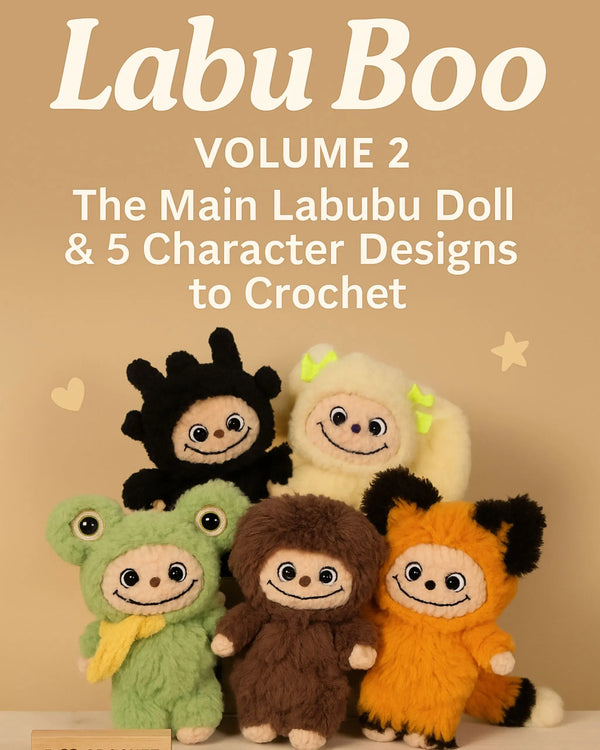
Labu Boo Volume 2: the main doll
the signature silhouetteVolume 2 is the doll everyone pictures first: the tall spike ears, the wide toothy grin, the huggable rounded body. The pattern is written in US terms with round-by-round stitch counts and detailed assembly photos, so ear placement is guesswork-free. It pairs beautifully with our tutorial on crocheting in the round if continuous spirals are new to you.

Fantasy crochet bundle: 6 characters
grow your yarn crewOnce you have caught the character-crochet bug, this six-in-one fantasy bundle keeps the momentum going with a whole cast of whimsical amigurumi friends. The shaping skills transfer directly from your Labubu-style doll, and you will find plenty more in our full character-inspired collection.
Skills you'll sharpen on a Labubu-style doll
This project is a masterclass disguised as a toy. Here is what you will walk away knowing.
Continuous rounds
The head, body, and ears are all worked in seamless spirals — the core skill of every amigurumi you will ever make.
Tapered shaping
Long, gradual decreases turn tubes into elegant pointed ears instead of stubby cones. Patience pays off here.
Embroidered details
That famous grin is embroidery, not crochet. You will learn to sketch, stitch, and shape a face with a darning needle.
Safety eye placement
Two millimeters left or right completely changes the expression. Test-fit, photograph, adjust, then snap.
Doll clothing
The ten outfits in the Labu Boo book are a gentle on-ramp to reading garment-style patterns in miniature.
New to crochet?
Learn every foundational stitch first with our free complete beginner's guide to crochet.
Ava's tips for a picture-perfect monster doll
- Stuff the ears lightly. Firm stuffing at the base, almost none at the tips — that is how the ears stand tall with a natural, slightly playful curve.
- Pin everything before you sew. Pin both ears and the muzzle, then look at the doll from the front, the side, and in a photo. Cameras catch crooked placement that eyes forgive.
- Mark the smile first. Draw the grin line with a water-soluble fabric marker and embroider over it. Nine tiny teeth are easy when the map is already there.
- Go down a hook size for velvet. Velvet and chenille yarns are slippery and hide stitch definition, so a snugger gauge keeps stuffing invisible.
- Count every ear round. The taper only looks smooth if your decreases land where the pattern puts them — a locking stitch marker at the start of each round is your best friend.
- Photograph before finishing. Before weaving in the last tail, take one photo in daylight. If anything looks off, you can still fix it painlessly.
Ready to hook your own grinning companion?
Skip the blind-box lottery and stitch the exact doll you have been wishing for — your colors, your size, your little monster.
Get a free patternShop beginner patternsFrequently asked questions
Is there an official Labubu crochet pattern?
No. The collectible's maker does not publish crochet patterns, so every crochet version is a fan-made interpretation. Our Labu Boo designs are original, fan-inspired patterns — unofficial and not affiliated with, licensed by, or endorsed by Pop Mart.
Is a Labubu-style doll hard to crochet?
It sits at the easy end of intermediate. If you can single crochet in the round, increase, and decrease, you can make it. The ears and the embroidered grin need patience rather than advanced skills, and photo-supported patterns walk you through both.
What yarn is best for a Labubu-style doll?
Velvet or chenille yarn gives the plush, fuzzy look closest to the collectible, while cotton or acrylic in DK to worsted weight gives crisper stitch definition. Brushing finished acrylic pieces with a slicker brush is a third way to get the furry texture.
What hook size should I use?
Most makers use a 2.5 to 3.5 mm hook with DK or worsted yarn, sized down from the yarn label so the fabric is tight enough to hold stuffing. For velvet or chenille yarns, go down another half size to keep stitches snug.
How long does it take to crochet one?
A keychain-size version is typically an evening or two, while a full doll with an outfit takes most makers a relaxed weekend or a week of evening sessions, depending on speed and how much detail you add.
How do I make the pointy ears stand up?
Work them at tight tension, stuff the base firmly while leaving the tips nearly empty, and sew them to the head with a wide, secure base. Some makers add a folded pipe cleaner inside for poseable ears, but skip that for children's toys.
How is the toothy grin made?
The grin is embroidered. You crochet or cut a light-colored muzzle piece, draw the smile line with a water-soluble marker, then embroider the mouth line and individual teeth in white or cream yarn before sewing the muzzle to the head.
Can I make a keychain-size version?
Yes — use fingering-weight yarn and a 2.0 mm hook and the same pattern shrinks to charm size. Our Labu Boo pattern book includes dedicated keychain versions plus ten outfits and accessories for the bigger dolls.
Can I sell dolls I make from a fan-inspired pattern?
Selling character-inspired items involves trademark considerations, so gifting and personal use are always the safe route. Before selling any make at fairs or online, read our guide on whether you can sell items made from a crochet pattern and check the pattern's own terms.
What is the difference between the Labu Boo book and Volume 2?
The Labu Boo pattern book is the full collection — plushie patterns, keychain minis, and ten outfits and accessories. Volume 2 is a single dedicated pattern for the main doll with the signature ears and grin. Start with whichever matches your ambition.