Crochet bunny pattern: the easy amigurumi guide
Looking for a crochet bunny pattern easy enough to be your very first plushie? Here is what makes a bunny beginner-friendly — and how to get the ears just right.

Bunnies are the gateway amigurumi. Ask almost any plushie maker what they crocheted first, and odds are good it had long ears and a wobbly embroidered smile. A crochet bunny pattern easy enough for beginners really comes down to three humble shapes: a ball head, an oval body, and two long ears.
What makes a crochet bunny pattern easy?
Simple shapes, one stitch, and as little sewing as possible — that is the whole formula.
Beginner-friendly bunnies are built from basic amigurumi geometry: the head is a sphere, the body a slightly stretched sphere, the ears skinny tubes. Every piece uses single crochet worked in the round, starting from a magic ring and shaped with evenly spaced increases and decreases. If a pattern asks for much more, it is not a beginner bunny.
Also check the construction. Classic patterns have you sew five or six pieces together at the end — and sewing is where most first plushies go wrong. No-sew amigurumi techniques join pieces as you crochet instead, which is why we design almost everything in our shop that way.
Bunny ears: floppy or standing?
Ears are the bunny's whole personality, and both styles are easy once you know the trick.
Standing ears are shorter and worked at firm tension. Leave them unstuffed (or add a pinch at the base), flatten the opening, and attach it straight across the top of the head — the doubled fabric stands on its own. Fully stuffed ears are what sag and bulge.
Floppy ears are longer and slimmer, also unstuffed: extra length plus the yarn's own weight makes them flop naturally. Attach at a slight outward angle. For either style, count the stitches between the ears and mark both spots with stitch markers before attaching anything — symmetry matters more than perfection.
Yarn and faces (especially for baby gifts)
For a first bunny, choose a smooth, light-colored yarn so you can see every stitch. Cotton gives crisp definition; acrylic is soft, budget-friendly, and comes in every pastel — our cotton vs acrylic guide weighs both. Velvet bunnies look dreamy but the pile hides your stitches, so save velvet for bunny number two. Whatever you pick, go a hook size or two smaller than the ball band suggests.
Now the face. Safety eyes are quick and adorable, but for a baby or toddler under three, embroider the whole face with yarn or floss instead — no small parts, nothing to detach. Our safety eyes guide covers placement and the safest alternatives. A Y-shaped nose and two sleepy stitched eyes give even a wonky first bunny endless charm.
Easter baskets, gifts, and beyond
Bunnies peak at Easter — tucked into baskets, perched beside painted eggs — but they are a year-round gift. Hunting for a crochet bunny pattern easy enough to finish before Easter morning? Go mini: a keychain bunny is done in a sitting or two. A white bunny with an embroidered face is a classic baby-shower present, and a pastel litter is a craft-fair favorite. If you catch the plushie bug, our top 10 easy amigurumi patterns roundup is full of next projects.
"Every maker remembers their first bunny — crooked ears, wonky smile, and absolutely perfect."— Ava Collins, MrsCrochetWorld
Bunny-approved patterns to hop into
Three beginner-first picks, each designed around simple shapes and minimal sewing.

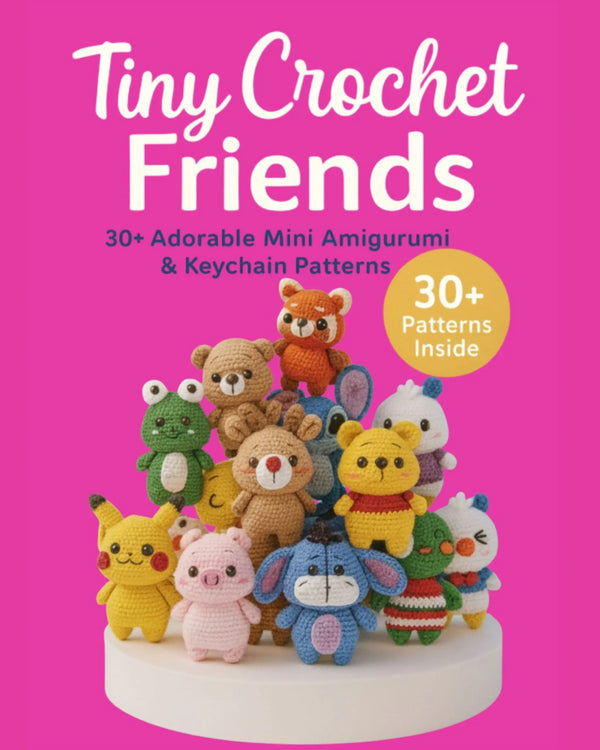
Tiny crochet friends — the keychain book
printed bookThirty mini keychain patterns — bunny included — each small enough to finish in a sitting or two. Fast wins are how beginners fall in love with amigurumi. Find it in our books collection.

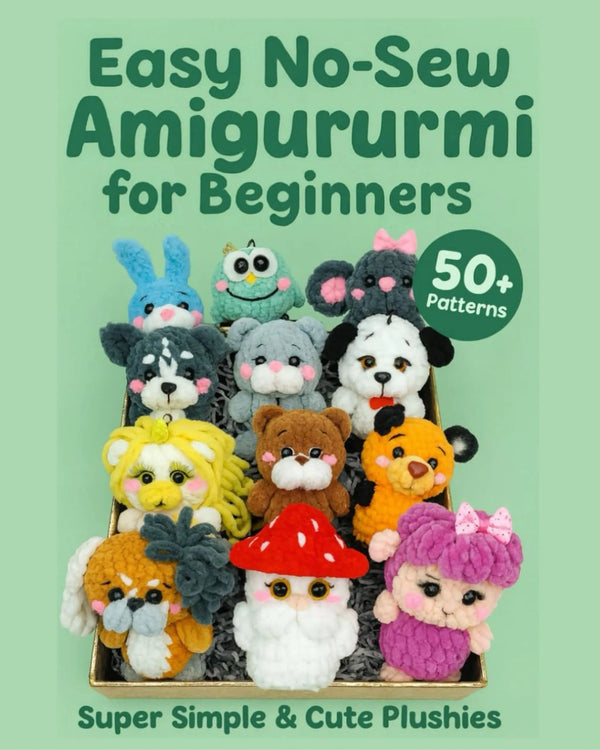
Easy no-sew amigurumi — the book
printed bookFifty super simple plushie patterns, all designed so pieces join as you crochet. New to the craft? Start with our complete amigurumi beginner guide, then let this book carry you through your first fifty friends.

50 no-sew amigurumi patterns bundle
mega bundleThe same beginner-first philosophy as an instant digital download — print what you need, keep the rest on your tablet. Here is the full guide to everything inside.
Six easy bunny styles to try
Same simple shapes, six very different personalities.
Classic sitting bunny
Ball head, oval body, standing ears — the timeless version and the perfect first build.
Pastel spring trio
Three small bunnies in blush, mint, and cream, lined up on a shelf or nestled into an Easter basket.
Keychain mini
A palm-sized bunny on a keyring — quick to make, sweet to gift, and brave enough to live on a backpack.
Sleepy lovey
A bunny head with embroidered sleeping eyes on a small flat body — snuggle-first for the littlest recipients.
Bunny with a carrot
A tiny orange cone with green loops on top — the fastest accessory in crochet.
New to crochet?
Learn the hook grip, the chain, and your first stitches in our complete beginner guide to crochet.
Bunny-making tips from my hook
- Use the invisible decrease. Decreasing through the front loops only keeps the fabric smooth and gap-free.
- Stuff the head firmly — never the ears. A firm head holds its shape; stuffed ears bulge and misbehave.
- Mark ear placement first. Count the stitches between the ears and park a marker at each spot.
- Embroider the face early. Working eyes and nose before the head is closed lets you anchor the ends invisibly.
- Go down a hook size. Tighter fabric hides stuffing and survives years of being loved.
- Pin before you attach. Check the bunny from the front, then commit.
Your first bunny is waiting
One skein, one hook, three simple shapes — and by the weekend a long-eared friend is sitting on your shelf.
Get a free patternShop beginner patternsFrequently asked questions
Is a bunny a good first amigurumi project?
Yes — bunnies are built from three simple shapes: a ball head, an oval body, and two long ears. Everything uses single crochet in the round, and no-sew versions remove the trickiest step entirely.
What yarn is best for a crochet bunny?
A smooth cotton or soft acrylic in a light color is ideal. Cotton gives crisp stitch definition, while acrylic is softer and budget-friendly. Avoid fuzzy or velvet yarns for a first bunny — the pile hides your stitches.
Should I use safety eyes or embroider the face?
For decor and older kids, safety eyes are quick and adorable. For babies and toddlers under three, embroider the eyes and nose with yarn or embroidery floss instead — an embroidered face has no small parts that could ever come loose.
How do I make bunny ears stand up?
Keep the ears short, crochet them at a tight tension, and leave them unstuffed or nearly so. Flatten the opening and attach it straight across the head — the doubled fabric holds the ear upright on its own.
How do I make floppy bunny ears?
Make the ears longer and slimmer, leave them completely unstuffed, and attach them at a slight outward angle. The extra length and the weight of the yarn will make them flop naturally over the sides of the head.
Do I have to sew the bunny pieces together?
Not necessarily. Traditional patterns are sewn together at the end, but no-sew patterns join pieces as you crochet, leaving only small details to attach — far more forgiving for beginners.
Why can I see stuffing between my stitches?
Your fabric is too loose — usually the hook is too large or the tension too relaxed. Go down a hook size or two, work a little tighter, and use the invisible decrease so the fabric barely opens when stuffed.
How long does an easy crochet bunny take?
A mini keychain bunny can be finished in an evening or two, while a medium bunny is a comfortable weekend project. First attempts always take longer — the second bunny is dramatically faster.
What hook size should I use for a bunny?
Use a hook one or two sizes smaller than your yarn's ball band recommends. Amigurumi needs a tighter fabric than garments so the stuffing stays hidden and the plushie holds its shape through years of cuddles.
Can I sell bunnies made from a crochet pattern?
Usually, yes — most independent designers allow selling handmade finished items. Always check the license that comes with your pattern; the pattern file itself may never be resold or shared.