Crochet vs. Knitting: Which Should You Start With in 2026?
Both crafts are wonderfully creative — but one is much easier for most beginners to pick up. Here's the honest comparison to help you choose.

You've been dreaming about making cozy sweaters, adorable stuffed animals, or beautiful blankets — but you can't decide: crochet or knitting? You're not alone. This is one of the most common questions I hear from crafters who are just starting out, and I love helping people finally make a decision so they can stop wondering and start creating.
What's the actual difference between crochet and knitting?
Both use yarn and make fabric — but the tools and technique are completely different.
Knitting uses two (or more) long needles and keeps many stitches live on both needles at once. You transfer stitches from needle to needle with each row, which means if you accidentally drop a stitch, it can unravel several rows in seconds. It's a beautiful craft, but it demands consistent attention to your stitch count.
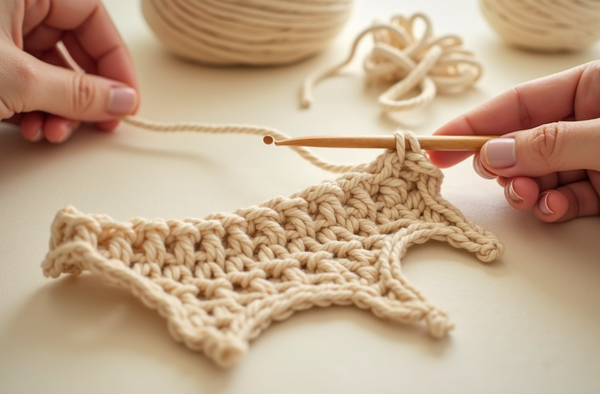
Crochet uses a single hook and works one stitch at a time. Each stitch locks into the fabric as you complete it, so there's no cascade of unraveling if you make a mistake. You finish one stitch completely before moving to the next — a feature that makes crochet significantly more forgiving for beginners. If you want to understand the underlying mechanics better, our complete beginner's guide to crochet walks through everything from scratch.
Why crochet tends to win for beginners
There are a few practical reasons crochet has a gentler learning curve:
One active stitch at a time. Because only one loop sits on your hook at any moment, you never have to juggle a full needle of live stitches. When you put your work down mid-row and pick it up again later, you'll know exactly where you left off.
Mistakes are easy to fix. Made a wrong stitch? You can simply pull the hook out, tug the yarn, and undo just that stitch — or a few stitches — without the whole project unraveling. Our guide on how to fix crochet mistakes covers the most common slip-ups and exactly how to recover from each one.
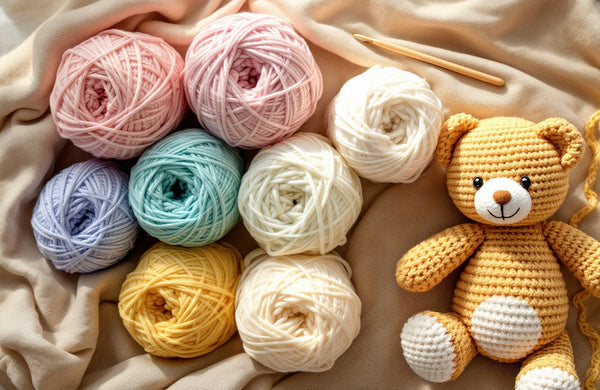
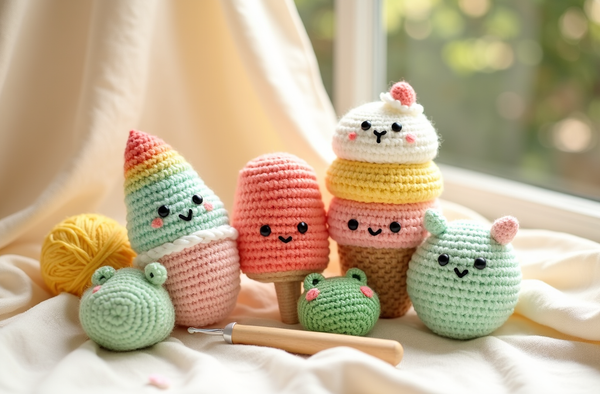
Amigurumi is uniquely crochet. If you've ever wanted to make stuffed animals or character plushies, crochet is your craft. Knitting can't replicate the tight, round, seamless tubes that make amigurumi work. Our complete amigurumi guide explains what makes this style so special.
Texture variety comes faster. Crochet stitches like the bobble stitch or waffle stitch are achievable relatively early in your skill journey and produce dramatic results with just a handful of techniques.
When knitting might be the better choice
Knitting isn't inferior — it's just different, and for certain goals, it genuinely excels. Knitted fabric tends to drape more fluidly, which is why many garment knitters prefer it for fitted sweaters and lightweight shawls. If your heart is set specifically on socks, fine lace shawls, or color-work like Fair Isle, knitting has a long tradition in those areas and a rich community built around them.
That said, crochet garments have had a major renaissance — cardigans, tops, and bags made with a hook are absolutely everywhere right now, and the results are stunning. If you're drawn to wearables, crochet can take you there too.
"The best craft is the one you'll actually pick up tomorrow. For most beginners, that's crochet — because early wins keep you coming back."— Ava, MrsCrochetWorld
Start your crochet journey with these beginner favorites
These patterns are designed specifically for people who've never picked up a hook before — clear instructions, satisfying results, and no sewing required.

50 No-Sew Amigurumi Bundle
Best for absolute beginnersFifty adorable plushie patterns with zero sewing required — each piece crochets in the round so all the joining happens with your hook. A perfect first project collection if you want to jump straight into making something cute. Learn more about no-sew amigurumi techniques before you dive in.

Easy No-Sew Amigurumi Book for Beginners
Printed bookIf you prefer a physical book you can lay flat on your lap while you work, this printed edition covers 50 super-simple plushies with step-by-step guidance. Ideal for anyone who wants to learn the difference between reading amigurumi patterns and general crochet patterns.

Granny Square Tote Bag Pattern
First wearable projectOnce you've nailed a few basic stitches, the granny square tote is the perfect next step — it's a project you'll actually use every day. Granny squares are also one of the best ways to practice crocheting in the round and changing colors.
Side-by-side: crochet vs. knitting at a glance
Quick reference for the six things beginners ask about most.
Tools needed
Crochet requires just one hook. Knitting needs two or more needles. Hooks are generally cheaper to start with and easier to find in a single beginner kit.
Reading patterns
Both use abbreviations, but crochet patterns are often considered more self-contained. Our pattern reading guide makes crochet abbreviations click in one sitting.
Yarn use
Crochet typically uses more yarn than knitting for the same size fabric — something worth factoring into your budget when choosing projects. Chunky yarn works great for both crafts as a beginner choice.
3D projects (amigurumi)
Crochet wins hands-down for stuffed animals, toys, and 3D figures. The tight interlocking stitches hold stuffing perfectly. Check our top 10 easy amigurumi patterns to see what's possible from day one.
Garments & wearables
Both make beautiful wearables. Knitting drapes more fluidly for fine gauge garments; crochet produces stunning bags, cardigans, and tops with great texture. Browse our crochet cardigan patterns for inspiration.
Ready to start crocheting?
Our complete beginner guide to crochet takes you from holding your first hook to finishing your first project — completely free, step by step.
Tips for making your first week count
- Start with a chain. Before anything else, practice making a chain of 20 stitches. It trains your tension and lets you feel how the hook moves — our chain stitch guide shows you exactly how to hold everything.
- Choose medium-weight (worsted) yarn in a light color. Thick yarn is easier to see, and a light color lets you count your stitches clearly. Avoid fuzzy or variegated yarn until you're comfortable.
- Pick one project and finish it. Beginners often start three things and finish none. Choose one small project — a dishcloth, a simple square — and see it through to the end before moving on.
- Learn to count your stitches after every row. This single habit prevents the majority of beginner problems. Our guide on how to count stitches and rows makes it quick and reliable.
- Don't worry about tension yet. Your first project will not be perfect, and that's completely fine. Tension improves naturally as your hands learn the rhythm. Focus on consistency rather than perfection.
- Use a crochet hook with an ergonomic handle if possible. Your hands will thank you. Check our guide to the best crochet hooks for beginners for options at every budget.
Ready to pick up a hook?
Grab a free pattern and see how satisfying crochet feels from your very first stitch. No experience needed — just yarn, a hook, and a little curiosity.
Get a free pattern Shop beginner patternsFrequently asked questions
Is crochet easier than knitting for beginners?
For most beginners, yes. Crochet works one stitch at a time with a single hook, so there are no live stitches to drop accidentally. Mistakes are easy to undo stitch by stitch, and early projects produce satisfying results quickly. That said, both crafts are learnable — it comes down to which projects appeal to you most.
Can I learn both crochet and knitting at the same time?
Technically yes, but most teachers recommend picking one first. Learning a single craft lets you build muscle memory faster and reach the rewarding stage of finishing real projects sooner. Once you're comfortable with one, picking up the other is much easier because you already understand yarn weight, tension, and pattern reading.
What tools do I need to start crocheting?
You need just two things to start: a crochet hook and some yarn. A 5mm (H/8) hook and worsted-weight acrylic yarn is the classic beginner combination — it's affordable, widely available, and large enough to see your stitches clearly. A pair of scissors and a yarn needle for weaving in ends rounds out the basics.
How long does it take to learn basic crochet?
Most beginners can learn the chain stitch, single crochet, and double crochet within a single weekend of practice — enough to start simple projects. Feeling genuinely comfortable and relaxed while crocheting usually takes a few weeks of regular practice. The key is consistent short sessions rather than one long marathon.
Can crochet make the same things as knitting?
Almost everything — blankets, sweaters, scarves, hats, socks, bags, and home decor can all be crocheted. The main difference is that amigurumi (stuffed animals and 3D figures) are almost exclusively a crochet technique, while some ultra-fine lace work is more traditional in knitting. For most everyday projects the two crafts overlap significantly.
Which craft uses less yarn — crochet or knitting?
Knitting generally uses less yarn for the same size fabric because the structure is tighter and more efficient. Crochet stitches tend to use about one-third more yarn than knitting for an equivalent project. This is worth keeping in mind when estimating how much yarn to buy, especially for larger projects like blankets or cardigans.
Is crochet good for making stuffed animals?
Crochet is the go-to craft for stuffed animals and plushies. The tight, interlocking stitches created by crocheting in the round hold stuffing perfectly and leave no gaps. This style is called amigurumi, and it's one of the most popular reasons people choose crochet over knitting as their first craft.
What's the best first crochet project for a complete beginner?
A simple dishcloth or small square using only single crochet stitches is the classic recommendation because it's flat, uses just one stitch, and produces something genuinely useful. Once you've finished one, a small amigurumi animal or a granny square makes a satisfying second project that introduces crocheting in the round.