How to crochet the bobble stitch — step-by-step tutorial
Learn the satisfying bobble stitch that adds gorgeous 3D texture to blankets, bags, and amigurumi — even if you have never tried a cluster stitch before.

The bobble stitch is one of those delightful techniques that looks wildly impressive but is actually built from a stitch you already know: the double crochet. Once you understand how to work several half-finished double crochets into the same stitch and then close them all together, those satisfying little puffs pop up like magic — and you will want to put them on everything.
What you need before you start
Gather a few basics and you are ready to swatch your first bobble.
You do not need specialist tools for the bobble stitch — just the same hook and yarn you already use for regular double crochets. That said, a few choices make a noticeable difference. A smooth, plied yarn in a light or medium colour lets you see your stitches clearly and troubleshoot your stitch count easily. Chunky yarn (weight 5 or 6) with a 5–6 mm hook creates especially satisfying, squishy bobbles and works up fast, making it ideal for a first practice swatch. If you want denser, perkier bobbles for amigurumi embellishment or a bag, switch to a fingering or DK weight with a smaller hook so the fabric stays tight.
Check the best yarn for beginners guide if you are unsure which weight to start with. For hook guidance, the best crochet hooks for beginners article covers the ergonomic options that reduce hand fatigue during textured stitch practice.
How to work the standard 5-dc bobble stitch
This is the classic method used in most bobble patterns — work through it once and the motion becomes automatic.
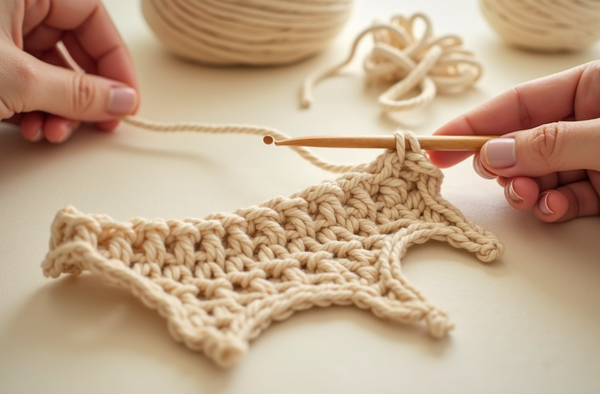
Start with a foundation chain of any multiple of 2 plus 1 (for example, chain 21). Work a row of regular double crochets so you have a base to practice on — this prevents your first bobble row from pulling loose at the edges.
Step 1 — Yarn over, insert hook: Chain 3 to turn (counts as a dc), then move to the next stitch. Yarn over and insert your hook into the stitch.
Step 2 — Pull up a loop: Yarn over again and draw through — you now have 3 loops on the hook. Yarn over and pull through the first 2 loops only, leaving 2 loops on your hook. You have just completed one incomplete double crochet.
Step 3 — Repeat into the same stitch: Without changing stitches, yarn over and insert into that same stitch again. Pull up a loop, yarn over, pull through 2 loops. You now have 3 loops on the hook. Repeat this step until you have 5 incomplete double crochets — meaning 6 loops on your hook.
Step 4 — Close the bobble: Yarn over once more and draw through all 6 loops in one smooth pull. You will feel the fabric bunch up slightly as the bobble pops out. Chain 1 to secure the bobble (some patterns skip this — check yours).
Step 5 — Skip and continue: Skip the next stitch in the base row, then work a regular double crochet into the following stitch. Alternate bobble + dc across the row, and on the return row work regular double crochets across all stitches (including into each ch-1 space). See the full how to double crochet tutorial if you need a refresher on the base stitch mechanics.
Troubleshooting common bobble problems
Most issues come down to tension or stitch count — here is how to fix them fast.
If your bobbles are flat rather than raised, your tension is probably too loose. Try dropping down one hook size — the tighter fabric gives the bobble something to push against, so it pops out to the right side. If the bobble pops to the wrong side (behind your work), you are working in the round or have an even number of rows. Bobbles naturally pop toward the side facing away from you as you work, so plan accordingly. For more tension tips, visit the how to get even crochet tension guide. And if you make a mistake, the how to fix crochet mistakes article walks you through exactly how to tink back cluster stitches without losing your place.
"The first time a bobble pops up under your hook, you get this little rush — like the yarn just did a magic trick. Chase that feeling and you will never run out of motivation to keep crocheting."— Ava, MrsCrochetWorld
Patterns that shine with bobble stitch
Once you have the stitch down, these designs put those satisfying bumps to beautiful use.

Granny square bag — PDF + video tutorial
Bags & accessoriesSwap one round of a granny square for a bobble round and you get instant texture that catches the light beautifully. This tote pattern includes a video tutorial and clear US-terms instructions, so it is perfect for practicing decorative stitches in a finished project. Pair with our complete granny square tutorial to nail the foundation before adding bobbles.

9 modern crochet bag patterns bundle
Pattern bundleNine bag patterns in one download means you have plenty of canvases to experiment with bobble-stitch panels, borders, and all-over textures. The bundle covers tote shapes, shoulder bags, and mini purses — great for exploring how bobble scale changes with different yarn weights. Browse the full range in the bags & accessories collection.

50 no-sew amigurumi patterns bundle
Amigurumi bundleBobble stitches make adorable texture on amigurumi — think spiky hedgehog spines, fluffy sheep wool, or bumpy dragon scales. This 50-pattern bundle gives you dozens of characters to customise with bobble embellishments. See no-sew amigurumi techniques for tips on integrating texture stitches cleanly without seaming.
6 things to know about the bobble stitch
Quick reference cards to keep in mind as you practice.
Yarn weight matters
Heavier yarn (bulky or super-bulky) makes the most dramatic, sculptural bobbles. Lighter weights create subtler texture that reads better up close.
Go down a hook size
Because bobbles require many loops on your hook at once, your tension can loosen. Using a hook one size smaller than your yarn label suggests keeps everything firm and pop-worthy.
Bobbles pop to the back
The raised bump appears on the side facing away from you as you work. For a right-side-up blanket, work bobble rows with the wrong side facing you.
Vary your count
3-dc bobbles are subtler and work well in fine yarn; 5-dc bobbles are the classic choice; 7-dc bobbles create dramatic pom-pom-like bumps for statement pieces.
Count your loops
Before the closing yarn-over, count the loops on your hook — they should equal the number of incomplete dc's plus one. This catches dropped yarn-overs before they flatten your bobble.
Ready for more texture stitches?
The bobble is one of a whole family of cluster-based stitches. Explore puff stitch, popcorn, and more in our complete beginner guide to crochet.
Bobble stitch tips from Ava
- Use a locking stitch marker to mark the first stitch of every bobble row — it is easy to accidentally skip the turning chain and lose your stitch count.
- Pull the closing loop firmly but not yanked; a gentle, steady pull seats all five legs of the bobble neatly without distorting the neighbouring stitches.
- Check your stitch count after every bobble row before you turn — bobbles eat one stitch per cluster, so a missed skip will show up as extra width by row two.
- Contrast colours amplify the texture beautifully; try alternating two yarns every two rows in a striped bobble blanket for a bold, graphic result.
- Block your swatch before starting a big project — wet blocking evens out the gaps between bobbles and gives a more professional finish. See the full how to block crochet guide for details.
- Practice on a 20-stitch swatch first so you get the rhythm of bobble + skip + dc before committing to a full-size pattern. Even five minutes of swatching saves hours of frogging later.
Ready to put your bobble skills to work?
Grab a free pattern to practice on straight away, or browse our beginner-friendly collection for a project that will show off your beautiful new texture stitch from day one.
Get a free patternShop beginner patternsFrequently asked questions
What is a bobble stitch in crochet?
A bobble stitch is a cluster of five (or three to seven) incomplete double crochets all worked into the same stitch and then closed together with a single yarn-over. Closing them simultaneously creates a raised, rounded bump — the "bobble" — on the surface of your fabric.
Is the bobble stitch hard for beginners?
The bobble stitch is beginner-friendly as long as you are comfortable with the basic double crochet. The motion is simply repeating an incomplete dc into the same stitch several times before closing — most crocheters master it within one short practice swatch.
What is the difference between a bobble, a popcorn, and a puff stitch?
All three are raised cluster stitches, but they differ in construction. A bobble uses incomplete double crochets closed together. A puff stitch uses half double crochets. A popcorn uses complete double crochets that are then folded and joined at the top — it creates the most dramatic, freestanding bump of the three.
Why are my bobbles flat instead of raised?
Flat bobbles are usually caused by tension that is too loose. Try going down one hook size, which gives the fabric more resistance for the bobble to push against. Also check that you are pulling through all loops in one clean motion when closing the bobble — multiple small pulls can flatten it.
Which side does the bobble pop out on?
The bobble pops to the side facing away from you as you work. If you want raised bobbles on the right side of a flat piece (like a blanket), work your bobble rows with the wrong side of the fabric facing you.
How many double crochets make a standard bobble?
The classic bobble uses five incomplete double crochets worked into the same stitch. Three-dc bobbles create a subtle texture good for fine yarn; seven-dc bobbles create very dramatic, sculptural bumps. Most patterns specify the count — follow the designer's recommendation for best results.
Do I need to chain 1 after closing a bobble?
Many patterns include a ch-1 after the closing yarn-over to lock the bobble in place and stabilise the stitch height. Some designers skip it for a denser fabric. Always follow your specific pattern — if writing your own, test both ways on a swatch to see which you prefer.
What projects are bobble stitches best suited for?
Bobble stitches work wonderfully for blankets, pillow covers, bags and totes, hats, and as decorative embellishments on amigurumi. They add tactile texture and visual interest to any project where you want a 3D effect without the complexity of cables or tapestry crochet.