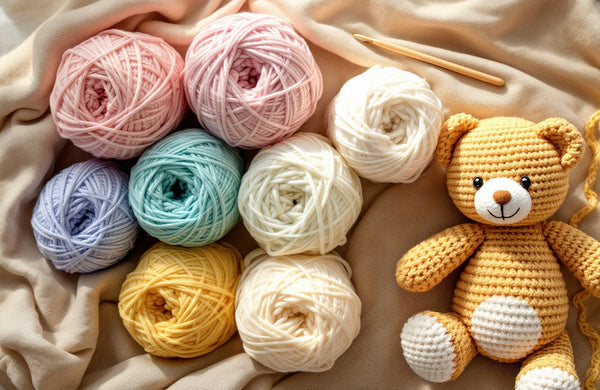
What is crochet beginners guide cozy yarn and hook flat lay

What Is Crochet? A Complete Beginner's Guide

What is crochet beginners guide cozy yarn and hook flat lay

What Is Crochet? A Complete Beginner's Guide

If you've ever picked up a hook and a ball of yarn and wondered what crochet actually is — or whether you can really teach yourself — this is the only beginner's guide you need. Crochet is the art of creating fabric, plushies, blankets, bags and clothing with a single hooked needle and yarn, working one loop at a time. It is calm, portable, surprisingly meditative, and (good news) far less complicated than it looks. At MrsCrochetWorld we've helped tens of thousands of complete beginners make their very first amigurumi, and in this guide we'll walk you through everything: the history, the tools, the yarn, the first projects, and exactly where to start today.

Quick answer — What is crochet? Crochet is a needlecraft that uses a single hook to pull loops of yarn through other loops, creating a flexible fabric. Unlike knitting, you only ever have one active stitch at a time. Beginners can learn the basics — chain, single crochet and double crochet — in under an hour, and finish a first amigurumi plushie in a single afternoon using a 4 mm hook and worsted-weight (#4) yarn.

What is crochet — definition and a short history

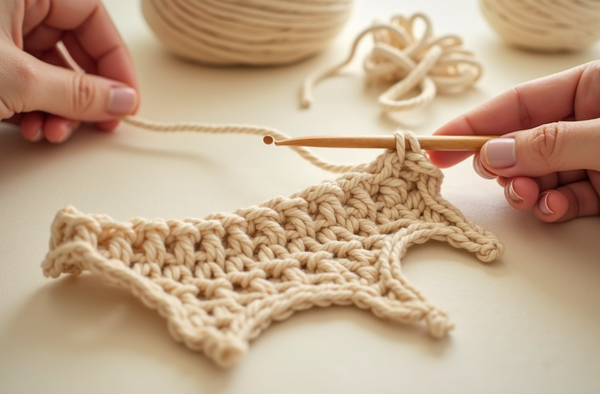
Crochet (from the French croche, meaning "small hook") is a textile craft in which yarn or thread is pulled through loops with a single hooked needle to form fabric. Every crochet piece in the world — from a doily on your grandmother's table to a cozy granny-square cardigan — is built from just a handful of fundamental stitches: the slip knot, the chain, the single crochet, the half double, the double and the treble. That's the whole alphabet.

Although crochet looks ancient, it is actually a relatively modern craft. The earliest clear written records appeared in Europe in the 1820s and 1830s, when "shepherd's knitting" (a hook-based loop technique) evolved into the recognizable craft we know today. It exploded in popularity during the Victorian era, where intricate lace crochet became a status symbol, and again in the 1960s and 70s, when granny squares met counter-culture color. Today, crochet is enjoying its third golden age — driven by TikTok, Pinterest, mental-wellness research and a worldwide craving for slow, handmade creativity.

At its heart, crochet is mathematics made cozy. You pull a loop through a loop, repeat in a pattern, and a soft three-dimensional structure appears. Once you understand that one principle, you can make almost anything: a scarf, a sweater, a stuffed dinosaur, a flower crown, even a wedding dress.

Crochet vs knitting — what's the actual difference?

This is the question every brand-new beginner asks. The short answer: crochet uses one hook and one active loop; knitting uses two needles and dozens of active loops at the same time. That single difference cascades into everything else.

Aspect Crochet Knitting
Tools One hook Two (or more) needles
Active stitches Always 1 Dozens at once
Fabric Denser, sculptural, structured Stretchier, drapier, smoother
Best for Amigurumi, bags, blankets, lace Sweaters, socks, fine clothing
If you drop a stitch One loop falls — easy fix Whole rows can ladder down
Learning curve Faster — first project in 1 day Slower — first project in 1 week
Yarn used Roughly 25–30% more yarn Less yarn for the same area

Most teachers agree that crochet is easier to learn first, mainly because there is only one tool and one stitch alive at a time. If something goes wrong, you pull the yarn, the work unravels in a clean line, and you start again. Knitting punishes mistakes — crochet forgives them.

What do I need to start crocheting?

The beauty of crochet is the entry cost. For under $15 you can have everything you need to make your first plushie or scarf. Here is the complete starter kit, with no fluff and no upsell:

  • One crochet hook — a 4.0 mm or 5.0 mm aluminum hook is the universal beginner standard.
  • One skein of medium worsted yarn — 100% acrylic in a light, solid color (cream, soft pink, light grey).
  • A pair of small scissors — embroidery scissors work beautifully.
  • A yarn needle — also called a tapestry needle, used to weave in ends and (occasionally) sew pieces together.
  • 2–3 stitch markers — tiny plastic clips that mark where each round begins; lifesavers in amigurumi.
  • Polyester fiberfill — only if you start with a plushie or amigurumi.

That's it. No machines, no big setup, no expensive bag of supplies. The whole kit fits in a shoebox.

💡 Expert tip from MrsCrochetWorld: Buy light, solid-colored yarn for your first project. Dark colors (navy, black, deep red) hide the stitches and make it almost impossible to see what you're doing. Avoid fluffy, fuzzy or eyelash yarns until you have at least one finished piece — they look beautiful, but the stitches are invisible until you get comfortable.

Which yarn should a beginner use?

Yarn weight is the most important number in crochet. The Craft Yarn Council ranks yarn from #0 (lace, threadlike) to #7 (jumbo, arm-knit thick). For your very first project, you want worsted weight, also called medium #4. It is the most forgiving, the most widely available, and the weight most beginner patterns are written for.

Common worsted-weight beginner brands include Red Heart Super Saver, Lion Brand Vanna's Choice, Bernat Premium and YarnArt Jeans (a slightly lighter worsted that's lovely for amigurumi). All are washable, affordable, and stocked in every craft store.

Yarn weight Symbol Best for beginners? Recommended hook
Lace / thread #0 ❌ Too fine 1.5–2.25 mm
Sport / fingering #1–2 ❌ Too slow 2.25–3.5 mm
DK / light worsted #3 ✅ Great for cute amigurumi 2.5–4 mm
Worsted / medium #4 ⭐ Best overall starter 4–5.5 mm
Bulky #5 ✅ Fast, chunky projects 5.5–8 mm
Super bulky / jumbo #6–7 ⚠️ Great for blankets, awkward for shapes 8 mm+

For amigurumi specifically, many crocheters move quickly to lighter cotton or acrylic-cotton blends like YarnArt Jeans (DK / light worsted) because the stitches are tighter and stuffing doesn't show through. But it is perfectly fine — and recommended — to start your very first plushie with simple worsted acrylic. Cute is cute, even with imperfect stitches.

Which crochet hook is best for beginners?

Hooks come in three main flavors: aluminum, ergonomic (rubber-handled), and bamboo/wood. For your first hook we recommend a 4.0 mm or 5.0 mm aluminum hook, ideally one with a small rubber grip. Aluminum slides the yarn easily, costs almost nothing, and is the standard size used in 90% of beginner patterns.

Once you crochet for more than 30 minutes at a time, your hand will tell you whether you want to upgrade to a fully ergonomic hook (brands like Clover Amour, Furls and Boye Ergonomic are all excellent). Wooden hooks have a slightly stickier grip and are favored by amigurumi makers because the yarn doesn't slide off accidentally — a small but meaningful detail when you are crocheting tight, tiny rounds.

Here's a simple hook-to-yarn-weight cheat sheet:

  • DK / #3 yarn → 2.75 mm – 3.5 mm hook (for tight amigurumi: 2.5–3.0 mm)
  • Worsted / #4 yarn → 4.0 mm – 5.5 mm hook (most common: 4.0 mm or 5.0 mm)
  • Bulky / #5 yarn → 5.5 mm – 8.0 mm hook
  • Amigurumi rule: go down one or two hook sizes from the yarn's recommendation to get a dense, stuffing-proof fabric.

The best first crochet projects (ranked by realism)

Forget the dishcloth. The reason most people quit crochet in week one is they pick a project that looks boring or fails halfway. Here are the projects that actually work for absolute beginners, in order of pure-fun-to-effort ratio:

  1. A no-sew amigurumi plushie. One ball of yarn, one hook, and you have a tiny giraffe or turtle by tonight. No assembly. No frustration. Maximum reward.
  2. A basic granny square. Sixteen stitches, repeat four times, and you have a small piece of art you can stitch into a coaster, scarf or bag.
  3. A simple scarf. Chain 30, single crochet back and forth, repeat for a week. Calming, satisfying, but slower to a finished piece.
  4. A washcloth or coaster. Honest, useful, but visually a bit dull for week one.
  5. A blanket. Reserve this for project number five — it is more of an emotional commitment than a tutorial.
Free no-sew giraffe amigurumi crochet pattern — beginner-friendly first project
The Free Giraffe is the #1 first project at MrsCrochetWorld — no sewing, written in plain English, finished in an afternoon.

Why amigurumi is the perfect crochet starter

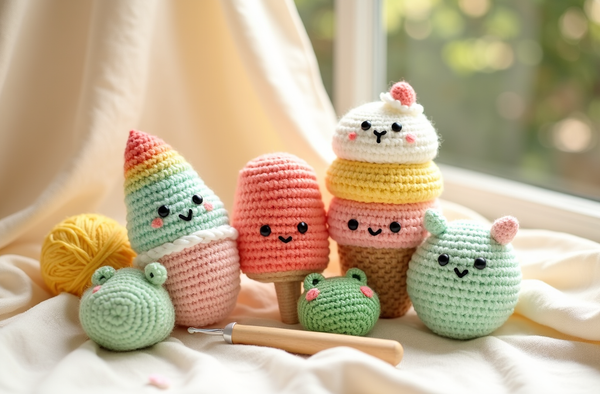
Amigurumi (編みぐるみ — Japanese for "knitted/crocheted stuffed toy") is the magical sweet spot of crochet. You only ever use one stitch — the single crochet — and you only ever work in tiny spiral rounds. There are no rows to count, no fancy turns, no complicated borders. You make a small ball, you stuff it, and suddenly it has eyes and a personality.

Three reasons amigurumi is the best place to start:

  • One stitch, mastered fast. You learn the single crochet on day one and that single stitch carries you for years.
  • Instant emotional reward. A finished plushie has a face. It looks like something. Scarves take weeks; plushies take an afternoon.
  • No expensive yarn. A single ball of inexpensive worsted acrylic makes 2–3 small plushies. The total project cost is under $4.
50 no-sew amigurumi crochet patterns bundle PDF for beginners
The 50+ No-Sew Amigurumi Bundle — every pattern is no-sew, so beginners never have to assemble small pieces. Perfect for your first month of crochet.

At MrsCrochetWorld our most popular beginner pattern format is "no-sew amigurumi" — patterns engineered so the body, head, arms and legs are all crocheted in one continuous piece, with no separate parts to sew together at the end. For 9 out of 10 beginners, the sewing step is where the giraffe never gets finished and gets shoved into a drawer. No-sew eliminates that failure point completely.

🧶 Beginner patterns we recommend

Common beginner mistakes to avoid

🚫 The 7 mistakes that make 90% of beginners quit

  1. Starting with dark yarn. You cannot see your stitches. Choose cream, light grey, soft pink or beige.
  2. Using a hook that's too small for your yarn. Your hand will cramp in 10 minutes. Match the hook to the yarn label.
  3. Holding the yarn too tight. Tense tension squeezes the loops shut. Let the yarn flow.
  4. Skipping the magic ring tutorial. The magic ring is the entrance to amigurumi. Spend 15 minutes on YouTube learning it. It pays back forever.
  5. Not using a stitch marker. Round 4 of any amigurumi without a marker = losing count = starting over.
  6. Choosing a project that's too big. A 200-stitch-per-row blanket as your first project is heroic and almost always abandoned.
  7. Comparing your first piece to Instagram. Every crochet star you follow has 5,000 wonky stitches buried in their past. Yours will be lumpy. That's normal. Finish it anyway.
💡 Expert tip — the "first plushie" rule: Promise yourself you will finish your very first amigurumi no matter how it looks. Crochet skill compounds. The lumpy giraffe is the price of admission, and by giraffe number three your stitches will look genuinely professional.

Frequently asked questions about learning crochet

Can I really teach myself crochet?

Yes. The majority of crocheters worldwide are self-taught. With a written pattern, one YouTube tutorial for the basic stitches, and one ball of yarn, a complete beginner can finish their first plushie inside 4 hours. The craft is unusually generous to self-learners.

How long does it take to learn crochet?

Most beginners feel comfortable with the four basic stitches (chain, single crochet, half double, double) within 2–3 hours of practice. Reading a full pattern fluently takes 2–3 weeks of regular crochet. Producing genuinely beautiful work usually takes 3–6 months.

What's the easiest first crochet project?

A no-sew amigurumi plushie. Our free no-sew giraffe pattern uses only the single crochet stitch, requires no assembly, and is finished in a single afternoon. It's the project we recommend for every brand new crocheter.

Is crochet hard for left-handed people?

Not at all. Crochet is one of the most left-handed-friendly crafts, since you only use one hook. Most modern patterns can be followed in mirror image, and there are dedicated left-handed video tutorials for every major stitch on YouTube.

What does "magic ring" mean in crochet?

The magic ring (or magic circle) is a special starting technique used to begin amigurumi. Instead of chaining to form a ring, you create an adjustable loop you can pull tight, closing the center of your work so no hole shows. It's the single most important amigurumi skill — and it takes about 15 minutes to learn from a YouTube video.

How much does it cost to start crocheting?

Under $15 for everything. A 4 mm aluminum hook ($3), a worsted-weight skein ($4–6), a yarn needle ($1), a pair of scissors and 2–3 stitch markers ($2). A free PDF pattern from a reputable shop completes the kit. You will not need anything else for your first 3–5 projects.

Is crochet good for mental health?

Yes — and there's research to back it up. Multiple studies (including a 2019 survey of over 8,000 crocheters published in Journal of Public Mental Health) have linked crochet to reduced anxiety, improved focus and a state of "flow" similar to meditation. The repetitive, rhythmic motion is genuinely calming.

Can children learn crochet?

Most kids can start around age 7 or 8, using a chunky 6 mm hook and a #5 bulky yarn. Younger children sometimes use finger crochet (no hook at all). The bigger the hook, the easier it is to see the stitches — and the faster a child sees a finished piece.

Crochet or knitting — which should I learn first?

Crochet. It uses fewer tools, only one active stitch at a time, and the fabric is sturdier — so mistakes are easier to fix. Knitting is wonderful, but the learning curve is steeper. Most teachers recommend mastering crochet first, then layering knitting on top after a few months.

What does "frogging" mean?

"Frogging" is crochet slang for ripping out your stitches when you make a mistake — because you "rip-it, rip-it" (like a frog). Don't fear it. Every experienced crocheter frogs constantly. It's part of the process, not a failure.

Summary — how to start crocheting today

Crochet is the most beginner-friendly fiber craft you can learn. It needs almost nothing: a 4 mm hook, a light-colored worsted-weight skein, scissors and a free pattern. Skip the dark yarn, learn the magic ring on YouTube, pick a no-sew amigurumi plushie as your first project, and accept that your first piece will be lumpy — and worth every wonky stitch. By project three you will have a hobby that genuinely calms your nervous system, fits in your handbag, and costs less than your morning coffee. The hardest stitch in crochet is the first one. After that, it's just one loop, then the next.

Ready to make your very first plushie?

Grab the free no-sew giraffe pattern and start today — written in plain US English, beginner-friendly, no sewing required.

Get the Free Giraffe Pattern →
About MrsCrochetWorld

MrsCrochetWorld is an independent crochet design studio creating beginner-friendly, no-sew amigurumi patterns and books, sold in over 60 countries.

Expertise: No-sew amigurumi, beginner pattern design, US-terms crochet education.

Experience: Over 200 published crochet patterns and 8 pattern books, with tens of thousands of finished projects shared by our community.

Authoritativeness: Featured patterns on Ravelry, Etsy and Pinterest with a combined audience of 1M+ crocheters worldwide.

Trustworthiness: Every pattern is photo-tested before publishing. Email support included. PDF downloads delivered instantly.

Back to blog