Best Yarn for Amigurumi: The 2026 MCW Guide
The yarn you pick changes a finished plushie more than any hook upgrade ever will. Here is how to choose between cotton, acrylic, blends, and chenille — so your stitches look crisp, your shaping holds, and no stuffing peeks through.

If you want smoother stitches, cleaner shaping, and less stuffing peeking through, choosing the right yarn matters more than almost any accessory in your bag. That is especially true for character plushies, where tiny details, tight curves, and facial shaping need a yarn that behaves predictably from the very first round.
What makes a yarn good for amigurumi?
Soft is nice — but shape-holding, stitch clarity, and split resistance are what actually make a toy look polished.
Amigurumi is worked in tight single crochet rounds, so the yarn has to survive constant tension without splitting on the hook. When I evaluate a yarn for plushies, I look at five things: stitch definition, fuzz level, durability, stretch, and how the fabric behaves once it is stuffed. A very fluffy yarn can hide small imperfections, but it also hides the details that make a face, ears, or paws look sharp — which is why many makers keep two yarn families in their toolkit: one for crisp character work and one for extra-soft cuddle plushies.
If you are new to the craft, add one more criterion: visibility. Light and medium colors in cotton or smooth acrylic are far easier to read than dark or fuzzy yarn, which makes counting rounds and placing increases much less frustrating. Our roundup of the best yarn for beginners goes deeper on that, and if you are brand new to the toy-making style itself, start with what amigurumi is.
How do weight and fiber change the finished toy?
Yarn weight sets the size and density of the piece. Fingering and sport weight create tiny, delicate figures and ornaments; DK gives balanced everyday amigurumi with good detail and speed; worsted makes larger, beginner-friendly plushies and quick gifts; bulky and chenille produce big cuddly toys with simple shaping. The same pattern can come out dramatically different depending on which weight you use.
Fiber decides how the stitches sit. Cotton looks crisp and slightly matte, acrylic looks rounder and softer, and plush yarn feels luxurious but blurs small details like noses and smile lines. Whatever you choose, pair it with a hook that gives a tight, even fabric — many makers go half a size smaller than the yarn label suggests. Our crochet hook size chart makes the mm-to-letter conversion painless, and if gaps still appear, the fixes in why does my amigurumi have holes solve it in minutes.
"Pick the yarn for the toy you want to hug, not the skein that looks prettiest on the shelf."— Ava Collins, MrsCrochetWorld
Patterns that reward the right yarn choice
These designs have the readable faces and rounded silhouettes where yarn choice shows the most — all beginner-friendly and no-sew or low-sew.

50-in-1 No-Sew Amigurumi Bundle
Cotton or acrylicFifty no-sew plushies that look polished in smooth cotton or acrylic — neat spirals, easy shaping, and nothing to assemble. Because every part is crocheted on directly, clean stitch definition really shines here; see our no-sew amigurumi techniques primer for how it works.

Care Bears Crochet Pattern — 4 Teddy Bears
Soft but structuredRounded teddy silhouettes stay tidiest in a yarn that is plush yet structured — a soft baby acrylic or cotton blend keeps the bear bellies round and the faces readable. A lovely project for practicing consistent tension across four matching characters.

Easy No-Sew Amigurumi Book for Beginners
Learn as you makeFifty super-simple plushies sorted easiest to hardest — the ideal place to test how cotton and acrylic behave in your hands, one small project at a time. Work the first few in a light, smooth yarn and watch your tension even out fast.
Which yarn should you choose? A quick decision guide
There is no single winner for every project — but there is a clear winner for every goal.
Cotton
Best for characters and detail work. Crisp, matte stitches and firm shaping that never sags — the trade-off is a little less squish.
Acrylic
The budget-friendly all-rounder: soft, huge color range, forgiving on tension. Mid-range skeins can pill over time, so squeeze before you buy.
Cotton blends
The middle ground — cotton clarity with a touch of acrylic softness and stretch. Quality varies by brand, so swatch a few rounds first.
Chenille & plush
Cloud-soft and on-trend, but the fluff hides stitches and small details. Save it for patterns written for plush yarn with simple shaping.
Pick by weight
Fingering for tiny ornaments, DK for balanced detail, worsted for quick beginner-friendly plushies, bulky for big cuddle toys.
Still deciding?
The complete beginner guide to crochet walks you through yarn, hooks, and first stitches in one place.
Ava's yarn-shopping tips for plushie makers
- Size down your hook by 0.5mm before switching to a stiffer yarn — a tighter fabric usually fixes see-through stitches more effectively than a fiber change.
- Match the designer's yarn weight. The stitch counts were written for it; a heavier or lighter yarn changes the whole silhouette.
- Avoid fuzzy yarn for detailed faces. If the pattern has smile lines, eyelids, or tiny muzzles, choose smooth cotton or acrylic.
- Check thickness before mixing brands. Two yarns labeled the same weight can behave very differently — compare strands and swatch if in doubt.
- Remember stuffing stretches fabric. Thin yarn worked loosely will gap once the toy is filled, so keep rounds dense.
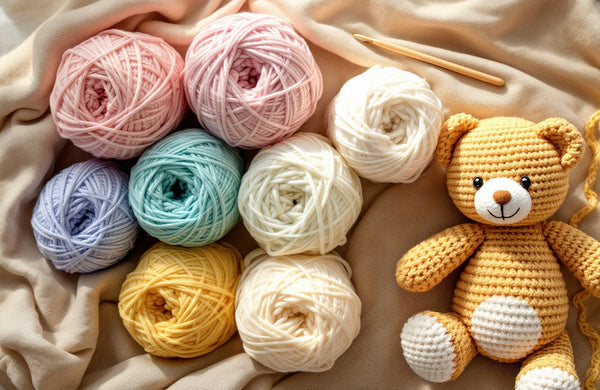
- Learn on light colors. Cream, mint, and pastel pink show every stitch; black and navy hide them exactly when you need to count.
Found your yarn? Now pick its pattern
Match your fiber to a design built for it — smooth yarn for character detail, plush yarn for simple cuddly shapes. Every MrsCrochetWorld pattern lists the recommended weight right up front, and our amigurumi collection has a match for every skein.
Get a free patternShop beginner patternsFrequently asked questions
Is cotton always the best yarn for amigurumi?
Not always, but it is one of the safest choices for structure and stitch clarity. If you want crisp detailing on faces and small parts, cotton is hard to beat. If you want a softer, squishier toy, a smooth acrylic may be the better fit.
Can I use chunky yarn for amigurumi?
Yes, if the pattern suits it. Chunky yarn makes larger, faster projects, but details become less precise. It works best for simple plush shapes rather than intricate characters with fine facial features.
Why does my amigurumi have holes?
Usually the yarn is too thin for the hook or your stitches are too loose. Switching to a smaller hook and a denser yarn closes most gaps, and cotton or smooth acrylic makes it easier to keep the fabric tight.
Is chenille yarn good for beginners?
Usually not as a first yarn. It is soft and popular, but the fluffy pile makes stitches very hard to see. Most beginners learn faster with smooth yarn first and switch to chenille once counting rounds feels automatic.
What yarn weight is best for small amigurumi?
Sport or DK weight is a strong starting point for small figures — enough detail without becoming fiddly. Fingering weight works for tiny collectibles and ornaments but takes more patience and a very small hook.
Can I mix yarn brands in one project?
Yes, but compare thickness, drape, and stretch first. Two yarns labeled the same weight can still behave very differently. Crochet a small test swatch of each if the finish needs to stay even across the toy.
What is the softest yarn for plush amigurumi?
Chenille is usually the softest-feeling option. For a soft but more manageable finish, many makers prefer a smooth baby acrylic or a gentle cotton blend, which keep stitches visible while still feeling cuddly.
Does expensive yarn make better amigurumi?
Not automatically. The right texture and thickness matter more than price. A mid-range yarn that matches the pattern will outperform a luxury skein that is too fuzzy or too stretchy for tight toy fabric.
What hook size should I use with amigurumi yarn?
Use whatever hook gives you a tight, even fabric — typically half a size to a full size smaller than the yarn label suggests. The goal is a dense fabric that keeps stuffing from showing through the stitches.
Should beginners use light or dark yarn?
Light or medium colors are much easier to read while learning. Dark yarn can look beautiful, but it hides stitches and increases exactly when you need to count them. Start with clearer colors while accuracy still takes effort.