Crochet hook sizes explained: complete mm-to-letters conversion chart
Every hook size decoded — from the tiny 2.0 mm steel hooks to chunky 25 mm jumbo wands — so you always grab the right one for your pattern.

You pull out a pattern that calls for a "Size H hook" — and your hook packet says 5.0 mm. Are they the same? Yes! But it took me years of squinting at tiny labels to feel confident about that. Today we clear it all up in one tidy guide, so you can shop smart, substitute with confidence, and never again wonder whether your hook is "right."
Why hook sizes matter more than you think
The difference between a 4.0 mm and a 5.0 mm hook is only one millimeter — but it can make your finished piece 10–15 % larger or smaller than the pattern intends.
Crochet hook size controls two things at once: stitch height and fabric density. A larger hook pulls bigger loops, creating an airier, drapey fabric. A smaller hook tightens everything up, which is exactly what you need for amigurumi so the stuffing doesn't peek through the gaps. For bags, smaller hooks also make the fabric sturdy enough to hold its shape.
Gauge — the number of stitches and rows per 4 inches — is the formal way to measure this. If your pattern includes a gauge swatch (and most do), working it before you start is the single fastest way to confirm your hook size is correct for your tension.
The complete US letter-to-mm conversion chart
US letter sizes and metric millimeters side by side. Memorize the landmarks (B=2.25, G=4.0, J=6.0, N=9.0) and the rest falls into place.
Below are the most common aluminum and plastic hook sizes you will find in US craft stores. Steel hooks (used for thread crochet and lace) follow a separate, reversed numbering system — a steel size 0 is actually 3.25 mm, while a size 14 is only 0.75 mm.
| US Letter / Number | Metric (mm) | Common uses |
|---|---|---|
| B / 1 | 2.25 mm | Fine thread, lace amigurumi |
| C / 2 | 2.75 mm | Fingering weight yarn |
| D / 3 | 3.25 mm | Sport weight, tiny amigurumi |
| E / 4 | 3.5 mm | Sport weight, fine DK |
| F / 5 | 3.75 mm | DK weight yarn |
| G / 6 | 4.0 mm | Worsted weight amigurumi & bags |
| 7 | 4.5 mm | Worsted weight, light texture work |
| H / 8 | 5.0 mm | Worsted weight — the most popular size |
| I / 9 | 5.5 mm | Bulky blends, scarves |
| J / 10 | 6.0 mm | Bulky yarn, granny square bags |
| K / 10½ | 6.5 mm | Super bulky, quick projects |
| L / 11 | 8.0 mm | Super bulky, tote bags |
| M–N / 13 | 9.0 mm | Jumbo projects, market bags |
| P / 15 | 10.0 mm | Chunky blankets, arm crochet |
| S / 35 | 19–25 mm | Extreme bulky, home décor |
Always trust the mm number over the letter when buying hooks from international brands. European and UK hooks are labeled in mm only, so as long as you match the millimeter size you are all set. Learn more about choosing the right tool in our best crochet hooks for beginners guide.
How to read hook size recommendations in a pattern
Patterns list hook size as a suggestion based on the designer's tension. You will often see something like "Size H/8 (5.0 mm)" — the letter, the number, then the metric size in parentheses. If those ever conflict, go with the mm value. And if a pattern lists only a letter without mm (common in older US publications), use this chart to find the metric equivalent before you buy.
For reading a crochet pattern with confidence, always check the materials list first — the hook size is almost always there, along with yarn weight. The yarn label itself usually shows a recommended hook size in the small skein icon, which gives you a great cross-reference starting point.
"When I finally understood that 'H' always meant 5.0 mm, I stopped second-guessing every single pattern. That one fact unlocked hundreds of projects for me." — Ava, MrsCrochetWorld
Put your hooks to work with these patterns
Each of these bestsellers specifies the exact hook size so you can practice matching mm to letter right away.

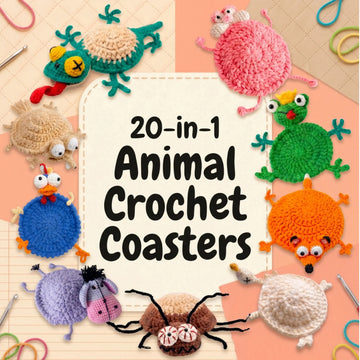
50 No-Sew Amigurumi Bundle
Beginner — worsted hook 3.5–5.0 mmFifty adorable plushies designed for tight amigurumi tension — all call for hooks in the D–H range (3.25–5.0 mm). Great for practicing how a G hook versus an H hook changes your fabric. Browse our full amigurumi collection for more ideas, or read about the best yarn for amigurumi before you start.

9 Modern Bag Patterns Bundle
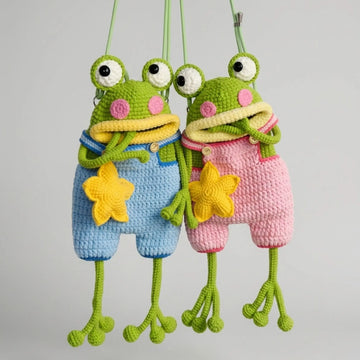
Intermediate — bulky hook 5.5–9.0 mmNine bag designs that climb from a J/10 (6.0 mm) up to an M/13 (9.0 mm), so you naturally build familiarity with larger hooks. The granny square technique used in several designs works beautifully with a J hook and cotton yarn. Each pattern lists both letter and mm size.

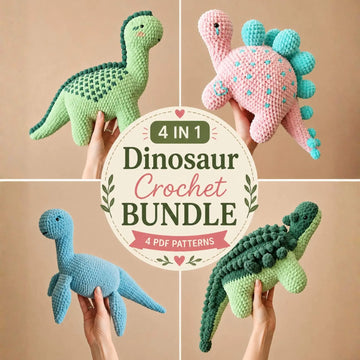
Dinosaur Amigurumi Bundle (4-in-1)
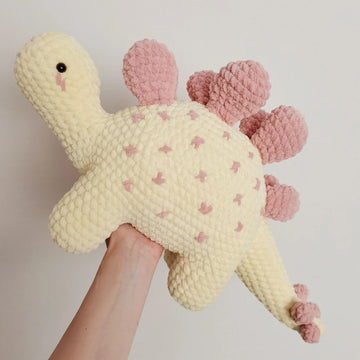
Beginner-friendly — hook 3.5–4.0 mmFour chunky dino friends worked on E–G hooks (3.5–4.0 mm) — the sweet spot where amigurumi fabric is tight but not hand-cramping. If you have been unsure whether your tension is correct, the T-Rex is a forgiving test project. Check out our tips on adding safety eyes once you're done crocheting.
Six things every crocheter should know about hooks
Beyond the size chart, these details make a real difference when you sit down to stitch.
Mm is the universal language
UK, Australian, Japanese, and European hooks are all labeled in mm. When a US pattern says "Size G," convert to 4.0 mm and you can use any brand worldwide.
Material changes feel
Aluminum hooks glide quickly and suit most yarns. Bamboo grips slightly — helpful if you crochet loosely. Ergonomic handles reduce hand fatigue on long sessions.
Label wear is real
Hook engravings fade. Keep a simple mm gauge tool (a flat card with calibrated holes) in your kit so you can measure any mystery hook in seconds.
Always swatch for wearables
For bags and wearables, work a 4×4 inch gauge swatch before starting. A half-stitch difference per inch adds up to inches of extra or missing width on a finished tote.
Size up for a looser gauge
If your swatch is smaller than the pattern's gauge, go one hook size larger. If it is bigger, go one size smaller. Never force your tension to match — change the hook.
Ready to pick your first project?
Our complete beginner guide walks you through choosing a hook size, buying yarn, and finishing your very first stitch — all in one place.
Quick tips for choosing the right hook size
- Start with the label: your yarn's ball band shows a recommended hook range — begin there and adjust based on your gauge swatch.
- Go smaller for amigurumi: tight stitches prevent stuffing from showing through; most amigurumi designers use a hook 0.5–1.0 mm smaller than the yarn label suggests. Our guide on why amigurumi has holes explains this in depth.
- Go larger for drape: shawls, market bags, and relaxed garments benefit from a hook 0.5–1.0 mm larger than the label to create a flowing, open fabric.
- Track your adjustments: keep a small notebook (or a note in your phone) recording which hook size you used and how your gauge turned out — you'll thank yourself on the next project.
- Buy a starter set: a basic aluminum set covering B through K (2.25–6.5 mm) handles the vast majority of worsted and DK patterns — you can add outlier sizes as projects demand.
- Check vintage patterns carefully: US patterns printed before the 1990s sometimes used a different letter-to-size mapping; if something looks off, cross-check the mm value rather than trusting the letter alone.
Grab a free pattern and practice your hook sizes today
The best way to internalize the chart is to make something. Pick a free pattern, check the hook size, find your matching mm hook, and start stitching — that muscle memory sticks far better than memorizing a table.
Get a free pattern Shop beginner patternsFor UK & Australian crocheters
Good news: millimetres are your native system — UK and Australian patterns state hook sizes in mm, so the letters in this chart only matter when you pick up a US-terms pattern like ours. Use the chart above to translate the letters to the mm stamped on your hooks.
Yarn pairing translates just as easily: UK DK equals Australian 8 ply and usually wants a 3.5–4.5 mm hook, while aran / 10 ply sits happily on 5.0–5.5 mm. And remember that US and UK stitch names differ too — a US single crochet is a UK double crochet! Our US, UK & Australian terms guide converts every stitch, weight and hook size in one place.
Frequently asked questions
What does the number on a crochet hook mean?
On US aluminum and plastic hooks the number refers to a sizing system that runs roughly parallel to the letter labels (for example, size 8 = H = 5.0 mm). The number itself is less standardized than the millimeter measurement, so always treat the mm value as the authoritative size.
Is a size H crochet hook the same as 5.0 mm?
Yes. In the standard US sizing system, an H/8 hook is 5.0 mm. This is one of the most common sizes for worsted weight yarn and is a great all-around hook for beginners to own first.
What size crochet hook is best for beginners?
Most crochet teachers recommend starting with an H/8 (5.0 mm) or I/9 (5.5 mm) hook paired with a smooth worsted weight acrylic yarn. These mid-range sizes are large enough that you can easily see your stitches but not so large that the hook feels unwieldy.
Why does my crochet hook have a letter AND a number on it?
US hooks carry both because American patterns have historically used letters (B, C, D…) while the international standard uses millimeters, and the number is a second US reference point. Over time the industry has moved toward always including the mm value as well, which is why modern hooks often show all three: letter, number, and mm.
Can I use a European or UK hook with a US pattern?
Absolutely. European and UK hooks are labeled only in millimeters. Just find the mm value listed in the US pattern (or convert the letter using the chart above) and pick the hook with that mm size — it will work perfectly regardless of brand or country of origin.
What crochet hook size do I need for amigurumi?
Most amigurumi patterns call for a hook in the D–G range (3.25–4.0 mm) when worked in standard worsted weight acrylic. Going slightly smaller than your yarn's recommended size tightens the stitches so stuffing cannot peek through the fabric. Check the specific pattern's materials list for the designer's exact recommendation.
What is the difference between steel crochet hooks and regular hooks?
Steel hooks are used for thread crochet and fine lace and follow a reversed numbering system — a higher number means a smaller hook (the opposite of regular hooks). A steel size 0 is 3.25 mm and a size 14 is only 0.75 mm. Regular aluminum and plastic hooks are used for all standard yarn weights and are what most patterns refer to unless they specifically say "thread" or "steel."
How do I know if I need to go up or down a hook size?
Work the gauge swatch specified in your pattern. If your swatch has fewer stitches per 4 inches than the pattern calls for, your stitches are too big — go down one hook size. If you have more stitches per 4 inches than called for, your stitches are too small — go up one hook size. Repeat until your swatch matches the pattern gauge.