How to sell crochet patterns on Etsy: your complete 2026 guide
Turn the patterns you already make into a steady stream of passive income — here's everything you need to open your Etsy shop, list your first PDF, and keep sales growing.

Every time I finish writing a crochet pattern for myself I think the same thing: someone else out there would love this. And they would. The difference between thinking it and actually earning from it is surprisingly small once you understand the steps — and that's exactly what this guide is for.
Why Etsy is still the best place to sell crochet patterns
Millions of crafters search Etsy every day specifically for patterns — it's a ready-made audience you don't have to build from scratch.
Etsy's search is built around handmade and craft content, which means buyers who land there already intend to purchase. Digital downloads are especially attractive because there's no shipping, no inventory, and your file can sell hundreds of times with zero extra effort on your part. Compare that to selling on your own website where you'd need to drive every single visitor yourself — Etsy handles a substantial slice of discovery for you while you focus on designing.
That said, Etsy works best as one channel in a broader strategy. Pairing your Etsy shop with your own website — or even a printed book — gives you income streams that aren't dependent on any single platform's algorithm. But if you're just starting out, Etsy is the fastest path to your first sale.
What you need before you open your shop
A little preparation now saves a lot of frustration later.
Before you click "Open a shop" you need three things ready: a finished, tested pattern; a PDF file that looks professional; and at least one strong listing photo. Let's look at each.
A fully tested pattern. Work the pattern yourself at least twice, or ask a trusted test crocheter to make it. Errors in published patterns damage your reputation fast — buyers leave reviews, and a one-star "the stitch count is wrong on round 4" will follow your listing for years. Take the time now. If you want a refresher on writing clear instructions, our guide on how to read a crochet pattern is a great reference for the structure buyers expect.
A polished PDF. You don't need expensive software — Canva (free tier) or Google Docs both produce clean, printable PDFs. Include: a materials list, gauge swatch info, abbreviations, step-by-step written instructions in US terms, and at least one clear photo of the finished item. A table of contents helps for longer patterns. Export at 150–300 dpi so photos print crisply.
Listing photos that sell. On Etsy, your thumbnail is your storefront window. Shoot in natural light against a clean background, show the finished item from multiple angles, and include a lifestyle shot of the item in use. A flat lay of your printed pattern pages also reassures buyers about what they're getting. For amigurumi, learning how to photograph amigurumi will level up every single listing.
Setting up your Etsy shop step by step
From zero to live shop in an afternoon.
Go to etsy.com/sell and click "Get started." You'll choose your shop language, country, and currency. Pick a shop name that reflects your niche — something memorable and searchable. Check that it isn't already taken (Etsy will tell you instantly) and that you can grab matching social handles.
Etsy charges a small listing fee per item plus a transaction percentage on each sale. There are no monthly subscription fees to start, which makes it genuinely low-risk to try. Read the current fee schedule on Etsy's help pages — fees do change and I won't quote a number here that might be out of date by the time you read this.
In your Shop Manager, fill out your About section fully. Buyers want to know the person behind the patterns. A short, warm bio with your photo builds trust and is also a place Etsy's search can pick up keywords organically.
Writing listings that rank and convert
Your title and tags are the engine that drives Etsy search traffic.
Etsy SEO works through titles, tags, and attributes. Your title should front-load the most important keyword phrase — think about what a buyer actually types. "Amigurumi dinosaur crochet pattern PDF beginner easy" beats "My T-Rex Pattern" every single time. Use all 13 available tags and vary them: include skill level, technique, finished size, occasion, and material. Understanding crochet skill levels helps you tag accurately so the right buyers find you.
In your description, answer the buyer's main questions immediately: what skill level is this? What yarn and hook do I need? How many pages? Write at least 200 words — Etsy uses description content as a relevance signal. Repeat your main keyword naturally two or three times.
Set your price thoughtfully. Digital patterns on Etsy typically range from a few dollars for a simple one-page design to higher amounts for large bundles. Look at comparable listings in your niche and price competitively — don't undersell yourself, but also recognize that buyers have choices. Our post on how to price handmade crochet items covers the underlying logic even though it focuses on physical goods; the principle of valuing your time applies equally here.
"Your pattern is already written. The only thing standing between you and your first Etsy sale is uploading the file and telling people about it."— Ava, MrsCrochetWorld
Three pattern types that sell especially well
Not sure what to list first? These categories consistently attract buyers on Etsy.

No-sew amigurumi bundles
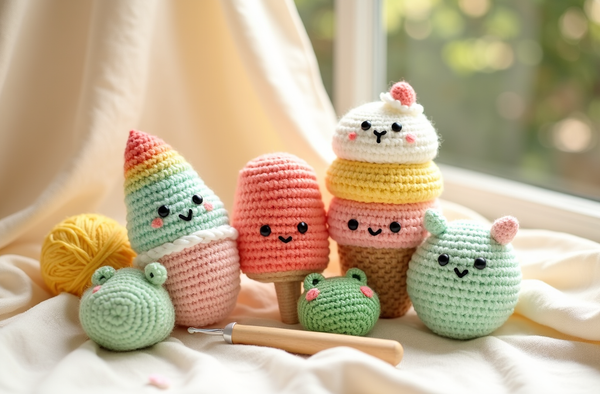
Evergreen bestsellerBuyers searching for no-sew amigurumi techniques are among the most motivated on Etsy — they want cute results without the fiddly finishing. Bundles that collect several related characters in one PDF consistently outsell single patterns because buyers feel they're getting more value per dollar. Think animals, seasonal characters, or a themed set like dinosaurs or fantasy creatures.

Character and fandom-adjacent themes
High search volumeThemed patterns — dinosaurs, fantasy characters, animals from popular films — attract passionate buyers who are already searching with intent. Be careful to design original characters inspired by a genre rather than reproducing copyrighted designs directly. Original fan-inspired work that doesn't reproduce specific IP is where most successful Etsy pattern sellers operate. Check out our complete amigurumi guide for ideas on character types that stay perennially popular.

Wearable and accessory patterns
Fashion-forward trafficBag patterns, cardigan patterns, and accessories draw a different buyer than amigurumi — someone who wants a finished item they'll use every day. These patterns can command higher prices, especially when they include video tutorial links or come in multiple sizes. A well-photographed crochet bag or accessory in a lifestyle setting on Etsy can attract thousands of saves, which Etsy's algorithm treats as a strong engagement signal.
Six things that separate thriving pattern shops from struggling ones
Consistent income on Etsy is about systems, not luck.
Invest in your photos
Etsy is a visual platform. Blurry or dark listing photos kill click-through rates no matter how good your pattern is. Reshoot anything that doesn't look sharp and bright.
Use all 13 tags every time
Each tag is a separate opportunity for Etsy to match your listing to a search. Unused tags are lost traffic. Mix broad terms ("amigurumi pattern") with specific ones ("no sew bunny crochet pdf").
Chase five-star reviews actively
After a buyer downloads your pattern, follow up with a friendly message asking if they have any questions. Happy buyers who hear from you are far more likely to leave a review.
Build a catalog, not a single listing
Shops with 20+ listings tend to rank better than shops with 3. Each new listing is another entry point into Etsy search. Aim to add at least one new pattern per month.
Cross-promote your patterns
Share finished-object photos on Pinterest and Instagram and link back to your Etsy shop. External traffic that converts signals quality to Etsy's algorithm and can boost your ranking.
Consider your own website too
Etsy is a launchpad, not the ceiling. Sellers who pair their Etsy shop with their own site or a broader content presence build an audience they own outright.
Practical tips for your first 30 days
- List at least 5 patterns before you promote. A shop with only one listing feels unfinished. Give buyers a reason to browse and follow your shop by having a small but real catalog from day one.
- Write a clear, honest shop policy. Cover what buyers receive (a PDF download link), what happens if they have trouble downloading, and your refund policy. Digital goods are typically non-refundable, but frame this warmly — explain that you're happy to help troubleshoot any download issues.
- Use Etsy's free preview feature. Uploading a low-resolution preview image of your pattern pages (not the full PDF) gives buyers confidence that they know what they're purchasing. It reduces refund requests significantly.
- Study your Stats tab weekly. Etsy shows you which listings get views, which get clicks, and which convert to sales. After a few weeks you'll see clearly which patterns need better photos or tags and which ones are already working.
- Don't drop your price to compete. Lowering prices in a race to the bottom rarely works on Etsy — buyers often equate price with quality for digital goods. Instead, improve your photos and description to justify your existing price.
- Link your social and your shop together. Add your Etsy shop URL to every social profile and pin a post about your shop to the top of each account. Free, permanent traffic that compounds over time.
Protecting your work and staying legal
A few simple steps keep your patterns and your shop safe.
Add a copyright notice to the first page of every PDF: "© [Your Name / Shop Name], [Year]. For personal use only. Not for resale or redistribution." This doesn't stop every bad actor, but it signals that you're serious and gives you legal footing if you ever need to file a DMCA takedown. Etsy has a built-in IP reporting system you can use if you find someone copying your work.
On the other side, make sure your own patterns don't reproduce copyrighted characters verbatim. Inspiration is fine; copying a Disney character stitch-for-stitch is not. This is a nuanced area — if you're unsure, search Etsy for similar themes and see what successful sellers are doing, and when in doubt consult a lawyer who specialises in creative IP.
It's also worth knowing that selling items made from a crochet pattern is a separate question from selling the pattern itself. Most designers allow personal sales of finished objects but not the pattern PDF — always read the license in any pattern you buy, and state your own license clearly.
Growing beyond your first few sales
Momentum builds when you treat your shop like a business.
Once you have reviews and a small catalog, it's time to think about growth. The two highest-leverage moves are: running Etsy Ads on your best-converting listings (start with a small daily budget and scale what works), and building an email list so you own a direct line to your buyers. Offer a free pattern to newsletter sign-ups — a free crochet pattern as a lead magnet is one of the oldest and most reliable tools in the digital product world.
You might also explore whether your patterns could become a printed book. Physical books reach buyers who prefer a tangible reference and who may never discover your Etsy shop. The two formats complement each other beautifully — your Etsy PDF buyers become your most enthusiastic book buyers when you launch one. Browse our crochet books and patterns collection to see how a physical format can sit alongside your digital work.
Most importantly, keep designing. Designers who publish consistently — even imperfect new patterns — grow faster than those waiting for the perfect listing. Treat each new pattern as a learning opportunity: what photos worked? Which tags brought traffic? What did buyers ask in messages? Every listing teaches you something that makes the next one better. And remember that our full guide to the most profitable crochet items to sell covers the physical side of the market too, if you ever want to complement your digital patterns with finished objects at craft fairs or markets.
Ready to start your pattern shop?
Grab one of our free patterns to study the format, or browse our beginner-friendly designs for listing inspiration — your first Etsy sale is closer than you think.
Download a free patternShop beginner patternsFrequently asked questions
Do I need a business license to sell crochet patterns on Etsy?
Requirements vary by location. In many places you can start selling as an individual without a formal business license, but once you earn above a certain threshold you may need to register and collect sales tax. Check the rules in your country, state, or province — Etsy provides some guidance in its Seller Handbook, and a local accountant can clarify your specific situation.
How much does it cost to open an Etsy shop for digital patterns?
Creating an Etsy account and shop is free. Etsy charges a small listing fee each time you publish or renew a listing, plus a transaction fee and payment processing fee on each sale. There is no monthly subscription required to start. Check Etsy's current fee schedule directly on their site, as rates can change.
What file format should I use for my crochet patterns on Etsy?
PDF is the standard format because it preserves your layout, fonts, and photos on any device and can be printed easily. Export your file at a resolution between 150 and 300 dpi so photos look sharp when printed. Avoid Word documents or Pages files because buyers may not have the right software to open them.
How do I price my crochet patterns on Etsy?
Look at comparable patterns in your niche and price in line with the market for your skill level and pattern complexity. Factor in the time you spent designing and writing, the value you deliver to the buyer, and what similar listings charge. Avoid pricing so low that buyers question your quality. You can always run a sale or offer a bundle discount without permanently lowering your base price.
Can I sell crochet patterns on Etsy if I am a beginner designer?
Yes. Many successful Etsy pattern sellers started with simple beginner-friendly designs. What matters most is that your pattern is accurate, clearly written, and well-tested, not that it is highly complex. In fact, beginner patterns often outsell advanced ones because the audience is larger. Write what you know and test it thoroughly before publishing.
How do I get my first sale on Etsy faster?
Share your new listings on Pinterest and Instagram with the direct Etsy link, tell your existing social following you have opened a shop, ask friends or family who crochet to review your pattern honestly, and make sure your listing title and tags use the words buyers actually search for. Etsy Ads on a small budget can also give a new listing an early visibility boost while it builds organic traction.
How many patterns do I need before opening my Etsy shop?
Aim for at least five patterns before your public launch so your shop looks established rather than empty. A larger catalog also means more entry points into Etsy search, which brings in more organic traffic. You can open with one listing if you're eager to start, but plan to add new patterns quickly in the weeks after launch.
Can I sell the same crochet pattern on my own website and on Etsy at the same time?
Yes. Etsy does not require exclusivity. Many designers sell their PDFs on Etsy, their own Shopify or WordPress store, and even other marketplaces simultaneously. Selling in multiple places is good practice because it diversifies your income and reduces reliance on any single platform's algorithm or fee changes.
Related guide: How to write and sell your own crochet PDF pattern.