How to substitute yarn in a crochet pattern
The right yarn swap can save your project — here's exactly how to choose a substitute that works, so your finished piece looks just as beautiful as the original.

You found the perfect crochet pattern — but the yarn it calls for is out of stock, out of budget, or just not available where you live. Sound familiar? The good news is that swapping yarn is completely doable once you know the three things to match. Get those right and your substitute will perform just like the original.
Why yarn substitution matters more than you think
Yarn is not interchangeable by brand alone. Two skeins labeled "worsted" can behave very differently in your hands.
Every crochet pattern is written around specific yarn properties — how heavy each strand is, how stretchy it feels, whether it blooms after washing, how much yardage fits on a skein. When you swap yarn without thinking these through, you can end up with a finished piece that is the wrong size, too stiff, too floppy, or runs out of yarn before the last row. Learning to substitute confidently means you are never stuck waiting on a discontinued colorway or a pricey import.
Step 1 — Match the yarn weight class
Yarn weight is your first and most important checkpoint. Every pattern lists a weight: lace, fingering, sport, DK, worsted, bulky, or super bulky. The Craft Yarn Council assigns each weight a number from 0 to 7. Stick within the same number and you keep the stitch size and drape close to the original design.
Check the label of your substitute yarn and compare it to the label of the original. If both say "4 / Medium / Worsted," you are in the right ballpark. If the pattern calls for DK (3) and you substitute with worsted (4), your project will come out noticeably larger and heavier — which matters a lot for fitted garments and amigurumi, and less for blankets. You can read more about how weight affects projects in our guide to choosing the right yarn for your crochet pattern.
Step 2 — Check fiber content and texture
Fiber changes how a yarn feels, stretches, and holds its shape. Cotton has almost no stretch and shows stitch definition beautifully — ideal for bags and kitchen accessories. Acrylic is machine-washable, affordable, and great for toys and gifts. Wool has natural elasticity and warmth but may need hand-washing. Blends sit somewhere in between.
For amigurumi, avoid anything too fuzzy or fluffy — the stitches need to be tight enough that no stuffing shows through gaps. A smooth acrylic or cotton in the same weight as the original is almost always the right call. For bags like granny square totes, cotton or cotton-blend yarns hold their shape well after use. For wearables, consider whether the recipient needs easy machine care, and match accordingly.
Texture matters too. A pattern written for a smooth yarn will look very different worked in a boucle or eyelash yarn. Unless the designer specifically calls for texture, choose a substitute with a similar surface finish — smooth for stitch-detail patterns, plied for color work.
Step 3 — Swatch and check gauge
Gauge is the number of stitches and rows that fit in a 4-inch square. Every pattern worth its salt includes a gauge note. Your substitute yarn may need a slightly different hook size to hit the same gauge as the original — and that is completely fine. What matters is the end measurement, not which hook you use to get there.
Crochet a small swatch — at least 15 stitches wide and 10 rows tall — block it the same way you plan to block the finished piece, then count stitches in the center 4 inches. If you have too many stitches, go up a hook size. Too few, go down. For blankets and bags a slight gauge difference rarely matters. For garments and amigurumi bodies, nail the gauge before you commit to the full project. Our full beginner crochet guide covers swatching in detail if you are new to the concept.
Yardage — the step most people forget
Even when weight, fiber, and gauge all match, yardage can catch you out. Two yarns of the same weight class can have very different meters per 100 g. The pattern will specify how many yards (or meters) it needs in total. Add up the yardage on your substitute skeins and make sure you have at least 10% more than the pattern calls for — dye lots change, and running out two rows from the end is heartbreaking. When in doubt, buy an extra skein; you can always use it on your next project.
"Once you understand weight, fiber, and yardage, every yarn in the shop becomes a possible substitute — the craft becomes so much more freeing." — Ava, MrsCrochetWorld
Patterns that work beautifully with the right yarn
Once you know how to swap yarn confidently, these designs are perfect for putting your new skills to work.

50 No-Sew Amigurumi Patterns Bundle
Best for smooth acrylic or cottonFifty adorable plushie patterns — all no-sew, all beginner-friendly. Because amigurumi needs tight, even stitches, a smooth DK or worsted acrylic is the perfect substitute if the listed yarn is unavailable. See our guide on the best yarn for amigurumi before you start.

9 Modern Crochet Bag Patterns Bundle
Best for cotton or cotton-blend yarnNine stylish bags — totes, granny square designs, and more. Cotton yarn is an ideal substitute here: it has no stretch, holds its shape after repeated use, and shows off the geometric stitch patterns beautifully. Check the full bags collection for even more options.

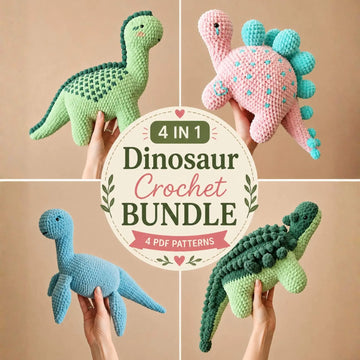
4-in-1 Dinosaur Crochet Pattern Bundle
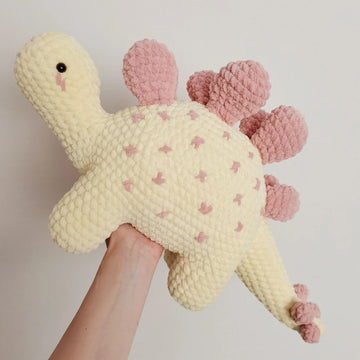
Best for worsted weight acrylicFour dino designs in one download — T-Rex, Stegosaurus, and friends. These chunky amigurumi work up fast in any smooth worsted-weight acrylic substitute. If you are new to amigurumi, this bundle is a fun way to practice yarn substitution on a forgiving, huggable project.
Six things to check before you commit to a yarn swap
Run through this quick checklist and you will avoid the most common substitution mistakes.
Weight class
Match the number on the yarn label (0–7). Going one step up or down changes your finished size significantly, especially for fitted pieces.
Fiber content
Cotton, acrylic, wool, and blends all behave differently. Match fiber type for garments and amigurumi; you have more flexibility for blankets and home décor.
Gauge swatch
Always swatch with your substitute and adjust your hook size as needed. A small swatch now saves hours of frustration later. See how even tension affects your gauge.
Total yardage
Count up the yards (or meters) your substitute skeins provide and compare with the pattern total. Always buy 10% extra as a buffer.
Dye lot
Buy all the skeins you need from the same dye lot. Even identical colorways can vary between lots — mix them and you will see a visible stripe.
Need more pattern help?
Our complete beginner guide to crochet covers yarn selection, hook sizes, and reading patterns — everything you need alongside yarn substitution skills.
Ava's top tips for a successful yarn swap
- Start with the label. The yarn weight symbol (a skein icon with a number 0–7) is your fastest guide. If it matches the original, you are already most of the way there.
- Trust wraps per inch over brand names. Wrap both yarns around a ruler for one inch and count the strands. If the numbers are within one or two of each other, the yarns are close in weight — even if their labels say something different.
- Wash your swatch. Some yarns grow, shrink, or bloom after washing. Block your swatch the same way you will block the finished project before you count gauge. This is especially important for cotton and superwash wool.
- Check stretch for fitted items. Hold a length of yarn and tug gently. Wool and nylon blends stretch; cotton and linen barely do. For garments, match the stretch behavior of the original so the fit stays true. For amigurumi, very low stretch is actually an advantage.
- Use the yardage calculator trick. Divide the total yardage the pattern needs by the yardage per skein of your substitute. Round up — that is how many skeins to buy. Never round down; running short mid-project with a discontinued yarn is a real risk.
- When in doubt, go up a skein. Leftover yarn is never wasted. Use it for one-skein projects, test swatches, or repairs down the road.
Ready to put your yarn knowledge to work?
Browse our free patterns to practice your new substitution skills, or shop our beginner collection for designs that are forgiving with almost any yarn weight.
Get a free pattern Shop beginner patternsFrequently asked questions
Can I substitute a different yarn weight in a crochet pattern?
Yes, but it will change the finished size. Going up one weight class makes the item larger and heavier; going down makes it smaller and lighter. For blankets and bags this is often fine. For garments and amigurumi, try to stay within the same weight class and adjust hook size to hit gauge instead.
How do I know if two yarns have the same weight?
Check the label for the yarn weight number (0–7) or the name (fingering, DK, worsted, etc.). You can also do a wraps-per-inch test: wrap each yarn tightly around a ruler for one inch and count the wraps. Similar counts mean similar weights.
Does fiber content really matter when substituting yarn?
Yes, especially for fit and care. Cotton and linen have very little stretch; wool and acrylic stretch more. If you substitute a stretchy yarn for a non-stretchy one in a bag, it may sag with use. For toys and amigurumi, smooth acrylic or cotton is almost always the best swap.
How do I calculate how much substitute yarn I need?
Find the total yardage (or meterage) the pattern requires. Divide that number by the yardage per skein of your substitute yarn, then round up to the nearest whole skein. Add one extra skein as a buffer to cover dye-lot issues or small gauge differences.
Do I always need to swatch when substituting yarn?
For blankets and dishcloths, a swatch is helpful but not critical. For garments, amigurumi, and anything with precise sizing, always swatch. Crochet at least 15 stitches by 10 rows, block it, then measure the center 4 inches to check gauge before committing to the full project.
What is a dye lot and why does it matter?
A dye lot is a batch number printed on the yarn label indicating the specific run of dye used. Yarn from different dye lots can appear slightly different in color even if the colorway name is identical. Always buy all the skeins you need from the same dye lot to avoid visible color stripes in your finished piece.
Can I substitute acrylic yarn for cotton in a crochet bag pattern?
You can, but the result will feel softer and stretchier. Cotton holds its shape better for structured bags because it has very low elasticity. If you use acrylic, consider going down a hook size to make a tighter fabric that resists stretching under the weight of the bag's contents.
Are there yarns that are easy to substitute for almost any pattern?
Smooth, plied acrylic yarns in standard weight classes are the most versatile substitutes. They are widely available, affordable, machine-washable, and come in a huge range of colors. For a quick substitute that works across most patterns, a smooth worsted-weight acrylic is almost always a safe starting point.