Amigurumi Size Chart: The Complete Guide to Getting Your Crochet Sizes Right Every Time
Yarn weight, hook size, gauge, and stitch counts all decide how big your plushie turns out. Here is exactly how they work together—plus a ready-to-use size chart for every project.

If you have ever followed an amigurumi pattern perfectly and still ended up with a plushie half the expected size—or twice as big—you already know the frustrating truth: in amigurumi, the pattern rarely tells the whole story. Two crocheters can work the exact same set of instructions and finish with toys that look like a parent and a child standing side by side.
That is where an amigurumi size chart comes in. Understanding how yarn weight, hook size, gauge, and stitch counts combine to control finished dimensions is the single most useful skill for making toys that come out the size you actually want. In this complete guide we will break down every factor, give you a practical size-category reference, and show you how to scale any pattern up or down with confidence.
Quick truth: A crochet pattern gives you a recipe, not a guaranteed size. Your yarn, your hook, and your personal tension are the ingredients that decide the final measurements.
What an Amigurumi Size Chart Actually Tells You
An amigurumi size chart is a reference that connects three things: the weight of yarn you choose, the hook you pair with it, and the approximate finished height a standard-count pattern will produce. It is not a rigid rulebook—it is a starting map. Because tension varies from person to person, a chart gives you a reliable ballpark rather than an exact millimeter guarantee.
Most amigurumi patterns are written assuming a specific yarn weight (very often worsted/medium) and a hook one or two sizes smaller than the yarn band suggests. When you swap in a different yarn or hook, the finished toy scales proportionally. Once you internalize that relationship, you stop being surprised by your results and start predicting them.

How Yarn Weight Changes the Final Size
Yarn weight is the biggest single lever you can pull. Thicker yarn makes bigger stitches, and bigger stitches make a bigger toy—even when the stitch count on the page never changes.
Here is roughly how the common weights stack up when worked at the same stitch count:
- Sport / fine (2): delicate, small toys—great for keychains and minis.
- DK / light (3): tidy, detailed plushies with a neat fabric.
- Worsted / medium (4): the amigurumi standard—most patterns assume this.
- Bulky (5) & super bulky (6): big, huggable toys made fast.
Jumping from DK to bulky using the identical pattern can easily double a finished toy's height. If you love a pattern but want it bigger or smaller, changing the yarn weight is the easiest way to do it—no math required.
A key detail many beginners miss: yarn fiber and plied structure also nudge the size. A dense cotton at worsted weight can crochet up slightly smaller and firmer than a lofty acrylic of the same labeled weight, because the fibers pack differently. That is one more reason a size chart is a guide, not a promise—and one more reason a quick swatch is worth the two minutes it takes.
Choosing the right yarn is half the battle. If you are unsure which fiber and weight best suit stuffed toys, our deep dive on the best yarn for amigurumi walks through stitch definition, washability, and how tightly each yarn holds its shape.
How Hook Size Affects Amigurumi Dimensions
If yarn weight is the throttle, hook size is the fine-tuning dial. A larger hook produces larger, looser stitches; a smaller hook produces tighter, denser ones. In amigurumi, tight stitches are actually desirable—they stop stuffing from peeking through the gaps—which is why patterns almost always call for a hook a size or two smaller than the yarn label recommends.
Practically, going up or down a single hook size will subtly change your finished measurements. A worsted-weight bear made with a 3.5 mm hook will be a touch bigger and softer than the same bear made with a 3.0 mm hook, which will be smaller and firmer. This gives you a gentle way to adjust size without switching yarn at all.

Yarn + Hook: Pairing Them for Predictable Results
Yarn weight and hook size are a team, and matching them well is what gives you clean, gap-free amigurumi at the size you expect.
Use these pairings as a reliable starting point, then fine-tune with a swatch:
- Sport / fine: 2.25–3.0 mm hook
- DK / light: 3.0–3.5 mm hook
- Worsted / medium: 3.25–4.0 mm hook (3.5 mm is the classic go-to)
- Bulky: 4.0–5.5 mm hook
Notice the hook is consistently smaller than a scarf or garment would use for the same yarn. That deliberate tightness is the amigurumi signature.
Hook material matters a little too. Aluminum and steel hooks tend to glide, letting some crocheters work slightly looser, while grippier coated hooks can encourage a tighter hand. It is a small effect, but if you switch hook brands mid-project you may notice a subtle size shift. If you want the full breakdown of hook sizing across the US system, our guide to crochet hook sizes explained covers every letter, number, and millimeter conversion.
Gauge Swatches: The Secret to Reliable Sizing
Gauge is simply how many stitches and rounds fit into a given measurement—typically 4 inches (10 cm). It is the bridge between "the pattern says" and "my hands actually make." Two crocheters with different tension will hit different gauges even with identical yarn and hook, and that difference is exactly why finished sizes vary.
For flat projects, gauge is king. For amigurumi, gauge is a little more forgiving because most toys do not need to fit anything—a bear that is 6 inches instead of 6.5 inches is still adorable. But when size does matter (making a matched set, sizing a hat to fit a doll, or working to a gift recipient's expectation), a quick gauge check saves you from unraveling hours of work.

How to Check Gauge for Amigurumi in Two Minutes
You do not need a giant swatch for toys. A small tension check is enough to tell you whether you run tight, loose, or right on target:
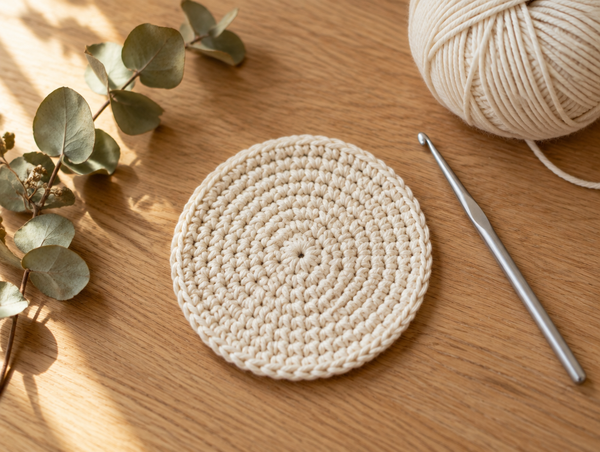
- Crochet a flat circle or a short tube using the pattern's yarn and hook, about 4–5 rounds.
- Lay it flat and measure across with a ruler.
- Count how many single crochets fit into 1 inch (2.5 cm).
- More stitches per inch than the pattern? You crochet tight—size up a hook if you want it bigger.
- Fewer stitches per inch? You crochet loose—size down a hook for a firmer, smaller toy.
Firm, even tension is the goal. If you can see stuffing through your fabric, tighten up or drop a hook size.
Standard Amigurumi Size Categories
While there is no single official standard, most makers group amigurumi into recognizable size tiers. This chart assumes a typical single-crochet body worked at the yarn weight noted—your exact numbers will shift with tension, stuffing, and shape, but these ranges give you a dependable frame of reference.
| Category | Approx. Height | Typical Yarn Weight | Best For |
|---|---|---|---|
| Keychain / Mini | 2–4 in (5–10 cm) | Sport / fine, or thread | Bag charms, party favors, tiny gifts |
| Small | 4–6 in (10–15 cm) | DK / light | Pocket pals, desk buddies, quick makes |
| Medium | 6–10 in (15–25 cm) | Worsted / medium | Classic plushies, gifts, the amigurumi standard |
| Large | 10–15 in (25–38 cm) | Worsted held double or bulky | Cuddle toys, statement pieces |
| Jumbo | 15 in+ (38 cm+) | Super bulky or chunky | Floor plushies, nursery decor, huggables |
Notice that the same pattern can slide across several of these tiers just by changing yarn and hook. A "medium" worsted bear becomes a "small" DK bear or a "large" bulky bear—same instructions, three different toys.

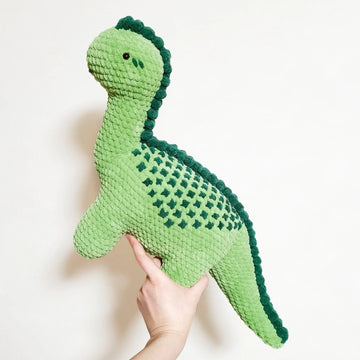
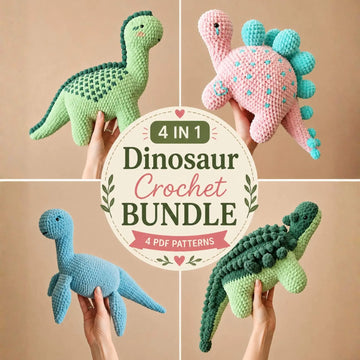
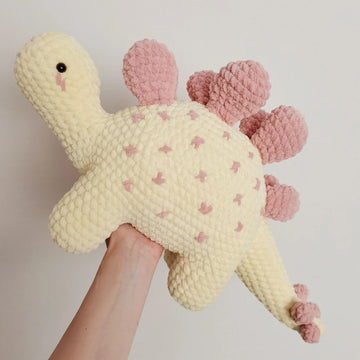
4-in-1 Dinosaur Amigurumi Bundle
Four roar-some dino patterns with clear round-by-round counts—perfect for practicing size control across shapes. Work them in DK for minis or bulky for cuddly giants.
View Pattern →How Stitch Counts and Rounds Control Size
Beyond yarn and hook, the pattern's own numbers shape the finished size. Amigurumi is built from increases and decreases: you increase to make a piece wider and taller, and you decrease to close it up. The maximum stitch count a round reaches sets how wide that part of the toy becomes, and the number of rounds at full width sets how tall or long it is.
This is powerful because it means you can adjust size directly in the pattern:
- To make a piece wider: add more increase rounds before you stop increasing (e.g., work up to 42 stitches instead of 36).
- To make a piece taller: add plain rounds with no increases or decreases in the straight section.
- To make it smaller: stop increasing sooner and remove some of the straight rounds.
When you change stitch counts, keep the increases evenly spaced so the shape stays smooth and round rather than lumpy. Proper stuffing then keeps that shape crisp—if you are unsure how firmly to pack a toy, our guide on how to stuff amigurumi explains exactly how stuffing density affects both size and structure.
Converting a Pattern Between Sizes
There are two clean ways to resize a pattern, and knowing when to use each keeps your proportions intact.
Method 1: Swap the yarn (easiest)
Keep every stitch count exactly as written and simply change to a heavier or lighter yarn with a matching hook. Because every part scales together, your proportions stay perfect. This is the fastest, safest way to get a bigger or smaller version of any toy—no re-charting required.
Method 2: Scale the stitch counts (more control)
If you want to stay with a particular yarn but change the size, multiply every stitch count by a consistent factor. Want a toy roughly 1.5× bigger? Multiply the starting magic-ring count and each increase round by about 1.5 and round to numbers that keep increases even. This takes more planning but gives you precise dimensional control.
Pro tip: When scaling counts up, remember safety eyes, joints, and clothing need to scale too. A bigger head calls for bigger eyes to keep that cute proportion. Our amigurumi safety eyes guide shows which eye sizes pair with which toy sizes.

12-in-1 Princess Crochet Doll Pattern Bundle
Twelve enchanting dolls with matching proportions—an ideal set for practicing consistent sizing across a whole collection. Keep one yarn and hook throughout for a perfectly matched lineup.
View Bundle →Tips for Consistent Sizing Across a Batch
If you sell toys, make gifts in sets, or crochet the same design repeatedly, consistency is everything. A row of "identical" bears that are visibly different sizes looks unprofessional—and it usually comes down to tension drift. Here is how to keep a batch uniform:
- Use the same yarn dye lot and hook for the whole batch. Even switching between two "3.5 mm" hooks from different brands can shift size slightly.
- Watch your tension when tired. Many crocheters tighten up when relaxed and loosen when rushing. Take breaks so your hand stays consistent.
- Count every round. Skipping or adding a stitch quietly changes width. A stitch marker at the start of each round keeps counts honest.
- Stuff each toy to the same firmness. Under-stuffing shrinks a toy and makes it floppy; over-stuffing stretches it larger and strains the fabric.
- Measure as you go. Check the first finished piece against a ruler, note the numbers, and match every subsequent one to it.
Troubleshooting: When Your Amigurumi Comes Out the Wrong Size
Even seasoned makers occasionally finish a toy that is off. Here is how to diagnose the usual culprits.
It came out too big
Most often your tension is loose, your hook is too large for the yarn, or the yarn is heavier than the pattern assumed. Drop a hook size, tighten your stitches, or switch to a lighter yarn. If gaps show between stitches, that is a clear sign you are working too loosely.
It came out too small
Usually the opposite: very tight tension, a hook that is too small, or a lighter yarn than intended. Go up a hook size, consciously relax your grip, or move to a heavier yarn. Tight amigurumi can also be hard on your hands—loosening up is kinder to your wrists.
The proportions look off
If one part is right but another is wrong, check that you did not change tension partway through, and confirm you followed the stitch counts for each piece. Uneven stuffing is another sneaky cause—an under-stuffed head on a firm body throws the whole look off.

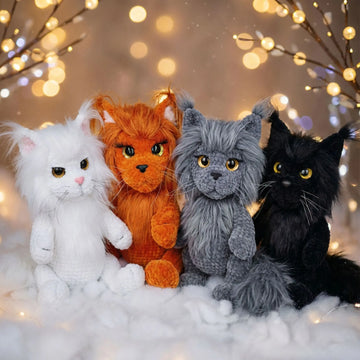
16-in-1 Chonky & Tiny Cats Crochet Pattern Bundle
Sixteen cats in chonky and tiny sizes—the perfect playground for mastering how stitch counts and yarn weight change a finished toy. Compare a mini and a chonky side by side and watch the size chart come to life.
View Bundle →Ready to put your size chart to work?
Browse our full collection of beginner-friendly amigurumi patterns with clear stitch counts—perfect for making toys in any size you like.
Shop All PatternsFrequently Asked Questions
What is the standard size for amigurumi?
There is no single official standard, but the most common "medium" amigurumi worked in worsted-weight yarn finishes around 6–10 inches (15–25 cm) tall. Smaller DK toys land at 4–6 inches, minis at 2–4 inches, and bulky-yarn toys can reach 15 inches or more.
How does yarn weight affect amigurumi size?
Yarn weight is the biggest factor. Thicker yarn makes larger stitches, so the exact same pattern worked in bulky yarn can be roughly double the size of the same pattern in DK yarn—without changing a single stitch count.
What hook size should I use for amigurumi?
Use a hook one to two sizes smaller than the yarn label recommends, so the fabric is tight enough to hide the stuffing. For worsted-weight yarn, a 3.5 mm hook is the classic choice; DK pairs well with 3.0–3.5 mm, and sport weight with 2.25–3.0 mm.
Do I really need a gauge swatch for amigurumi?
Not always—most toys do not need to fit anything, so small size differences are fine. But if size matters (a matched set, a doll-sized hat, or a specific gift size), a quick two-minute tension check saves you from unraveling hours of work.
How do I make an amigurumi pattern bigger?
The easiest way is to switch to a heavier yarn with a matching larger hook while keeping every stitch count the same—the whole toy scales up in perfect proportion. For more control, multiply all stitch counts by a consistent factor, keeping increases evenly spaced.
How do I make an amigurumi pattern smaller?
Use a lighter yarn with a smaller hook and keep the stitch counts unchanged, or reduce the stitch counts proportionally. Going down a hook size on the same yarn also produces a slightly smaller, firmer toy.
Why did my amigurumi come out a different size than the pattern?
Almost always because of tension, hook, or yarn differences. If yours is bigger, you likely crochet loosely or used a larger hook or heavier yarn; if smaller, you crochet tightly or used a smaller hook or lighter yarn. Patterns give a recipe, not a guaranteed measurement.
How can I keep multiple amigurumi the same size?
Use the same yarn and hook for the whole batch, count every round with a stitch marker, keep your tension steady (take breaks to avoid drift), and stuff each toy to the same firmness. Measure the first finished piece and match every other one to it.
Does stuffing change the size of amigurumi?
Yes. Over-stuffing stretches the fabric and makes a toy larger and firmer, while under-stuffing leaves it smaller and floppier. Consistent, firm stuffing keeps both the size and the shape looking their best across a set.
What yarn weight is best for beginners making amigurumi?
Worsted-weight (medium, weight 4) yarn is the friendliest starting point. It is the weight most patterns assume, its stitches are easy to see and count, and it produces a nicely sized medium toy. A smooth, matte acrylic or cotton in a light color makes stitches easiest to read.
How do I measure a finished amigurumi correctly?
Sit the toy upright on a flat surface and measure its height from the base to the top of the head (excluding ears or hats) with a ruler or soft tape. For a consistent record, always measure the same way—standing height is the most common reference used in size charts.