Pop-Up Animal Crochet Coasters: How They Work and What to Make
A flat base, a few small pieces and the right tension: here is what actually makes a crochet animal seem to pop up around your mug, explained without the mystery.

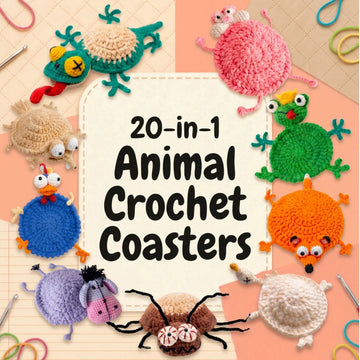
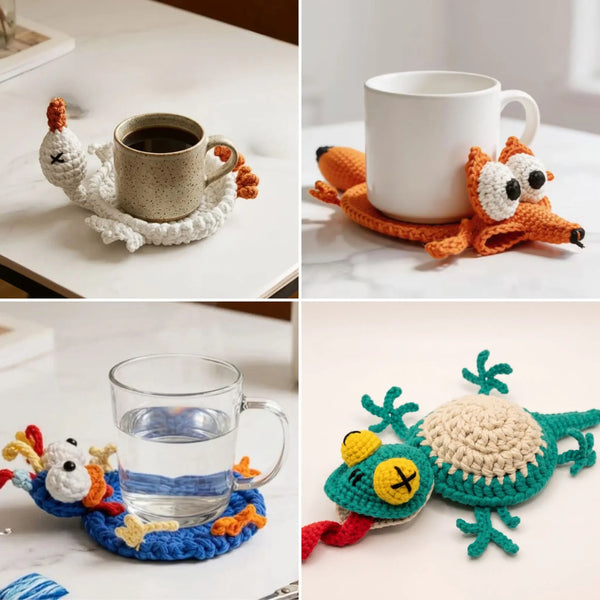
Put a mug down on a pop-up animal crochet coaster and something small happens: a fox peeks out from behind the cup, a goose seems to hold it, a frog looks up at you over the rim. It looks a little like magic, which is probably why so many pattern pages simply show the photo and move on. Search for how pop-up crochet coasters work and you mostly find pictures, not explanations.
This article explains that principle in plain language, so you know what you are looking at before you pick a pattern. It is deliberately not a pattern itself. Every MrsCrochetWorld design is written and test-crocheted by a human designer, and the stitch counts, piece shapes and placement belong in those tested patterns, where the photos show you each stage. What you will get here is the why behind it, all in US crochet terms.
Pop-up animal coasters at a glance
| What "pop-up" means here | The round base is the animal's body; the head, paws and tail sit around the edge, so the character seems to pop up when you set your mug down[1] |
|---|---|
| Base (21-in-1 bundle) | Flat round in double crochet (dc), sport / fine (#2) cotton or acrylic held double, 3.5 mm (US E-4) hook, crab stitch edge[1] |
| Character pieces | Single strand on a 2.5 mm hook; fiberfill, safety eyes or embroidered eyes; a little craft wire on a few designs such as the Goose and the Cat[1] |
| Finished size | About 8–10.5 cm (3¼–4¼ in) across[1] |
| Skill level | Advanced beginner to intermediate, with a 3-page beginner's guide in the PDF[1] |
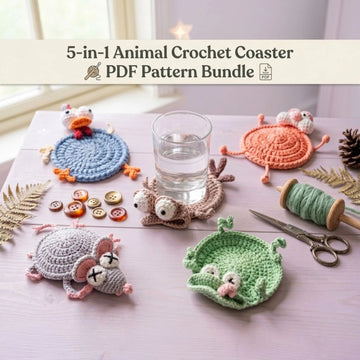
| 5-in-1 Animal Coasters | Chick, mouse, frog, squirrel and leopard, each with a playful pop-up animal detail while the base stays flat; QR codes to video tutorials[2] |
| Paperback | 20-in-1 Animal Crochet Coasters book with 20 designs, ordered through Amazon[3] |
Why the base feels so solid: the Craft Yarn Council lists 3.5–4.5 mm (US E-4 to 7) as the usual hook range for fine (#2) yarn[4]. The 21-in-1 base uses the bottom of that range (3.5 mm) for a doubled strand, so the fabric comes out thick and firm instead of soft and drapey. That firmness is what keeps the base flat once pieces are sewn to its edge.
Hook and yarn guidelines are general; the materials list of each design comes first. Product line-ups can change, and the product page always shows the current details.
How do pop-up crochet coasters work? The three parts
Every pop-up animal coaster combines the same three ingredients. Once you can see them, you can look at any design and understand how it was built.

A flat, heavy round that does the real work
The base is the part nobody photographs, and it is the part that makes the whole idea possible. In the 21-in-1 animal patterns it is a flat round worked in double crochet with the yarn held double, finished with a crab stitch edge (also called reverse single crochet). Holding two strands together on a small hook produces a thick, dense disc that does not flop or bend when a head and paws are attached to one side of it.
It has to lie flat, because your mug has to stand securely. A flat circle stays flat when the increases are spread evenly from round to round; too few and it cups, too many and it ruffles. That is why the patterns lay out every round in a table with the stitch count at the end, so you can check yourself before moving on. If working in rounds is new to you, our guide to crocheting in the round covers the basics.
See the 21 pop-up animal coaster patterns →
Small 3D pieces anchored at the rim
The personality comes from the character pieces: heads, eyes, beaks, ears, paws or tails, depending on the animal. In the 21-in-1 bundle they are crocheted with a single strand on a smaller 2.5 mm hook, which keeps them neat and firm enough to hold their shape. The notions list includes fiberfill, so some parts are softly three-dimensional rather than flat appliqué.
The pop-up effect is all about where those pieces go. They are sewn around the edge of the base, never in the middle. The mug claims the center; the head sits at the rim behind or beside it, and paws or a tail sit elsewhere on the edge. From the side, the animal appears to be hugging or peeking around your cup. The assembly photos show exactly where each piece belongs, which is the part you should never guess. For a refresher on joining pieces, see how to sew amigurumi parts together.
Explore the animal coaster bundle →
Firm everywhere, slightly looser at the very end
The third ingredient is invisible: tension. The 21-in-1 patterns ask you to keep your tension firm and even while you crochet the base and to avoid working too loosely. A loose base stretches, sags under the weight of the head and lets the pieces tip outward instead of standing up.
There is one deliberate exception. The patterns recommend working the final round slightly looser to give the coaster natural lift. A tight last round tends to pull the edge in; a relaxed one lets the rim settle, which gives the pieces sewn to it a better footing. If your stitches vary a lot from row to row, our crochet tension guide walks through the usual causes.
Get the 21-in-1 pop-up animal patterns →
Five pop-up animals to start with
If 21 designs feel like a lot, the 5-in-1 Animal Coaster bundle uses the same idea on a smaller scale: a chick, a mouse, a frog, a squirrel and a leopard. Each design has a playful pop-up animal detail, while the base stays flat so your mug or glass sits securely.
The PDF includes step-by-step photos, a materials list and abbreviations guide, detailed assembly instructions and QR codes that link to video tutorials, which is helpful when you want to watch a step rather than read it.
See the 5-in-1 pop-up animal coasters →The making process in four steps
Every animal in the 21-in-1 bundle follows the same rhythm, which is why the second coaster always feels easier than the first. This is the overview, not the pattern: the tested instructions supply the details.
- Read the "Before You Start" page. Each animal lists the yarn colors, hooks and notions it needs, plus the techniques it uses, with references back to the beginner's guide.
- Crochet the base. Work the flat round with the yarn held double, checking the stitch count at the end of each round, and finish with the crab stitch edge.
- Make the character pieces. Switch to a single strand and the smaller hook for heads, eyes, beaks, ears, paws or tails.
- Assemble and finish. Sew the pieces around the coaster as shown in the assembly photos, attach them firmly and weave in every end on the back.
Pop-up, flat or flower: how the formats differ
| Format | Where the character sits | What holds it up |
|---|---|---|
| Flat appliqué coaster | On top of the base, flat | Nothing needs to stand; the face is stitched onto the surface |
| Pop-up animal coaster | Around the edge of the base | A firm base, firm pieces and secure sewing; a little wire on a few designs |
| Pop-up flower coaster | On stems around the mug | Thin craft wire inside bendable stems |
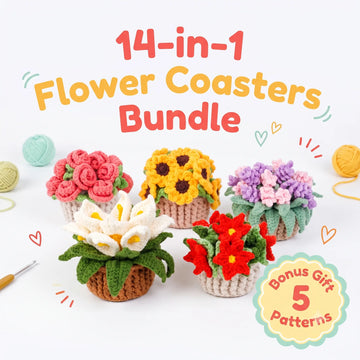
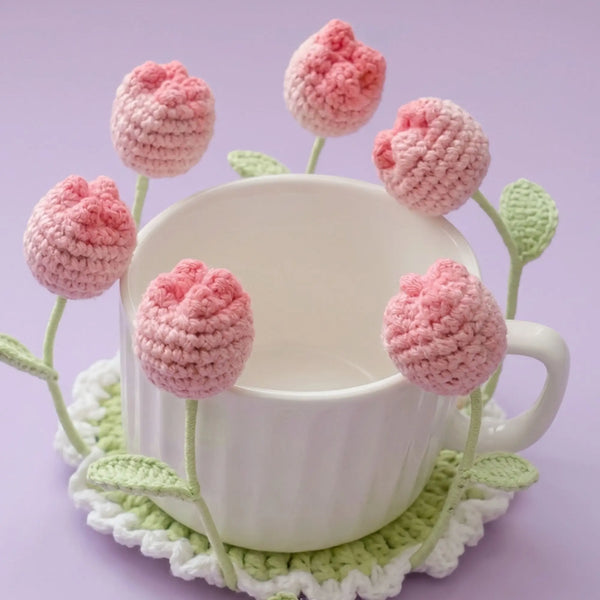
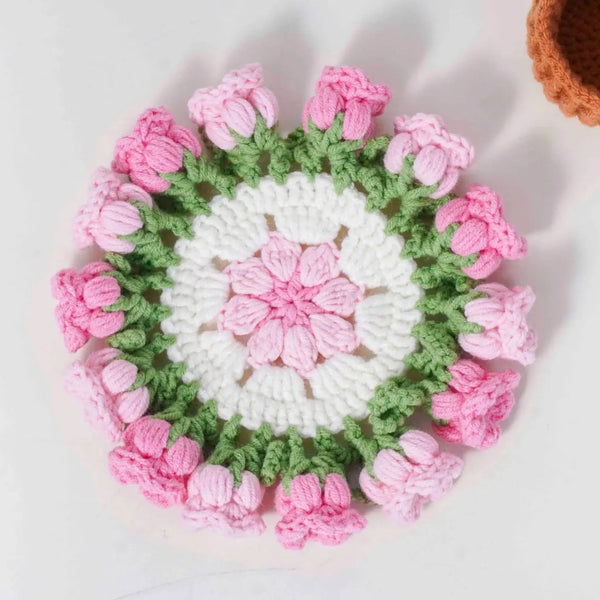
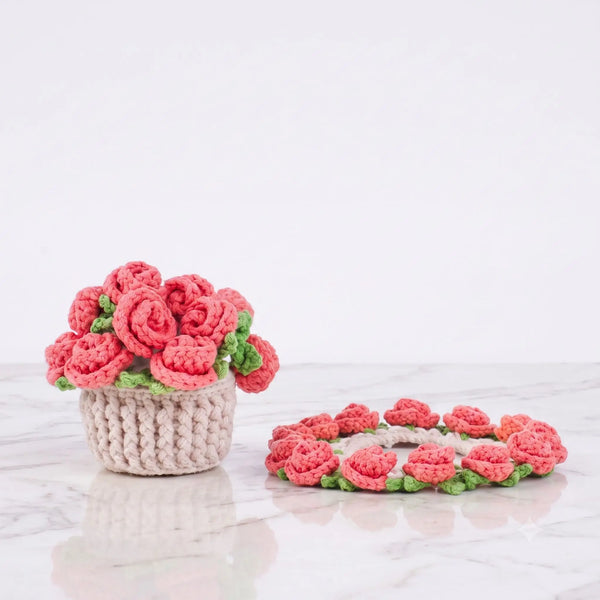
The flower version uses the same pop-up logic with a twist: the motifs sit on wire stems that you bend around the cup. We explain that technique in our guide to pop-up flower crochet coasters.
When the pop-up effect does not pop
- The head flops outward: the base or the pieces were worked too loosely, or the piece was not sewn on at enough points. Check the assembly photos for the attachment line.
- The base cups upward: too few stitches in a round. Recount against the stitch count in the pattern's round table.
- The edge ruffles: an extra increase slipped in somewhere. Ruffling usually traces back to a single round.
- The mug wobbles: a piece is sitting too far toward the center. Pieces belong at the rim, where the pattern places them.
- The base still curls a little: a gentle press under a damp cloth can help; check your yarn label first, because acrylic should not be pressed with a hot iron. More fixes in our guide to making crochet coasters lay flat.
The animal is the fun part, but the base is the secret. Make it firm and flat, and every character you sew to it will stand up proudly.— Ava, MrsCrochetWorld
Which pop-up animals to make first
The 21-in-1 bundle groups naturally into little families. The pond friends (Frog, Turtle, Duck, Duckling, Goose) suit a bathroom shelf or a garden table. The little critters (Ladybug, Spider, Cockroach) make a playful or spooky-season set. The pets (Dog, Cat) are a sweet gift for animal lovers, and the wild ones (Leopard, Panda, Sloth, Fox, Lizard) bring a touch of adventure.
For your first coaster, choose a character with fewer separate pieces, then move on to animals with more details and color changes as your confidence grows. A few designs, such as the Goose and the Cat, use a little craft wire for shaping, so they make a good second or third project. If you would like to browse every design with photos first, our animal crochet coaster pattern guide walks through the whole collection. Brand new to coasters altogether? Start with a plain round from our list of easy crochet coasters, then come back for the animals.
For kids' rooms, the 21-in-1 patterns recommend embroidering the eyes instead of using safety eyes, stitching all pieces on firmly and avoiding tiny loose parts. Treat the finished coasters as decor rather than toys for very young children; our guide to crochet for kids has more on safe materials. To see where pop-up animals fit among all the other styles, head to our complete crochet coaster patterns guide.
Pop-up coaster patterns and books
The PDF bundles are instant downloads; the paperback is ordered through Amazon. All patterns are written in US crochet terms.

21 pop-up animals, 170+ pages, round tables with stitch counts, photo tutorials and a 3-page beginner's guide.
View pattern →
20 animal coaster designs as a printed book with written steps and photo tutorials, ordered through Amazon.
View the book →
Five pop-up animals with step-by-step photos and QR codes to video tutorials.
View pattern →
The garden version of the pop-up idea: one base, motifs on bendable wire stems.
View pattern →
Every coaster pattern and book we publish, animals, flowers and Christmas, in one place.
Browse the collection →PDF or paperback?
The 21-in-1 PDF holds 21 designs and downloads instantly. The paperback holds 20 designs; check the materials list of each design before you buy yarn.
Human-written patterns
Every pattern is written and test-crocheted by Ava, with photos beside the steps so you can compare your work as you go.
Sell what you make
You may sell the finished coasters; credit is appreciated, never required. The patterns themselves may not be copied, shared or resold.
Frequently asked questions
How do pop up crochet coasters work?
A sturdy, flat round base sits under the mug and acts as the animal's body. Small 3D pieces such as the head, paws and tail are sewn around the edge of that base. The mug takes the center and the pieces stay at the rim, so the character appears to pop up around your cup. Firm, even tension keeps the base flat and the pieces upright; nothing folds or springs.
Do pop-up animal coasters still lie flat under a mug?
Yes. The base is a flat round and the pieces are attached around the edge, not in the middle, so your mug or glass stands securely. In the 21-in-1 bundle the base is worked with the yarn held double, which makes it thick and firm enough to carry the pieces without bending.
What yarn and hook do I need for pop-up animal coasters?
The 21-in-1 PDF uses sport / fine (#2) cotton or acrylic. The base is worked with the yarn held double on a 3.5 mm (US E-4) hook, and the small parts use a single strand on a 2.5 mm hook. You also need fiberfill, a tapestry needle, a stitch marker and safety eyes or black yarn for embroidered eyes. The paperback lists its own yarn and hooks, so always check the materials list of each design.
Are pop-up animal coasters good for beginners?
The 21-in-1 bundle is rated advanced beginner to intermediate and includes a 3-page beginner's guide with basic stitches, abbreviations and how to read a round. If you have never worked in the round, make a plain flat coaster first, then start with an animal that has fewer separate pieces.
Why does my pop-up animal flop over?
Usually the base or the pieces were worked too loosely, or the piece is not sewn on at enough points. The patterns ask for firm, even tension on the base and show the exact attachment position in the assembly photos. A few designs, such as the Goose and the Cat, also use a little craft wire for shaping.
How do I wash pop-up animal coasters?
A gentle hand wash in lukewarm water with a little mild soap is usually all they need. Reshape them while damp and let them dry flat. Make sure every piece is sewn on firmly and every end is woven in securely on the back before the first wash.
Are pop-up animal coasters safe for a kids' room?
They make playful kids' room decoration. For young children, the patterns recommend embroidering the eyes instead of using safety eyes, attaching all pieces firmly and avoiding tiny loose parts. Use them as decor, not as toys for very young children.
What is the difference between the 21-in-1 PDF and the 20-in-1 paperback?
The PDF is an instant download with 21 animal designs; the paperback is a printed book with 20 designs, ordered through Amazon. Both are written in US crochet terms with photo tutorials. The two product pages list their materials differently, so check the materials list of each design before buying yarn.
Can I sell pop-up coasters made from your patterns?
Yes. You may sell all finished coasters you make from our patterns and books, with no quantity limits; credit to MrsCrochetWorld is appreciated but never required. What you may not do is copy, share, resell or upload the patterns or books themselves.
About the author
Ava is the designer and writer behind MrsCrochetWorld. She writes and test-crochets every pattern herself, including the pop-up animal and flower coaster collections, and explains techniques here so that crocheters understand what their hook is doing, not just which stitch comes next.
Written by Ava Collins · MrsCrochetWorld · Updated November 25, 2026
Make your first pop-up animal
One firm base, a handful of small pieces and an evening: pick an animal and watch it peek around your mug.
Get the 21 pop-up animal patterns Browse all coaster patternsSources
- MrsCrochetWorld: 21-in-1 Animal Crochet Coasters Pattern Bundle, product page (construction, materials, size, skill level), checked 25 Nov 2026
- MrsCrochetWorld: 5-in-1 Animal Crochet Coaster Pattern Bundle, product page, checked 25 Nov 2026
- MrsCrochetWorld: 20-in-1 Animal Crochet Coasters Pattern Book, product page, checked 25 Nov 2026
- Craft Yarn Council: Standard Yarn Weight System (yarn weights and recommended hook sizes), checked 25 Nov 2026