Best Yarn for Crochet Coasters: Fiber, Weight and What Our Sets Use
Cotton, cotton blend or acrylic? Sport, DK, worsted or bulky? Here is how each choice changes absorbency, shape and washing, and which yarns our tested coaster patterns are actually written for.

A coaster has a simple job: sit under a cold glass or a warm mug, catch the drips, stay flat, and survive being washed again and again. The yarn you pick decides most of that before you make your first stitch. Pick well and even a plain round looks crisp for years. Pick badly and the nicest pattern turns into a soggy, wobbly disc.
This guide is deliberately brand-neutral. We will not tell you which label to buy. Instead you will learn what to look for on any yarn label, how the standard yarn weights behave in a coaster, why some designs hold the yarn double, and exactly which yarns our own coaster patterns are written for. All instructions in our patterns use US crochet terms; hooks are given in millimeters with the US size where one exists.
Coaster yarn at a glance
| #2 Fine (sport, baby) | Label crochet hook range 3.5–4.5 mm (US E-4 to 7)[1] |
|---|---|
| #3 Light (DK, light worsted) | Label crochet hook range 4.5–5.5 mm (US 7 to I-9)[1] |
| #4 Medium (worsted, aran) | Label crochet hook range 5.5–6.5 mm (US I-9 to K-10½)[1] |
| #5 Bulky (chunky) | Label crochet hook range 6.5–9 mm (US K-10½ to M-13)[1] |
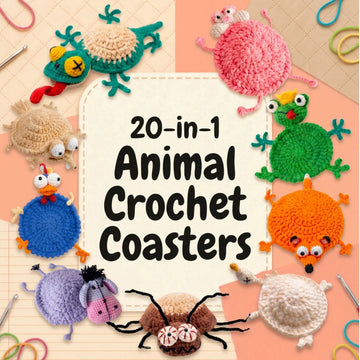
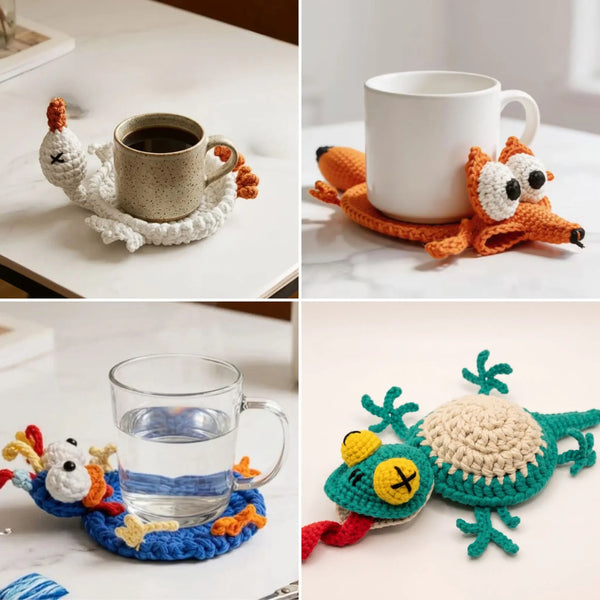
| 21-in-1 Animal Coasters PDF | Sport / fine (#2) cotton or acrylic; base worked with the yarn held double on a 3.5 mm (US E-4) hook, small parts with a single strand on a 2.5 mm hook; about 8–10.5 cm (3¼–4¼ in) across[2] |
| 23-in-1 Pop-Up Flower Coasters | Sport-weight (#2) cotton, ideal for scraps; 2.0 mm and 3.0 mm hooks in the PDF[3] |
| Christmas Coasters Vol. 3 (book) | 6 flat coasters in sport-weight cotton, 5 plush 3D mug rugs in soft bulky yarn[4] |
Why the pattern hook is often smaller than the label: the ranges above are the label guidelines for general fabric[1]. A coaster wants a denser fabric than a scarf, so coaster designs often sit at the low end of the range or hold the yarn double. Our 21-in-1 base uses a 3.5 mm hook, the bottom of the #2 range, with two strands of #2 yarn at once[2].
Hook ranges are Craft Yarn Council guidelines; the hook in your pattern and your yarn label come first. Product details are taken from our product pages and can change; the product page always shows the current version.
Cotton, cotton blend or acrylic?
Fiber is the first decision. Here is how the three common choices tend to behave in a coaster, in general terms. Your specific yarn label always has the final word.
| Fiber | Drips and condensation | Warm mugs | Shape and stitch definition | Washing |
|---|---|---|---|---|
| Cotton | Absorbs moisture well, the classic reason to choose it | Copes well with warm cups | Firm, crisp edges and clear stitches; little natural stretch | Generally easy to wash; follow the label and dry flat |
| Cotton blend | Depends on how much cotton it contains | Depends on the other fiber; check the label | Often a little softer and lighter than pure cotton | Follow the label, since blends vary widely |
| Acrylic | Absorbs less, so drips may sit on top or run off | A synthetic fiber that does not like high heat; keep hot irons and very hot pans away | Huge color range, soft, springy; good for character details | Usually easy care; never press with a hot iron |
Cotton yarn for coasters is the default for good reason. It drinks up the ring of water a cold glass leaves behind, it handles a warm mug well, and its low stretch keeps a coaster flat and crisp instead of floppy. Smooth cotton also shows stitch detail clearly, which matters on small designs where every petal or ear counts. Its one quirk: cotton has little give, so it can feel a bit stiff on the hook and your hands may tire sooner on long sessions.
Cotton blends sit in between. A blend with a high share of cotton keeps most of cotton's absorbency while feeling softer to work with. Because blends vary so much, treat the label as your guide for washing and heat.
Acrylic is not forbidden. It comes in a huge range of bright shades, it is soft and springy, and for decorative coasters or the raised details on a character coaster it can be a perfectly good choice. That is why our 21-in-1 animal set lists cotton or acrylic. Just keep its limits in mind: it absorbs less than cotton, and as a synthetic it should never meet a hot iron. If a coaster will live under steaming mugs every morning, cotton is the safer pick.
What our coaster sets actually use
The honest rule: each design was made and tested with a specific yarn and hook, so the materials list in the pattern beats any general advice, including this article.

21-in-1 Animal Coasters: #2 yarn, two strands for the base
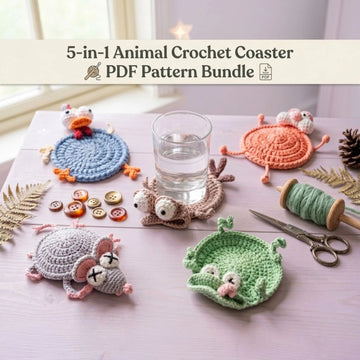
Every animal in the 21-in-1 PDF starts with the same base: a flat round in double crochet with the yarn held double, finished with a crab stitch edge. The yarn is sport / fine weight (#2) cotton or acrylic, and the base is worked on a 3.5 mm (US E-4) hook. Heads, eyes, ears and paws use a single strand and a 2.5 mm hook.
Two thin strands worked together give a sturdy, thick coaster that still has the clean stitch look of a fine yarn. The paperback edition of the animal collection lists DK or worsted weight yarn with a 3.5–4.0 mm hook, so check the materials list of the edition you own and of each design.
See the 21-in-1 animal coaster patterns
23-in-1 Pop-Up Flowers: sport-weight cotton leftovers
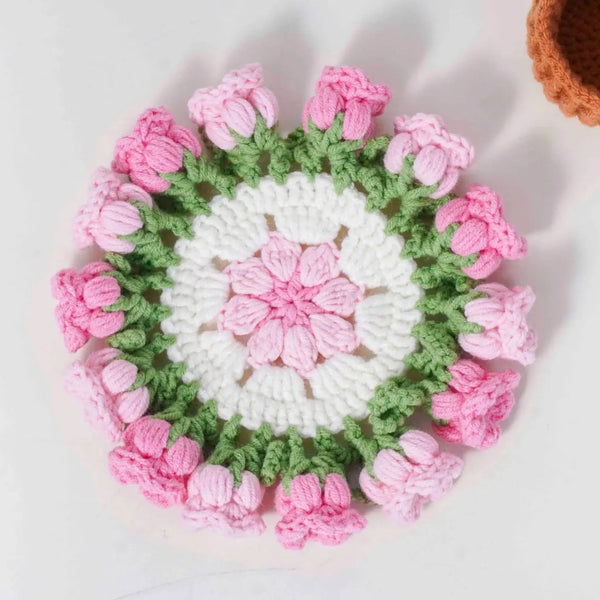
The pop-up garden and Christmas star designs are written for sport-weight (#2) cotton. Each motif needs only a little of each color, which makes this set a natural home for the scraps left from bigger projects. The PDF uses 2.0 mm and 3.0 mm hooks; the paperback lists 3.5 mm (US E-4) and 2.0 mm.
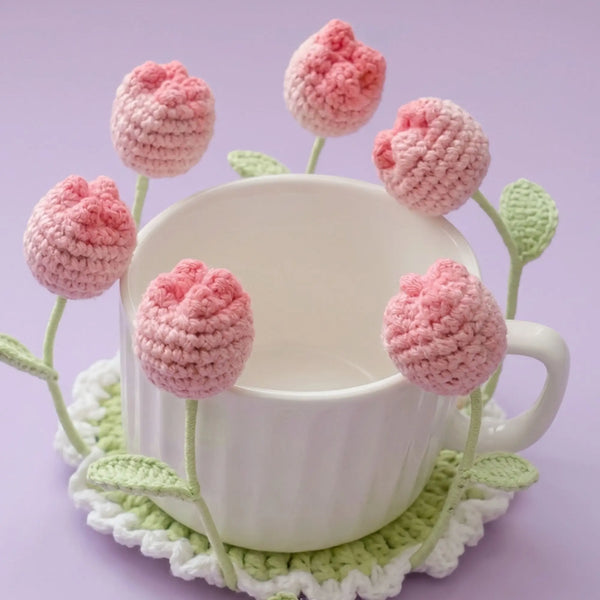
Cotton suits these designs because it absorbs drips, keeps a crisp shape and shows small petals and leaves clearly. Thin craft wire inside the stems lets the flowers stand up around your mug.
See the 23-in-1 pop-up flower coaster patterns
Christmas Coasters Vol. 3: sport cotton and bulky yarn
This paperback shows how much the yarn shapes the result. The six flat Christmas coasters use sport-weight cotton for crisp, quick pieces that lie neatly under a mug of cocoa. The five 3D mug rugs use soft bulky yarn, which gives them their plush, cushiony, three-dimensional look.
Same book, same theme, two very different yarns, each chosen for what the piece needs to do.
See the Christmas coasters and granny squares book
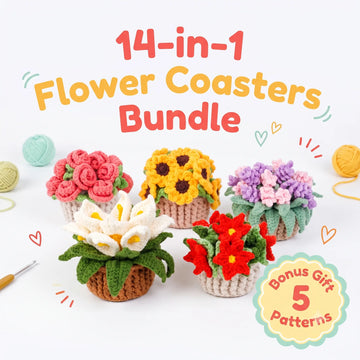
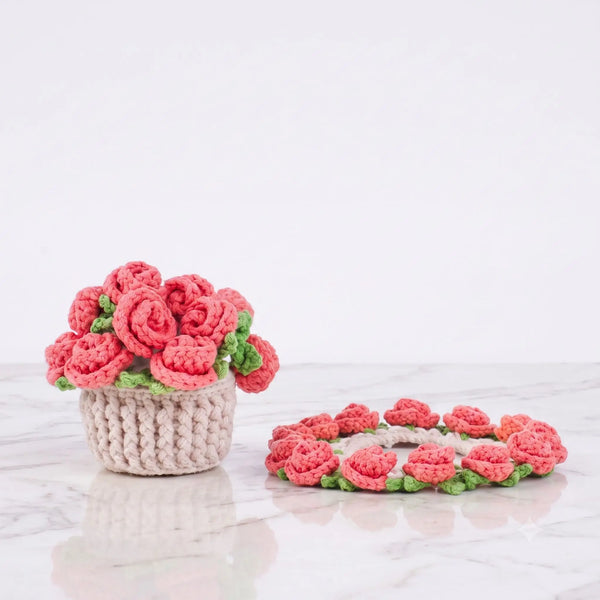
14-in-1 Flower Coasters: firm enough to stand in a pot
Each of the 14 flower coasters lies flat or rolls into a bouquet that sits in its own crochet pot. Every pattern lists its own materials, so start there. In general, cotton is a great choice here because it keeps a crisp edge, and a slightly firm tension gives the coaster enough body to stand in its pot when rolled up.
See the 14-in-1 flower coaster patternsYarn weight for crochet coasters: #2, #3, #4 or bulky?
The yarn weight for crochet coasters changes three things at once: the finished size, the thickness, and how much detail the design can show. For a full overview of every category, see our guide to crochet yarn weights explained.
- #2 Fine (sport). Thin, crisp and detailed. Ideal for small motifs, petals, faces and pop-up pieces. On its own it makes a thinner coaster, which is why some designs hold it double for the base.
- #3 Light (DK). A comfortable middle ground: quicker than sport, still neat enough for detail. A good weight for plain round or granny-style coasters.
- #4 Medium (worsted). Thicker and faster, with a more cushioned feel. Coasters come out larger unless the pattern adjusts the stitch count, and very fine details look chunkier.
- #5 Bulky. Not for everyday flat coasters, but lovely for plush mug rugs and 3D pieces where a soft, padded look is the point, like the mug rugs in our Christmas book.
Whatever the weight, coasters like a firm, even tension. Loose stitches let a mug base sink in and make the edge wave. If your coaster ends up floppy, a smaller hook within the pattern's guidance often helps more than changing the yarn. Our guide on how to make crochet coasters lay flat covers curling, cupping and ruffling in detail.
Holding yarn double: when and why
Holding yarn double simply means working two strands as if they were one. It is a smart trick for coasters for three reasons:
- Thickness without changing yarn. Two fine strands give a sturdier base, while you keep the same fine yarn for the small details.
- Color mixing. Two different shades held together create a soft tweed effect, a nice way to use up two small scraps.
- Density. A double strand on a relatively small hook makes a firm fabric that a mug cannot push through.
Two tips: pull both strands from separate balls (or from the inside and outside of one ball) so they do not twist, and make sure your hook catches both strands in every stitch. A missed strand leaves a loop that shows. Only hold yarn double where the pattern tells you to; doing it on your own changes the finished size.
Before you buy or swap yarn
- Read the materials list of the design first. It names the weight and hook the designer tested with.
- Switching to a much thicker or thinner yarn will change the finished size of the coaster.
- Crochet a small test circle and check it against the size given in the pattern before making a whole set.
- Check the care symbols on the label, especially if you plan to steam or press the finished coasters.
- Substituting? Our guide on how to substitute yarn in a crochet pattern walks you through it step by step.
If you also make small toys, many of the same principles apply. Our best yarn for amigurumi guide compares fibers for firm, shaped pieces, which is useful for the pop-up parts of character coasters.
The right yarn is the one the designer tested with. Start there, and only then start experimenting.— Ava, MrsCrochetWorld
A simple way to choose
Still unsure? Ask yourself what the coaster will do every day:
- Daily mugs and cold glasses: smooth cotton or a cotton-rich blend in sport, DK or worsted weight, worked firmly.
- Character and pop-up designs: the fiber and weight in the pattern, often a fine yarn for crisp details.
- Plush mug rugs and festive table decor: soft bulky yarn, as written in the pattern.
- Purely decorative pieces: any yarn you love, including acrylic in bright shades.
New to coasters? Start with our step-by-step guide on how to crochet a coaster, then browse ideas in our big guide to crochet coaster patterns.
Coaster patterns with clear yarn guidance
Every pattern names its yarn weight and hook. PDF bundles are instant downloads; the paperback is ordered through Amazon.

21 pop-up animal coasters, #2 cotton or acrylic with the base held double, 3-page beginner's guide.
View pattern
17 garden and 6 Christmas star designs on one pop-up base, made with sport-weight cotton scraps.
View pattern
Flower coasters that lie flat or roll into a bouquet in a matching crochet pot, with photo tutorials.
View pattern
Flat coasters in sport cotton, plush mug rugs in bulky yarn and 9 granny squares. Paperback, ordered through Amazon.
View the book
Every coaster pattern bundle and book in one place. New designs are added here first.
Browse the collectionTested yarn and hook
Every pattern is written and test-crocheted by a human designer, with the yarn and hook that give the intended result.
US terms, metric hooks
Instructions use US crochet terms; hooks are listed in millimeters, sizes in centimeters and inches.
Scrap friendly
Most coaster designs need only small amounts of each color, so your leftover yarn finally has a purpose.
Frequently asked questions
What is the best yarn for crochet coasters?
For coasters you use every day, a smooth cotton or cotton-rich blend is usually the best choice. Cotton absorbs drips, copes well with warm mugs and keeps a crisp shape. For a specific design, always use the yarn named in its materials list, because that is what the design was tested with.
Can I use acrylic yarn for coasters?
Yes, for decorative coasters and character details it can work well, and our 21-in-1 animal set lists cotton or acrylic. Acrylic absorbs less moisture than cotton and is a synthetic fiber, so never press it with a hot iron. For coasters under hot mugs every day, cotton is the safer choice.
What yarn weight is best for crochet coasters?
Fine (#2, sport), light (#3, DK) and medium (#4, worsted) weights all work for coasters. Fine yarn shows small details best, worsted is quicker and thicker. Bulky (#5) yarn suits plush mug rugs rather than flat everyday coasters.
Why do some coaster patterns hold the yarn double?
Working two strands together makes a thicker, sturdier base while you keep a fine yarn for small details. It also makes the fabric denser. Our 21-in-1 animal coasters use #2 yarn held double for the base and a single strand for the small parts.
What hook size should I use for coasters?
Use the hook in your pattern first. As a general guide, coaster designs often sit at the lower end of the yarn label's hook range for a firm fabric. Our 21-in-1 base uses a 3.5 mm (US E-4) hook with #2 yarn held double.
Is mercerized cotton good for coasters?
Mercerized cotton has a smooth sheen and very crisp stitch definition, which looks lovely on detailed designs. Unmercerized cotton is usually softer and more matte. Both can make good coasters; follow the weight in your pattern and check the label for care.
Can I use a different yarn weight than the pattern says?
You can, but the finished size will change. A thicker yarn makes a bigger, thicker coaster and a thinner yarn a smaller one. Crochet a test piece first and compare it with the size in the pattern.
What yarn do crochet mug rugs need?
That depends on the design. The plush 3D mug rugs in our Christmas coasters book use soft bulky yarn for their cushiony look, while the flat coasters in the same book use sport-weight cotton.
Pick your yarn, pick your pattern
Every MrsCrochetWorld coaster pattern lists its tested yarn and hook, written in US crochet terms. PDFs are instant downloads.
Browse crochet coaster patterns See the pop-up flower coastersSources
- Craft Yarn Council: Standard Yarn Weight System (yarn categories and recommended crochet hook ranges), checked 25 Nov 2026
- MrsCrochetWorld: 21-in-1 Animal Crochet Coasters Pattern Bundle (product page, yarn and hook guide), checked 25 Nov 2026
- MrsCrochetWorld: 23-in-1 Pop-Up Flower Crochet Coaster Patterns (product page, materials), checked 25 Nov 2026
- MrsCrochetWorld: 20-in-1 Christmas Crochet Coasters & Granny Squares Book (product page, yarn guide), checked 25 Nov 2026