Crochet Patterns · Gift Ideas
Crochet Flower Bouquet Patterns: Handmade Flowers That Last
Discover the best crochet flower bouquet patterns including rose, tulip, iris, and daffodil — plus step-by-step tips for beginners and beyond.

Want every flower pattern in one place?
9-in-1 Flower Crochet Pattern Bundle PDF — Rose, Tulip, Iris, Daffodil & More. Instant digital download with step-by-step instructions in US crochet terms.
Instant digital download · No physical item shipped · Opens on phone, tablet, or computer.
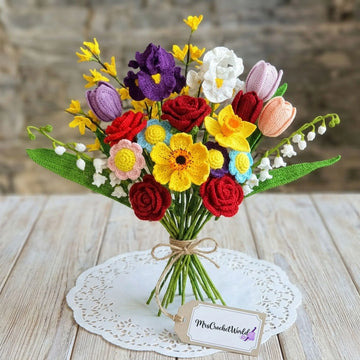
View the PDF BundleCrochet flower bouquet patterns are instructions for crocheted flowers that you gather into a bouquet: handmade blooms that never wilt and can be kept as lasting keepsakes. Whether you want a single crochet rose, a mixed bouquet of tulips and irises, or a full arrangement to gift for a birthday or anniversary, this guide covers the techniques, tools, and flower styles you need to get started.
Crochet flower bouquets at a glance
| 9-in-1 Flower Crochet Pattern Bundle | cosmos, daffodil, fairy tale flowers, forsythia, iris, lily of the valley, rose bud, half-open rose and tulip – one 112-page PDF in US crochet terms |
|---|---|
| Stitches you need | ch = chain, sl st = slip stitch, sc = single crochet, hdc = half double crochet, dc = double crochet, tr = treble crochet[3] – plus a magic ring or chain ring to start |
| US vs. UK names | US sc = UK dc, US hdc = UK htr, US dc = UK tr, US tr = UK dtr[3] – this guide and the bundle use US terms |
| DK yarn (light #3) | label hook range 4.5–5.5 mm (US 7 to I-9)[1] |
| Worsted yarn (#4) | label hook range 5.5–6.5 mm (US I-9 to K-10½)[1] |
| Hooks named in this guide | 3.5 mm = US E-4, 4 mm = US G-6, 5 mm = US H-8[2] |
| Stems | floral wire through each flower, wrapped in green floral tape; a crocheted leaf or sleeve hides the wire |
Hook math: 3.5–4.0 mm with DK sits 0.5–1 mm below the DK range of 4.5–5.5 mm, and 4.0–5.0 mm with worsted sits 0.5–1.5 mm below the worsted range of 5.5–6.5 mm[1] – deliberately tighter than the label, so the petals keep their shape.
Hook sizes are Craft Yarn Council guidelines; the hook in your pattern and your own tension come first.
Why Crochet Flower Bouquets Make Meaningful Gifts
Unlike fresh flowers, a handmade crochet bouquet lasts for years. It can be kept on a shelf, displayed in a vase, or passed along as a heirloom. Every bloom is a one-of-a-kind handmade creation, and the time invested makes each one genuinely meaningful. Crochet bouquets are especially popular for birthdays, Mother’s Day, anniversaries, weddings, and graduations.

What You Need to Make a Crochet Flower Bouquet
Before you begin, gather your supplies:
- Yarn: DK weight (light #3) or worsted weight (#4) cotton yarn in your chosen flower colors and green for leaves and stems
- Hook: the size your pattern gives; for crisp petal shapes, go below the yarn label (label ranges: 4.5–5.5 mm for DK, 5.5–6.5 mm for worsted), for example 3.5–4.0 mm with DK or 4.0–5.0 mm with worsted
- Floral wire stems: 18–22 gauge, one per flower
- Green floral tape for wrapping stems
- Scissors, yarn needle, stitch markers
- Fabric stiffener spray (optional) to help petals hold their shape
Cotton yarn is especially popular for crochet flowers because it creates crisp stitch definition and holds petal shapes well. DK weight produces delicate blooms; worsted gives bolder statement flowers.
Four Beautiful Crochet Flower Styles to Start With
Crochet Rose
A crochet rose is typically made by crocheting a long strip of layered petals (using double crochet and treble crochet stitches), then rolling and stitching the strip into a spiral bloom. The tighter you roll, the tighter and more formal the rose looks; a looser roll creates an open, romantic bloom. Roses look stunning in soft pinks, creams, blush reds, and coral tones.
Crochet Tulip
A crochet tulip is worked in the round from a base cup upward, forming six petals that naturally curl inward — much like a real tulip bud. The closed shape makes it one of the most realistic-looking crochet flowers. Tulips look beautiful in pure white, butter yellow, soft orange, and lavender.
Crochet Iris
The iris is one of the more intricate crochet flowers, with layered petals that fan out in multiple directions. Look for patterns that break the construction into separate petal groups so you can work each section without tangling. Iris shades range from deep violet to pale periwinkle and golden yellow.
Crochet Daffodil
A crochet daffodil features a trumpet center surrounded by six outer petals. Many patterns work the trumpet and petals separately, then join them — but some clever designs crochet both in one piece. Yellow and cream are the most popular daffodil colorways, though novelty colors make charming bouquet additions.
How to Make Crochet Flowers Stand Upright in a Bouquet
The key to a bouquet that holds its shape is proper stem construction:
- Insert an 18–22 gauge floral wire stem through the center of each finished flower.
- Secure the wire with a few tight stitches or a small dot of hot glue inside the flower base.
- Wrap the entire stem with green floral tape, stretching slightly as you go for a smooth finish.
- Crochet a leaf piece or green sleeve and attach it partway down the stem to hide the wire.
- If petals need more structure, spray lightly with fabric stiffener and pin into shape while drying.
Once all stems are complete, arrange blooms by height — tallest in the center, shorter flowers and buds around the edges. Wrap stems together with floral tape, then tie with twine or a decorative ribbon.

Tips for Beginners Making Their First Crochet Flower Bouquet
- Start simple: A flat daisy or basic rose that uses only sc and dc stitches is a great first flower.
- Use a bundle pattern set: Patterns with multiple flower types let you progress naturally from easy to detailed designs.
- Make extras: Crochet two or three of each flower type. Having extras lets you choose the best ones for the final arrangement.
- Block cotton flowers: Wet blocking opens up stitches, evens tension, and helps petals lie flat or curl in the right direction. Pin petals to a foam mat in the desired shape and let dry fully.
- Practice the assembly: Lay all finished flowers out on a table before wiring stems. Arrange the bouquet dry first to see how the shapes and colors work together.
How Long Does It Take to Make a Crochet Flower Bouquet?
How long a flower takes depends on its size, the yarn and your pace. A full bouquet is several flowers’ worth of work, so plan it over several sessions. Simpler flat flowers are faster; 3D roses or layered irises take longer but give stunning results. Leave time at the end for wiring and assembling the stems.

The 9-in-1 Flower Crochet Pattern Bundle
If you want every major flower style covered in a single PDF, the MrsCrochetWorld 9-in-1 Flower Crochet Pattern Bundle includes nine patterns – cosmos, daffodil, fairy tale flowers, forsythia, iris, lily of the valley, rose bud, half-open rose and tulip – in one 112-page instant-download PDF with step-by-step instructions in US crochet terms.
This is a helpful starting point for anyone who wants to make a mixed bouquet without searching for each flower pattern separately. With nine flowers in one bundle, you have enough variety to build beautiful arrangements in any color palette.
Get the Flower Bundle PDFFrequently Asked Questions About Crochet Flower Bouquet Patterns
What crochet stitches do I need to make a flower bouquet?
Most crochet flower bouquet patterns use basic stitches: magic ring (or ch-2 ring), chain, slip stitch, single crochet, half double crochet, double crochet, and treble crochet. Knowing these six stitches is enough to complete roses, tulips, irises, and daffodils.
What yarn weight is best for crochet flowers?
DK weight (light #3) or worsted weight (#4) yarn is most popular for crochet flowers because it creates clear stitch definition and holds petal shapes well. Fingering weight produces smaller, more delicate blooms; bulky weight gives bold statement flowers. Cotton yarn is especially popular for crisp-looking petals.
How do I make crochet flowers stand upright in a bouquet?
Insert a floral wire stem (18–22 gauge) through the center of each flower and secure with a few stitches or hot glue. Wrap the stem with green floral tape for a realistic look. Crochet a sleeve or leaf piece around the base to hide the wire. Stiffen petals with fabric stiffener spray if needed.
How long does it take to crochet a flower bouquet?
How long a flower takes depends on its size, the yarn and your pace. A full bouquet is several flowers’ worth of work, so plan it over several sessions. Simpler flat flowers are faster; 3D roses or layered irises take longer.
Can beginners make a crochet flower bouquet?
Yes! Many crochet flower patterns are beginner-friendly. Start with a simple flat rose or daisy using only sc and dc stitches. As confidence grows, move on to 3D tulips or layered irises. A bundle pattern set with multiple flower types lets you progress naturally from easy to more detailed designs.
What hook size should I use for crochet flowers?
Start with the hook your pattern names. The Craft Yarn Council’s label ranges are 4.5–5.5 mm for DK and 5.5–6.5 mm for worsted; for flowers, a hook below that range – for example 3.5–4.0 mm with DK or 4.0–5.0 mm with worsted – creates tighter, sturdier stitches that hold petal shape better.
How do I assemble a crochet flower bouquet?
Wire each flower, crochet or cut leaves and attach them to stems, then arrange blooms by height — tallest in the center, shorter flowers and buds around the edges. Wrap all stems together tightly with floral tape or ribbon. Tie with twine or a decorative bow.
What is the difference between a crochet rose and a crochet tulip pattern?
A crochet rose is typically made by crocheting a long strip of layered petals, then rolling and stitching it into a spiral bloom. A crochet tulip is worked in the round from a base cup upward, forming six petals that naturally curl inward — much like a real tulip bud.
Are crochet flower bouquets good as gifts?
Absolutely. Crochet flower bouquets make thoughtful, lasting gifts for birthdays, Mother’s Day, anniversaries, weddings, and graduations. Unlike fresh flowers, they never wilt and can be kept as keepsakes. They are especially meaningful because of the time and care invested.
Do I need to block crochet flowers?
Blocking is optional but recommended for cotton flowers. Wet blocking opens up stitches, evens out tension, and helps petals lie flat or curl in the right direction. Pin petals to a foam mat in the desired shape and let dry fully. Acrylic yarn generally does not need blocking but can be steam blocked lightly.
Final Thoughts
Crochet flower bouquet patterns offer one of the most rewarding projects in the craft: beautiful, lasting handmade flowers that you can customize in any color palette and give as meaningful gifts. Start with one or two simple flowers, learn the stem construction, and then build up to a full mixed bouquet. The result is something that will last far longer than fresh cut flowers and carry the personal touch of something made by hand.
Sources
- Craft Yarn Council: Standard Yarn Weight System (yarn weights and recommended hook sizes), checked 21 Nov 2026
- Craft Yarn Council: Hooks & Needles (mm to US hook size chart), checked 21 Nov 2026
- Craft Yarn Council: Crochet Abbreviations (US terms and US/UK table), checked 21 Nov 2026
Keep reading
Hand-picked guides from our crochet blog that go with this one.

How to Crochet a Flower: Easy Step-by-Step Tutorial
A real 15-minute, 5-petal flower pattern in US terms — plus rose, daisy, and layered variations, and all the lovely things …
Read the guide →
Crochet Spring Flower Garland Pattern: Cozy DIY Spring Decor
String together a garden's worth of cheer with this beginner-friendly crochet flower garland — perfect for mantels, windows …
Read the guide →
Valentine Crochet Patterns & Ideas: Hearts, Love Bugs & Quick Gifts
Sweet Valentine crochet ideas: hearts, garlands, amigurumi love bugs and couples, roses, bookmarks and quick classroom …
Read the guide →