How to Read a Crochet Pattern: The Complete Beginner's Guide

MrsCrochetWorld designs plush-friendly crochet patterns for makers of every level, and the question we hear most from beginners is the same one every crocheter once had: how do you actually read a crochet pattern? Those tight rows of letters, numbers, brackets, and asterisks can look like a secret code. The good news is that once you learn a handful of rules, almost any pattern becomes easy to follow.
In this guide you will learn exactly how to read a crochet pattern from the top of the page to the final stitch: how to decode abbreviations, understand US vs UK terms, follow repeats and brackets, count stitches, and work amigurumi in rounds. By the end, you will be able to open a new pattern and start with confidence instead of confusion.
What are the parts of a crochet pattern?
Before you make a single stitch, read the pattern from top to bottom once. Most patterns follow the same layout, and knowing the sections helps you avoid surprises halfway through a project.

A well-written crochet pattern usually includes: a materials list (yarn weight, hook size, notions), a gauge or finished size note, an abbreviation key, special stitch explanations, and then the instructions themselves, row by row or round by round. Amigurumi patterns often add an assembly section at the end that tells you how to sew the pieces together.
Why the materials list matters first
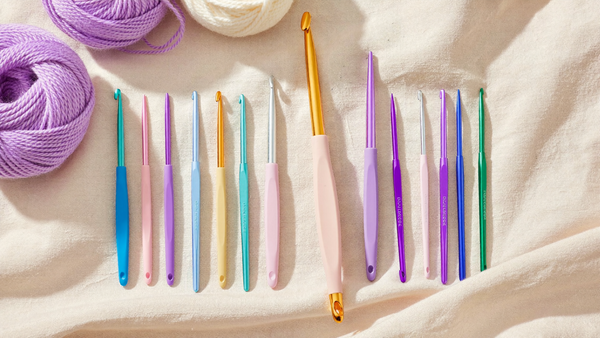
The materials list is not just a shopping note. The recommended hook size and yarn weight directly affect whether your finished piece matches the pattern. If the pattern calls for a 3.0 mm hook and DK yarn, swapping to a bulky yarn will change the size, the stitch definition, and how much stuffing shows through on a plushie.
How do I understand crochet abbreviations?
Crochet patterns are written in shorthand to save space. Instead of writing "single crochet" dozens of times, a pattern writes "sc." Every reliable pattern includes a key that lists each abbreviation, so you never have to guess. Here are the most common US abbreviations you will meet as a beginner.
| Abbreviation | Meaning (US) | What it does |
|---|---|---|
| ch | chain | Foundation stitches and turning stitches |
| sl st | slip stitch | Joins rounds or moves without adding height |
| sc | single crochet | Short, dense stitch; the backbone of amigurumi |
| hdc | half double crochet | Medium-height stitch |
| dc | double crochet | Taller, more open stitch |
| inc | increase | Two stitches in one stitch to grow the shape |
| dec | decrease | Combines two stitches into one to shrink the shape |
| st(s) | stitch(es) | Refers to the stitches themselves |
| rnd / rep | round / repeat | A full round, or an instruction to repeat |
When you see a number next to an abbreviation, it tells you the quantity. "6 sc" means make six single crochets. "sc, inc" repeated means one single crochet followed by an increase, over and over. Once you internalize this, the letters stop looking like code and start reading like a recipe.
Why do US and UK crochet terms confuse people?
This is the single biggest trap for new crocheters. US and UK patterns use the same words to mean different stitches. If you follow a UK pattern using US stitch heights, your project will come out wrong even if you did everything else perfectly.
| US term | Equivalent UK term |
|---|---|
| single crochet (sc) | double crochet (dc) |
| half double crochet (hdc) | half treble crochet (htr) |
| double crochet (dc) | treble crochet (tr) |
| treble crochet (tr) | double treble (dtr) |
Before you start, look for a note that says "US terms" or "UK terms." MrsCrochetWorld patterns are written in US terminology, which is the most common standard in amigurumi. If a pattern does not state which terms it uses, a quick clue is the word "single crochet": only US patterns use it, so its presence signals US terms.
How do brackets, parentheses, and asterisks work?
Repeats are what make patterns short and readable, and they are where most beginners get lost. Once you learn the three main repeat symbols, long instructions suddenly become simple.

- Brackets [ ] or parentheses ( ): group stitches that belong together. "[sc, inc] x6" means work the group "sc, inc" a total of six times.
- Asterisks *: mark the beginning of a repeat. "*sc in next 2 sts, inc; rep from * around" means repeat everything from the asterisk to the semicolon until you reach the end of the round.
- Numbers in parentheses at the end: this is the stitch count, not an instruction. "(18)" means you should have 18 stitches after that row.
Read a repeat slowly the first time and physically count it out on your work. After one or two rounds it becomes automatic, and you will appreciate how much clearer repeats make a long pattern.
How do I read amigurumi patterns worked in rounds?
Most amigurumi and plush patterns are worked in a continuous spiral rather than joined rows. That means you do not slip stitch to close each round; you simply keep going. Because of this, it is easy to lose your place, so a stitch marker is essential.
Place a stitch marker in the first stitch of the round and move it up as you begin each new round. Follow the increases and decreases exactly as written, and always check the stitch count in parentheses at the end of each round. If your count is off by even one stitch, fix it before moving on, because errors compound quickly in shaped pieces like heads and bodies.
A simple example, decoded
Here is a typical amigurumi opening and what it means:
- Rnd 1: 6 sc in magic ring (6) — make six single crochets into a magic ring; you should have 6 stitches.
- Rnd 2: inc in each st around (12) — increase in every stitch; now you have 12.
- Rnd 3: [sc, inc] x6 (18) — repeat "single crochet, increase" six times; now 18 stitches.
That is the entire logic of amigurumi shaping. Increases at the start build the ball, even rounds hold the shape, and decreases at the end close it up. Every character you make follows this same rhythm.
What mistakes should beginners avoid?
- Starting before reading the whole pattern and its abbreviation key.
- Ignoring whether the pattern uses US or UK terms.
- Skipping the stitch count in parentheses at the end of each row.
- Working amigurumi rounds without a stitch marker.
- Guessing at a repeat instead of counting it out the first time.
- Using a different hook or yarn weight than the pattern recommends.
- Not checking gauge on garments, where size really matters.
Which MCW patterns are best for practicing pattern reading?
The fastest way to get comfortable reading patterns is to practice with clear, beginner-friendly instructions. Some patterns are written specifically to be easy to follow, with tidy abbreviation keys and simple repeats. The 50-in-1 No-Sew Amigurumi Bundle is a great starting point because the no-sew construction removes the tricky assembly step. The Easy No-Sew Amigurumi Book for Beginners keeps stitch counts low and repeats simple, and the Tiny Crochet Friends keychain book lets you finish a full project quickly so you can practice reading rounds again and again.
🧶 Patterns You'll Love
- 50-in-1 No-Sew Amigurumi Bundle — Clear, beginner-friendly instructions with no complicated sewing, perfect for learning to read rounds.
- Easy No-Sew Amigurumi Book for Beginners — Simple repeats and low stitch counts so pattern reading feels approachable.
- Tiny Crochet Friends (30 Mini Keychains) — Fast, small projects that let you practice reading amigurumi patterns often.
Frequently asked questions about reading crochet patterns
How do I read a crochet pattern as a beginner?
Read the materials list and abbreviation key first, then work one row or round at a time. A number before a stitch tells you how many to make, brackets and asterisks mark repeats, and the number in parentheses is your stitch count. Count after each row to catch mistakes early.
What does sc, dc, and ch mean?
In US terms, sc is single crochet, dc is double crochet, and ch is chain. Most patterns include a key that defines every abbreviation, so you can always confirm the meaning before you start.
What do brackets and asterisks mean in a crochet pattern?
Brackets or parentheses group stitches, and a number after them tells you how many times to repeat that group. An asterisk marks the start of a repeat that continues to the semicolon or the words "repeat from."
Are US and UK crochet terms the same?
No. They use the same words for different stitches. A US single crochet is a UK double crochet, so always check which terminology a pattern uses before beginning.
What does the number in parentheses at the end of a row mean?
It is the stitch count for that row or round. After finishing, count your stitches and compare. Matching numbers mean you are on track; a mismatch usually means an added or missed stitch.
How do I read amigurumi patterns worked in rounds?
Amigurumi is usually worked in a continuous spiral. Use a stitch marker in the first stitch of each round, follow the increases and decreases exactly, and check the stitch count at the end of every round.
What is a magic ring in a pattern?
A magic ring is an adjustable starting loop used to begin amigurumi in the round. It lets you pull the center closed tightly so there is no hole where the stuffing could show.
Do I need to check gauge for amigurumi?
Gauge is less critical for amigurumi than for garments, but hook and yarn choice still matter. A tighter fabric keeps stuffing from peeking through, so many makers use a slightly smaller hook than the label suggests.
What should I do if my stitch count is wrong?
Stop and recount the last row. It is usually an extra stitch from a missed decrease or a double increase. Fixing it immediately is far easier than unraveling several rounds later.
Are written patterns or charts easier to read?
It depends on how you think. Written patterns suit step-by-step learners, while charts give a visual map of the stitches. Many amigurumi patterns are written, so learning written format first is a practical choice.
Summary: reading a crochet pattern with confidence
Reading a crochet pattern comes down to a few reliable habits: confirm US or UK terms, learn the abbreviation key, follow repeats marked by brackets and asterisks, and check the stitch count in parentheses after every row. For amigurumi, add a stitch marker and work the spiral rounds one at a time. Practice these steps on a simple, well-written pattern and the code turns into a clear set of instructions you can follow for any project.
Ready to put your new skills to work? Choose a beginner-friendly MCW pattern with clear instructions and start your first plushie today.