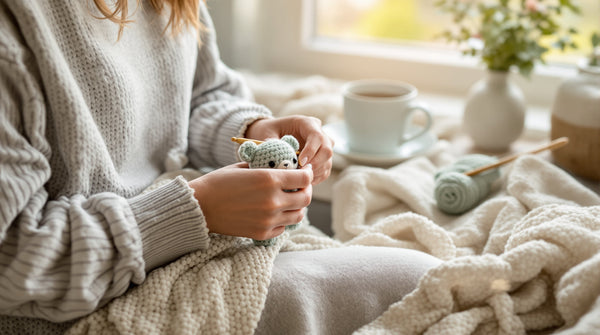
Some days, everything feels a little too loud. Your thoughts jump ahead, your shoulders creep up toward your ears, and even sitting still feels restless. In those moments, the advice to “just relax” rarely helps — because relaxing on command is hard. What tends to work better is giving your attention something small, repetitive, and pleasantly tactile to hold onto. For a lot of people, that something is a crochet hook and a soft ball of yarn.
This guide is about crochet for grounding: using the rhythm, texture, and focus of crochet as a gentle sensory routine to help you feel more present and steady. We’re not making medical claims or promising to cure anything. Think of this the way you’d think of a warm cup of tea, an evening walk, or a few slow breaths — a simple, everyday habit that many crafters say helps them settle. If you’re dealing with a health concern, this is a companion to good care, never a replacement for it.
What “grounding” actually means
Grounding is a plain word for a simple idea: gently bringing your attention out of a spinning head and back into the here and now — the chair under you, the light in the room, the object in your hands. You may have heard of grounding exercises like naming five things you can see or pressing your feet into the floor. They work because they give your senses a clear, simple job. Instead of chasing thoughts about the past or the future, you notice what is actually happening right now.
Crochet is quietly good at this. It asks your eyes to follow a stitch, your fingers to feel the yarn, and your hands to repeat a small motion again and again. That combination — a light visual task, a steady physical rhythm, and a soft texture to touch — naturally pulls your focus into the present. You don’t have to force calm; you simply give your senses somewhere pleasant to land.

Why crochet fits a grounding routine so well
A grounding routine works best when it’s easy to start and hard to get wrong. Crochet checks both boxes. Once you know a couple of basic stitches, the motion becomes almost automatic — hook in, yarn over, pull through — which means your thinking mind can finally take a break while your hands keep gently moving.
There’s also a comforting sense of progress you can see and touch. Row by row, a shapeless strand of yarn slowly becomes something soft and real. That small, visible feedback loop gives your attention a reason to stay, and it offers a quiet feeling of “I made this” that many crafters find deeply satisfying at the end of a long day.
Best of all, crochet travels with you. A single hook and a small ball of yarn fit in a bag, so your grounding routine can come along to the sofa, the porch, a waiting room, or a train seat — wherever you need a moment to come back to yourself.
Grounding through your five senses
Classic grounding techniques lean on the senses, and crochet gives you several of them at once. Here’s how a simple session can gently touch each one:

Touch — the anchor
Texture is the heart of tactile grounding. Run your fingers over the yarn before you start. Is it smooth cotton, fuzzy chenille, or springy wool? Notice the cool metal or warm wood of your hook, and the gentle tension of the working strand across your finger. When your mind drifts, come back to that feeling of yarn moving through your hands.
Sight — a soft focus
Let your eyes rest on the small pool of stitches you’re working. You’re not staring or straining — just softly tracking one loop, then the next. Choosing calming colors you genuinely like, such as muted sage, cream, or dusty rose, makes this even more soothing.
Sound & smell — the setting
Crochet is quiet, which leaves room for gentle background sound: rain, a low playlist, or simply the hush of the room. Pair it with a warm drink nearby and you add a comforting scent to the moment too. These small details turn a craft into a full sensory ritual.
A gentle note: grounding isn’t about doing it “perfectly.” If your mind wanders a hundred times, that’s fine — the practice is simply noticing and returning to the yarn, again and again, with kindness.
A simple 15-minute grounding routine
You don’t need a long, complicated ritual. This short routine is designed to be repeatable on an ordinary evening. Feel free to adjust the timing to whatever feels comfortable for you.
- Settle in (1 minute). Sit somewhere comfortable, place both feet flat on the floor, and take three slow breaths. Feel the support of the chair beneath you.
- Meet your materials (1 minute). Pick up your yarn and hook. Notice the texture, weight, and color before you make a single stitch.
- Warm up (2 minutes). Work a short foundation chain or a few simple stitches slowly, without counting or pressure. This is just to find your rhythm.
- Find the flow (8 minutes). Continue at an easy, steady pace. Let the repeated motion carry you. When a thought pulls you away, gently return your attention to the feel of the yarn.
- Close with kindness (3 minutes). Slow down, notice what you made, and set it aside. Take one more slow breath before you stand up.
That’s the whole routine. It’s intentionally low-stakes: there’s no finished object you have to reach and no skill test to pass. The goal is the doing, not the outcome. Some evenings you’ll feel noticeably calmer; other evenings you’ll simply have spent fifteen quiet minutes with your hands busy and your phone down — which is a lovely result all on its own.

5-in-1 Blossom Critter Pots Bundle
Small, plant-inspired makes with plenty of gentle repetition — perfect low-pressure companions for a grounding routine.
Explore the bundle →
Setting up your calm crochet corner
A grounding habit sticks more easily when it has a home. You don’t need a whole room — just one inviting spot you associate with slowing down. A comfortable chair by a window, a soft blanket, and a little basket for your current project are more than enough.
Keep your grounding project separate from any “deadline” crochet. Complicated patterns or gift projects with a due date can quietly add pressure, and pressure is the opposite of grounding. Reserve a simple, forgiving project just for these calm sessions so picking it up always feels like a relief, not a task.
Small touches help too: warm lighting instead of harsh overhead light, your phone tucked out of reach, and maybe a warm drink within arm’s length. Over time, simply sitting in that corner can become a cue to your body that it’s time to soften.
Best beginner projects for grounding
The ideal grounding project is repetitive, forgiving, and quick enough to feel rewarding. Skip anything with tricky color changes or intricate shaping when your goal is calm. Instead, reach for these friendly options:
- Simple squares and coasters. Endlessly repeatable rows with a clear rhythm — ideal when you just want your hands moving.
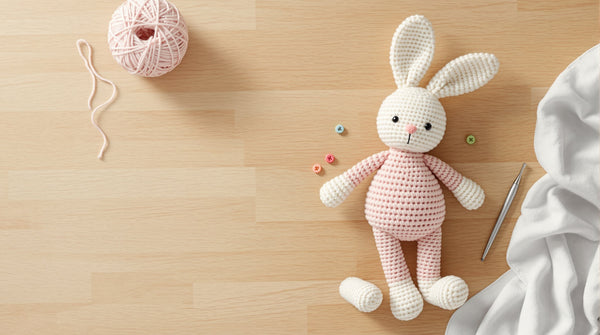
- Small amigurumi in the round. Working continuous spirals is soothing and meditative, and a tiny finished friend is a lovely reward.
- Long chains, garlands, and cords. Almost no thinking required — pure, gentle repetition you can do while listening to something quiet.
- Granny squares. Predictable, rhythmic, and easy to pause and resume without losing your place.
The “right” project is simply the one that feels good in your hands and doesn’t stress you out. If a pattern starts to feel frustrating, it’s okay to set it aside and switch to something plainer. Grounding is about ease, not achievement.

4-in-1 Rainbow Belly Bears Amigurumi Bundle
Soft, huggable bears worked mostly in soothing spirals — a comforting choice for slow, mindful evenings.
See the pattern bundle →If you’re brand new to working in the round, our beginner plushie guide walks you through the basics gently. And when you want more calm-craft inspiration, our cozy self-care ritual guide pairs beautifully with this one.
Frequently asked questions
What does “crochet for grounding” mean?
It means using the steady rhythm, soft textures, and gentle focus of crochet to bring your attention into the present moment. Instead of forcing yourself to relax, you give your senses a simple, pleasant task — feeling the yarn and repeating a stitch — which naturally helps you feel more settled and present.
Do I need to be experienced to use crochet as a grounding routine?
Not at all. In fact, a grounding routine works best with very simple, repetitive stitches you don’t have to think hard about. A basic single crochet or a plain chain is more than enough. The goal is easy, comforting repetition, not advanced technique.
How long should a grounding crochet session be?
There’s no required length. Even five focused minutes can help you feel more present, while fifteen to twenty minutes gives you time to fully settle into the rhythm. Let comfort guide you rather than a timer — stop whenever it feels right.
Which projects are best for a calming routine?
Choose simple, forgiving projects like coasters, granny squares, long chains, or small amigurumi worked in the round. These offer plenty of gentle repetition without the pressure of complex color changes or shaping, which keeps the experience relaxing.
Can crochet really help me feel calmer?
Many crafters describe crochet as a soothing, absorbing activity that helps them slow down and unwind — much like other simple comforts such as a warm drink or a quiet walk. We can’t promise specific health outcomes, and it isn’t a treatment, but as a gentle everyday routine, a lot of people find it genuinely comforting.
What if I keep getting distracted while I crochet?
Getting distracted is completely normal and not a failure. The practice is simply noticing that your mind wandered and gently guiding your attention back to the feel of the yarn and the motion of your hands. Each time you return, you’re doing it right.
Should I count stitches during a grounding session?
Only if counting feels calming to you. For pure grounding, many people prefer a “no-count” project so there’s no pressure to track numbers. If you enjoy the light structure of counting, that’s fine too — do whatever keeps the session feeling easy.
What kind of yarn feels best for grounding?
Reach for yarn that feels genuinely pleasant in your hands — soft cotton, cushy acrylic, or a springy wool blend are all popular. Textures like chenille or velvet can feel especially soothing. Since touch is central to grounding, let your fingers, not just your eyes, help you choose.
Can I do a grounding crochet routine in the evening before bed?
Yes, a slow, screen-free crochet session can be a lovely part of a calm evening wind-down. Keep the project simple and the lighting soft. Just be mindful of your own energy — if a tricky pattern starts to feel frustrating, switch to something plainer or stop for the night.
Do I need special supplies to start?
No. A single hook and one ball of soft yarn are enough to begin. Over time you might add a comfortable chair, a small project basket, and calming colors you love, but none of that is required to start feeling the grounding benefits today.
Is crochet a replacement for professional help?
No. Crochet is a gentle, supportive hobby, not a medical treatment. If you’re struggling with your wellbeing, please reach out to a qualified professional. Think of a grounding routine as one small, comforting habit that can sit alongside proper care — never instead of it.
Ready to make your grounding corner cozier?
Browse our beginner-friendly amigurumi and pattern collection and find a simple, soothing make to keep by your favorite chair.
Shop crochet patterns →