
Crochet Abbreviations Chart (US & UK) - Complete List + Examples
Every crochet abbreviation decoded in plain English — from ch and sc to sc2tog, FLO, BLO and special stitch shorthand. US terms with UK equivalents included. Bookmark this page so you can read any pattern with confidence.

What are crochet abbreviations and why do patterns use them?
Crochet abbreviations are the shorthand a pattern designer uses to keep instructions compact and easy to scan. Instead of writing "work one single crochet in each of the next five stitches," a designer writes "sc in next 5 sts" — the meaning is identical, but it fits on a single line and is far less likely to cause misreading mid-row. Once you know the crochet shorthand, a pattern stops looking like a code and starts reading like a recipe.
Most abbreviations used in US patterns follow standards published by the Craft Yarn Council, which means that a crochet abbreviations list from one American designer will look almost identical to one from another. That said, some designers add their own special stitch abbreviations for textured or original stitches, so always read the key or legend at the start of the pattern first. When you learn how to read a crochet pattern, understanding the abbreviations is step one.
This crochet abbreviations chart covers every common term you will encounter, organized by category so you can find what you need quickly. All terms below are US crochet terms; where the UK equivalent differs, it is listed in the third column. For a full side-by-side comparison, see our dedicated US vs UK crochet terms chart.
Basic stitch abbreviations — US terms with UK equivalents
The core stitches you will see in almost every pattern. The US and UK use the same stitch mechanics but different names — knowing both prevents expensive mistakes.
| Abbr. | US meaning | UK equivalent | Height (chains tall) |
|---|---|---|---|
| ch | Chain | Chain (same) | N/A — foundation stitch |
| sl st | Slip stitch | Slip stitch (same) | 0 — no height |
| sc | Single crochet | dc — double crochet | 1 chain tall |
| hdc | Half double crochet | htr — half treble crochet | 2 chains tall |
| dc | Double crochet | tr — treble crochet | 3 chains tall |
| tr | Treble crochet (triple crochet) | dtr — double treble crochet | 4 chains tall |
| dtr | Double treble crochet | trtr — triple treble crochet | 5 chains tall |
| trtr | Triple treble crochet | qtr — quadruple treble | 6 chains tall |
The "height" column tells you how many turning chains to work at the start of a row — a useful rule of thumb when a pattern simply says "tch" (turning chain) without specifying a number. For the complete stitch-name translation table, visit our US vs UK crochet terms chart.
General crochet abbreviations — structure and notation
These terms appear in almost every pattern regardless of the stitches involved. They describe where to work, how many times to repeat, and how to track your progress.
| Abbr. | Meaning | Used in context |
|---|---|---|
| st | Stitch | "sc in next st" |
| sts | Stitches | "sc in next 3 sts" |
| sp | Space (chain space) | "dc in next ch-2 sp" |
| ch-sp | Chain space | "work into the ch-sp" |
| sk | Skip | "sk next st" (UK: miss / m) |
| rep | Repeat | "rep from * to *" |
| rnd | Round | "Rnd 4: sc in each st" |
| rnds | Rounds | "rep for rnds 5–8" |
| beg | Beginning | "beg ch-3" |
| tch / t-ch | Turning chain | "ch 3 (counts as dc)" |
| yo | Yarn over (hook) | UK: yoh — "yo, pull through 2 loops" |
| yoh | Yarn over hook | UK equivalent of yo |
| RS | Right side (public face) | "RS facing, join yarn" |
| WS | Wrong side | "WS facing, sl st to join" |
| pm | Place marker | "pm in last st" |
| sm | Slip marker | "sm and continue" |
| rm | Remove marker | "rm before working dec" |
| MC | Main color | Color A in some patterns |
| CC | Contrasting color | Color B or secondary yarn |
| FO | Fasten off | "FO and weave in ends" |
| WE / WI | Weave in ends | After fastening off |
| lp / lps | Loop / loops | "pull through rem lps" |
| rem | Remaining | "8 sts rem at end of row" |
| cont | Continue | "cont in pattern" |
| patt | Pattern (stitch pattern) | "work in patt as est" |
| est | Established | "as est" or "as established" |
| foll | Following | "rep in foll rows" |
Shaping abbreviations — increases, decreases and special techniques
These are the terms that let you add or remove stitches, work in specific loop positions, and create texture. Many beginners find these the most confusing part of the crochet terms glossary.
| Abbr. | Meaning | Notes |
|---|---|---|
| inc | Increase | Work 2 stitches in the same stitch — adds 1 st to the count |
| dec | Decrease | Combine 2 stitches into 1 — removes 1 st from the count |
| tog | Together | Work multiple stitches as one; used in decreases |
| sc2tog | Single crochet 2 together | Standard sc decrease — combines 2 sts into 1 |
| dc2tog | Double crochet 2 together | Taller decrease — combines 2 dc sts into 1 |
| hdc2tog | Half double crochet 2 together | Decrease for hdc fabric |
| invdec | Invisible decrease | Insert into front loops only of next 2 sts — gapless; preferred for amigurumi |
| MR | Magic ring (magic circle) | Adjustable starting loop that closes tight; also written "mc" or "magic loop" |
| FLO | Front loop only | Work into the front (near) loop of the stitch only; creates a ridge on the back |
| BLO | Back loop only | Work into the back (far) loop only; creates a ribbed, stretchy texture on the front |
| BL | Back loop | Alternate shorthand for BLO in some patterns |
| FL | Front loop | Alternate shorthand for FLO in some patterns |
| FPdc | Front post double crochet | Insert hook around post from front — raises a ridge on the right side |
| BPdc | Back post double crochet | Insert hook around post from back — raises a ridge on the wrong side |
| FPsc | Front post single crochet | Same technique, sc height — creates a very pronounced raised stitch |
| BPsc | Back post single crochet | Shorter raised stitch, often used in ribbing alongside FPsc |
| FPtr | Front post treble crochet | Tall raised stitch; used in cable patterns |
| BPtr | Back post treble crochet | Back-facing tall raised stitch |
Special stitch abbreviations
Special stitch abbreviations appear in texture and cluster stitches. Always check the pattern's stitch glossary for exact instructions, as execution can vary slightly by designer.
| Abbr. | Meaning | Notes |
|---|---|---|
| cl | Cluster | Several partial stitches joined at the top; pointed shape |
| bob | Bobble | 5 dc worked in the same stitch, joined — bumpy on the right side |
| pop | Popcorn | 5 dc worked and slipped off the hook; creates a bold 3D bump |
| puff | Puff stitch | Multiple hdc loops pulled up in the same stitch, then joined |
| shell | Shell stitch | Several dc worked into the same stitch or space; fan-shaped |
| V-st | V-stitch | dc, ch 1, dc in the same stitch or space |
| X-st | X-stitch (crossed stitch) | Two stitches crossed over each other |
| spike sc | Spike single crochet | sc worked into a row below the current row — adds a vertical color slash |
| sl st2tog | Slip stitch 2 together | Used in some crochet bind-off methods |
| ch-# | Chain of # stitches | "ch-3 sp" means a space made by chaining 3 |
| PS | Puff stitch | Alternate abbreviation; check pattern definition |
| BS | Bobble stitch | Alternate abbreviation; check pattern definition |
For special stitch abbreviations, always follow the pattern's individual stitch key over any generic definition — a designer's "cl" may be 3 partial dc, another's may be 5. All standard abbreviations above follow Craft Yarn Council conventions. Browse our crochet glossary for step-by-step stitch definitions.
"Once the crochet abbreviations click, a pattern stops looking like a puzzle and starts reading like a clear set of directions — and that changes everything about how much you enjoy the craft."— Ava, MrsCrochetWorld
Worked examples — the tricky abbreviations explained
Seeing an abbreviation in a real pattern line makes it stick far better than a definition alone. Here are the ones that trip up most crocheters, with a plain-English walkthrough of exactly what to do.
What does sc2tog mean in crochet?
sc2tog means "single crochet two stitches together." Insert your hook into the next stitch and pull up a loop (2 loops on hook). Without completing the stitch, insert again into the following stitch and pull up another loop (3 loops on hook). Yarn over and pull through all 3 loops. The result: two stitches have become one, your stitch count drops by one, and the fabric draws inward. This is the standard single crochet decrease used for shaping hats, sleeves, toys and almost every amigurumi piece.
What does FLO and BLO mean in crochet?
Every crochet stitch has two loops across its top — front and back. FLO (front loop only) means you insert your hook into the loop nearest you. BLO (back loop only) means you insert into the loop farthest from you, leaving the front loop free. BLO worked across a row leaves a visible ridge of loops along the surface — that ridge is what creates the ribbed, stretchy texture you see in cuffs, hat brims and waistbands. FLO is used for joins, surface embellishments and some lace details.
What does yo mean in crochet?
yo means "yarn over" — draw the working yarn over your hook from back to front. Nearly every stitch involves at least one yo. In US terms it is always abbreviated yo; in UK patterns you may see yoh (yarn over hook) meaning exactly the same thing. Understanding where the yo appears in a stitch sequence is what separates a single crochet (one yo total) from a double crochet (two yo's) from a treble (three yo's).
What does sk mean in crochet?
sk means "skip" — move past the next stitch without working into it. In UK patterns you will see "miss" or simply "m" instead. Skipping stitches is foundational to lace and mesh patterns: "sk 2, dc in next st, ch 2" creates the open, airy look of filet crochet. On its own a skip reduces your stitch count, so patterns always balance a skip with an equal number of new stitches to keep the total stable.
What does inc mean and how does dec differ?
inc (increase) means work two stitches into the same stitch, adding one stitch to your total. dec (decrease) means combine two stitches into one, removing one from your total. In amigurumi these two moves are the primary tools for shaping — increases make a circle widen outward, decreases pull it closed. The exact stitch used (sc inc, dc inc, sc2tog, dc2tog) depends on the fabric you are working in. For smooth toys, the invisible decrease (invdec) into FLO of two stitches closes without a gap.
Reading a full pattern instruction
Put it all together and a line like "Rnd 5: [sc in next 4 sts, inc] x 6. (36)" means: in round five, work one single crochet in each of the next four stitches, then an increase (two single crochets in the same stitch), and repeat that six times around the round — ending with 36 stitches total (the number in parentheses is always your stitch count at the end of the row or round). Our guide on how to read a crochet pattern walks through this step by step.
Bracket and asterisk notation
Patterns use two main repeat notations. Square brackets like [sc, ch 2, dc] x 4 mean repeat the group inside the brackets the stated number of times. Asterisks like *sc, ch 2, dc; rep from * 3 more times mean the same thing with slightly different punctuation. Both formats are equally valid — you will see either depending on the designer's style. Some older patterns use parentheses for repeats, which can look similar to stitch-count parentheses, so check the pattern's notation key if anything seems ambiguous. Need more help counting what you have worked? See our guide on how to count crochet stitches and rows.
US vs UK crochet abbreviations — the key differences
The biggest source of confusion in crochet pattern reading is the US vs UK naming difference. Both traditions use the same physical stitches, but call them by different names — and some of those names overlap in a maddening way. A US double crochet (dc) and a UK double crochet (dc) are entirely different stitches. If you follow a UK pattern using US technique or vice versa, every stitch will be one level taller or shorter than intended.
The safest rule: determine whether a pattern is US or UK before you start. US patterns are the standard on most American websites and Ravelry. UK patterns are common on British yarn brand sites. Most modern patterns state "US terms" or "UK terms" clearly at the top, but older publications and free blog patterns sometimes omit this — if you are unsure, check whether the pattern contains the abbreviation "dc" and whether it also says "chain 1 to turn" (US sc uses ch 1 to turn; UK dc uses ch 1 to turn — the same pattern behavior, which can help you identify which system is in use). Our full US vs UK crochet terms chart gives you every stitch paired side by side.
How to use a crochet abbreviations list in practice
Most patterns list abbreviations used in that specific pattern at the beginning, sometimes under a heading like "Special stitches" or "Abbreviations used." Always read this section before you start, even if you think you know all the abbreviations — designers sometimes give a standard abbreviation a custom definition for their pattern (for example, "sc = foundation single crochet" or a cluster worked a specific way). Having this crochet shorthand clear from the start prevents frogging later.
Keep this chart open in a browser tab or bookmark the page so you can check any unfamiliar term as you work. Over time you will find that the most common abbreviations become second nature. The ones that stay slippery longest are usually the post stitches (FPdc, BPdc), the loop-only versions (FLO, BLO) and the combined decreases (sc2tog, dc2tog, invdec) — so those are worth spending a few minutes practicing before you commit them to a real project.
Once you are comfortable with abbreviations, the next step is understanding gauge — how big your stitches are relative to the pattern's intention. Use our crochet gauge calculator to check your tension before starting any sized project, and consult our crochet yarn calculator to estimate how much yarn you will need. For a complete starting point, our complete beginner guide to crochet walks you through everything from holding your hook to finishing your first piece. All the tools and charts together live on our free crochet tools and charts hub.
Common mistakes when reading crochet abbreviations
Six errors that trip up beginners and intermediate crocheters alike — and the clear fixes.
Confusing US dc with UK dc
The same abbreviation means completely different stitches in each tradition. Always confirm whether a pattern uses US or UK terms before you begin.
Missing the stitch count in parentheses
The number at the end of a row or round — like (36) — is your stitch count check. Skipping it means errors compound silently across rows.
Forgetting the turning chain rule
The ch 3 at the start of a dc row counts as your first dc. Skipping this note means you will either have one stitch too few or work into the wrong place at row end.
Ignoring special stitch definitions
A designer's "cl" may differ from the standard. Read the special stitches section at the top of every new pattern — never assume the same definition from another pattern.
Treating brackets and parentheses as the same
Brackets usually signal a repeat group; parentheses usually signal stitch counts. Mixing them up makes you repeat something that should only be done once, or vice versa.
Working sc2tog as a full sc in each stitch
sc2tog is one move across two stitches, not two separate single crochets. Working it incorrectly maintains the stitch count instead of decreasing it, which throws off all subsequent shaping.
Frequently asked questions about crochet abbreviations
What does sc mean in crochet?
sc means single crochet — the most fundamental crochet stitch in US terms. To work a single crochet, insert your hook into the stitch, pull up a loop (two loops on hook), yarn over and pull through both loops. In UK terms the same stitch is called double crochet (dc), which is one of the most common points of confusion between the two traditions.
What does dc mean in crochet?
In US terms, dc means double crochet — a stitch worked with two yarn-overs that stands three chain-heights tall. In UK terms, dc means double crochet as well, but that UK dc is what Americans call a single crochet. To avoid confusion, always confirm whether a pattern uses US or UK terms. Our US vs UK crochet terms chart shows every stitch paired side by side.
What does hdc mean in crochet?
hdc means half double crochet in US terms. It is taller than a single crochet but shorter than a double crochet, worked with one yarn-over before inserting the hook, then pulling through all three loops at once. The UK equivalent is htr (half treble crochet). The half double crochet is popular for hats and bags because it creates a dense fabric slightly thicker than sc with a distinctive third horizontal loop at the back of each stitch.
What does tr mean in crochet?
In US terms, tr means treble crochet (also called triple crochet). You yarn over twice before inserting the hook, then work off loops two at a time in three steps. The result is a tall, open stitch — four chain-heights tall — used in lace, shawls and granny squares. In UK terms, tr means treble crochet too, but that UK tr is the same as a US double crochet, one stitch level lower. Check which system your pattern uses before starting.
What does sl st mean in crochet?
sl st means slip stitch — the shortest crochet stitch, adding virtually no height. You insert the hook, pull up a loop and draw it straight through the loop on the hook in one motion. Slip stitches are used to join rounds, move across stitches without adding height, reinforce edges and create surface crochet details. The UK term is the same: sl st.
What does sc2tog mean in crochet?
sc2tog means single crochet two together — a standard single crochet decrease. Insert your hook into the next stitch and pull up a loop, then without finishing insert into the following stitch and pull up another loop (three loops on hook), then yarn over and pull through all three loops at once. Two stitches become one, reducing your total stitch count by one. It is the decrease used most often in amigurumi, hats and any shaped project worked in single crochet.
What does FLO and BLO mean in crochet?
FLO means front loop only and BLO means back loop only. Each stitch has two loops across its top when viewed from above. Working FLO inserts your hook into the near loop only; working BLO inserts into the far loop only. BLO leaves the front loop free as a visible ridge on the fabric surface, creating a stretchy, ribbed texture ideal for cuffs and brims. FLO is often used for decorative joins, waistband folds and surface detail rows.
What does yo mean in crochet?
yo means yarn over — draw the working yarn over the hook from back to front. It is one of the most basic actions in crochet and appears in almost every stitch sequence. A single crochet involves one yo; a double crochet involves two; a treble involves three. In UK patterns you may see yoh (yarn over hook) instead, which means exactly the same thing.
Are US and UK crochet abbreviations the same?
Most non-stitch abbreviations (ch, sl st, yo, sk/miss, rep, rnd, FLO, BLO, etc.) are the same or very close. The critical difference is the stitch names: every US stitch name is one level above its UK counterpart. A US single crochet (sc) is a UK double crochet (dc); a US double crochet (dc) is a UK treble (tr); a US treble (tr) is a UK double treble (dtr). The chain and slip stitch are the same in both systems. For the complete comparison, see our US vs UK crochet terms chart.
Ready to put these abbreviations to work?
Browse our pattern collection — every MrsCrochetWorld pattern is written in clear US terms with all abbreviations defined and every stitch count checked.
Browse all patterns More free tools and chartsKeep learning — explore the hub 🧶
Pick your next topic. Every free guide, chart and calculator is one tap away.
From the Crochet Blog 📖
View all articles →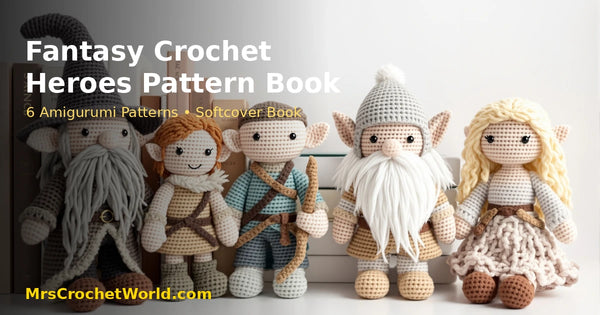
Fantasy Crochet Heroes: The 6 Amigurumi Pattern Book Every Yarn Adventurer Will Love
AMIGURUMI PATTERNSFantasy Crochet Heroes: The 6 Amigurumi Pattern Book Every Yarn Adventurer Will Love Dive into a world of dragons, wizards, and mythical creatures — all...
Read full article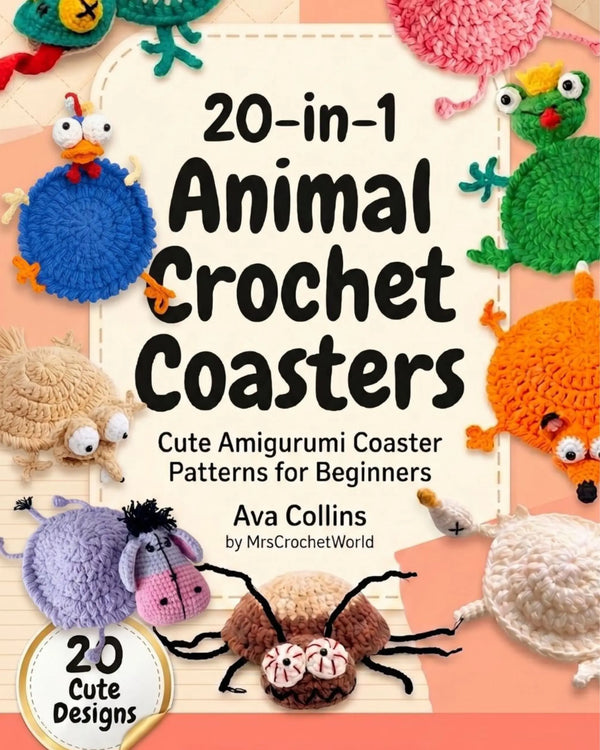
The Best Animal Crochet Coaster Pattern Book — 20 Cute Designs to Make Today
CROCHET COASTERSThe best animal crochet coaster pattern book — 20 cute designs to make today Twenty adorable animal coasters you can crochet in a single afternoon...
Read full article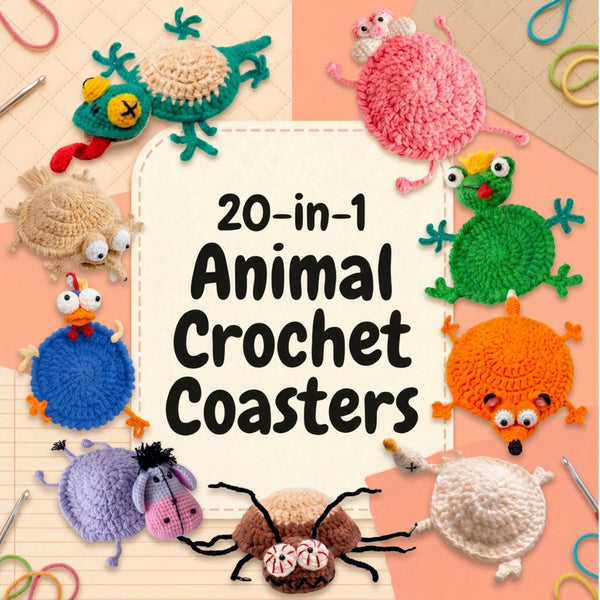
20 Adorable Animal Crochet Coasters Patterns — The Ultimate Bundle Guide
PATTERN ROUNDUP20 Adorable Animal Crochet Coasters — The Ultimate Bundle Guide Turn a skein of cotton yarn into a whole zoo of functional home décor. This...
Read full article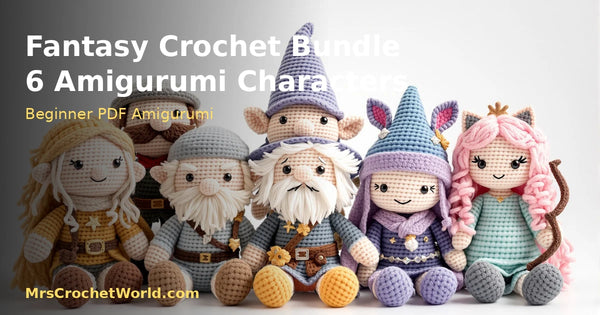
Fantasy Crochet Bundle — 6 Amigurumi Characters PDF Pattern Guide
AMIGURUMI BUNDLESFantasy Crochet Bundle: 6 Magical Amigurumi Characters You Can Make This Weekend Six enchanting fantasy creatures, one PDF bundle — discover exactly what's inside and...
Read full article